Recovering shoulder function takes the right kind of resistance: controlled, adjustable, and gentle enough for rehab.
These orthopedic shoulder rehab bands and pulley-style systems are built to support mobility work, post-surgery recovery, and gradual strength rebuilding.
Best 10 Orthopedic Shoulder Rehab Bands Picks for 2026
Best for Doorway Rehab
ATENTO Shoulder Rehab Pulley System

- Doorway pulley with no-drill strap setup
- Four anchor loops for varied rehab angles
- Includes light latex bands for assisted strengthening
Best For: Home rehab users who want a doorway-based shoulder mobility and stretching kit.
Best Adjustable Resistance
RipStick Pillz Shoulder Rehab Tool

- Six resistance levels for gradual progression
- Works for rehab, shoulder strength, and muscle training
- Compact and easy to assemble/store
Best For: People who want one adjustable tool for shoulder rehab and upper-body resistance training.
Best for Gentle Range-of-Motion Rehab

- Quick over-the-door setup with no assembly
- Helps restore passive shoulder range of motion
- Simple, manual design with no electricity needed
Best For: People recovering from shoulder surgery or stiffness who need gentle assisted motion at home.
Best for Gentle Shoulder Rehab
RENRANRING Figure 8 Resistance Bands

- Three resistance levels for gradual progression
- Comfortable figure-8 grips for easier handling
- Portable option for rehab, stretching, and light training
Best For: People recovering from shoulder strain who want a simple band set for rehab and mobility work.
Best for Easy Home Setup
Shoulder Pulley for Physical Therapy
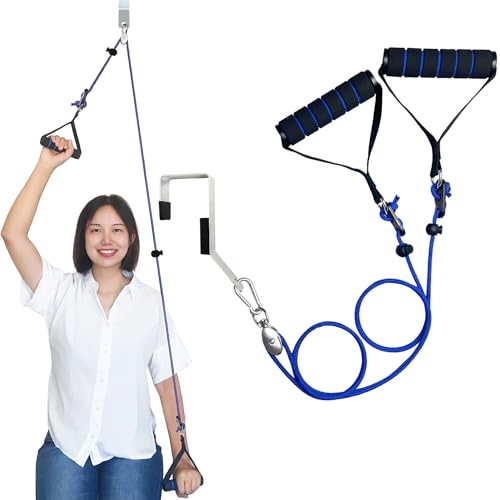
- Gravity-assisted shoulder mobility work
- Over-the-door bracket for quick setup
- Foam grips and adjustable rope length
Best For: Home users recovering from shoulder stiffness or limited range of motion.
Best for Cross-Anchor Rehab
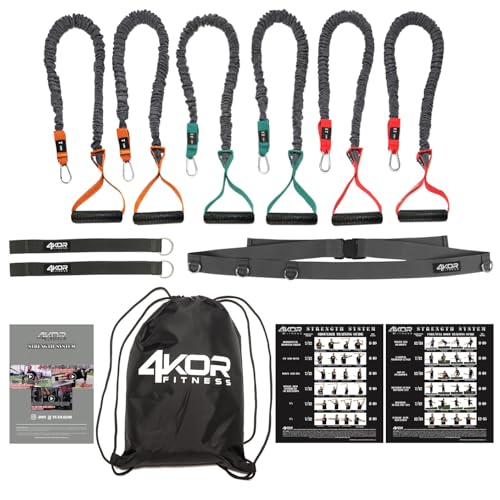
- Three resistance levels with progressive loading
- Cross-anchor design for shoulder stability and mobility
- Includes handles, anchors, sleeves, and carry bag
Best For: Athletes and rehab users who want a more versatile shoulder rehab band system.
Best for ROM Recovery
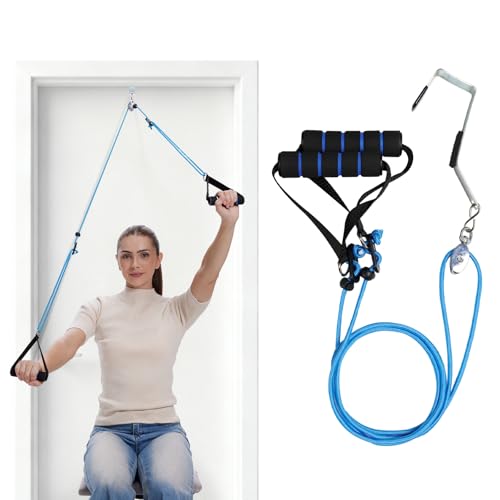
- Gentle passive motion for shoulder mobility
- Adjustable rope length for progression
- Simple over-door setup with quiet use
Best For: People recovering from shoulder surgery or injury who need controlled range-of-motion exercises.
Best for Progression Rehab
Iron Neck Shoulder Resistance Band System

- Three resistance levels for rehab through strength training
- Door and rack anchoring for home, gym, or travel use
- Cloth-wrapped bands add comfort for repeated sessions
Best For: People who want a portable shoulder rehab system that can progress from PT to performance training.
Best for Gentle Shoulder Mobility
Figure 8 Resistance Band for Rehab
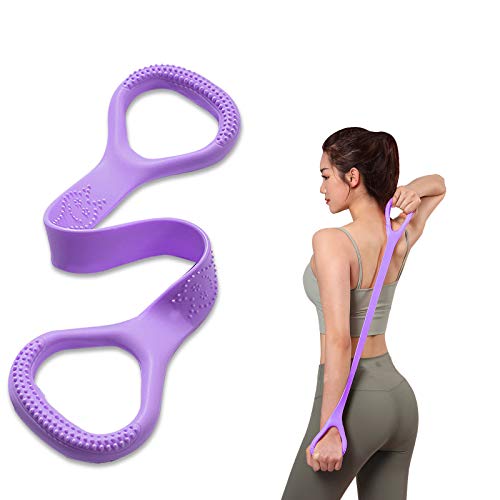
- Ergonomic figure-8 grip
- Lightweight and travel-friendly
- Good for stretching and rehab work
Best For: People who want a simple band for gentle shoulder rehab, mobility, and light upper-body exercise.
Best Latex-Free Rehab Bands
A AZURELIFE 3-Pack Resistance Bands

- Latex-free and non-toxic for sensitive users
- Three resistance levels for gradual progression
- Long flat bands suit rehab, stretching, and mobility work
Best For: People who need a latex-free, easy-to-scale band set for shoulder rehab and physical therapy.
Best for Doorway Rehab – ATENTO Shoulder Rehab Pulley System
If you want a simple home setup for improving shoulder mobility, this ATENTO kit is a practical option. It combines a doorway pulley, multi-anchor strap, foam handles, and light latex assistance bands, making it a versatile pick among orthopedic shoulder rehab bands for stretching, range-of-motion work, and gentle strengthening.
Best For: Home users recovering from frozen shoulder, rotator cuff irritation, AC joint discomfort, or post-surgery stiffness who want an easy doorway-based rehab tool.
Pros:
- Door strap and pulley design makes it easy to use without drilling or permanent hardware.
- Four anchor positions add flexibility for different stretch angles and exercise heights.
- Includes 20-22 lb latex resistance bands for light strengthening and assisted mobility work.
- Foam handles and adjustable components make the setup more comfortable for repeated sessions.
Cons:
- The included resistance level is light, so it may not suit advanced strength training.
- Doorway-based rehab requires a sturdy door and enough clear space to move safely.
For shoppers comparing orthopedic shoulder rehab bands, this model stands out for convenience and recovery-focused versatility rather than heavy resistance. It is a sensible choice if your main goal is restoring motion first, then adding gentle band work as tolerated.
Best Adjustable Resistance – RipStick Pillz Shoulder Rehab Tool
For shoppers comparing orthopedic shoulder rehab bands, the Premium RipStick Pillz stands out as a simple, adjustable upper-body tool that can support rehab, shoulder strengthening, and progressive resistance work. Its six resistance settings make it easy to start light and increase tension as mobility and strength improve.
Best For: Beginners through advanced users who want one compact trainer for shoulder rehab, upper-body conditioning, and gradual resistance progression.
Pros:
- Six adjustable resistance bands support easy progression
- Useful for shoulder work, grip training, and upper-body strength
- Compact design is easy to assemble and store
- Suitable for a wide range of fitness and rehab needs
Cons:
- Not as specialized as dedicated physical-therapy equipment
- May be more tool than needed for very light rehab routines
- Best results depend on correct exercise selection and form
Overall, this is a flexible option for orthopedic shoulder rehab bands buyers who want adjustable resistance in a single, space-saving device. It makes the most sense if you want rehab-friendly progression plus broader upper-body training in one product.
Best for Gentle Range-of-Motion Rehab – Over-the-Door Shoulder Pulley
If you want a simple, low-tech way to keep shoulder rehab moving, this over-the-door pulley is a practical alternative to some orthopedic shoulder rehab bands. It’s built for gentle passive range-of-motion work after injury or surgery, with no assembly and no electricity needed.
Best For: Anyone recovering from shoulder surgery or stiffness who needs a straightforward home rehab tool for assisted ROM exercises.
Pros:
- Over-the-door setup is quick and easy to start using
- Supports gentle passive motion for flexion and mobility work
- No electricity or assembly required
- Good fit for early-stage shoulder recovery routines
Cons:
- Only addresses range of motion, not resistance strengthening
- Must be used carefully to avoid pushing into pain
- Not as versatile as full rehab band systems
For buyers comparing orthopedic shoulder rehab bands, this pulley system makes the most sense if your main goal is restoring motion rather than building strength. It’s a simple, therapist-friendly option for controlled at-home rehab.
Best for Gentle Shoulder Rehab – RENRANRING Figure 8 Resistance Bands
If you want orthopedic shoulder rehab bands that can also do light full-body work, this figure-8 tube set is a practical pick. It offers three resistance levels, a comfortable grip, and a portable format that works well for stretching, physical therapy, and gradual upper-body strengthening.
Best For: Users recovering from shoulder strain who want a simple, low-cost band set for rehab, mobility, and light resistance exercises.
Pros:
- Three resistance levels make it easy to progress gradually
- Figure-8 design with soft rubber grips feels comfortable in hand
- Useful for shoulder stretching, posture work, and general rehab routines
- Compact and easy to carry for home, gym, or travel use
Cons:
- Not as versatile as a long flat therapy band for some rehab drills
- Higher resistance may be too light for advanced strength training
- Latex material may not suit users with latex sensitivity
For shoppers comparing orthopedic shoulder rehab bands, this set stands out for simplicity and everyday convenience rather than advanced rehab features. It’s a solid option if you want a gentle, portable band for shoulder mobility, light strengthening, and recovery-focused exercise.
Best for Easy Home Setup – Shoulder Pulley for Physical Therapy
If you want a simple at-home rehab aid that helps restore motion without much setup, this shoulder pulley is a practical pick. It uses gravity-assisted movement to support controlled range-of-motion work, making it a useful complement to orthopedic shoulder rehab bands when you’re rebuilding shoulder function.
Best For: People recovering from shoulder stiffness, surgery, or limited mobility who want an easy over-the-door therapy tool for home use.
Pros:
- Easy over-the-door installation with a sturdy metal bracket
- Smooth nylon wheel and rope for quiet, controlled motion
- Foam-padded handles for a more secure, comfortable grip
- Adjustable rope length to match different rehab routines
Cons:
- Only targets shoulder mobility work, not full upper-body strengthening
- Requires a compatible door and a bit of clear space to use safely
This is a straightforward rehab tool for users who need repeatable, low-effort stretching at home. If your recovery plan also includes orthopedic shoulder rehab bands, this pulley can round out mobility-focused work with a simple passive-movement option.
Best for Cross-Anchor Rehab – 4KOR Shoulder Training System
If you want orthopedic shoulder rehab bands that do more than basic pull-aparts, this 4KOR system is built for targeted shoulder conditioning with multiple resistance levels, handles, and anchor options. It’s a strong pick for rehab, prehab, and overhead mobility work when you need a more sport-specific setup.
Best For: Athletes, lifters, and rehab users who want a cross-anchor band system for shoulder stability, mobility, and progressive strength work.
Pros:
- Three resistance levels with two bands each for easy progression
- Cross-anchor setup adds varied force vectors for more realistic shoulder training
- Includes nylon sleeves, rubber-grip handles, door anchor, rack straps, and carry bag
- Workout charts and guided video help beginners and advanced users alike
Cons:
- More specialized than simple loop bands, so it may feel overbuilt for basic rehab
- Best results depend on having a suitable anchor point or rack
For users comparing orthopedic shoulder rehab bands, this set stands out for its anchored design and higher training versatility. It is especially appealing if you want one kit that can bridge rehab work, shoulder stability, and athletic overhead training.
Best for ROM Recovery – Over-Door Shoulder Pulley
If you’re comparing orthopedic shoulder rehab bands and related therapy tools, this over-the-door pulley is a smart pick for gentle, passive range-of-motion work. It’s designed to help restore shoulder mobility after injury or surgery, with a simple setup that fits at home or in a clinic.
Best For: Early-stage shoulder rehab, rotator cuff recovery, and post-op mobility work when you need controlled, low-effort movement.
Pros:
- Over-door anchor makes setup quick and avoids permanent installation.
- Adjustable rope length helps control range of motion as rehab progresses.
- Manual, quiet operation is ideal for daily physical therapy routines.
- Gentle pulley motion supports stiffness relief and mobility training.
Cons:
- Not a strength-training tool; it’s aimed at mobility, not resistance work.
- Door-based setup may not suit every room or thicker door frame.
- Results depend on following a therapist-guided rehab plan.
Overall, this is a practical choice if your priority is restoring shoulder movement rather than adding resistance. For shoppers browsing orthopedic shoulder rehab bands, it stands out as a simple, controlled option for early recovery and steady ROM progress.
Best for Progression Rehab – Iron Neck Shoulder Resistance Band System
If you want orthopedic shoulder rehab bands that can carry you from early recovery into full-strength training, this Iron Neck system is built for that progression. The mix of 5lb, 10lb, and 25lb resistance, plus door and rack anchoring, makes it a flexible option for PT-style work, mobility drills, and sport-specific shoulder prep.
Best For: Users recovering from shoulder injuries or rotator cuff work who want one portable kit for rehab, mobility, and strength building.
Pros:
- Three resistance levels support rehab, mobility, and stronger athletic training.
- Door belts and cinch anchors make it easy to use at home, in the gym, or while traveling.
- Cloth-wrapped bands are more comfortable than bare rubber for frequent sessions.
- Includes a complete carry kit with bands, anchors, and bag.
Cons:
- Not the simplest choice if you only need a single light rehab band.
- More of a training system than a basic low-cost starter set.
For buyers comparing orthopedic shoulder rehab bands, this is a strong pick when you want a structured, long-term system rather than a one-resistance solution. It stands out most for its progression-friendly design and portability, especially if you plan to keep using it after rehab for strength and stability work.
Best for Gentle Shoulder Mobility – Figure 8 Resistance Band for Rehab
If you want a simple, portable option for light upper-body work, these orthopedic shoulder rehab bands are a practical pick. The figure-8 design gives you a comfortable grip for stretching, mobility drills, and low-load resistance work at home, in therapy, or while traveling.
Best For: People who want an easy-to-use band for gentle shoulder rehab, posture work, and light arm or back exercises.
Pros:
- Figure-8 shape offers a more secure, ergonomic grip than a plain tube band
- Lightweight and easy to pack for home workouts, the gym, or travel
- Useful for stretching, physical therapy, yoga, Pilates, and mobility routines
- Latex construction provides flexible resistance for upper-body rehab exercises
Cons:
- Not ideal for users who need heavy resistance for strength training
- Best suited to light rehab and mobility, not advanced progressive loading
- Single-band style limits exercise variety compared with multi-band kits
This is a smart, low-fuss choice if you mainly need orthopedic shoulder rehab bands for stretching, mobility, and gentle strengthening. It shines most as a portable rehab tool rather than a full resistance-training system.
Best Latex-Free Rehab Bands – A AZURELIFE 3-Pack Resistance Bands
If you want a simple, portable option for orthopedic shoulder rehab bands, this AZURELIFE set is a practical pick. The three color-coded resistance levels make it easy to progress gradually, while the long, flat design works well for controlled rehab moves, warm-ups, and light strength work at home, in the clinic, or on the go.
Best For: People who need a latex-free, easy-to-scale band set for shoulder rehab, mobility work, and basic physical therapy routines.
Pros:
- Latex-free, non-toxic material is a good fit for sensitive users.
- Three resistance levels make progression straightforward.
- Long 5-foot bands are versatile for rehab, stretching, and light training.
- Includes a simple exercise guide for getting started.
Cons:
- Flat bands may not feel as secure as loop-style options for every exercise.
- Resistance range is better for rehab than heavy strength training.
For orthopedic shoulder rehab bands, this set stands out as an affordable, travel-friendly choice with a gentle learning curve. It is especially useful if you want a non-latex option that can support gradual return-to-motion work without adding a lot of bulk or complexity.
How We Picked the Best Orthopedic Shoulder Rehab Bands
We focused on products that support shoulder rehab with practical resistance progression, comfortable handles or grips, and setups suited to home use. We also looked for easy anchoring, clear resistance ranges, and designs that make it simpler to stay consistent during recovery.
Quick Comparison
In this roundup, pulley systems are best for assisted range-of-motion work, while resistance bands are better for controlled strengthening and mobility drills. If your goal is early rehab, choose lighter, smoother resistance. If you are moving into conditioning, look for adjustable tension and more training variety.
Key Buying Factors for Orthopedic Shoulder Rehab Bands
Resistance Level and Progression
Start with the lightest option that lets you move without compensating. For Orthopedic Shoulder Rehab Bands, the ability to progress in small steps matters more than maximum resistance. Rehab should feel controlled, not forceful.
Band Type and Exercise Style
Pulleys are useful when you need help lifting the arm and regaining range of motion. Tube bands and flat long bands are better for rows, rotations, external rotation work, and stability drills. Figure 8 styles can add convenience for upper-body mobility, but they are usually less versatile than full band kits.
Comfort, Grip, and Anchoring
Look for padded or foam handles, secure door anchors, and smooth hardware that will not dig into the hands or shoulder area. A stable anchor setup is especially important if you will use the system frequently at home.
Material and Durability
Latex bands often offer strong elasticity and a familiar rehab feel, while non-latex options are a better fit for users with sensitivities. Check for reinforced connections, durable webbing, and consistent stretch over time.
Who Should Buy Which Orthopedic Shoulder Rehab Bands?
If you are early in recovery or working on mobility after surgery, a shoulder pulley system is usually the most useful starting point. If you are rebuilding strength, improving control, or supplementing physical therapy, choose adjustable resistance bands with handles. For users who want a broader training tool that can move from rehab into performance work, a multi-resistance kit is the most flexible option.
For most shoppers, the best choice is the one you will use consistently, with a setup that matches your current range of motion, comfort level, and rehab plan.