Recovering from ankle surgery is easier when you have the right support for walking, standing, and short trips around the house. The best option depends on your balance, weight-bearing limits, and how much mobility you need each day.
Below, you’ll find 10 practical choices designed to help reduce strain, improve stability, and make recovery more manageable while you heal.
Best 10 Ankle Surgery Walking Aid Picks for 2026
Pneumatic Ankle Walker
Medline Deluxe Pneumatic Ankle Walkers

- Adjustable air compression for support and fit
- Low-profile shape helps promote a natural gait
- Nonskid rocker sole helps reduce slipping
Best For: Adults needing adjustable ankle support for sprains or immobilization
Hands-Free Crutch
iWALK3.0 Original Hands Free Knee Crutch

- Hands-free recovery aid for active adults
- Can handle stairs and uneven terrain
- Requires specific fit, balance, and motivation
Best For: Qualified adults who want hands-free mobility during foot or ankle recovery
Cam Walker Boot
United Ortho Short Air Cam Walker Fracture Boot

- Rocker sole and cushioned insole aid walking
- Sturdy build with steel-reinforced uprights
- Fits left or right foot with included user guide
Best For: Adults needing post-op or fracture support for ankle and foot recovery
Low-Profile Ankle Support

- Low-profile design for reduced bulk
- Fits either the right or left leg
- Made for adult ankle sprain support
Best For: Adults needing a simple ankle walker for sprain recovery
Lightweight Post-Op Shoe
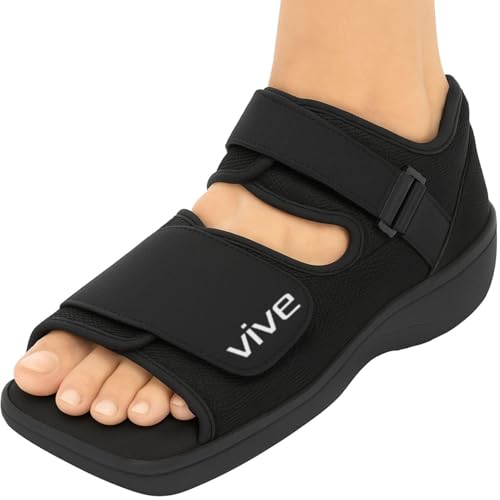
- Adjustable straps fit casts or bandages
- Left or right foot compatibility
- Rocker sole and non-skid tread
Best For: Post-surgery walking support with a lightweight protective shoe
Hands-Free Mobility Support
Single Leg Walker Assist Device

- Hands-free alternative to crutches
- Supports up to 660 lb
- Fits casts, boots, and ankle braces
Best For: Hands-free recovery support for broken legs or sprained ankles
Rigid Support Air Boot
Jewlri Air Walking Boot for Ankle Recovery
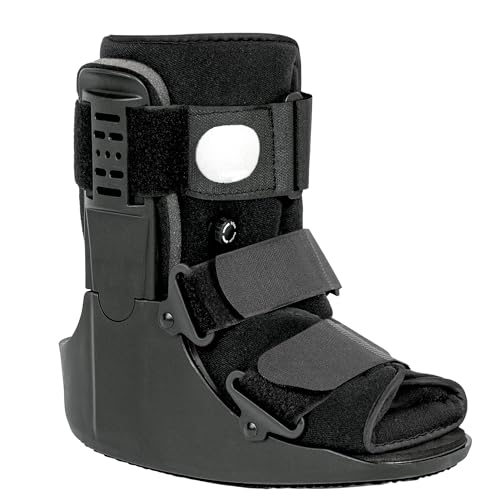
- Rigid plastic shell for protection
- Inflatable lining adds adjustable compression
- Rocker sole supports more natural walking
Best For: Post-op ankle recovery and fracture support
Closed-Toe Recovery Shoe
BraceAbility Medical Walking Shoe

- Closed-toe box helps keep dressings clean
- Lightweight design with adjustable straps
- Rocker sole and non-skid tread support walking
Best For: Broken toe, bunion, and post-op foot recovery
Adjustable Air Support Boot
Lightweight Air Walking Boot for Sprains

- Customizable air pressure for swelling changes
- Lightweight build with easy-adjust straps
- Non-slip sole for indoor and outdoor use
Best For: Adjustable support for sprains, fractures, and post-op recovery
Steerable Knee Scooter – KneeRover Economy Steerable Knee Scooter
If you want an ankle surgery walking aid that feels steadier than crutches, this KneeRover knee scooter is built for practical day-to-day recovery. It supports either leg, works indoors or outdoors, and adds steerable control with rubber wheels and braking for safer movement.
Best For: Adults recovering from broken ankle, foot surgery, or lower-leg injuries who want a stable crutch alternative.
Pros:
- Four 7.5″ rubber wheels and rear brakes help with control.
- Adjustable handlebar and kneepad fit a wide height range.
- Foldable design makes transport and storage easier.
- 300 lb. capacity and lightweight 20.3 lb. build.
Cons:
- Not as compact as a standard walking boot.
- Requires enough space to maneuver like a scooter.
- Works best for users comfortable balancing on one knee.
This is a strong value pick if you want a reliable mobility aid for recovery without relying on underarm crutches. The combination of adjustability, braking, and foldability makes it especially useful for everyday home and outdoor use.
Pneumatic Ankle Walker – Medline Deluxe Pneumatic Ankle Walkers
For an ankle surgery walking aid that focuses on immobilization and support, this Medline pneumatic walker is designed to hold the ankle securely while still allowing compression adjustment. The low-profile shape helps reduce leg-length difference, which can make walking feel more natural during recovery.
Best For: Adults recovering from ankle sprains or stable ankle and lower-leg injuries who need adjustable support.
Pros:
- Pneumatic system lets you adjust compression and fit.
- Low-profile design helps promote a more natural gait.
- Nonskid rocker sole is made to help reduce slipping.
- Fits either the left or right leg.
Cons:
- Designed for support and immobilization, not hands-free mobility.
- Less versatile than scooter-style recovery aids.
- Fit depends on choosing the right size and proper application.
This boot is a practical choice when your priority is protecting the ankle while still walking with more stability than a soft brace. It is best suited to recovery situations where controlled, supported steps matter more than speed or convenience.
Hands-Free Crutch – iWALK3.0 Original Hands Free Knee Crutch
If you need an ankle surgery walking aid that keeps you off crutches and out of a scooter, the iWALK3.0 is built for hands-free mobility. It is designed for active adults who meet the stated fit requirements and are willing to learn the device over a short adjustment period.
Best For: Healthy, motivated adults recovering from foot or ankle injuries who want hands-free movement and can meet the qualification requirements.
Pros:
- Hands-free design supports normal activities, including stairs.
- Works indoors, outdoors, and on uneven terrain.
- Personalized support and warranty are included.
- Tool-free assembly with instructional resources in the box.
Cons:
- Not recommended for elderly users or anyone with balance limits.
- Requires users to meet specific height, weight, age, and balance criteria.
- There is a learning curve and possible initial discomfort.
This is a specialized option, not a universal one, but it can be a game changer for the right user. If you fit the requirements and want maximum mobility during recovery, it offers more freedom than many traditional aids.
Cam Walker Boot – United Ortho Short Air Cam Walker Fracture Boot
For a more traditional ankle surgery walking aid, this United Ortho cam walker boot is designed to protect the foot and ankle while promoting a more natural walking motion. The rocker sole and shock-absorbing insole are useful if you want support during post-operative recovery or stable fracture care.
Best For: Adults recovering from acute ankle sprains, stable fractures, or post-operative ankle and foot care.
Pros:
- Rocker sole and shock-absorbing insole support smoother walking.
- Sturdy molded uprights with steel reinforcement add durability.
- Can be worn on the left or right foot.
- Includes user guide and comfort pads for setup.
Cons:
- Sizing must be checked carefully before purchase.
- Less mobile than scooter- or crutch-style options.
- Designed for support, so it does not free the hands.
This boot is a straightforward recovery choice when your priority is protection and walking support rather than hands-free movement. It is best for users who want a stable, boot-style solution with practical features for daily wear.
Low-Profile Ankle Support – Medline Deluxe Ankle Walkers
If you need an ankle surgery walking aid for a sprain or similar ankle recovery, these Medline Deluxe Ankle Walkers keep things simple with a low-profile design and right-or-left fit. They’re aimed at adults and are built to support the ankle without adding much bulk, which can make everyday walking feel more manageable during recovery.
Best For: Adult users who want a low-profile ankle walker that fits either leg.
Pros:
- Low-profile design helps keep the walker less bulky.
- Fits right or left leg for flexible use.
- Targeted for ankle sprain support.
Cons:
- Product notes do not list sizing details.
- Included components are limited to the leg walker itself.
Overall, this is a straightforward option if you want a basic ankle-support walker focused on fit and simplicity rather than extra features.
Lightweight Post-Op Shoe – Vive Post Op Shoe
As an ankle surgery walking aid, this Vive post op shoe is designed for post-surgery or injury use on the toes, foot, ankle, or leg. It focuses on protection and stability with a lightweight build, adjustable straps, and a non-skid rocker sole, making it a practical choice when you need support for short-term walking.
Best For: Post-surgery recovery when you need a lightweight protective walking shoe for either foot.
Pros:
- Adjustable straps help it fit casts or bandages.
- Can be worn on the left or right foot.
- Non-skid tread adds stability while walking.
- Rigid rocker sole helps support the arch and reduce pressure.
Cons:
- Sizing needs to be checked carefully before buying.
- Best fit depends on leaving extra space for toe protection.
This is a good pick if you want a protective post-op shoe with adjustable, lightweight support rather than a heavier boot.
Hands-Free Mobility Support – Single Leg Walker Assist Device
If you’re looking for an ankle surgery walking aid that keeps weight off your arms, this single-leg walker assist device is built as a hands-free alternative to traditional crutches. It’s designed for broken legs and sprained ankles, with height adjustability, secure leg straps, and compatibility with casts, walking boots, and ankle braces.
Best For: Users who want hands-free mobility support and can fit within the device’s thigh and calf measurements.
Pros:
- Hands-free design reduces arm fatigue and underarm strain.
- Supports up to 660 lb for heavy-duty stability.
- Anti-slip rubber base adds traction and balance.
- Compatible with casts, walking boots, and ankle braces.
Cons:
- Fit depends on thigh circumference and calf length limits.
- Bulkier than a simple brace or post-op shoe.
This is best for people who want to stay mobile without relying on crutches, especially when a secure, adjustable leg support is more important than compact size.
Rigid Support Air Boot – Jewlri Air Walking Boot for Ankle Recovery
If you need an ankle surgery walking aid that focuses on support and protection, this walking boot is built for post-op recovery, sprains, fractures, and soft tissue injuries. Its rigid plastic shell helps keep the injured area from moving, while the inflatable lining and adjustable closure system make it easier to fine-tune comfort as swelling changes.
Best For: Post-surgery ankle recovery, sprains, and fracture support when rigid protection matters.
Pros:
- Hard plastic shell adds rigid protection for the foot, ankle, and lower leg.
- Inflatable lining can add compression and support as swelling changes.
- Hook-and-loop closure system allows adjustable fit and easier on/off.
- Rocker sole is designed to support a more natural walking gait.
Cons:
- Fit depends on measuring foot length and ankle width carefully.
- Manufacturer recommends consulting a medical professional before ordering.
This is a practical pick if you want a more structured walking boot with adjustable compression and a gait-friendly sole. It is especially suited to users who need protection plus customization during recovery.
Closed-Toe Recovery Shoe – BraceAbility Medical Walking Shoe
This ankle surgery walking aid is a lightweight closed-toe medical shoe designed for broken toes, post-op bunion care, stress fractures, and sprained ankle recovery. The square-toe box gives room for swelling, socks, or casts, while the rigid rocker sole and non-skid tread are meant to support safer walking indoors or outdoors.
Best For: Broken toe, forefoot, and post-op foot recovery when you want a lightweight closed-toe option.
Pros:
- Closed-toe design helps keep bandages and dressings dry and clean.
- Square-toe box provides room for swelling, socks, or casts.
- Lightweight construction makes it less bulky than many medical boots.
- Rigid rocker sole and non-skid tread support stable walking.
Cons:
- Less protective than a full fracture boot with a hard shell.
- Size selection depends on the provided chart for proper fit.
This shoe is a strong choice if your recovery calls for foot protection without the bulk of a tall boot. It prioritizes lightweight wear, toe box space, and dependable walking support.
Adjustable Air Support Boot – Lightweight Air Walking Boot for Sprains
For an ankle surgery walking aid with customizable support, this air walking boot uses adjustable pneumatic cushioning to help adapt to swelling stages. It is designed for broken foot recovery, severe sprains, and post-surgical use, while the lightweight build and non-slip sole are intended to make daily movement more manageable.
Best For: Users who want adjustable air cushioning and lightweight support during ankle or foot recovery.
Pros:
- Adjustable air pressure lets you tune support as swelling changes.
- Lightweight materials help reduce the burden of wearing a boot.
- Non-slip sole is designed for indoor and outdoor surfaces.
- Easy-adjust straps help secure the boot on different foot shapes.
Cons:
- Fit still depends on measuring and matching the medium size correctly.
- Manufacturer advises checking with a doctor if you are unsure about use.
This boot is a sensible option if you want adjustable air support without a heavy feel. It balances stabilization, simple strap adjustment, and traction for everyday recovery use.
How We Picked the Best Ankle Surgery Walking Aid
We focused on recovery-friendly options that can function as an Ankle Surgery Walking Aid across common post-op situations, including controlled weight bearing, non-weight-bearing mobility, and short-term support at home or on the go. Priority went to products with solid stability, adjustable fit, comfortable padding, and clear use cases for different stages of healing.
Quick Comparison
Different recovery needs call for different tools. Knee scooters and hands-free crutches are better when you need to keep weight fully off the ankle. Walking boots, cam boots, and post-op shoes make more sense when your surgeon allows protected walking or partial weight bearing. A medical walking shoe is typically lighter and better for milder protection, while a boot offers more support and immobilization.
Key Buying Factors for an Ankle Surgery Walking Aid
Weight-Bearing Status
Follow your surgeon’s instructions first. If you are not allowed to put weight on the ankle, choose a knee scooter, hands-free crutch, or another non-weight-bearing solution. If you can bear some weight, a boot or post-op shoe may be more appropriate.
Stability and Balance
Look for a design that matches your balance level. Knee scooters provide a stable platform for many users, while hands-free devices require more coordination. Boots and shoes are simpler to use but offer less mobility assistance.
Fit, Adjustability, and Comfort
Adjustable straps, air cushions, padded liners, and the right size matter more than they may first appear. A poor fit can create rubbing, pressure points, or poor support, especially during longer wear.
Indoor Versus Outdoor Use
Consider where you’ll use the device most. Larger wheels and steerable frames help with uneven ground, while lightweight boots and shoes are easier for stairs, tight hallways, and quick indoor movement.
Healing Stage and Daily Routine
Your best Ankle Surgery Walking Aid may change as you recover. Early-stage recovery often calls for stricter immobilization or complete offloading, while later stages may benefit from lighter support and easier walking.
Who Should Buy Which Ankle Surgery Walking Aid?
Choose a knee scooter if you need maximum mobility without placing weight on the ankle. Consider a hands-free crutch only if you have the balance and upper-body strength to use it safely. Pick a walking boot if your recovery plan allows protected walking and you need more ankle control. A post-op shoe is best for lighter-duty support, shorter outings, or cases where your provider recommends a less restrictive option.
In short, the best choice depends on your prescription, comfort needs, and how much independence you want during recovery. When in doubt, match the device to your weight-bearing rules and your daily environment.