The best balance boards make stability training more engaging while helping you build control through your ankles, legs, and core. The right design depends on whether you want gentle rehabilitation, desk-friendly movement, or a challenging fitness session.
We compare 10 balance boards across rocker, wobble, roller, cushioned, and rehab-focused designs so you can choose a model that matches your experience level, space, and training goals.
Best 10 Balance Boards Picks for 2026
Simple Strength Builder
Amazon Basics Wood Wobble Board
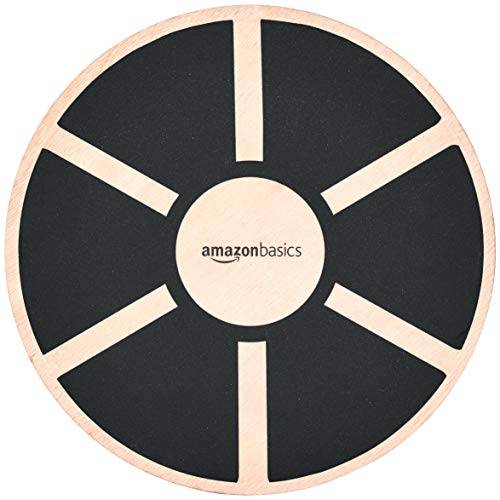
- Supports up to 265 pounds
- Non-slip surface for balance exercises
- Compact design for home or gym use
Best For: Basic core, posture, and balance workouts
Adjustable Challenge Trainer
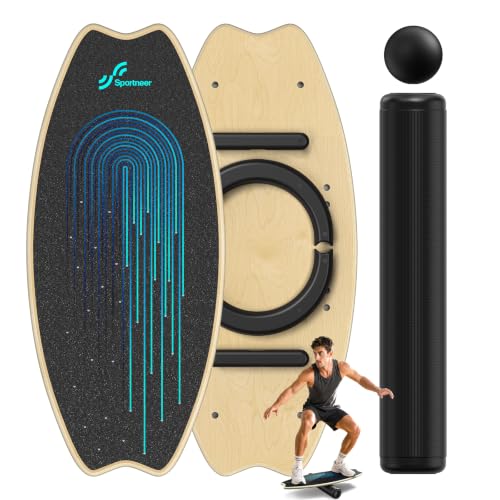
- Seven challenge modes
- Includes roller and solid-rubber ball
- Supports up to 450 pounds
Best For: Progressive fitness and board-sport training
Low-Impact Stability Aid
ProsourceFit Exercise Balance Pad
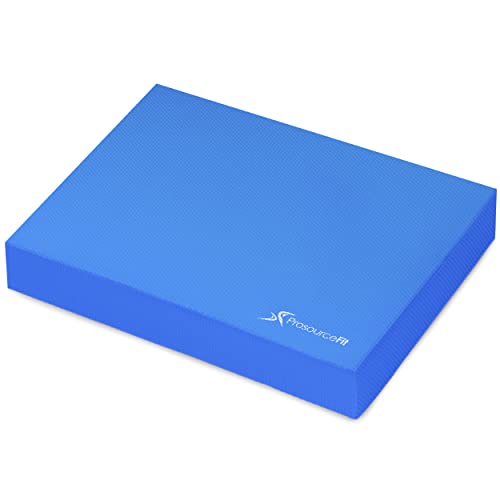
- Lightweight 12-ounce foam pad
- Slip-resistant, sweat-proof TPE
- Useful for fitness and physical therapy
Best For: Gentle stability, yoga, and rehabilitation exercises
Board-Sport Practice Pick
Yes4All Adjustable Balance Trainer

- Three stopper distances plus advanced mode
- 15-ply wood supports up to 300 pounds
- Designed for surf and board-sport training
Best For: Core control and board-sport balance practice
Compact Rocker Pick
StrongTek Wooden Balance Board
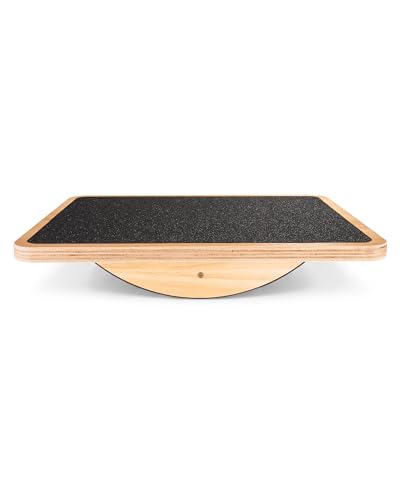
- Textured, slip-resistant surface
- Compact and portable rocker design
- Supports up to 350 pounds
Best For: Beginners, families, and standing-desk users
Progressive Training Pick
Sportneer 7-Mode Balance Trainer

- Seven adjustable challenge modes
- Includes roller and 2.8-inch ball
- Supports up to 450 pounds
Best For: Athletes and users wanting progressive balance training
Rehab-Friendly Value Pick
Professional Wooden Wobble Board

- Supports balance and coordination work
- Anti-slip surface with floor-protection pads
- Compact 350-pound-capacity design
Best For: Beginners, older adults, and physical-therapy routines
Best for Guided Foot and Ankle Rehab

- Guided 10-day programs via the Sidekick app
- 900+ adjustable peg configurations
- Anti-slip design with lifetime warranty
Best For: Progressive foot and ankle stability training
Best Simple Everyday Wobble Board

- Ready to use with no assembly
- Supports therapy, posture, and core work
- Anti-slip pads help protect indoor floors
Best For: Accessible home or standing-desk balance practice
Best for Versatile 360-Degree Training

- 360-degree rotation for dynamic balance work
- Textured, moisture-resistant anti-slip surface
- Useful for fitness, sports, and therapy exercises
Best For: Multidirectional balance and core training
Simple Strength Builder – Amazon Basics Wood Wobble Board
If you want a straightforward addition to your balance boards collection, this Amazon Basics wood wobble board supports core, coordination, posture, and balance exercises. Its compact design suits home workouts, gyms, and rehabilitation spaces.
Best For: Adults seeking a basic wobble board for balance practice, planks, push-ups, and targeted strengthening.
Pros:
- Supports up to 265 pounds.
- Non-slip surface helps provide a secure grip.
- Works for standing poses, planks, push-ups, and targeted workouts.
- Compact 15.75-by-15.75-inch footprint.
Cons:
- It is a single-mode wobble board without adjustable challenge settings.
- The product should be used only on dry, non-slip surfaces.
This is a practical pick if you prefer a traditional wood balance board without extra accessories. The limited 1-year warranty adds basic coverage for home users.
Adjustable Challenge Trainer – Sportneer 7-Mode Wobble Board
Among balance boards, the Sportneer stands out for its adjustable setup and included roller and ball. Seven challenge modes and removable magnetic stoppers let beginners and experienced users tailor balance, core, and sport-specific training.
Best For: Athletes, hobby skaters, board-sport enthusiasts, and users who want multiple balance-training configurations.
Pros:
- Includes a board, roller, and solid-rubber ball.
- Offers seven challenge modes with four removable magnetic stoppers.
- Birch construction supports up to 450 pounds.
- Matte surface provides non-skid grip with bare feet or shoes.
Cons:
- At 10.6 pounds, it is heavier than simpler balance boards.
- The larger 31.5-by-14.17-inch design may require more storage space.
This is the most configurable option in the group. Its high weight capacity and accessories make it useful for progressive workouts, though the setup is more substantial than a basic wobble board.
Low-Impact Stability Aid – ProsourceFit Exercise Balance Pad
This foam balance pad offers a softer alternative to traditional balance boards. Its unstable surface can challenge balance and core strength while also supporting yoga, physical therapy, lunges, squats, and rehabilitation exercises.
Best For: Beginners, older adults, athletes, and anyone needing a lightweight stability or rehabilitation aid.
Pros:
- Lightweight 12-ounce design is easy to carry.
- Sweat-proof, slip-resistant TPE material is easy to clean.
- Can be used as a knee pad, seat cushion, foot pad, or meditation pillow.
- Suitable for balance, yoga, physical therapy, and core exercises.
Cons:
- It provides a cushioned foam surface rather than the rolling or wobbling action of a rigid board.
- Its 15.5-by-12.75-inch footprint offers less standing area than some boards.
Choose this pad when portability, cushioning, and versatility matter more than advanced board control. It is especially practical for mixed-use workouts and gentle stability training.
Board-Sport Practice Pick – Yes4All Adjustable Balance Trainer
This Yes4All trainer brings a surf-style feel to balance boards, with adjustable stoppers that create 11-, 16-, or 22-inch roller spacing—or no stopper restriction for advanced riders. It is designed for core control, coordination, and board-sport practice.
Best For: Adults training for surfing, snowboarding, skiing, skateboarding, and other sports requiring balance and body control.
Pros:
- Adjustable stopper positions accommodate beginners through advanced users.
- 15-ply pressed wood construction supports up to 300 pounds.
- Emery surface and TPE-covered roller help reduce slipping.
- Supports core, leg, thigh, and waist training.
Cons:
- It has a sport-oriented roller design that may be less suitable for simple stationary wobble exercises.
- Its 29.53-inch length requires more floor space than compact wobble boards.
For board-sport preparation, this trainer offers a useful progression from controlled spacing to freer movement. The included board and roller keep the setup focused, while the 300-pound capacity suits many adult users.
Compact Rocker Pick – StrongTek Wooden Balance Board
If you want a straightforward way to add balance boards to a home, office, or gym routine, the StrongTek Wooden Balance Board is a compact rocker-style option. Its textured surface, portable size, and 350-pound capacity make it suitable for core work, conditioning, rehabilitation, or standing-desk movement.
Best For: Beginners, families, standing-desk users, and anyone seeking a simple rocker board for balance and core training.
Pros:
- Textured surface helps provide a secure grip for barefoot training.
- Compact 17.5-by-13.5-inch design is easy to store and transport.
- Supports up to 350 pounds and is designed for both kids and adults.
- Useful for conditioning, agility, rehabilitation, and standing-desk use.
Cons:
- The basic rocker design offers less progression than multi-mode balance trainers.
- Its 3-inch height may provide a more limited challenge for advanced users.
This is a practical pick when portability and uncomplicated operation matter most. Choose it over a more elaborate balance board if you prefer a stable rocker format that can fit easily into everyday routines.
Progressive Training Pick – Sportneer 7-Mode Balance Trainer
The Sportneer Balance Board is built for shoppers who want balance boards with adjustable difficulty. It includes a roller, a 2.8-inch ball, and four removable magnetic stoppers, creating seven modes for gradually developing stability, ankle strength, and core control.
Best For: Athletes, progressing beginners, and home users who want multiple balance challenges for sports training or physical therapy.
Pros:
- Seven modes support progression from beginner to more demanding balance work.
- Includes both a roller and ball for varied training exercises.
- Textured EVA surface is designed for non-slip use with shoes or bare feet.
- 450-pound capacity provides a strong stated weight limit.
Cons:
- The larger 30.09-inch length may require more storage space.
- Its adjustable components can make setup more involved than a basic rocker board.
With its interchangeable challenge modes and included accessories, this is the most adaptable option in the group. It makes particular sense for users who expect their balance practice to become progressively more difficult.
Rehab-Friendly Value Pick – Professional Wooden Wobble Board
This professional wobble board is a compact choice for balance boards shoppers focused on stability, coordination, and controlled movement. Its anti-slip surface and protective pads suit home, gym, office, and physical-therapy settings, while the rocker format can support exercises such as squats, planks, and push-ups.
Best For: Beginners, older adults, people working on balance, and users incorporating physical therapy or recovery exercises.
Pros:
- Designed to support balance, coordination, proprioception, and core strength.
- Anti-slip surface helps provide secure footing during exercises.
- Protective pads are intended to help prevent floor damage.
- Compact design is convenient for transport and storage.
Cons:
- The 350-pound capacity is lower than the Sportneer trainer’s stated limit.
- It does not include a roller, ball, or multiple adjustment modes.
This board is a sensible fit for straightforward balance practice and recovery-oriented routines. Its compact construction and floor-protection features are especially useful when equipment needs to move between rooms or be used in an office.
Best for Guided Foot and Ankle Rehab – AxisBoard Balance Board
For shoppers looking for balance boards with a more structured rehabilitation focus, the SIDEKICK AxisBoard combines an adjustable split-board design with guided exercise programs. Its app-based 10-day routines and multiple peg configurations make it suited to progressive foot and ankle training.
Best For: Adults working on foot and ankle stability, balance, dorsiflexion mobility, or lower-leg strength.
Pros:
- Lifetime access to guided 10-day programs through the Sidekick app.
- Split-board design targets stabilizing muscles in the feet and ankles.
- More than 900 peg configurations support adjustable progressions.
- Anti-slip surface, portability, lifetime warranty, and HSA/FSA eligibility add practical value.
Cons:
- Its adult-oriented rehabilitation design may be more specialized than needed for casual balance practice.
- Users who prefer a simple, fixed wobble board may not need the adjustable peg system or app.
The AxisBoard stands out when you want a guided plan rather than an unstructured balance challenge. It is a particularly strong option for users who value adjustable difficulty and a rehab-oriented approach.
Best Simple Everyday Wobble Board – Wooden Balance Board
This wooden wobble board is a practical choice among balance boards for home exercise, physical therapy, and standing-desk use. It arrives assembled and uses anti-slip and floor-protection pads to make everyday practice more convenient indoors.
Best For: Beginners, adults, children, older users, and anyone wanting balance, posture, or core work while standing at a desk.
Pros:
- Supports physical therapy, core strengthening, posture improvement, and coordination work.
- Preassembled design is ready to use out of the box.
- Wood construction is rated to support up to 350 pounds.
- Anti-slip and anti-scratch pads improve grip while helping protect indoor floors.
Cons:
- It offers a conventional wobble-board setup without the guided programs or adjustable configurations of specialized systems.
- Its 16.45-by-12.99-inch size may feel limited for users wanting a larger training platform.
Choose this model if you want a straightforward, low-maintenance board that can serve several purposes. Its assembled construction and desk-friendly design make it especially approachable for casual home or office use.
Best for Versatile 360-Degree Training – Advanced Wood Balance Board
For shoppers comparing balance boards for broader fitness use, this advanced wood model offers a 360-degree rotation design and a larger training surface. Its textured anti-slip covering and carry holes support exercises at home, in the gym, or while traveling.
Best For: Users seeking balance and core training for yoga, squats, planks, push-ups, surfing practice, or general physical therapy.
Pros:
- 360-degree half-ball design challenges balance and coordination from multiple directions.
- Textured, moisture-resistant surface is designed for grip and durability.
- Supports varied exercises, including yoga, squats, planks, push-ups, and surf training.
- No assembly required, with carry holes for easier transport.
Cons:
- The more dynamic design may be challenging for beginners compared with a simpler wobble board.
- The supplied details list both a 500-pound support-volume statement and a 350-pound maximum weight recommendation, so buyers should follow the lower stated limit.
- Its larger size and 2.68 kg weight may be less convenient for storage or frequent carrying.
This model is a good fit when versatility matters more than a narrowly defined rehab program. The rotating base and exercise-friendly surface provide room for balance, core, and sport-oriented practice, while the no-assembly format keeps setup simple.
How We Picked the Best Balance Boards
We evaluated these Balance Boards by design, stability range, surface traction, weight capacity, portability, and intended use. We considered how easily beginners can mount each board, how much progression it offers, and whether its construction suits exercise, physical therapy, standing-desk movement, or sport-specific training.
Because balance equipment varies significantly, we included stable rocker boards alongside more demanding 360-degree wobble and roller systems. Cushioned balance pads were also considered for users who need lower-impact stability work or a comfortable surface for kneeling and rehabilitation exercises.
Quick Comparison
| Best For | Look For | Most Suitable Design |
|---|---|---|
| Beginners | Wide deck and limited tilt | Rocker board or cushioned pad |
| Core workouts | Progressive instability and strong traction | Wobble board |
| Advanced training | Multidirectional movement | Roller or 360-degree board |
| Physical therapy | Controlled motion and secure grip | Rehab-focused board or balance pad |
| Standing desks | Compact profile and manageable movement | Low-profile rocker or swing board |
Key Buying Factors for Balance Boards
Board Type and Difficulty
Rocker boards tilt mainly forward and backward or side to side, making them a sensible starting point. Wobble boards move in multiple directions and demand more ankle and core control. Roller boards are usually the most challenging because the platform and roller move independently.
Surface Grip and Stability
A textured or non-slip surface helps keep your feet planted during barefoot or athletic-shoe use. Check the base as well: adjustable stoppers, a fixed fulcrum, or a cushioned underside can make practice more controlled and reduce unwanted sliding.
Size, Capacity, and Storage
Choose a deck large enough for your stance and rated above your body weight, especially for dynamic exercises. Compact boards store easily, while larger platforms can feel more secure but require additional floor space. Always use the board on a firm, level surface.
Training Goals
For general fitness, prioritize a durable deck and progressive challenge. Rehabilitation users should favor controlled movement, comfortable contact points, and guidance from a qualified professional. A standing-desk board should be stable, quiet, and easy to step off.
Who Should Buy Which Balance Boards?
Choose a rocker board if you are new to balance training or want a predictable way to work on ankle and core control. Choose a wobble board if you want a versatile option for squats, planks, lunges, and standing drills.
Choose a roller system if you already have solid balance and want a more demanding progression for sports or advanced workouts. Choose a balance pad if low-impact instability, physical therapy, yoga, or kneeling exercises are your priority.
Choose a rehab-specific model when foot, ankle, or lower-leg recovery is your main goal, and follow professional advice for exercise selection and intensity. No balance board replaces medical evaluation or supervised therapy when pain or injury is involved.