Putting on socks can become frustrating when Parkinson’s symptoms affect balance, flexibility, coordination, or hand strength. The right sock aid can reduce bending and make dressing more manageable while supporting greater independence.
We’ve compared 10 popular sock helpers for fit, handle design, loading method, sock compatibility, and everyday practicality. Use the guide below to narrow your choices based on mobility needs and the types of socks you wear most often.
Best 10 Sock Aids for Parkinson S Patients Picks for 2026
Weak-Grip Friendly Pick

- Flexible shell for weak hand strength
- Soft, non-slip foam handles
- Adjustable 38-inch ropes
Best For: Regular socks and users who need a comfortable grip
Easy-Adjust Option

- Foam-padded comfort-grip handles
- Slip-resistant cuff helps hold socks
- Button-adjustable 33-inch cords
Best For: Seniors and users with limited mobility
Compact U-Shaped Design

- Soft, flexible ABS shell
- U-shaped opening stays in position
- Supports no-bending sock application
Best For: Regular socks and feet 4 inches wide or less
Put-On and Remove Kit
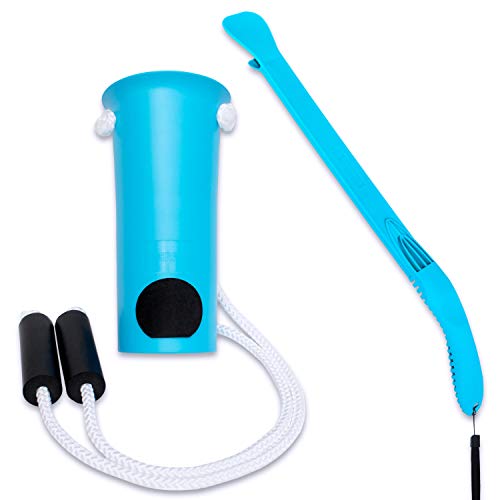
- Includes sock aid and remover
- Foam handle and flexible shell
- Remover adds leverage for limited arm strength
Best For: Users needing help both putting on and removing regular socks
Gentle-Grip Pick

- Three-finger design holds regular socks
- Fabric covering helps reduce friction
- Lightweight 2.4-ounce construction
Best For: Everyday dress, casual, and athletic socks
Long-Reach Kit

- 33-inch adjustable-by-knot rope
- Wide tube supports regular socks
- Includes an 18.5-inch sock remover
Best For: Users who need extra reach and sock removal support
Adjustable Wide Fit

- 38-inch adjustable cords and foam handles
- Wide shell fits feet up to 4.2 inches wide
- Extended lip helps keep socks in place
Best For: Users needing adjustable reach and a wide regular-sock aid
Long-Reach Independence Pick
Sammons Preston 28-Inch Sock Aid

- 28-inch continuous-loop cord
- Foam handle for one-handed use
- Wide trough with no-slip pad
Best For: Users needing extra reach or easier one-handed dressing
Soft Everyday Dressing Pick
Easy-On Sock Helper for Seniors
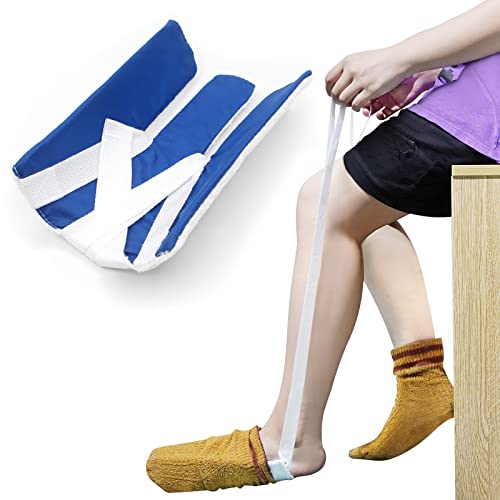
- Reduces bending and twisting
- Supports several sock types
- Terry cloth grip with nylon lining
Best For: Lightweight everyday sock assistance
Classic Slip-Resistance Pick
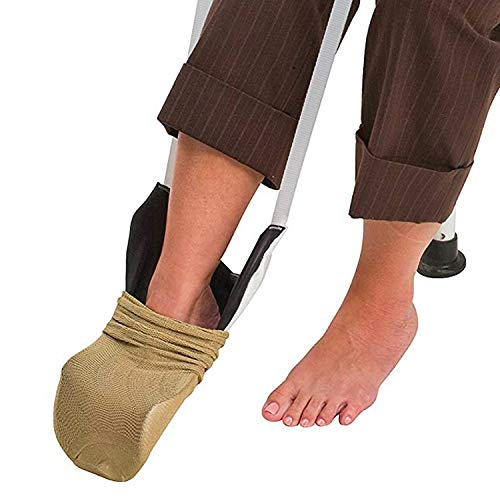
- Helps avoid bending
- Terry cloth cover improves sock hold
- Nylon lining reduces friction
Best For: Seniors or recovery-related limited mobility
Weak-Grip Friendly Pick – RMS Deluxe Sock Aid
For shoppers comparing sock aids for Parkinson’s patients, the RMS Deluxe Sock Aid is designed to reduce bending and simplify putting on regular socks. Its flexible shell and foam handles may be especially useful when hand strength or mobility is limited.
Best For: Adults who need help putting on regular socks and prefer soft, non-slip foam handles.
Pros:
- Flexible, contoured shell is designed for users with weak hand strength.
- Soft foam handles provide a comfortable, non-slip grip.
- Adjustable 38-inch ropes allow the pulling length to be customized.
- Works with several regular sock styles, including ankle, knee, athletic, and dress socks.
Cons:
- Not intended for compression socks, compression stockings, sheer anklets, or very thin hosiery.
- Designed for foot widths of 5 inches or less.
This is a straightforward option for regular socks, with a flexible shell and adjustable cords that support independent dressing. Confirm sock type and foot width before purchasing.
Easy-Adjust Option – Vive Sock Aid
The Vive Sock Aid is a practical choice among sock aids for Parkinson’s patients who want to put on socks or hosiery without bending as much. Its contoured plastic shell, padded handles, and button-adjustable cords focus on ease of use.
Best For: Seniors and people with limited mobility who want padded grips and simple cord adjustment.
Pros:
- Latex-free shell contours over the foot and heel to help pull socks into place.
- Each handle has 3 cm of foam padding for a secure, comfortable grip.
- Wide, slip-resistant cuff helps keep the sock from sliding off the aid.
- 33-inch cords can be adjusted with button adjustors.
Cons:
- The supplied notes do not specify compatibility with compression socks or stockings.
- Product care instructions call for hand washing only.
With padded handles and button-based length adjustment, this model emphasizes handling comfort and setup convenience. Its included 60-day Vive guarantee adds purchase reassurance.
Compact U-Shaped Design – KEKOY Sock Aid
The KEKOY Sock Aid is worth considering when choosing sock aids for Parkinson’s patients who need to put on regular socks without bending. Its soft, flexible U-shaped shell is designed to hold the sock opening in place while easing pressure on the instep.
Best For: Users with foot widths of 4 inches or less who want a soft U-shaped aid for everyday regular socks.
Pros:
- U-shaped design helps fix the sock opening size during use.
- Soft, flexible ABS shell makes it easier to insert socks.
- Supports independent dressing for people with limited mobility or difficulty bending.
- Suitable for regular ankle, knee, calf, sports, and dress socks.
Cons:
- Not suitable for compression socks or compression stockings.
- Limited to foot widths measuring 4 inches or less.
The KEKOY stands out for its U-shaped shell, which is intended to make sock placement easier and reduce pressure on the instep. Check the width requirement carefully before ordering.
Put-On and Remove Kit – RMS Sock Aid Kit
For people comparing sock aids for Parkinson’s patients, the RMS Sock Aid Kit adds a remover to the sock-putting aid. That two-piece approach can help with both dressing and undressing when bending, arm strength, or mobility is limited.
Best For: Men and women who want one kit for putting on and taking off regular socks or stockings.
Pros:
- Includes a deluxe sock aid with foam handle and a sock or stocking remover.
- Flexible shell is designed to help users with weak hand strength.
- Remover design maximizes leverage for limited arm strength.
- Smooth, flexible pieces are designed to slide socks on and off without snagging.
Cons:
- Not intended for compression socks or compression stockings.
- Designed for foot widths of 5 inches or less.
This kit offers more versatility than a put-on aid alone by including a dedicated doffer. It is a useful choice when removing regular socks is also part of the dressing challenge.
Gentle-Grip Pick – CAidRE Three-Finger Sock Aid
For shoppers comparing sock aids for Parkinson’s patients, this CAidRE model is designed to reduce bending, twisting, and turning. Its three-finger design and fabric-covered construction help hold regular socks while supporting a more independent dressing routine.
Best For: Users with mobility limitations who need a lightweight aid for everyday dress, casual, or athletic socks.
Pros:
- Three-finger design helps hold stockings and socks in place.
- Terrycloth exterior and nylon interior provide a gentle but firm grip.
- Works with most regular dress, casual, and athletic socks.
- Lightweight design weighs 2.4 ounces.
Cons:
- Does not work well with compression socks.
- Its compact design may provide less reach than long-handled alternatives.
This is a straightforward option when gentle fabric contact and low weight matter. Confirm that the intended socks are regular rather than compression styles before choosing it.
Long-Reach Kit – Jellas 4-Inch Wide Sock Aid
This Jellas kit is a practical choice among sock aids for Parkinson’s patients who want to limit bending during dressing. The wide plastic tube, long rope, and included sock remover support a more complete putting-on and taking-off routine.
Best For: Users who need extended reach and a wider aid for regular socks, including people with limited mobility or difficulty bending.
Pros:
- 33-inch rope helps reduce bending and can be shortened with knots.
- Four-inch-wide tube accommodates feet under 14 inches long and 4 inches wide.
- Frosted particles and anti-slip foam help keep socks positioned during use.
- Includes an assembled 18.5-inch sock remover.
Cons:
- Not best suited to compression socks.
- If reinforced with nails, the two-part remover is difficult to disassemble without tools.
- Arm injuries may affect the user experience.
The Jellas stands out for reach and kit versatility, especially for users who also need a sock-removal tool. Check the stated foot-size limits and consider leaving the remover unreinforced if frequent storage is important.
Adjustable Wide Fit – CAidRE 3.93-Inch Sock Aid
For people comparing sock aids for Parkinson’s patients, this CAidRE model combines a wide shell with adjustable cords and foam handles. It is built to help users put on regular socks without bending or straining, while the contoured shape guides the sock over the heel.
Best For: Users with weak hand strength, limited reach, or foot widths of 4.2 inches or less who wear regular socks.
Pros:
- 38-inch cords adjust with a buckle for a more comfortable reach.
- Soft foam handles provide a non-slip grip.
- Extended lip and foam pad help prevent socks from slipping off the shell.
- Smooth, durable plastic shell is designed to guide socks without tearing.
Cons:
- Not recommended for tight compression socks or extremely thick stockings.
- Best suited to foot widths measuring 4.2 inches or less.
- The wide shell may be less suitable for users outside its stated fit range.
This model is a strong fit-focused option when adjustable reach and handle comfort are priorities. Verify foot width and sock type first, since its specifications favor regular everyday footwear.
Long-Reach Independence Pick – Sammons Preston 28-Inch Sock Aid
For shoppers comparing sock aids for Parkinson’s patients, the Sammons Preston model combines a 28-inch continuous-loop cord with a wide plastic trough. Its long reach and foam handle can help reduce bending and make one-handed dressing more manageable.
Best For: Adults who need extra reach, have limited range of motion, or prefer a one-handed sock-dressing aid.
Pros:
- 28-inch rope provides extended reach.
- Continuous loop cord and foam handle support one-handed use.
- Wide 5.5-inch tool is designed for wider feet and fits any sock or stocking length.
- No-slip pad and optional sticky pad help keep the sock in place.
Cons:
- The tool measures 10 inches long and may require positioning between the knees for loading.
- The sticky pad must be applied separately if additional sock grip is needed.
This is a practical choice when reach and independent dressing are priorities. Its larger trough and long cord may be especially useful for users who have trouble bending or gripping.
Soft Everyday Dressing Pick – Easy-On Sock Helper for Seniors
Among sock aids for Parkinson’s patients, this dark-blue helper is designed for putting on ankle, knee, calf-length, athletic, trouser, and compression socks without bending, twisting, or turning. Its terry cloth and nylon construction balances sock grip with reduced friction.
Best For: Seniors, people with limited mobility, and anyone seeking a lightweight aid for several common sock styles.
Pros:
- Designed to reduce bending, twisting, and turning.
- Works with multiple sock types, including ankle, knee, calf-length, athletic, and compression socks.
- Gentle terry cloth helps hold the sock while the nylon side reduces friction.
- Lightweight design weighs 2.4 ounces.
Cons:
- The supplied notes do not specify a long handle or cord for extended reach.
- Use with compression socks is stated, but the notes do not provide additional compression-sock fit guidance.
This model emphasizes simple, low-effort use across several sock styles. It may suit shoppers who want a lightweight device rather than a long-reach design.
Classic Slip-Resistance Pick – DMI Deluxe Sock Aid
The DMI Deluxe is a straightforward option for shoppers seeking sock aids for Parkinson’s patients that can help with dressing without bending. Its terry cloth cover helps keep the sock from slipping, while the nylon lining is intended to reduce friction.
Best For: Adults and seniors with limited range of motion or those recovering from hip, knee, or back surgery.
Pros:
- Designed for putting on socks or stockings without bending.
- Can be used while sitting or standing.
- Terry cloth cover helps prevent sock slippage.
- Nylon lining reduces friction.
Cons:
- Care instructions require hand washing with mild detergent and hanging to dry.
- The supplied notes do not specify a long handle or extended-reach cord.
This is a simple, established-style sock aid focused on grip and reduced friction. It is worth considering when ease of loading and uncomplicated care matter more than extra reach.
How We Picked the Best Sock Aids for Parkinson S Patients
We focused on features that matter during daily dressing: reduced bending, stable sock loading, comfortable handles, practical cord or handle length, and compatibility with common sock styles. We also considered whether each design is suited to limited grip strength, reduced range of motion, or difficulty coordinating both hands.
Because needs vary, no single model is best for everyone. A basic foam-handle aid may be ideal for regular socks, while a longer or wider design may work better for users who have trouble reaching their feet or need to pull on thicker socks.
Quick Comparison
- Best for regular everyday socks: RMS Deluxe Sock Aid or DMI Deluxe Sock Aid.
- Best for easy on-and-off use: Vive Sock Aid.
- Best for a wider foot opening: KEKOY or Jellas models.
- Best for a kit with added dressing tools: RMS Sock Aid Kit.
- Best for compression socks: Sammons Preston Sock and Stocking Aid.
- Best for a simple no-bending design: CAidRE, the generic sock helper, or similar rigid aids.
Key Buying Factors for Sock Aids for Parkinson’s Patients
Handle Style and Grip
Look for large, cushioned, or nonslip handles if tremors, stiffness, arthritis, or reduced hand strength make small grips difficult. Foam handles can be comfortable, but rigid handles may offer more control for users who need to guide the aid precisely.
Reach and Bending Requirements
Long cords or extended handles can make a meaningful difference for people with limited flexibility, balance concerns, or difficulty leaning forward. Choose a design that lets you pull the sock up without twisting or reaching too far.
Sock Size and Opening Width
Check the listed width and confirm that it suits your socks. Narrow aids may work well with thin dress socks, while wider models are often more practical for thick casual socks. Compression socks may require a purpose-built stocking aid rather than a basic sock slider.
Loading and Release
A sock aid is only useful if it is easy to load. Consider whether you can stretch the sock over the shell independently and whether the sock releases smoothly at the heel and ankle. A nonslip surface can help keep the sock in place during loading.
Who Should Buy Which Sock Aids for Parkinson S Patients?
Choose a padded, straightforward model such as the RMS Deluxe or DMI Deluxe if you primarily wear regular socks and want a comfortable starter aid. Select Vive if simple pulling and easy handling are your top priorities. KEKOY, Jellas, and CAidRE wide models are worth considering when a broader opening or no-bending setup is more important.
For users who regularly wear compression stockings, the Sammons Preston model is the most specialized choice in this group. If you want multiple dressing accessories or support for several mobility limitations, the RMS kit may provide better overall value. Before buying, confirm the sock aid’s dimensions, sock compatibility, and handle reach—and ask an occupational therapist for guidance if Parkinson’s symptoms make dressing unsafe or unusually difficult.