The best golf launch monitors turn practice swings into useful feedback on distance, club delivery, ball flight, and consistency. The right model can also bring a full simulator experience into a garage, spare room, or backyard.
We compared these 10 options across portability, measured data, indoor performance, software support, battery life, and overall value to help you choose with confidence.
Best 10 Golf Launch Monitors Picks for 2026
Best All-Around Pick
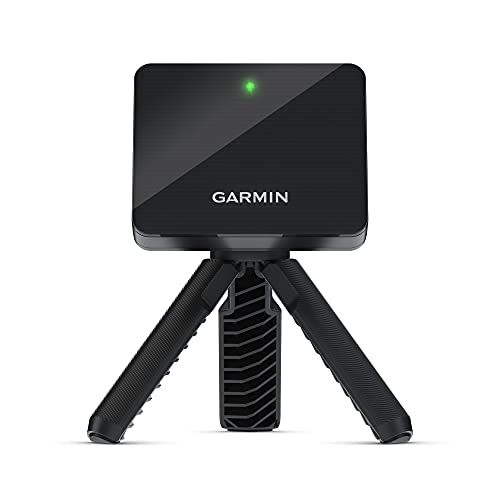
- Portable for home, indoor, and range use
- Tracks speed, spin, launch, and tempo
- Up to 10 hours of battery life
Best For: Versatile practice and swing analysis
Best for Detailed Data

- Captures 15 shot and swing metrics
- Combines Doppler radar with dual cameras
- Supports premium simulator course access
Best For: Data-focused practice and home simulation
Best Renewed Value
- Portable monitor for indoor or range use
- Works with Garmin Golf app metrics
- Includes stand, mount, case, and cable
Best For: R10 features at a renewed-product price
Best for iPhone Users

- Designed for iPhone and iPad
- Tracks speed, launch, carry, and shot shape
- Adds video replay with shot tracer
Best For: Simple portable feedback for iOS golfers
Best Budget Speed Trainer
PRGR HS 130-A Portable Launch Monitor

- Measures swing speed with or without a ball
- No app, calibration, or subscription required
- Stores up to 500 past swings
Best For: Affordable speed training and basic distance feedback
Best Premium Simulator
Garmin Approach R50 Golf Launch Monitor

- Uses a three-camera system for detailed metrics
- Built-in 10-inch touchscreen and impact videos
- Supports virtual golf with an active membership
Best For: Immersive practice and simulator sessions
Best for Game Improvement

- Includes one year of Core Foresight software
- Tracks detailed ball and club metrics
- Adds bag mapping and structured practice tools
Best For: Data-driven practice and swing improvement
Versatile Practice Pick

- Indoor and outdoor use with standard golf balls
- Built-in screen, voice output, and multiple training modes
- Includes 3D Driving Range and E6 Connect access
Best For: Portable practice, swing-speed training, and accessible simulator sessions
Advanced Indoor Simulator

- Tracks 19 real-time metrics with near-zero latency
- Compatible with GSPro, E6, TGC19, and Creative Golf 3D
- Requires a compatible PC or laptop for software and simulation
Best For: Dedicated indoor golf simulation and detailed swing analysis
Portable Radar Value

- Doppler radar with 9 on-device and 21-plus app metrics
- Standalone practice requires no subscription
- 4.3-inch display, 6-plus-hour battery, and IPX4 water resistance
Best For: Portable range, backyard, and indoor practice with simulator upgrade options
Best All-Around Pick – Garmin Approach R10
For golfers comparing golf launch monitors, the Garmin Approach R10 is a versatile portable option for home practice, indoor sessions, or the driving range. When paired with the Garmin Golf app, it tracks metrics such as ball speed, club head speed, spin, launch angle, and swing tempo.
Best For: Golfers who want portable practice feedback, swing video, and optional virtual rounds.
Pros:
- Supports indoor, home, and driving-range practice.
- Tracks a broad set of swing and ball metrics through the Garmin Golf app.
- Offers up to 10 hours of battery life and IPX7 water resistance.
- Includes a phone mount, tripod stand, and carrying case.
Cons:
- Requires a compatible smartphone and Garmin Golf app for metric tracking.
- Virtual rounds and global tournaments require an active subscription.
- Accuracy specifications include tolerances of up to ±3 mph for club head speed.
The Approach R10 stands out as a flexible training companion with useful analysis tools, automatic swing video, and long battery life. It is a strong choice if you want one monitor for practice in several locations.
Best for Detailed Data – Rapsodo MLM2PRO
The Rapsodo MLM2PRO is a feature-rich golf launch monitor for players who want extensive shot data and simulator features. Its Doppler radar and dual-camera setup capture 15 metrics, including spin rate, spin axis, carry distance, club speed, club path, and launch angle.
Best For: Golfers seeking detailed shot tracking, swing video, and home simulator practice.
Pros:
- Uses Doppler radar and dual cameras for shot tracking.
- Captures 15 key metrics for more detailed practice feedback.
- Includes swing capture and slow-motion impact analysis.
- Premium access includes more than 30,000 simulator courses.
Cons:
- Premium features require the included trial and an ongoing membership afterward.
- Its feature set may be more than casual golfers need.
- Simulator and app features depend on compatible devices and software.
With its extensive metric list and dual-camera training tools, the MLM2PRO is aimed at golfers who want deeper feedback than basic distance tracking. The included balls, tripod, and carrying case add to its practice-ready setup.
Best Renewed Value – Renewed Garmin Approach R10
The renewed Garmin Approach R10 brings the same compact practice concept to golfers shopping for a potentially lower-cost option among golf launch monitors. It works at home, indoors, or on the range and pairs with the Garmin Golf app for shot metrics, training data, and recorded swing clips.
Best For: Buyers who want Approach R10 functionality in a renewed package.
Pros:
- Supports home, indoor, and driving-range practice.
- Tracks metrics including ball speed, club head speed, spin, and launch angle.
- Includes a tripod stand, phone mount, carrying case, and cable.
- Provides up to 10 hours of battery life and IPX7 water resistance.
Cons:
- Renewed condition may be less predictable than buying new.
- The listed warranty is limited to 90 days.
- App-based metrics require a compatible smartphone.
This renewed R10 offers a broad set of Garmin practice features, including training mode, shot dispersion charts, and swing video. It is worth considering when the renewed condition and shorter warranty fit your buying priorities.
Best for iPhone Users – Rapsodo Mobile Launch Monitor
The original Rapsodo Mobile Launch Monitor is a compact golf launch monitor designed specifically for iPhone and iPad users. It provides shot-by-shot feedback on ball speed, club speed, launch angle, carry distance, and shot shape, with video replay and a shot tracer for practice review.
Best For: iPhone or iPad golfers who want straightforward range, backyard, or indoor-net feedback.
Pros:
- Provides core distance and launch metrics for each shot.
- Records swing video with an on-screen shot tracer.
- Portable design suits the range, backyard, or indoor net.
- Includes a carrying case and charging cord.
Cons:
- Compatible with iOS devices only.
- Simulator courses and game modes require premium access.
- Offers fewer listed metrics than the newer MLM2PRO.
For Apple-device owners who prioritize portability and clear shot feedback, this Rapsodo model keeps the setup simple. Its iOS limitation is important, but compatible users get useful numbers and video review in a lightweight package.
Best Budget Speed Trainer – PRGR HS 130-A Portable Launch Monitor
The PRGR HS 130-A is a compact golf launch monitor focused on practical swing-speed feedback. Its Doppler radar measures club speed with or without a ball, then calculates ball speed, smash factor, and estimated carry and total distance—without an app, calibration, Wi-Fi, Bluetooth, or subscription.
Best For: Golfers who want an affordable, portable monitor for speed training and basic distance feedback.
Pros:
- Measures club head speed without requiring a ball, making it useful for swing-speed drills.
- Tracks ball speed, smash factor, carry, and total distance for common clubs.
- Pocket-sized design, AAA-battery operation, and memory for up to 500 swings.
Cons:
- Does not provide the broader simulator features or detailed club metrics found on premium monitors.
- Its listed measuring range is 135 to 270 yards, which may limit some distance estimates.
The PRGR is a straightforward choice when portability and speed practice matter more than a full virtual-golf setup. It offers useful core numbers with very little setup, making it particularly practical for range, garage, or gym sessions.
Best Premium Simulator – Garmin Approach R50 Golf Launch Monitor
The Garmin Approach R50 is a premium golf launch monitor and simulator built around a three-camera system, a 10-inch touchscreen, and on-device practice features. It delivers advanced shot metrics, impact video, training tools, and optional virtual rounds for golfers who want an immersive indoor or range setup.
Best For: Golfers seeking an all-in-one launch monitor and simulator with a built-in display.
Pros:
- Provides ball speed, launch angle, spin, face-to-path, and other advanced measurements.
- Includes impact videos, club-by-club training statistics, and shot dispersion charts.
- Supports HDMI output, a carrying case, and up to four hours of battery life.
Cons:
- Virtual rounds and the Home Tee Hero course library require an active Garmin Golf membership.
- At 9 pounds, it is substantially less portable than compact launch monitors.
- Face-to-path tracking requires the included tracking sticker.
The R50 is aimed at golfers who want more than basic numbers. Its touchscreen, visual feedback, and simulator capabilities make it a strong centerpiece for practice, though the size, premium positioning, and subscription requirement for some features should factor into the purchase.
Best for Game Improvement – SkyTrak ST MAX Launch Monitor
The SkyTrak ST MAX is a golf launch monitor designed to pair detailed shot data with structured practice tools. It measures key ball and club metrics, includes one year of Core Foresight software, and adds features such as skills assessments, bag mapping, randomized practice, and a wedge matrix.
Best For: Golfers who want measurable practice plans and broad club-data analysis.
Pros:
- Measures carry and total distance, ball speed, spin, launch angle, club speed, and smash factor.
- Also tracks club path, face angle, and face-to-path for more detailed swing analysis.
- Includes one year of Core Foresight software and GOLFTEC-powered speed-training drills.
Cons:
- Its software benefits are tied to the included one-year Core Foresight period.
- The supplied notes do not specify a built-in screen, so an external compatible setup may be needed for viewing.
The ST MAX is a strong fit for golfers who want to turn launch-monitor numbers into organized training. Its combination of club and ball metrics, practice modes, and included software makes it more improvement-focused than a basic distance monitor.
Versatile Practice Pick – SC4 PRO Launch Monitor
The SC4 PRO is a practical choice among golf launch monitors for golfers who want portable indoor and outdoor practice without special balls or a monthly subscription. Its built-in screen, voice output, multiple training modes, and included 3D Driving Range and E6 Connect access make it suitable for quick feedback or more immersive sessions.
Best For: Golfers seeking a portable, easy-to-set-up monitor for practice, swing-speed training, and basic simulator play.
Pros:
- Tracks ball and club data for indoor and outdoor practice.
- Includes a built-in screen, voice output, and standard-ball compatibility.
- Offers practice, target, speed-training, and 3D simulator modes.
- Includes 3D Driving Range and E6 Connect access with no monthly subscription.
Cons:
- Advanced statistical analysis and additional app features require the VOICECADDIE S app.
- The included warranty is one year.
The SC4 PRO balances portability and simulator features well. It is especially appealing if you want straightforward feedback and flexible practice modes without building a more complex PC-based setup.
Advanced Indoor Simulator – Uneekor EYE MINI LITE
The Uneekor EYE MINI LITE is one of the more software-focused golf launch monitors for an indoor simulator. Its high-speed cameras and infrared sensors provide near-zero-latency tracking, while VIEW software supplies 19 real-time metrics and session reports. A PC or laptop is required, so plan for compatible hardware before buying.
Best For: Indoor golfers who want detailed club and ball analysis, third-party simulator compatibility, and structured progress tracking.
Pros:
- Provides 19 real-time metrics through the included VIEW Player Package.
- Uses Dimple Optix and Club Optix for ball and club-at-impact visuals.
- Works with GSPro, E6 Connect, TGC19, and Creative Golf 3D.
- Includes a three-month Ultimate Package trial with REFINE+ and GameDay modes.
Cons:
- Requires a PC or laptop with specified hardware for VIEW and simulation features.
- Third-party software requires a subscription.
- Some AI Trainer functionality requires the separately sold Swing Optix.
The EYE MINI LITE is best viewed as the foundation of a dedicated indoor setup rather than a standalone range device. Its strong compatibility and detailed reporting are valuable, but the computer and software requirements add cost and planning.
Portable Radar Value – Blue Tees Rainmaker
The Blue Tees Rainmaker is a flexible option among golf launch monitors for practice at the range, in the backyard, or indoors. Doppler radar provides immediate feedback, with nine metrics shown on the 4.3-inch display and more than 21 available in the app. Standalone practice does not require a subscription, while E6 and GSPro add simulator options.
Best For: Golfers who want a portable monitor with its own display, useful battery life, and both standalone practice and simulator compatibility.
Pros:
- Displays immediate shot feedback on a bright 4.3-inch color screen.
- Offers 21-plus metrics through the Blue Tees app and supports RCT golf balls.
- Provides three standalone training modes with no subscription required.
- Includes IPX4 water resistance, six-plus hours of battery life, and a carrying case.
Cons:
- Advanced metrics, 3D range features, and analytics require the app.
- E6 and GSPro simulation use may involve separate software requirements or costs.
Rainmaker stands out for golfers who prioritize portability and quick feedback. Its standalone operation is convenient for practice anywhere, while E6 and GSPro compatibility leaves room to expand into a home simulator.
How We Picked These Golf Launch Monitors
We focused on launch monitors that offer a meaningful combination of measurement accuracy, useful practice features, setup flexibility, and software compatibility. The selection includes simple radar units for range sessions, phone-connected models for casual practice, and premium systems designed for dedicated indoor simulator spaces.
We also considered whether each monitor works indoors, outdoors, or both; which metrics it measures; how easily it connects to a phone, tablet, or computer; and whether subscriptions, compatible balls, or additional software may affect the total cost.
Quick Comparison
| Best For | What to Prioritize | Typical Product Type |
|---|---|---|
| Practice on a budget | Core ball-flight metrics and simple setup | Portable radar monitor |
| Phone-based feedback | App compatibility and device support | Mobile launch monitor |
| Indoor simulation | Accuracy, low latency, and software options | Camera or premium radar system |
| Indoor and outdoor flexibility | Portability, battery life, and lighting tolerance | Dual-use monitor |
| Dedicated simulator room | Advanced metrics and platform compatibility | Premium launch monitor |
Key Buying Factors for Golf Launch Monitors
Accuracy and Measured Metrics
Decide which numbers you actually need. Basic units may provide club speed, ball speed, smash factor, carry distance, and total distance. More advanced systems can add launch angle, spin rate, spin axis, angle of attack, face angle, club path, and face-to-path data. Additional metrics are valuable only if you understand how to use them.
Indoor Setup and Space
Measure the distance from the ball to the monitor and from the ball to the impact screen or net. Radar units often need more room to track the full ball flight, while camera-based systems can work well in compact indoor spaces. Check minimum ceiling height, lighting requirements, and whether left- and right-handed players can use the same setup easily.
Software, Devices, and Subscriptions
Review supported phones, tablets, computers, and simulator platforms before buying. Some systems are limited to specific mobile operating systems, while others support platforms such as GSPro, E6, or TGC19. Account for annual software fees, premium courses, compatible balls, and any required adapters.
Portability and Power
If you practice at the range or move the monitor between rooms, weight, battery life, charging, and setup time matter. A compact monitor with a built-in battery is convenient, but a larger premium unit may provide better data and simulation features at the expense of portability.
Who Should Buy Which Golf Launch Monitors?
Choose a basic portable radar monitor if you mainly want quick distance and swing feedback without building a simulator. A phone-connected model suits golfers who prefer app-based coaching and easy session tracking. For frequent indoor practice, prioritize a monitor with reliable short-flight performance, low latency, and broad software support.
Golfers building a permanent simulator should consider a premium system with deeper club and ball data, strong compatibility, and dependable performance for multiple players. If you split time between the range and home, choose a dual-use model with solid battery life and a straightforward setup. Finally, verify device compatibility and recurring software costs before placing your order, since those details can matter as much as the monitor itself.