The best golf launch monitors for beginners make practice more useful by showing what happened after every swing. Instead of relying only on feel, you can track distances, club speed, ball speed, carry, and other feedback to build a more repeatable game.
We compared portable models for driving-range sessions, backyard practice, indoor setups, and full golf simulation. The right choice depends on your space, phone or tablet, preferred metrics, and how much technology you want to manage.
Best 10 Golf Launch Monitors for Beginners Picks for 2026
Best All-Around Pick
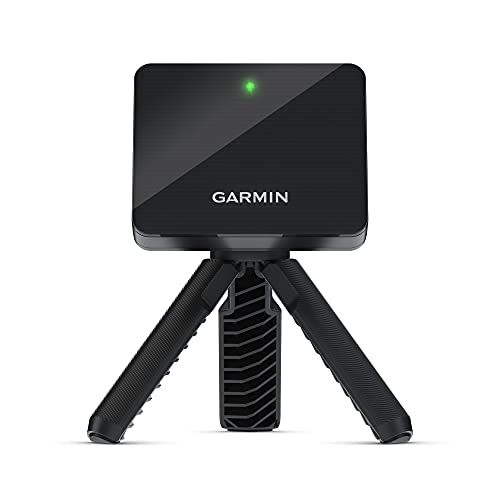
- Tracks speed, tempo, spin, launch, and more
- Supports indoor, home, and range practice
- Up to 10 hours of battery life
Best For: Beginners wanting detailed app-based practice feedback
Best No-Subscription Option

- Measures ball and club speed instantly
- Includes carry, total distance, and smash factor
- Free app includes lifetime session history
Best For: Beginners seeking simple feedback without subscription fees
Best for iPhone Users

- Provides shot data and carry-distance feedback
- Adds swing video with shot tracer
- Works indoors, outdoors, and at the range
Best For: iPhone or iPad users wanting visual swing feedback
Best Budget Speed Trainer

- Measures club speed with or without a ball
- Needs no app, Wi-Fi, Bluetooth, or subscription
- Stores up to 500 previous swings
Best For: Beginners prioritizing simple swing-speed training
Most Complete Training Data

- Dual radar and camera shot tracking
- Captures 15 performance metrics
- Includes simulator and swing-review tools
Best For: Beginners seeking detailed feedback and home-simulator features
Best Portable All-Rounder

- Tracks key metrics through the Garmin Golf app
- Offers up to 10 hours of battery life
- Supports training mode and virtual rounds
Best For: Beginners wanting flexible range, home, and app-based practice
Simplest Practice Companion

- Lightweight 3D Doppler radar monitor
- Tracks eight swing parameters
- Includes multiple practice challenges
Best For: Beginners wanting portable core data and simple practice tools
Best with Extra Features

- Indoor/outdoor tracking with standard balls
- 3D Driving Range and five free E6 courses
- Practice, target, simulator, and speed modes
Best For: Beginners wanting a versatile monitor for practice and simulation
Best for Speed Training
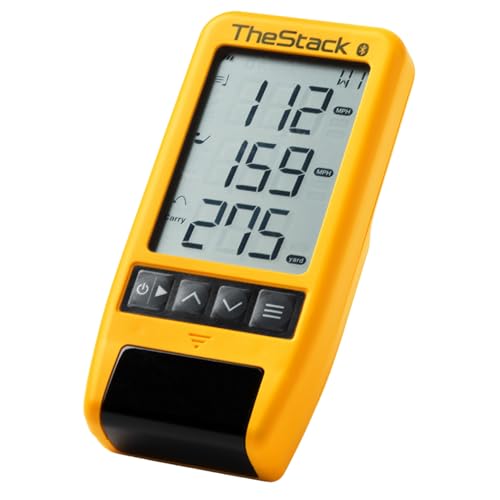
- Measures swing and ball speed
- Estimates carry distance and smash factor
- Bluetooth app support for structured training
Best For: Beginners focused on speed development and range practice
Best for Detailed Swing Data

- Tracks spin, launch, attack angle, and swing speed
- Environmental sensors adjust shot data
- 3D practice with broad smartphone support
Best For: Beginners seeking deeper swing analysis without a subscription
Best All-Around Pick – Garmin Approach R10
For golfers comparing golf launch monitors for beginners, the Garmin Approach R10 is a versatile choice for home practice, indoor nets, and the driving range. It tracks a broad set of metrics through the Garmin Golf app, including ball speed, club head speed, swing tempo, spin, and launch data.
Best For: Beginners who want detailed practice feedback, swing video, and optional virtual golf features.
Pros:
- Works indoors, at home, or on the driving range.
- Tracks numerous swing and ball metrics with the Garmin Golf app.
- Offers swing video clips, training mode, and shot-dispersion analysis.
- Provides up to 10 hours of battery life and includes a phone mount.
Cons:
- Many features require a compatible smartphone and Garmin Golf app.
- Virtual rounds and tournaments require an active subscription.
- It does not have a built-in touchscreen display.
The R10 stands out when you want a portable beginner monitor that can grow with your practice routine. Its app-based setup delivers more analysis than a basic speed monitor, though the richest virtual-golf features add an ongoing subscription requirement.
Best No-Subscription Option – Shot Scope LM1
The Shot Scope LM1 is a straightforward option for golfers shopping for golf launch monitors for beginners. It provides immediate ball speed, club speed, smash factor, carry distance, and total distance readings, then stores session history in a free golf GPS app with no subscription fees.
Best For: Beginners who want essential distance and speed feedback without recurring app costs.
Pros:
- Displays ball speed, club speed, and smash factor in real time.
- Measures both carry and total distance.
- Includes on-course, practice-range, and speed-training modes.
- Offers lifetime session history in the free app with no subscription required.
Cons:
- Its listed battery life is 5+ hours, shorter than some alternatives.
- IPX3 weather resistance is intended for rain-ready use, not full waterproofing.
- The supplied features focus on core speed and distance data rather than swing video or launch-angle analysis.
For beginners, the LM1 keeps the learning curve manageable by focusing on useful performance numbers. Its free app and flexible training modes make it especially practical for golfers who want repeatable feedback without a subscription.
Best for iPhone Users – Rapsodo Mobile Launch Monitor
The Rapsodo Mobile Launch Monitor is a convenient pick among golf launch monitors for beginners who already use an iPhone or iPad. It delivers shot-by-shot feedback at the range, in a backyard, or with an indoor net, while the app adds video replay and a shot tracer for easier swing review.
Best For: iPhone and iPad users who want portable practice feedback with video and shot-tracer features.
Pros:
- Reports ball speed, club speed, launch angle, carry distance, and shot shape.
- Records swing video with an on-screen shot tracer.
- Works at the driving range, in a backyard, or with an indoor net.
- Lightweight design includes a carrying case and charging cord.
Cons:
- Compatibility is limited to iPhone and iPad devices.
- Premium features are needed for simulator courses and game modes.
- It requires the Rapsodo app and a compatible smartphone or tablet.
The MLM is a strong beginner-friendly choice when visual feedback matters as much as the numbers. Its iOS-only design is a clear limitation, but supported users get an approachable combination of shot data, video, and tracer playback.
Best Budget Speed Trainer – PRGR HS 130-A
The PRGR HS 130-A is a compact, uncomplicated option for golfers evaluating golf launch monitors for beginners. Its Doppler radar measures club speed with or without a ball, calculates ball speed and smash factor, and estimates carry and total distance without requiring an app, Wi-Fi, Bluetooth, or subscription.
Best For: Beginners focused on swing-speed training and essential distance numbers at home, the range, or the gym.
Pros:
- Measures club-head speed even when no ball is struck.
- Calculates ball speed, smash factor, carry distance, and total distance.
- Requires no app, wireless connection, calibration, or subscription.
- Stores up to 500 past swings and runs on AAA batteries.
Cons:
- It does not provide the broader app-based analysis found on more feature-rich monitors.
- It uses AAA batteries rather than a rechargeable battery.
- Its listed measuring range is 135–270 yards.
The PRGR makes a sensible starting point for beginners who primarily want to understand and train swing speed. Its pocket-sized, no-app design keeps operation simple, while the ability to measure swings without a ball adds useful flexibility for dedicated speed training.
Most Complete Training Data – Rapsodo MLM2PRO
For beginners comparing golf launch monitors, the Rapsodo MLM2PRO stands out for combining dual-shot tracking with a broad set of practice tools. It captures 15 metrics, including carry distance, spin rate, club speed, club path, and launch angle, while its camera features can help you review your swing and ball contact.
Best For: Beginners who want detailed feedback, video-based swing review, and a path toward home simulator practice.
Pros:
- Dual Doppler radar and camera setup for shot tracking.
- Captures 15 key club and ball metrics.
- Includes a 21-day Premium/Core trial and access to more than 30,000 courses with Premium.
- Slow-motion impact and swing views support technique review.
Cons:
- Some simulator and course features require Premium access.
- Its extensive data may be more than a beginner needs at first.
The MLM2PRO is a strong choice if you want one device to support range sessions, indoor practice, and longer-term swing analysis. Its feature set is especially appealing for beginners who expect to keep using structured feedback as their game develops.
Best Portable All-Rounder – Garmin Approach R10
The Garmin Approach R10 is a practical option for beginners shopping for golf launch monitors that can move from the driving range to home practice. When paired with the Garmin Golf app and a compatible smartphone, it tracks metrics such as club head speed, ball speed, swing tempo, spin, and launch angle.
Best For: Beginners who want portable practice feedback, swing video, and optional virtual rounds.
Pros:
- Portable design works at home, indoors, or on the driving range.
- Up to 10 hours of battery life.
- Training mode provides club statistics and a shot-dispersion chart.
- Supports virtual rounds on more than 42,000 courses with an active subscription.
Cons:
- Requires a compatible smartphone and Garmin Golf app for metrics and video features.
- Virtual rounds require an active subscription.
The R10 offers a beginner-friendly balance of portability, practice data, and entertainment. Its included power bank adds convenience for longer sessions, while the app-based setup gives you room to explore more advanced features over time.
Simplest Practice Companion – FlightScope Mevo
The FlightScope Mevo is a compact entry point for beginners looking for golf launch monitors focused on straightforward practice feedback. Its 3D Doppler radar tracks eight full-swing parameters, including direct spin measurements, and it can be used at home, on the range, or on the course.
Best For: Beginners who want a lightweight monitor for basic shot feedback and practice challenges.
Pros:
- Very lightweight and portable at 1.76 ounces.
- Tracks eight full-swing performance parameters.
- Includes direct spin measurements.
- Offers PGA and LPGA challenges, long-drive competition, and range competition.
Cons:
- Provides fewer listed metrics than the MLM2PRO and Approach R10.
- The supplied notes do not specify battery life or included accessories.
Mevo keeps the focus on portability and purposeful practice rather than a large feature set. It is a sensible fit for beginners who want core swing data and built-in challenges without starting with a more elaborate simulator-oriented system.
Best with Extra Features – SC4 PRO Launch Monitor
For beginners seeking golf launch monitors for beginners, the SC4 PRO combines straightforward setup with practice data and simulator features. It works indoors or outdoors with standard golf balls, includes a built-in screen and voice output, and requires no monthly subscription.
Best For: Beginners who want one portable device for shot tracking, swing-speed practice, and home simulator sessions.
Pros:
- Tracks ball and club-head data for indoor and outdoor practice.
- Includes a 3D Driving Range and five free E6 courses.
- Offers practice, target, simulator, and speed-training modes.
- Uses standard golf balls and has a user-friendly setup.
Cons:
- Advanced statistical analysis and distance calibration require the companion app.
- Its broader simulator feature set may be more than beginners need for basic range practice.
The SC4 PRO is a versatile starting point for golfers who want an accessible launch monitor that can grow from simple practice sessions into more immersive simulator training.
Best for Speed Training – TheStack Radar
TheStack Radar is a compact option among golf launch monitors for beginners who want to focus on swing-speed development. It measures swing speed and ball speed, estimates carry distance and smash factor, and sends training data to TheStack app over Bluetooth.
Best For: Beginners prioritizing swing-speed training, portable range practice, and simple performance measurements.
Pros:
- Measures swing speed, ball speed, estimated carry distance, and smash factor.
- Connects directly to TheStack app on iOS and Android for speed training.
- Includes access to gamified wedge practice and bonus putting sessions on iOS.
- Compact and lightweight for taking to the range or course.
Cons:
- Wedge mode and putting access are limited to iOS devices.
- It focuses on speed and estimated distance rather than a broader simulator feature set.
Choose this radar if you want a small, focused training tool rather than a full home simulator. Its app connection makes structured speed practice easier to follow.
Best for Detailed Swing Data – Pro X1 Plus Launch Monitor
The Pro X1 Plus gives beginners exploring golf launch monitors for beginners a wider set of swing metrics through a smartphone-based experience. It supports indoor and outdoor practice, includes environmental sensors, and offers up to 10 hours of battery life with no subscription.
Best For: Beginners who want detailed swing analysis, environmental adjustments, and 3D practice at home or on the range.
Pros:
- Provides metrics including spin rate, spin axis, attack angle, launch angle, and swing speed.
- Environmental sensors adjust shot data for temperature, humidity, and barometric pressure.
- Offers impact visuals, swing-only mode, and 3D viewing angles.
- Supports iOS, Android, and HarmonyOS with no subscription.
Cons:
- Uses a smartphone for the simulator and smart-app experience.
- The wider range of metrics may require more time for beginners to interpret.
The Pro X1 Plus is a strong choice when basic distance feedback is not enough. Its expanded metrics and environmental sensing can help motivated beginners study swing consistency over time.
How We Picked the Best Golf Launch Monitors for Beginners
We focused on launch monitors that balance useful feedback with beginner-friendly setup. Our comparison considered measurement capabilities, portability, indoor and outdoor performance, app or display requirements, battery life, simulator features, and the clarity of the information provided after each shot.
Because beginner needs vary, the list includes simple radar devices for distance feedback, mobile systems that use a phone or tablet, and more advanced models for structured practice or home simulation. We also considered whether each monitor can grow with your skills instead of becoming obsolete after a few sessions.
Quick Comparison
| What to Compare | Best For |
|---|---|
| Basic club and ball data | Golfers who want straightforward practice feedback |
| Phone or tablet integration | Players who want video, shot history, and visual analysis |
| Indoor simulation | Golfers with a net, mat, and adequate room |
| Outdoor portability | Driving-range and backyard practice |
| Advanced training metrics | Players ready to work on speed, gapping, and consistency |
Key Buying Factors for Golf Launch Monitors for Beginners
Accuracy and Useful Metrics
Look for the measurements that match your goals. Carry distance, total distance, ball speed, club speed, launch angle, and smash factor are more useful than an overwhelming list of numbers. Beginners should prioritize consistent, understandable feedback over professional-level complexity.
Indoor Space and Setup
Indoor use requires enough room for a safe swing, a suitable hitting area, and a net or simulator screen. Check the manufacturer’s placement requirements before buying. Some units need a phone or tablet, while others provide readings directly on the device.
Apps, Compatibility, and Extra Costs
Review supported iOS or Android devices and confirm whether important features require a subscription. Simulator libraries, practice modes, video recording, and shot storage can add value, but recurring fees may affect the long-term cost.
Portability and Battery Life
A compact monitor is easier to bring to the range or move between rooms. Battery life matters for extended practice, while simple controls reduce setup time and make spontaneous sessions more likely.
Who Should Buy Which Golf Launch Monitors for Beginners?
Choose a basic portable radar monitor if you mainly want reliable distance and speed feedback without building a simulator. A phone-connected model is a better fit if you value video, shot history, and app-based coaching. Golfers planning indoor simulation should choose a device with compatible software, adequate measurement space, and a clear upgrade path.
For structured improvement, prioritize monitors that track multiple club and ball metrics. If you are still learning your distances, start with the simplest model that provides carry feedback and encourages regular practice. The best Golf Launch Monitors for Beginners are the ones you will set up often, understand quickly, and use consistently.