Choosing the right adaptive eating cup can make daily hydration safer, cleaner, and more comfortable for seniors, adults with limited mobility, and people managing swallowing challenges.
In this roundup, we focus on practical designs that reduce spills, support easier gripping, and help preserve independence at mealtime.
Best 10 Adaptive Eating Cup Picks for 2026
Adult Care 3-in-1 Cup
Adult Sippy Cup for Elderly with 2 Lids

- 3-in-1 drinking support with two lids
- Gravity-ball straw helps when lying down
- Stainless steel, wide handle, spill-resistant
Best For: Seniors and adults needing assisted drinking support
Dysphagia Flow-Control Cup

- Two inserts control sip size from 5cc to 15cc
- No sucking required for easier drinking
- Rotating nozzle helps reduce spills while lying down
Best For: Adults with swallowing difficulties needing controlled hydration
Spill-Proof Independence Pick
Adult Sippy Cup Set for Elderly Users
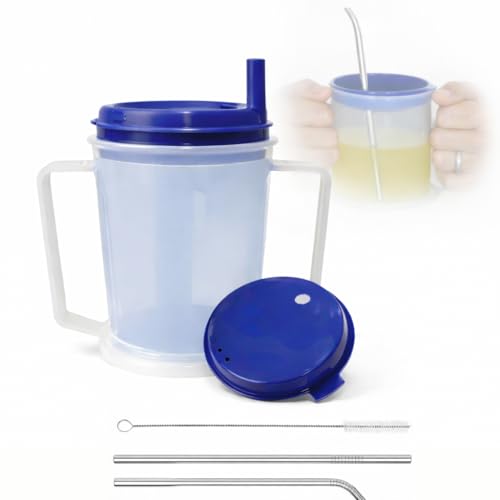
- Two ergonomic handles improve stability.
- Spout and straw lid options add flexibility.
- Dishwasher safe, BPA-free, and lead-free.
Best For: Elderly or disabled adults who need a more secure, nearly spill-proof cup.
Grip-Support Choice
Hand-In Mug Adaptive Drinking Cup

- Internal hand slot improves grip stability.
- Spill-resistant lid adds everyday protection.
- 16-ounce cup for cold drinks and rehab use.
Best For: Adults with tremors or limited grasp strength who need a secure drinking cup.
Versatile 3-in-1 Pick
Spill Proof Senior Cup with Handles
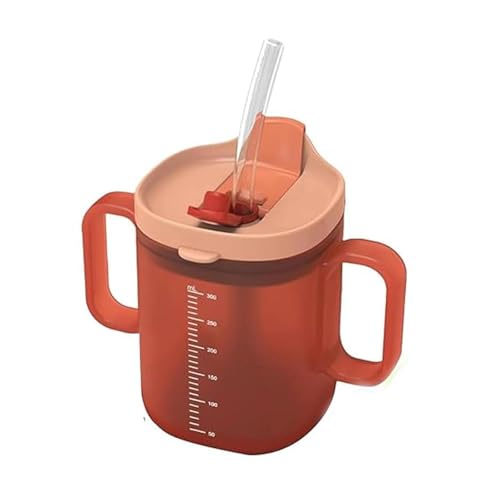
- Three drinking options in one adaptive cup.
- Two handles help with control and stability.
- BPA-free and dishwasher safe design.
Best For: Users who want a compact handled cup with multiple drinking styles.
Stable Self-Feeding Set
Hushee 3 Sets Blue Scoop Bowl & Plate

- 3 plates and 3 bowls included
- High-low edges help one-handed scooping
- Suction base adds tabletop stability
Best For: People who need spill-reducing dinnerware for easier self-feeding
Suction-Base Mealtime Aid
Hushee Red Scoop Bowl & Plate Set
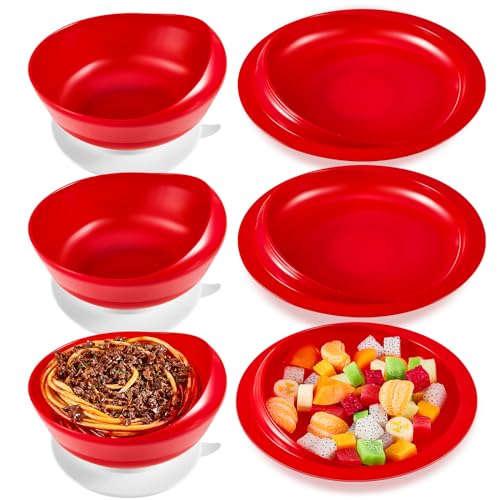
- 3 bowls and 3 plates included
- High-low edges support easier scooping
- Suction base helps reduce sliding
Best For: Users and caregivers needing stable, spill-reducing mealtime dishes
Adult Care 3-in-1 Cup – Adult Sippy Cup for Elderly with 2 Lids
If you’re comparing an adaptive eating cup for daily hydration support, this 13.5 oz stainless steel option is built to handle several drinking situations with one setup. It can work as a straw cup, feeding cup, or standard drinking cup, and the gravity-ball straw is designed to help users sip from different angles, including when lying down.
Best For: Seniors, bedridden adults, disabled users, and caregivers who want one cup that supports assisted drinking in bed, wheelchairs, or recovery settings.
Pros:
- 3-in-1 design with 2 interchangeable lids for straw, feeding, or everyday use
- Gravity-ball straw supports sipping when lying down or at varying angles
- Stainless steel body is reusable and made for daily wear resistance
- Wide handle and stable body help users with weak grip or shaky hands
Cons:
- Hand wash only, so it is not a low-maintenance dishwasher option
- Not intended for children
Overall, this is a practical adaptive eating cup for caregivers who want spill-resistant drinking support with flexible lid options. Its emphasis on assisted care makes it especially useful for recovery or mobility-limited routines.
Spillproof Classic 3-Pack – Providence Kennedy Cups
This adaptive eating cup is a simple spill-reducing choice for adults who need help drinking with less mess. The 7 oz size is practical for everyday beverages, and the design is meant to support warm or cold drinks, soups, and smoothies in home care settings.
Best For: Adults, seniors, and caregivers looking for a small, spill-resistant cup for daily use at home.
Pros:
- Pack of 3 gives you multiples for home or caregiving routines
- Nearly spill-proof design helps reduce accidents during drinking
- 7 oz capacity is convenient for beverages and soft drinks like soups or smoothies
- Dishwasher safe and latex-free for easier cleaning
Cons:
- Plastic construction may not suit buyers looking for insulated or metal cups
- 7 oz capacity is smaller than many standard mugs
For users who want a straightforward spillproof cup without extra complexity, this is a practical and familiar option. The multi-pack format also makes it easier to keep a cup available in different rooms or care settings.
Dysphagia Flow-Control Cup – Regulating Cup for Safe Sips
When the goal is safe, controlled hydration, this adaptive eating cup is designed specifically for adults with swallowing difficulties. It uses interchangeable inserts to limit per-sip volume, and the rotating silicone nozzle helps direct liquid into the mouth without requiring a traditional sucking motion.
Best For: Adults with dysphagia, Parkinson’s, or dementia who need carefully controlled liquid flow under caregiver supervision.
Pros:
- Adjustable sip control with 5cc-10cc and 10cc-15cc inserts
- No sucking required, which helps users with weak or absent suction reflexes
- 90° rotating silicone nozzle supports spill-free, directed drinking
- Dishwasher safe and suitable for home or nursing home use
Cons:
- Not suitable for thickened liquids
- Specifically not a traditional sippy cup
- Requires tilting to drink, so it may not fit every user preference
This is a specialized cup for swallowing support, not a general-purpose tumbler. If you need measured, low-volume liquid delivery, its design is clearly focused on that job.
Insulated Grip Mug Pair – Rehabilitation Advantage Adaptive Mugs
If you want an adaptive eating cup for hot or cold drinks, this 2-pack focuses on comfort and simple spill control. The insulated plastic mugs use snorkel lids that regulate flow when the opening is covered, while the extended handles are meant to help people with weak grip strength or limited hand mobility.
Best For: Seniors, rehab patients, and caregivers who need lightweight mugs with easy-grip handles for daily sipping.
Pros:
- 2-pack format is convenient for home, work, or shared care settings
- Insulated design helps maintain drink temperature
- Spill-resistant snorkel lids can help reduce mess from shaky hands
- Large handles support arthritis, weak grip, or limited mobility
Cons:
- Hand wash only, despite being described as top-rack dishwasher safe in the notes
- Not recommended for microwave use
This mug set is a good fit if you want a lightweight, easy-to-hold option for everyday drinks. Its combination of insulation and handle support makes it especially useful in therapy or assisted-living environments.
Spill-Proof Independence Pick – Adult Sippy Cup Set for Elderly Users
If you need an adaptive eating cup that prioritizes stability and easier drinking, this adult sippy cup set is built for daily use with reduced spill risk. The two-handle design, wide base, and interchangeable lid options make it a practical choice for elderly users, disabled adults, and anyone who needs a more secure cup for drinks, soups, or smoothies.
Best For: Elderly, disabled, or bedbound adults who want a more stable, nearly spill-proof drinking cup with handle support.
Pros:
- Two ergonomic handles and a wide base help improve grip and stability.
- Includes two lid styles: a spouted lid and an anti-splash straw option.
- Suitable for warm or cold beverages, including soups and smoothies.
- Dishwasher safe and made from BPA-free, lead-free materials.
Cons:
- Designed as a large-capacity set, which may be more than some users need.
- Plastic construction may not suit buyers looking for a metal or glass cup.
This set focuses on helping users drink more independently while reducing mess. It is a strong fit when spill control, stability, and versatile lid choices matter more than a standard mug shape.
Grip-Support Choice – Hand-In Mug Adaptive Drinking Cup
This adaptive eating cup is designed for users who need a more secure way to hold a drink with limited grasp strength or hand control. The internal hand slot creates a stable grip, while the spill-resistant lid adds extra confidence for everyday use in home or rehab settings.
Best For: Adults with tremors, arthritis, spasticity, or limited hand control who need a secure one-cup drinking option.
Pros:
- Internal hand slot supports a stable, secure grip.
- Spill-resistant lid helps reduce accidental messes.
- 16-ounce capacity is practical for daily cold drinks.
- Top-rack dishwasher-safe construction supports easier cleanup.
Cons:
- Intended for cold beverages only.
- Hand wash only is listed in the product care instructions.
Compared with a standard cup, this model puts grip support first. It makes sense for users who need a straightforward adaptive cup for rehabilitation or assisted daily drinking.
Versatile 3-in-1 Pick – Spill Proof Senior Cup with Handles
For buyers comparing an adaptive eating cup with more drink-style flexibility, this 3-in-1 design covers several common needs in one cup. The spill-proof lid system, two handles, and moderate 10.2-ounce size make it useful for seniors, patients, and anyone who needs steadier drinking support without a bulky cup.
Best For: Seniors, disabled adults, and post-surgery users who want a compact adaptive cup with multiple drinking options.
Pros:
- 3-in-1 design includes straw, spill-proof duckbill, and wide-mouth options.
- Two wide handles improve control for weaker hands and wrists.
- 10.2-ounce size is manageable while still holding a useful amount of liquid.
- BPA-free and dishwasher safe for easier care.
Cons:
- The listed capacity is smaller than some other adaptive cups.
- Best suited to users who want handled cup support rather than a minimalist mug.
This is a practical pick when you want one cup that can adapt to different drinking needs. It stands out for flexibility, especially for users who may switch between straw use and open-cup sipping.
Stable Self-Feeding Set – Hushee 3 Sets Blue Scoop Bowl & Plate
If you need an adaptive eating cup alternative for mealtimes, this Hushee set is really about reducing spills and making self-feeding easier. The high-low edges and suction base are designed to help people with tremors, limited grip, or one-handed use manage meals with more control.
Best For: Seniors, disabled users, or Parkinson’s patients who need stable, spill-reducing plates and bowls for daily meals.
Pros:
- Includes 3 plates and 3 bowls, so you have extras for rotation or sharing
- High-low edge design supports one-handed scooping with less spilling
- Suction base helps keep the bowl and plate in place during use
- Microwave, refrigerator, and dishwasher safe when the suction base is removed
Cons:
- Does not include an actual drinking cup or lid
- Suction base must be removed before using in microwave, dishwasher, or refrigerator
- Made of plastic, which may not suit buyers looking for a heavier-feeling option
This is a practical choice if the main goal is steadier eating rather than drinking. The set focuses on reducing mess and improving independence at the table.
Spill-Resistant Drinking Cup – Adult Sippy Cup with 2 Handles, 10.2oz
This adaptive eating cup is built for safer drinking when grip strength or coordination is limited. Its spill-proof lid and straw system, plus dual handles, make it easier to hold, tip, and sip with less mess.
Best For: Adults and seniors who want a controlled drinking cup for water, juice, soup, or nutrition drinks.
Pros:
- Spill-proof lid and straw system releases liquid only when sucked
- Two handles provide a steadier, more ergonomic grip
- 3-in-1 design offers straw, duckbill, and wide-mouth options
- Dishwasher safe and made from BPA-free materials
Cons:
- Capacity is modest at about 10.2 oz, so refills may be needed
- Designed more for assisted drinking than standard open-cup use
- Plastic-and-silicone build may not appeal to everyone
For users who need a practical, spill-resistant cup, this model covers the basics well. The handle layout and flexible lid options make it a versatile everyday drinking aid.
Suction-Base Mealtime Aid – Hushee Red Scoop Bowl & Plate Set
For buyers comparing adaptive eating cup alternatives, this Hushee set is focused on helping people eat with less spilling and more independence. The high-low edge design and suction base are meant to support one-handed use, which can be helpful for people with tremors or limited mobility.
Best For: Caregivers and users who want stable, easy-to-use plates and bowls for everyday meals.
Pros:
- Comes with 3 plates and 3 bowls for repeated daily use
- High-low edge design helps guide food onto utensils with less mess
- Suction base helps keep dinnerware anchored during meals
- Safe for dishwasher, microwave, and refrigerator use when the base is removed
Cons:
- Does not function as a drinking cup
- Suction base has to be removed before machine use
- Plastic construction may be less durable-feeling than heavier materials
This is a straightforward adaptive dining set that prioritizes stability and easier self-feeding. If the goal is less cleanup and more confidence at mealtime, it does the job without extra complexity.
How We Picked the Best Adaptive Eating Cup
We looked for an Adaptive Eating Cup that balances spill resistance, ease of use, and comfort in the hand. Priority factors included lid style, stability, grip design, capacity, and whether the cup suits different needs such as tremors, low hand strength, or swallowing support.
We also favored options that are easy to clean, durable enough for daily use, and flexible enough for home care, rehab, or long-term support settings.
Quick Comparison
Some cups are better for controlled sipping and spill prevention, while others emphasize easy gripping or insulated construction. A few products in this roundup are built for users who need a straw, a no-spill lid, or a more traditional mug shape. If you want the safest all-around choice, focus on the lid mechanism and how securely the cup sits in the hand.
Key Buying Factors for an Adaptive Eating Cup
Spill Control
Look at how the lid works. Gravity-ball lids, regulated flow lids, and straw-compatible lids each serve different needs. If the user tips the cup often or drinks while reclined, stronger spill control matters more than style.
Grip and Stability
Easy-grip handles, wider bases, and textured surfaces can make a big difference for users with arthritis, tremors, or weak hand strength. A stable cup is easier to hold, lift, and set down safely.
Swallowing Support
For users with dysphagia or other swallowing difficulties, slower flow and controlled sipping are important. Choose a design that supports small, manageable sips rather than fast pouring.
Capacity and Weight
Larger cups reduce refills, but they can feel heavy when full. Smaller cups are often easier to manage for people with limited strength or coordination.
Material and Cleaning
Stainless steel, insulated plastic, and dishwasher-safe parts each offer different advantages. Consider temperature retention, durability, and how easy the cup is to disassemble and wash.
Who Should Buy Which Adaptive Eating Cup?
If spill prevention is the top priority, choose a cup with a secure no-spill lid and controlled flow. If comfort and independence matter most, pick a model with handles and a shape that feels natural to hold. For care settings, an Adaptive Eating Cup with simple cleaning and reliable construction is usually the most practical choice.
Users with swallowing issues should look for the most controlled drinking design available, while caregivers may prefer a versatile option that works for both supervised use and everyday hydration. The best choice is the one that matches the user’s strength, mobility, and drinking habits—not just the lowest price.