Choosing the right patient transfer chair can make daily care safer, less stressful, and more efficient for both the user and the caregiver.
Below, we focus on practical options for home use, covering lifting style, portability, comfort, and transfer versatility so you can match the chair to real-world needs.
Best 10 Patient Transfer Chair Picks for 2026
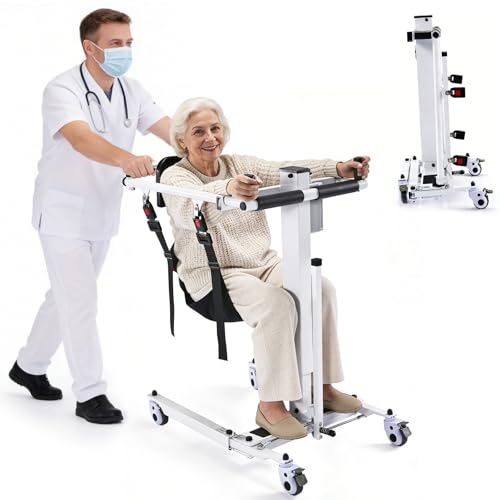
Active Sit-to-Stand Lift
VOCIC One-Step Stand Assist Lift

- 400 lb steel frame with dual-lock brakes
- Padded grips, shin pads, and split-seat cushions
- Open design for users who can support their own core
Best For: Users who can assist their own stand and need short-distance transfer help
Powered Home Transfer Chair
Electric Height Adjustment Lift

- Powered height adjustment for bed, sofa, toilet, and car transfers
- Steel frame with locking swivel casters and supportive sling
- Foldable design with IPX54 splash resistance
Best For: Caregiver-assisted home transfers with powered lifting support
Multi-Use Patient Transfer Chair

- Two cushion options, including a toilet-use hole cushion
- Universal wheels with brakes for positioning control
- Works as a commode, bathroom chair, lift, or wheelchair
Best For: Households needing one versatile chair for several care tasks
Manual Home Transfer Support
Manual Patient Lift Chair for Seniors

- Hand-crank height adjustment
- Fabric sling seat for transfers
- Locking casters for indoor stability
Best For: Caregiver-assisted indoor transfers between common home surfaces
Powered Wet-Room Option
Electric Patient Lift Transfer Chair
- One-touch electric lift system
- Waterproof for shower and commode use
- Foldable frame with lockable wheels
Best For: Powered home care transfers that include bathroom and shower tasks
Heavy-Duty 4-in-1 Choice
Ceridwen Hydraulic Transfer Chair
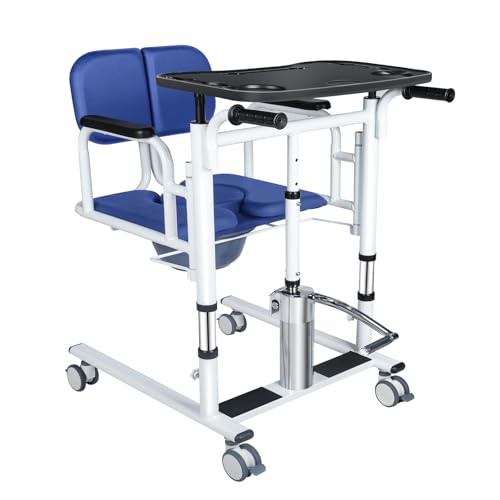
- 4-in-1 transfer, shower, commode, rest
- Hydraulic foot pedal height adjustment
- 440 lb capacity for heavier users
Best For: Multi-use home care where strength and versatility matter
Heavy-Duty Hydraulic Choice
Alloy Patient Lift Transfer Chair for 300 lb Support

- 300 lb capacity with alloy frame
- 32"-40" hydraulic height range
- 360° swivel seat with locking wheels
Best For: Caregiver-assisted indoor transfers with compact-surface compatibility
Multi-Function Bariatric Pick
5-in-1 Patient Lift Transfer Chair

- Up to 440 lb capacity
- 5-in-1 transfer and commode design
- Four locking swivel casters
Best For: Heavier users needing a versatile transfer and commode solution
Comfort-Focused 6-in-1 Option
Hydraulic Patient Lift Nursing Chair
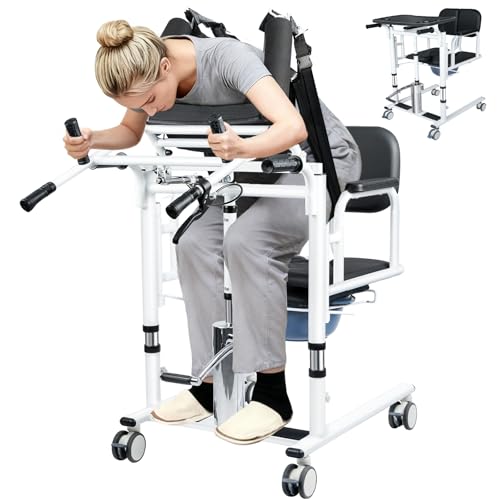
- 6-in-1 daily care design
- 440 lb capacity with alloy frame
- PU leather seat with thick sponge padding
Best For: Comfort-first home caregivers needing a versatile indoor transfer chair
Active Sit-to-Stand Lift – VOCIC One-Step Stand Assist Lift
This patient transfer chair is built for users who can sit up and support their own upper body during assisted standing and short-distance movement. The open-design frame, padded contact points, and locking casters make it a practical aid for caregiver-supported transfers at home.
Best For: Seniors who need help standing and moving short distances while still maintaining core control.
Pros:
- 400 lb capacity with reinforced steel construction
- Soft foam handgrips, padded shin supports, and split-seat cushions for comfort
- Dual-lock braking system helps keep the chair stable during positioning
- Low-profile base and adjustable knee pad for easier setup
Cons:
- Does not include or support a safety belt restraint
- Not intended for completely immobile or paralyzed patients
- Requires the user to be able to sit upright and support their own core
For the right user, this stand-assist style patient transfer chair offers a strong mix of stability, comfort, and straightforward mobility support. It is best viewed as an active transfer aid rather than a full passive lift.
Powered Home Transfer Chair – Electric Height Adjustment Lift
This electric patient transfer chair is designed for caregiver-assisted home transfers between a bed, sofa, toilet area, and suitable vehicle seat. The powered height adjustment and locking casters are meant to reduce repeated manual lifting while keeping transfers controlled.
Best For: Home caregivers who want powered height adjustment for short-distance seated transfers.
Pros:
- Electric up-stop-down control for easier height positioning
- Steel frame with supportive backrest, seat sling, and locking swivel casters
- Foldable frame helps with storage and transport planning
- IPX54 splash resistance for bathroom transfer routines when used as directed
Cons:
- 300 lb maximum weight limit
- Assembly is required
- Needs careful fit checks for doorway, toilet, under-bed, and vehicle clearance
As a patient transfer chair for home use, this model focuses on practical powered assistance rather than compact portability alone. It makes the most sense when you have the space, the clearance, and a caregiver ready to supervise each transfer.
Multi-Use Patient Transfer Chair – C100 Senior Care Chair
This patient transfer chair is built as a flexible care aid for toilet use, bathing, and seated movement around the home. With two cushion options and universal wheels with brakes, it aims to cover several daily caregiving tasks in one device.
Best For: Families who want a multifunction chair for commode, bathroom, and transfer use.
Pros:
- Includes two cushion styles, including a hole cushion for toilet use
- Universal wheels with brakes for easier positioning and mobility control
- Functions as a bedside commode, bathroom chair, patient lift, or wheelchair
- Steel tubing frame with padded backrest and seat cushion
Cons:
- 220 lb weight capacity is lower than some heavier-duty options
- Crank-based height adjustment may be slower than powered models
- Iron frame and basic build are more utilitarian than premium
If you want one patient transfer chair to handle several routine care situations, this model stands out for versatility. It is especially useful when toilet access, bathing, and seated transfers all need to be covered by the same chair.
Expandable 3-in-1 Transfer Chair – Portable Chair-to-Car Lift Device
This patient transfer chair is designed for flexible transfers in tight spaces, with a seat that widens on demand and a hand crank for height changes. It is meant to handle transfers between beds, wheelchairs, toilets, and vehicles while keeping the setup adaptable.
Best For: Caregivers who need a versatile transfer chair that can widen for toileting and narrow for doorways.
Pros:
- Foot pedal expands seat width from 22.8 to 34.6 inches with the user seated
- Manual height adjustment from 37 to 50.8 inches
- Two cushions included: firm foam seat and open commode cushion
- Locking casters and soft non-slip hand grips improve control
Cons:
- 275 lb maximum weight capacity
- Manual crank and mechanical setup require more effort than powered models
- Best suited to caregiver-assisted transfers rather than solo use
For homes that need one chair to do more than one job, this patient transfer chair offers a practical 3-in-1 layout. The ability to widen for toileting and narrow for tight spaces makes it especially useful in everyday care routines.
Manual Home Transfer Support – Manual Patient Lift Chair for Seniors
If you need a patient transfer chair for routine indoor caregiving, this manual model focuses on making bed, sofa, and toilet moves more controlled. The hand-crank lift adjusts height to better match real furniture, while the fabric sling seat and locking casters help keep transfers steadier in tight home spaces.
Best For: Caregiver-assisted home transfers between bed, chair, sofa, and toilet.
Pros:
- Manual hand-crank height adjustment helps match different furniture heights.
- Fabric sling seat is designed for softer, caregiver-assisted transfers.
- Locking casters and 3-inch wheels support steadier indoor movement.
- Compact steel-frame build is suited to bedrooms, bathrooms, and living rooms.
Cons:
- 220 lb weight limit may not suit heavier users.
- Manual lifting requires caregiver effort rather than powered assistance.
- Designed for indoor use, not broader travel or outdoor mobility.
This is a practical choice if your priority is everyday home transfer support without a more complex powered system. It aims to reduce awkward lifting and make recurring routines feel more manageable for both caregiver and user.
Powered Wet-Room Option – Electric Patient Lift Transfer Chair
This electric patient transfer chair is built for caregivers who want powered assistance for routine home care. With one-touch lifting, adjustable width, waterproof construction, and a folding frame, it is designed to handle bed, bathroom, shower, and car-transfer scenarios with less physical strain.
Best For: Homes that need a powered, waterproof transfer chair for bathing and bathroom use.
Pros:
- One-touch electric lift adjusts height from 33.86 to 47.64 inches.
- Full-body waterproof design supports shower use without removing the battery.
- Foldable frame can fit into a car trunk for transport use.
- Includes four silent lockable wheels and a safety buckle seat design.
Cons:
- At 75 lbs, it is not especially light to move when folded.
- 300 lb weight limit may not fit every user.
- Electric operation may be more than needed for simple transfer tasks.
For families balancing transfer help with bathing and occasional vehicle transport, this chair packs a lot into one device. Its powered lift and waterproof build make it especially practical when you want fewer separate tools around the home.
Heavy-Duty 4-in-1 Choice – Ceridwen Hydraulic Transfer Chair
If you want a patient transfer chair that does more than basic bedside moves, this hydraulic model is built as a 4-in-1 solution for transfer, shower, commode, and rest use. The 180° split seat, hydraulic foot pedal, and 440 lb capacity make it a strong fit for larger users and for caregivers who need a more versatile home-care tool.
Best For: Users who need a heavy-duty, multi-use transfer chair for home care.
Pros:
- 4-in-1 design works as a transfer chair, shower chair, commode, and rest chair.
- 180° split seat and detachable backrest support smoother transfers.
- 440 lb capacity gives it a higher load rating than many home-care options.
- Hydraulic foot pedal adjusts height without bending.
Cons:
- Stronger build and dual-beam design may feel bulky in smaller spaces.
- Best fit depends on careful seat-width and body-width compatibility checks.
- Assembly is straightforward, but it still requires setup and maintenance.
For households that need one chair to cover multiple daily care tasks, this is the most versatile and heavy-duty option in the group. Its higher capacity and hydraulic adjustment make it well suited to more demanding transfer routines.
Heavy-Duty Hydraulic Choice – Alloy Patient Lift Transfer Chair for 300 lb Support
This patient transfer chair is built for caregivers who need controlled, indoor transfers between a bed, sofa, wheelchair, or similar surface. Its hydraulic height range and swivel seat help with positioning, while the alloy frame and locking front wheels add day-to-day stability.
Best For: Home care users who need a compact, caregiver-assisted transfer chair for everyday indoor transfers.
Pros:
- Supports up to 300 lb with a high-strength alloy frame.
- Hydraulic height adjustment from 32″ to 40″ helps match common transfer surfaces.
- 360° swivel seat and dual-lock front wheels support more precise alignment.
- Includes two cushions: an open-seat option and a full cushion for longer sitting.
Cons:
- Requires caregiver assistance and is not for independent use.
- Not suitable for users who cannot sit upright or are completely paralyzed.
- Fit depends on doorway and clearance measurements, so sizing must be checked carefully.
This is a practical pick if you want a sturdy patient transfer chair with adjustable height and simple positioning features, but it works best when the user can sit upright and the home layout meets the listed clearance requirements.
Multi-Function Bariatric Pick – 5-in-1 Patient Lift Transfer Chair
For buyers comparing a patient transfer chair that does more than basic moving support, this model combines transfer, commode, shower, and wheelchair functions in one unit. The 180° split seat, locking casters, and reinforced frame make it a strong fit for heavier users who need versatile daily care support.
Best For: Caregivers who want a multi-function transfer chair with commode capability and higher weight support.
Pros:
- Supports up to 440 lb with reinforced crossbars and anti-tip features.
- 5-in-1 design includes wheelchair, shower chair, commode, transfer aid, and bedside commode use.
- Four locking swivel casters help with movement and stability during transfers.
- Detachable commode bucket and 180° split seat simplify bathroom use.
Cons:
- Requires caregiver assistance and cannot be used independently.
- Needs at least 5.1″ under-bed or sofa clearance and wider doorways.
- Not suitable for users unable to maintain an upright seated position.
This is a versatile patient transfer chair for homes that need one tool to cover transfers and toileting, but its size and setup requirements mean it should be matched carefully to the space and user needs.
Comfort-Focused 6-in-1 Option – Hydraulic Patient Lift Nursing Chair
This patient transfer chair is designed for families that want a more comfort-oriented option for daily indoor care. With a hydraulic lift system, 180° split backrest, and padded PU leather seating, it aims to make bed, toilet, bathroom, and sofa transfers feel smoother and more manageable.
Best For: Home caregivers looking for a padded, high-capacity transfer chair with broad daily-use versatility.
Pros:
- 6-in-1 design covers shower chair, wheelchair, commode, table, and sofa chair use.
- Hydraulic foot pedal lift and 180° split backrest support easier transfers.
- 440 lb weight capacity with an alloy steel frame for heavy-duty support.
- PU leather and thick sponge padding improve comfort during longer sitting.
Cons:
- Uses a caregiver-assisted design rather than independent operation.
- Requires adequate space and may not suit very tight layouts.
- It is built for indoor use, so it is not the right choice for outdoor mobility.
For buyers who prioritize comfort and multi-use functionality in a patient transfer chair, this model stands out with its padded seat and broad feature set, as long as the home setup and user profile fit the product’s limitations.
How We Picked the Best Patient Transfer Chair
We prioritized Patient Transfer Chair designs that support safer assisted transfers, practical home use, and easier handling for caregivers. Key factors included lifting method, weight support, wheel quality, seat style, foldability, and how well each chair fits common transfer tasks like bed-to-chair, toilet, sofa, and car movement.
We also looked for models that balance stability with convenience, since the best option is not always the most powerful one. For some users, a compact manual model is enough; for others, electric lift assistance or hydraulic adjustment is worth the upgrade.
Quick Comparison
In general, manual transfer chairs are a solid choice for lower budgets and short-term or occasional use, while electric models reduce caregiver effort and are better for frequent transfers. Hydraulic designs sit in the middle, offering more control than manual options with less complexity than powered lifts.
Seat design matters too. Split seats can simplify positioning, padded or PU leather surfaces may improve comfort and cleaning, and locking casters are important for safety during transfer. If space is tight, look for foldable frames and a compact turning radius.
Key Buying Factors for Patient Transfer Chair
Lifting Mechanism
Choose the lift style based on the user’s mobility. Sit-to-stand aids work best for people who can bear some weight, while full transfer chairs are better for users who need more assistance getting between surfaces.
Safety and Stability
Check the caster locks, frame construction, and stated weight capacity. A stable base and secure brakes can matter more than extra features when transferring someone in a home setting.
Comfort and Fit
Look for adjustable height, supportive seating, and enough room for safe positioning. The chair should feel secure without making transfers overly cramped or difficult to manage.
Portability and Storage
If the chair will be moved between rooms or loaded into a vehicle, consider foldability, wheel maneuverability, and overall weight. A more portable Patient Transfer Chair can be a big advantage for smaller homes.
Cleaning and Maintenance
Materials that wipe down easily are helpful for everyday care. Smooth surfaces, removable components, and durable upholstery can reduce maintenance time.
Who Should Buy Which Patient Transfer Chair?
Buy an electric model if you want the least caregiver strain and expect frequent transfers. Choose a hydraulic chair if you want a practical middle ground with good control and less physical effort than a fully manual design.
Go with a manual Patient Transfer Chair if you need a more budget-friendly solution and the caregiver can help with positioning and lifting. For users who can partially stand, a sit-to-stand model may offer the easiest and safest transfer experience.
For most shoppers, the best choice is the chair that matches the user’s mobility level, the caregiver’s strength, and the spaces where transfers happen most often.