A reliable pull-up bar can add effective back, arm, shoulder, and core training to a home workout without taking up much space. The best budget models balance secure installation, useful grip options, and a fit that matches your doorway or mounting surface.
We compared 10 pull-up bars under $50 across construction, capacity, adjustability, portability, and installation style to help you choose a practical option for your training setup.
Best 10 Pull Up Bars Under 50 Picks for 2026
Heavy-Duty Doorway Pick
Ally Peaks Multi-Grip Pull Up Bar

- 440-pound stated maximum capacity
- Multi-grip design supports several exercises
- Silicone door-frame protection
Best For: Versatile doorway workouts and higher-capacity home training
Budget-Friendly Classic
CAP Barbell Doorway Chin Up Bar
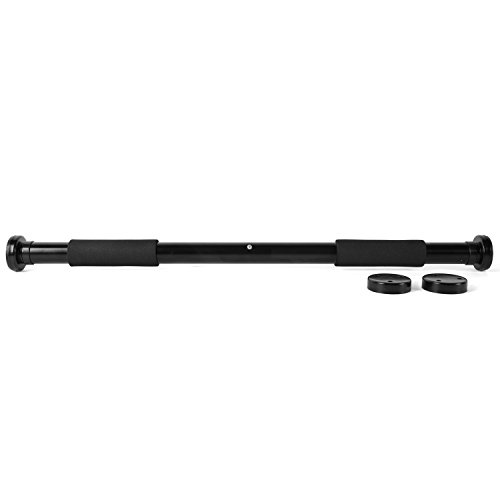
- Adjusts from 24.75 to 36.5 inches
- Padded foam handles for comfort
- Supports pull-ups, core work, and sit-ups
Best For: Beginners wanting an affordable, adjustable doorway bar
Garage Gym Mount
Fitarc Joist Mount Pull Up Bar
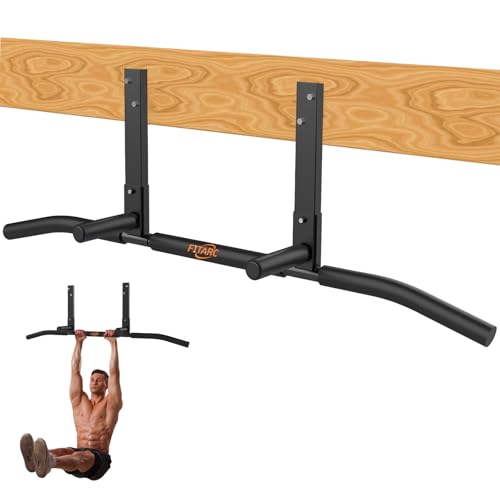
- Mounts to wooden joists and beams
- 440-pound stated maximum capacity
- Multiple padded grip positions
Best For: Permanent basement, garage, or home gym setups
Secure No-Drill Option
Sportneer Adjustable Doorway Pull Up Bar

- Fits 29.5- to 37-inch doorways
- Dual-gear lock and PVC stability mats
- Integrated anti-slip handlebar
Best For: No-drill doorway training with a compatible solid frame
Most Adjustable
Ally Peaks Doorway Pull-Up Bar

- Five width and two thickness adjustments
- 500-pound stated weight capacity
- Silicone doorframe protection
Best For: Users needing broad doorway compatibility and high load support
Best Multi-Grip Option
ENERGI CORE Doorway Pull-Up Bar
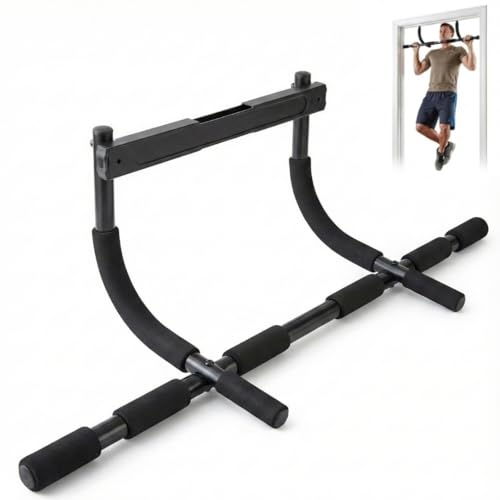
- Twelve padded grip positions
- No-screw installation for 24–36-inch frames
- Usable for floor-based exercises
Best For: Compact home gyms needing varied grip positions
Best All-Around Value

- 440-pound stated weight capacity
- Three grip positions
- No-screw, quick-removal design
Best For: Home users wanting versatile upper-body training in one bar
Best Adjustable Fit
25–39-Inch Doorway Pull-Up Bar
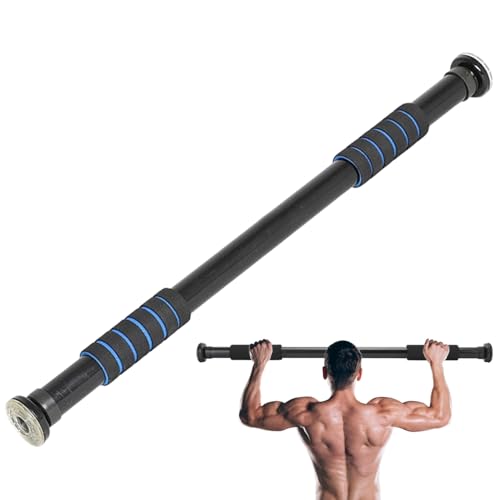
- Fits openings from 25 to 39 inches
- No-drill setup with optional screws
- Supports up to 220 pounds
Best For: Flexible home workouts in suitable doorways or solid wall spaces
Best High-Capacity Option
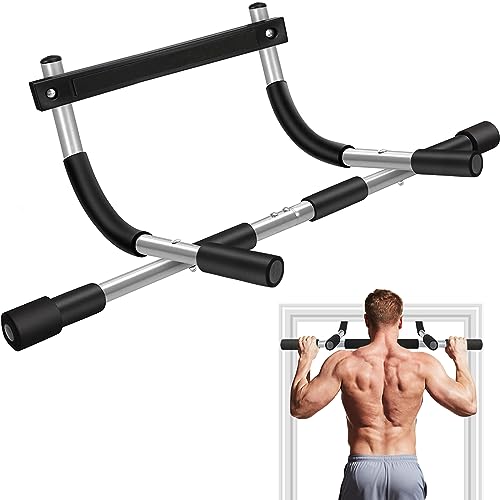
- Supports up to 440 pounds
- Fits 23–31-inch standard doorways
- Offers multiple grip and exercise positions
Best For: Higher-capacity doorway strength training
Best Multi-Grip Design

- Supports multiple grip positions
- Rated for up to 440 pounds
- Installs without drilling in compatible doorways
Best For: Versatile upper-body workouts at home
Heavy-Duty Doorway Pick – Ally Peaks Multi-Grip Pull Up Bar
If you’re comparing pull up bars under 50, the Ally Peaks stands out for its heavy-duty steel construction, multi-grip design, and no-screw doorway installation. It fits standard 24- to 32-inch doorways and supports pull-ups, dips, push-ups, and hanging crunches.
Best For: Home users who want a versatile, high-capacity doorway bar with added door-frame protection.
Pros:
- Thickened steel construction with a stated 440-pound maximum capacity.
- Supports multiple exercises, including pull-ups, dips, push-ups, and hanging crunches.
- Silicone protection helps reduce marks on the door frame.
- Portable, screw-free design is easy to install and remove.
Cons:
- Fit is limited to doorways measuring 24 to 32 inches wide.
- Requires careful installation and a downward tug test before use.
The Ally Peaks is a strong all-around option when you want more than basic chin-ups. Its broad exercise range and protective silicone pads add convenience, but accurate doorway measurements are essential.
Budget-Friendly Classic – CAP Barbell Doorway Chin Up Bar
For shoppers seeking pull up bars under 50, the CAP Barbell Doorway Chin Up Bar offers a straightforward adjustable design for standard door frames. It supports pull-ups, chin-ups, leg raises, knee lifts, crunches, and other home workouts.
Best For: Beginners and budget-conscious users who want a simple adjustable doorway bar with padded grips.
Pros:
- Adjusts from 24.75 to 36.5 inches for broad doorway compatibility.
- Padded foam handles provide a more comfortable, non-slip grip.
- Can support hanging exercises and function as a foot anchor for sit-ups.
- Includes weight-bearing and non-weight-bearing brackets.
Cons:
- Maximum weight recommendation is 220 pounds.
- Includes only a 30-day manufacturer warranty.
The CAP Barbell is a practical entry-level choice with useful adjustability and multiple exercise options. Its lower stated capacity makes it better suited to lighter users and moderate home training.
Garage Gym Mount – Fitarc Joist Mount Pull Up Bar
Among pull up bars under 50, the Fitarc Joist Mount is a useful alternative to doorway models for a basement, garage, or home gym. It mounts to wooden beams and provides multiple grip positions for pull-ups, chin-ups, hanging leg raises, and strength training.
Best For: Home gym users with suitable wooden joists who prefer a permanent overhead training station.
Pros:
- Designed for installation on wooden beams in garage and basement gyms.
- Heavy-duty steel construction has a stated 440-pound maximum capacity.
- Multiple grip positions support varied upper-body and core exercises.
- Thickened padded handles help reduce hand fatigue.
Cons:
- Requires mounting to suitable wooden beams rather than a standard doorway.
- Installation is less portable than a no-drill doorway bar.
The Fitarc makes the most sense if you have a dedicated workout space and can securely mount it to the recommended structure. Its joist-mounted format offers a stable, space-saving setup but is not ideal for renters or frequent relocation.
Secure No-Drill Option – Sportneer Adjustable Doorway Pull Up Bar
If you want pull up bars under 50 without drilling, the Sportneer offers an adjustable 29.5- to 37-inch doorway fit with a dual-gear locking system. It also includes large PVC contact mats, installation guidance, and an integrated handlebar for pull-ups, sit-ups, push-ups, and stretching.
Best For: Users with compatible 29.5- to 37-inch door frames who prioritize a no-drill setup and locking mechanism.
Pros:
- Adjustable length fits door frames from 29.5 to 37 inches.
- Dual-gear safety lock and four metal fixed points help secure the bar.
- Large PVC mats provide added friction without drilling.
- Integrated anti-slip handlebar supports flexible grip positions.
Cons:
- The manual specifies a 297-pound maximum load, despite higher testing figures.
- Only suitable for solid, compatible door frames within the stated width range.
- Incorrect locking direction or setup may compromise installation safety.
The Sportneer is appealing for its adjustable, no-drill design and visible focus on locking stability. Follow the manual’s 297-pound limit and verify the doorway dimensions and structure before use.
Most Adjustable – Ally Peaks Doorway Pull-Up Bar
For shoppers comparing pull up bars under 50, the Ally Peaks stands out for its unusually broad doorway fit. Its width and thickness adjustments are designed to accommodate many standard doorframes without screws, while its heavy-duty construction supports substantial loads.
Best For: Users who want maximum doorway adjustability, high weight capacity, and multiple home-gym exercises.
Pros:
- Adjusts for doorways 21.65–39.37 inches wide and 4.7–8.27 inches deep.
- Supports up to 500 pounds with thickened chrome steel and a double-pipe design.
- Silicone contact surfaces and removable pads help protect the doorframe.
- Supports pull-ups, push-ups, dips, and hanging crunches.
Cons:
- Its extensive adjustment hardware may take more setup than simpler bars.
- The 2.82-kilogram weight makes it less lightweight than some portable options.
The Ally Peaks is a strong choice when doorframe compatibility and load capacity matter most. Verify your doorway dimensions before buying, then use the included protection features and test the bar before exercising.
Best Multi-Grip Option – ENERGI CORE Doorway Pull-Up Bar
Among pull up bars under 50, the ENERGI CORE is a practical pick for users who want varied hand positions without drilling. Its 12 foam grips support wide, narrow, and neutral-grip movements, and the bar can also be used for floor exercises.
Best For: Apartment dwellers and home-gym users seeking a portable, multi-grip bar for upper-body and core training.
Pros:
- Installs without screws on standard doorframes measuring 24–36 inches wide.
- Offers 12 non-slip foam grips for wide, narrow, and neutral positions.
- Supports up to 300 pounds with a high-strength steel construction.
- Can be repositioned for push-ups, tricep dips, and core exercises.
Cons:
- Its stated 300-pound capacity is lower than the other listed options.
- The fit range is narrower than bars designed for doorways up to 39 inches wide.
The ENERGI CORE prioritizes grip variety and portability over the highest weight rating. It is well suited to compact spaces, provided your doorframe falls within its specified width range.
Best All-Around Value – MOMODA Doorway Pull-Up Bar
For shoppers seeking pull up bars under 50, the MOMODA offers a balanced combination of capacity, grip variety, and quick installation. It fits doorframes up to 39 inches wide and uses leverage rather than screws, making it convenient for indoor workouts.
Best For: Home users who want a versatile doorway bar with wide, narrow, and neutral grips.
Pros:
- Supports up to 440 pounds with reinforced 1.5-millimeter steel.
- Provides three grip positions for pull-ups, chin-ups, and upper-body training.
- Also supports push-ups, sit-ups, dips, and arm exercises.
- Installs and removes quickly without screws or doorframe drilling.
Cons:
- Requires a doorway between 19 and 39 inches wide.
- The supplied dimensions and doorway range should be checked carefully before installation.
The MOMODA is a versatile middle ground for buyers who want a high stated capacity without giving up portability. Confirm the frame width and follow the safety instructions before each workout.
Best Adjustable Fit – 25–39-Inch Doorway Pull-Up Bar
If you need pull up bars under 50 for varied spaces, this adjustable model fits openings from 25 to 39 inches. Its no-drill setup is convenient for home use, while included screws offer a more fixed installation when appropriate. Measure carefully and use it only on suitable solid surfaces.
Best For: Home users who want an adjustable bar for pull-ups, chin-ups, hanging core exercises, and stretching.
Pros:
- Adjusts to fit 25–39-inch openings.
- Installs in about three minutes without drilling.
- Double-layer steel tube supports up to 220 pounds.
- Foam grips and protective contact pads improve comfort and surface protection.
Cons:
- Not intended for glass, hollow, or uneven textured surfaces.
- Requires careful measurement and secure fastening before use.
- Its 220-pound capacity is lower than some competing options.
This is a practical pick when flexibility and easy removal matter more than the highest listed weight capacity. The broad adjustment range also makes it useful beyond a single standard doorway.
Best High-Capacity Option – Upgrade Doorway Pull-Up Bar
Among pull up bars under 50, this doorway model stands out for its stated 440-pound maximum capacity and versatile exercise design. It uses a lever-based, no-drill installation for standard doorways, with foam padding intended to protect the frame during use.
Best For: Adults and teens seeking a sturdy doorway bar for pull-ups, push-ups, sit-ups, and upper-body exercises.
Pros:
- Rated for up to 440 pounds.
- Fits doorways 23–31 inches wide and 4.7–7.5 inches deep.
- Heavy-duty steel construction and a reinforced 1.7 mm horizontal bar.
- Multiple foam contact points help protect the door frame and improve grip comfort.
Cons:
- Fit is limited to the specified doorway dimensions.
- Requires assembly with the included manual and tool.
- Its larger, heavier construction may be less convenient to store than simpler bars.
This option makes the most sense if your doorway matches the measurements and you prioritize a high stated load rating. Verify the frame dimensions before ordering, since compatibility is specific.
Best Multi-Grip Design – TOPOKO Doorway Pull-Up Bar
This TOPOKO model is a versatile choice among pull up bars under 50, combining multiple grip positions with a doorway-mounted design. It fits standard doorways within a defined size range and installs without drilling, making it suitable for a compact home gym.
Best For: Adults and teens who want one doorway station for pull-ups, wide-grip push-ups, sit-ups, and upper-body exercises.
Pros:
- Supports multiple grip positions and several bodyweight exercises.
- Heavy-duty alloy steel construction with a stated 440-pound capacity.
- Foam padding helps protect the door frame and cushion the handles.
- No drilling is required for doorway installation.
Cons:
- Fits only doorways 23–31 inches wide with 4.7–7.5-inch jamb depth.
- Assembly is required before installation.
- Doorway compatibility must be confirmed before purchase.
Choose this bar if exercise variety is a priority and your doorway falls within the listed dimensions. Its multiple grips and high stated capacity make it a strong all-around home workout station.
How We Picked the Best Pull Up Bars Under 50
We focused on the features that matter most in affordable home equipment: frame compatibility, published weight capacity, installation method, grip design, adjustability, and portability. Doorway models were considered for how easily they can be fitted and removed, while wall- or joist-mounted options were assessed for buyers who want a more permanent setup.
Because product specifications and doorway construction can vary, capacity ratings should be treated as a starting point rather than a substitute for careful installation. Always follow the manufacturer’s instructions and inspect the bar and mounting surface before every workout.
Quick Comparison
- Best for simple doorway workouts: Choose a traditional no-drill bar with a secure leverage design.
- Best for varied exercises: Select a multi-grip model with angled or neutral handles.
- Best for frequent removal: Look for a lightweight, portable doorway bar.
- Best for a permanent station: Consider a joist- or wall-mounted pull-up bar.
- Best for varied door widths: Prioritize accurate width adjustment and clear fit measurements.
Key Buying Factors for Pull-Up Bars Under $50
Fit and Installation
Measure the usable doorway width, frame depth, and available clearance before ordering. No-screw bars are convenient, but they depend on a suitable frame and correct placement. A mounted bar requires compatible studs, joists, or masonry and may need additional hardware.
Weight Capacity and Stability
Check the stated maximum load and leave a sensible safety margin for your body weight, movement, and any added weight. A higher advertised capacity does not guarantee safety if the frame or mounting surface is weak.
Grip Options
A straight bar is compact and often sufficient for pull-ups and chin-ups. Multi-grip designs can offer neutral and angled positions that may feel more comfortable and support a wider range of exercises, but they usually take up more space.
Padding and Adjustability
Foam grips can reduce hand discomfort, while adjustable models can accommodate more doorway sizes. Confirm that adjustment mechanisms lock firmly and that padding does not interfere with the bar’s contact points.
Who Should Buy Which Pull Up Bars Under 50?
Beginners and occasional users should look for a straightforward doorway bar that installs easily and offers comfortable grips. Progress-focused users may prefer a multi-grip design for chin-ups, pull-ups, and varied hand positions. Renters or space-conscious buyers should prioritize removable, no-drill construction and verify that the bar will not damage the frame. Heavier users or anyone performing dynamic movements should favor the most secure compatible design, confirm every installation detail, and avoid relying solely on a headline capacity rating. For frequent, higher-intensity training, a properly anchored wall- or joist-mounted option is generally more dependable than a temporary doorway setup.