Finding a rollator that fits through tight doorways can make everyday mobility much easier. The best narrow models balance compact widths with dependable brakes, useful storage, comfortable seating, and a stable walking experience.
We compared 10 rollator walkers for narrow doorways across portability, dimensions, weight capacity, wheel design, and practical features to help you choose a model that suits your home and routine.
Best 10 Rollator Walkers for Narrow Doorways Picks for 2026
Best Petite Pick
NOVA GetGo Petite Narrow Rollator

- 22-inch-wide, lightweight frame
- Adjustable fit for users 4'10"–5'4"
- Padded seat, pouch, and folding lock
Best For: Petite users needing a narrow rollator with a seat
Best Value Narrow Design
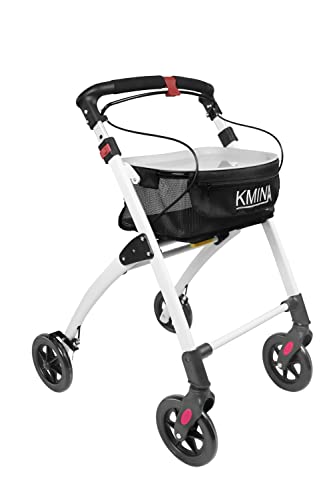
- 22-inch width for tight indoor spaces
- Tray and basket included
- Lightweight, foldable aluminum frame
Best For: Indoor users who want storage features in a narrow rollator
Best for Travel Storage

- Folds to a 10-by-11-inch footprint
- Pre-assembled and 14.5 pounds
- Includes travel seat and locking brakes
Best For: Travelers prioritizing compact folding over minimum width
Best Indoor Comfort
Helavo 23.6-Inch Narrow Walker

- 23.6-inch width for small spaces
- Quiet 8-inch indoor wheels
- Adjustable handlebar and parking brakes
Best For: Home users wanting quiet rolling and a wide height range
Best All-Terrain Pick
Aojin Narrow Rollator with Seat
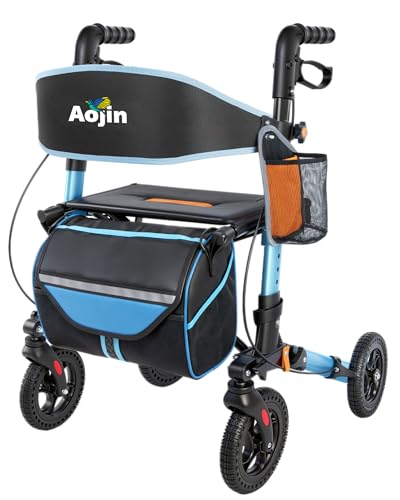
- 17.3-inch-wide folding frame for tighter passages
- 8-inch all-terrain wheels for uneven surfaces
- Seat, adjustable height, and 300-pound capacity
Best For: Users wanting a narrow rollator with a seat for indoor and outdoor use
Best for Small Doorways
Vive Narrow Rollator with Tray

- Slim 23-inch frame for doorways and hallways
- Folds to 22.5 by 17 inches and weighs 13 pounds
- Tray, cupholder, and large storage bag included
Best For: Users prioritizing compact indoor maneuverability and carrying space
Best Three-Wheel Design
Vive Mobility Folding 3-Wheel Walker
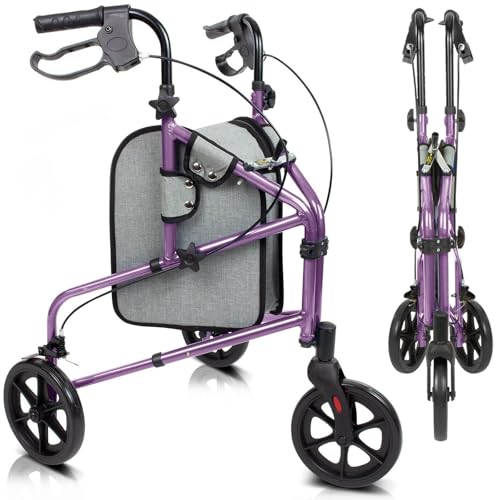
- Three-wheel layout for maneuverability in tight spaces
- Lightweight foldable aluminum frame
- Adjustable handles and removable storage bag
Best For: Users seeking a portable three-wheel walker for crowded indoor areas
Best Adjustable Width Pick
HOMENURSE Z3 Narrow Folding Walker

- Width adjusts from 17.7 to 25.8 inches
- 6.8-pound frame supports up to 350 pounds
- Folds easily; includes wheels and ski glides
Best For: Adults and seniors navigating tight home spaces
Best Narrow Seat Rollator

- 23.5-inch frame fits tight doorways and hallways
- Folds for car storage and weighs 19 pounds
- Seat, storage bag, and 300-pound capacity
Best For: Adults seeking a compact rollator with a seat
Best Ultralight Compact Option
Vive Ultra Lightweight Rollator

- 19.3-inch listed width for narrow spaces
- Lightweight 16.5-pound aluminum design
- Foldable four-wheel rollator with seat
Best For: Adults prioritizing portability and compact maneuverability
Best Petite Pick – NOVA GetGo Petite Narrow Rollator
For shoppers comparing rollator walkers for narrow doorways, the NOVA GetGo Petite stands out with a 22-inch-wide frame designed for smaller users. Its lightweight build, folding lock, seat, and storage pouch make it practical for indoor mobility and transport.
Best For: Petite users from 4’10” to 5’4″ who need a narrow rollator with a seat.
Pros:
- 22-inch-wide, 13-pound frame helps with tight indoor spaces.
- Adjustable 29- to 33.25-inch handles support a petite fit.
- Includes a padded seat, storage pouch, 6-inch wheels, and locking hand brakes.
- Lock N Load folding system simplifies carrying and storage.
Cons:
- Designed specifically for petite users, so the height range may not suit taller adults.
- The 12-inch-wide seat is relatively compact.
With a 300-pound capacity and strong warranty coverage, this is a well-rounded narrow option when fit and easy transport matter most.
Best Value Narrow Design – KMINA 22-Inch Foldable Walker
The KMINA is a useful choice among rollator walkers for narrow doorways, with a 22-inch width and lightweight aluminum frame. Its tray, basket, front-wheel steering, and foldable design are geared toward indoor independence in compact spaces.
Best For: Users seeking a lightweight indoor rollator with carrying features and one-handed handlebar control.
Pros:
- 22-inch width suits narrow corridors and doorways.
- 13-pound aluminum design folds for storage.
- Tray and basket with an outside pocket help transport essentials.
- Five height adjustments and low-force braking improve adaptability.
Cons:
- 220-pound weight capacity is lower than some competing models.
- Its recommended use is primarily for indoor mobility and people with medium-low dependency.
The KMINA combines a compact footprint with helpful everyday accessories, making it especially practical for navigating and organizing items at home.
Best for Travel Storage – Stander Space Saver Rollator
Although its 26.5-inch width is wider than some dedicated narrow models, the Stander Space Saver earns consideration for rollator walkers for narrow doorways when folding and portability are priorities. Its patented EZ Fold-N-Go design folds to a compact 10-by-11-inch footprint.
Best For: Travelers and users who prioritize exceptionally compact storage, a rest seat, and ready-to-use assembly.
Pros:
- Folds three times smaller than an average rollator for transport and storage.
- Comes pre-assembled and weighs 14.5 pounds.
- Includes a non-slip travel seat with back strap and 250-pound capacity.
- Adjustable handles and 6-inch wheels support indoor and outdoor use.
Cons:
- At 26.5 inches wide, it may not fit doorways as easily as 22- or 23.6-inch models.
- The compact seat is only 6 inches deep.
This model is best viewed as a highly portable rollator rather than the narrowest doorway solution. Measure your door openings before choosing it for tight indoor routes.
Best Indoor Comfort – Helavo 23.6-Inch Narrow Walker
The Helavo is designed specifically for indoor maneuvering, making it a strong candidate among rollator walkers for narrow doorways. Its 23.6-inch width, quiet 8-inch wheels, adjustable handlebar, tray, and park function suit apartments and other compact homes.
Best For: Adults and seniors who want a quiet indoor rollator with a tray and broad height adjustment.
Pros:
- 23.6-inch-wide frame is intended for tight spaces and doorways.
- Quiet, stable 8-inch wheels are designed for indoor surfaces.
- Handlebar adjusts from 35.4 to 40.2 inches for users from 4’10” to 6’2″.
- Folds for storage and includes sensitive brakes with a park function.
Cons:
- Its 14.3-pound weight is slightly heavier than some narrow alternatives.
- The height range may be too tall for users needing very low handles.
For home use, the Helavo offers a useful balance of narrow dimensions, quiet movement, adjustable comfort, and secure parking while resting.
Best All-Terrain Pick – Aojin Narrow Rollator with Seat
For shoppers comparing rollator walkers for narrow doorways, the Aojin combines a folding frame with a comfortable seat and outdoor-ready wheels. Its 17.3-inch width, compact folding design, and detachable wheels make it easier to manage in tight passages, vehicles, and storage spaces.
Best For: Users who want a narrow rollator with a seat and better capability on uneven outdoor surfaces.
Pros:
- Lightweight 16.5-pound aluminum frame supports up to 300 pounds.
- 8-inch all-terrain wheels with swivel front wheel and shock absorption help on gravel, grass, dirt, and sidewalk gaps.
- Adjustable height from 31.5 to 38 inches accommodates users from approximately 5 to 6.5 feet.
- Folds quickly, with detachable wheels and a multifunctional storage bag for transport.
Cons:
- Its seat and larger all-terrain wheels may take more storage space than a basic indoor walker.
- The 17.3-inch width may not fit every exceptionally narrow doorway.
The Aojin is a strong choice when doorway access matters but comfort and outdoor versatility matter too. Its seat, brakes, wide support base, and terrain-focused wheels make it more versatile than a minimalist narrow walker.
Best for Small Doorways – Vive Narrow Rollator with Tray
The Vive Narrow Walker is designed specifically for shoppers seeking rollator walkers for narrow doorways, with a slim 23-inch frame for hallways, doorways, and crowded areas. It folds to 22.5 by 17 inches and includes a tray, cupholder, and storage bag for everyday errands.
Best For: Users who prioritize narrow indoor maneuverability, portability, and carrying space over a built-in seat.
Pros:
- 23-inch-wide frame is designed for tight spaces and small doorways.
- Lightweight 13-pound design folds compactly for car trunks and storage.
- Textured 15.25-by-10.25-inch tray, cupholder, and six-gallon storage bag add useful carrying capacity.
- Adjustable handles fit users approximately 4 feet 10 inches to 6 feet 2 inches, with a 300-pound capacity.
Cons:
- This model does not include a seat for sitting breaks.
- Its 6-inch wheels are intended for a smooth ride on most surfaces rather than particularly rough terrain.
Choose this Vive model when precise indoor navigation and practical storage are the main priorities. The no-seat design keeps it focused on agility and portability, while the tray and bag make it useful for carrying daily items.
Best Three-Wheel Design – Vive Mobility Folding 3-Wheel Walker
For tight interiors and crowded routes, this three-wheel Vive Mobility walker offers a compact alternative among rollator walkers for narrow doorways. Its foldable aluminum frame, adjustable handles, and removable storage bag support convenient everyday use and transport.
Best For: Users who want a lightweight three-wheel walker for maneuvering through small spaces and crowded areas.
Pros:
- Three-wheel configuration is designed for maneuverability in small spaces and crowded areas.
- Lightweight, foldable aluminum construction is easy to transport in a car.
- Adjustable handles help users find a comfortable hand position and access the brakes.
- Removable, easy-to-clean bag provides convenient accessory storage.
Cons:
- Supports up to 250 pounds, less than the two four-wheel models in this selection.
- Unlike the Aojin, the supplied details do not list a seat or all-terrain wheels.
This model makes sense when turning ease, low carry weight, and a foldable design are more important than a seat or maximum weight capacity. Its three-wheel layout is particularly suited to navigating compact indoor areas and busy spaces.
Best Adjustable Width Pick – HOMENURSE Z3 Narrow Folding Walker
For shoppers comparing rollator walkers for narrow doorways, the HOMENURSE Z3 stands out for its adjustable width. The wheel position can be changed from 17.7 to 25.8 inches, helping it fit through tight doorways, hallways, and bathrooms.
Best For: Adults and seniors who need a lightweight, height- and width-adjustable walker for maneuvering around small homes.
Pros:
- Adjustable width from 17.7 to 25.8 inches for narrow spaces.
- Lightweight 6.8-pound aluminum frame supports up to 350 pounds.
- Folds by lifting the handles and includes 5-inch wheels and ski glides.
- Eight height settings from 30.7 to 37.7 inches.
Cons:
- It is a standard walker rather than a four-wheel rollator with a seat.
- Width adjustment requires swapping the wheel positions.
This is a practical choice when doorway clearance is the priority. Its high weight capacity and broad height range add versatility, while the folding design helps with storage and travel.
Best Narrow Seat Rollator – Vive Mobility Steel Rollator
The Vive Mobility Steel Rollator is a strong option among rollator walkers for narrow doorways, with a 23.5-inch-wide frame designed for tight hallways and entrances. It also folds for transport and includes a seat and storage bag.
Best For: Adults who want a compact four-wheel rollator with a seat for indoor use, travel, and everyday errands.
Pros:
- 23.5-inch width and a tight turning radius suit small spaces.
- Foldable 19-pound design fits most car trunks and compact storage areas.
- Steel frame supports up to 300 pounds.
- Height adjusts from 31 to 36 inches and includes underseat storage.
Cons:
- At 19 pounds, it is heavier than an ultralight aluminum model.
- The supplied specifications do not state the seat dimensions or wheel size.
This model balances doorway-friendly width with the convenience of a built-in seat. Its steel construction favors sturdy daily support, while the folding frame makes it easier to take on trips.
Best Ultralight Compact Option – Vive Ultra Lightweight Rollator
For anyone prioritizing a small footprint and easy handling, the Vive Ultra Lightweight Rollator is a compact choice among rollator walkers for narrow doorways. Its listed width is 19.3 inches, and the aluminum design weighs 16.5 pounds.
Best For: Adults who want a lightweight four-wheel rollator for small spaces and easier transport.
Pros:
- Compact 19.3-inch listed width is well suited to narrow areas.
- At 16.5 pounds, it is lighter than the steel Vive model.
- Foldable four-wheel design includes a seat and underseat accessory space.
Cons:
- The supplied notes do not specify weight capacity.
- The notes do not provide an adjustable height range.
- The pink-and-black color may not suit every preference.
This rollator is appealing when low weight and narrow dimensions matter most. Before buying, confirm the height range and weight capacity to ensure the fit matches the user’s needs.
How We Picked the Best Rollator Walkers for Narrow Doorways
We focused on rollators designed for restricted indoor spaces, prioritizing narrow frames, folding mechanisms, maneuverability, and features that support daily use. We also considered whether each walker offers a seat, basket or tray, cupholder, adjustable handles, and transport-friendly construction.
Because doorway clearance is only one part of usability, we looked at the overall balance between compact dimensions, stability, comfort, and rated weight capacity. Product specifications should always be checked against your own measurements and mobility needs before purchase.
Quick Comparison
| Type | Best For | Notable Advantage |
|---|---|---|
| Petite or ultra-light rollator | Users who prioritize easy lifting | Simple transport and storage |
| Four-wheel narrow rollator | Everyday indoor and outdoor use | More balanced support and often a seat |
| Three-wheel rollator | Tight turns and compact spaces | Agile maneuverability |
| Indoor walker with tray | Moving items around the home | Convenient food, drink, or personal-item transport |
| Heavy-duty narrow model | Users needing a higher capacity | Stronger support, with potentially greater weight |
Key Buying Factors for Rollator Walkers for Narrow Doorways
Measure the Full Route
Measure the narrowest doorway, hallway, bathroom entrance, and turning area—not just the main entrance. Compare those measurements with the rollator’s listed width, allowing extra room for hand placement and steering. A walker that technically fits may still be difficult to control in a tight passage.
Choose the Right Wheel Layout
Four-wheel rollators generally offer a stable, balanced feel and are often the best all-purpose choice. Three-wheel designs can turn more easily in cramped rooms, but they typically do not provide the same seated support or stability for every user. Wheel size also affects how smoothly the walker handles thresholds and uneven surfaces.
Check Folding, Weight, and Capacity
A lightweight frame is useful if the walker must be lifted into a car or carried between rooms. However, confirm that its weight capacity comfortably exceeds the user’s weight and that the folded dimensions suit your storage space. A locking fold mechanism can make transport more secure.
Prioritize Brakes and Comfort
Look for easy-to-reach hand brakes, a reliable parking brake, height-adjustable handles, and a seat with enough width and padding if resting is important. Storage baskets, trays, and cupholders add convenience, but they should not interfere with door clearance or safe braking.
Who Should Buy Which Rollator Walkers for Narrow Doorways?
Choose a petite or ultra-light model if portability and lifting are the main concerns. Select a four-wheel narrow rollator if you want the best combination of stability, seating, and everyday versatility. A three-wheel option is worth considering for especially tight turns and indoor navigation. Models with trays are practical for users who frequently move meals or belongings around the house, while a higher-capacity steel design may better suit users who need additional structural support.
If balance is limited, ask a healthcare professional or physical therapist to help assess the appropriate rollator style, handle height, brake operation, and seat use. Before relying on any model, practice opening, folding, turning, and locking the brakes on a clear, level surface.