Sciatica can make sitting, walking, or getting through a workday uncomfortable. The right device depends on what aggravates your symptoms: pressure from a chair, movement around the hip or lower back, or pain you want to manage without wearing a support.
These 10 picks cover seat cushions, TENS units, an acupressure pad, and several braces. This guide explains what each type is best suited for—and where its limits matter.
Best 10 Sciatica Pain Relief Devices Picks for 2026
Gel-Enhanced Seat Cushion

- Gel-topped, medium-firm memory foam
- U-shaped tailbone cutout
- Washable cover and carry handle
Best For: Long workdays or drives on flat, firm seats
All-Memory-Foam Seat Cushion
Everlasting Comfort Seat Cushion

- 100% memory-foam fill
- U-shaped tailbone cutout
- Breathable, washable cover
Best For: Switching between office and car seating
Rechargeable Multi-Mode TENS

- TENS, EMS, and RELAX functions
- 24 modes and 40 intensity levels
- Dual channels; 12 pads included
Best For: Portable stimulation with flexible settings
Classic Battery-Powered TENS

- Multiple TENS modes
- Battery and four pads included
- Hard carrying case
Best For: A conventional battery-powered TENS setup
Calf Pressure Pick
BeActive Plus Acupressure Brace
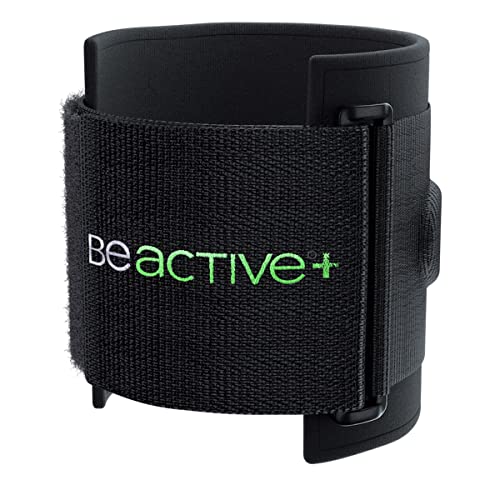
- Pad targets the outer calf below the knee
- Adjustable for 12.5–21-inch calves
- Discreet under-clothing design
Best For: Adults seeking a compact, calf-worn pressure-point brace
Hip and Thigh Coverage

- Covers hip, groin, thigh, and hamstring
- Three adjustable compression straps
- Leg-specific versions in Regular and Plus
Best For: Adjustable upper-leg support during daily movement
SI Joint Support
Vriksasana Sacroiliac Hip Belt
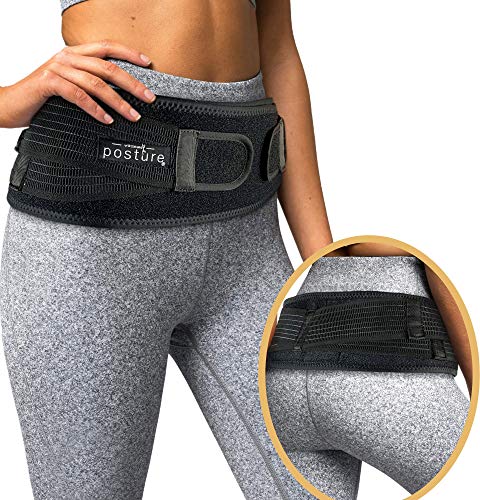
- Dual-belt adjustable pelvic compression
- Fits 32–45-inch hip circumferences
- Anti-slip strips help keep it in place
Best For: Buyers prioritizing SI joint support and pelvic compression
Breathable Hip Support
Janustar Hip and Thigh Compression Brace

- Adjustable hip-and-thigh compression
- Ventilated, anti-slip design
- Choose leg side and measure for fit
Best For: Hip-and-thigh support during daily activity
Lumbar Support Pick
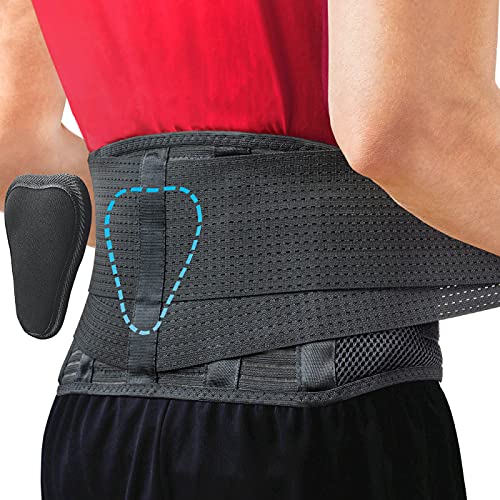
- Removable lumbar compression pad
- Vertical stays resist rolling
- Breathable, adjustable belt
Best For: Adjustable lower-back support
Left-Side Wrap

- Adjustable hip-and-thigh wrap
- Wear under or over clothing
- Left-side version; check fit
Best For: Left-side hip-and-thigh compression
Gel-Enhanced Seat Cushion – ComfiLife Coccyx Cushion
Among sciatica pain relief devices, the ComfiLife cushion is a seating option for people who want to reduce tailbone pressure at a desk or in a car. Its medium-firm memory foam has a gel layer and a U-shaped cutout that sits behind the tailbone.
Best For: Long workdays or drives on flat, firm seats.
Pros:
- U-shaped cutout and medium-firm foam help take pressure off the tailbone.
- Non-slip bottom, carry handle, and removable machine-washable cover suit daily use.
- Gel-enhanced memory foam is designed to retain its shape.
Cons:
- Can raise your sitting height, particularly on soft or deeply bucketed seats.
- Medium-firm feel may not suit anyone seeking a plush pad.
At 17.5 × 13.7 × 2.8 inches, check your chair dimensions before buying. Position the cutout at the back, and lower your chair if the cushion puts you too high.
All-Memory-Foam Seat Cushion – Everlasting Comfort Seat Cushion
The Everlasting Comfort cushion is a portable choice among sciatica pain relief devices if prolonged sitting is your main concern. Its 100% memory-foam fill conforms to the body, while a U-shaped rear cutout leaves space around the tailbone.
Best For: Moving a supportive cushion between an office chair and car seat.
Pros:
- Contouring memory foam provides seating support without a gel layer.
- U-shaped cutout is designed to reduce pressure at the tailbone.
- Breathable, machine-washable cover has a non-slip bottom.
Cons:
- The foam itself cannot go in the washer or dryer.
- Pain relief is not guaranteed.
It can also travel to airplane seats or benches, but its main appeal is simple: a removable-cover memory-foam cushion you can use across different seats.
Rechargeable Multi-Mode TENS – AUVON 3-in-1 TENS Unit
For shoppers comparing electronic sciatica pain relief devices, the AUVON 3-in-1 offers TENS, EMS, and RELAX functions in a compact, rechargeable unit. It provides 24 preset modes and 40 intensity levels for gradual adjustments.
Best For: People who want portable, adjustable electrical stimulation with multiple pad options.
Pros:
- Dual channels accommodate two or four pads at once.
- Includes eight 2-inch square pads and four larger rectangular pads.
- Adjustable session time reaches 90 minutes in continuous mode.
Cons:
- Electrode pads require upkeep and eventual replacement.
- Finding a preferred mode and intensity may take some trial and error.
This is the feature-rich pick if you want more control over stimulation settings. It is an option for managing discomfort, not a fix for the underlying cause of sciatica.
Classic Battery-Powered TENS – TENS 7000 Digital Unit
The TENS 7000 is a straightforward electrical-stimulation option among sciatica pain relief devices. It comes with multiple TENS modes and the basic accessories needed to get started, including electrodes and a 9V battery.
Best For: Buyers who prefer a battery-powered TENS unit with a hard storage case.
Pros:
- Multiple TENS modes offer stimulation choices.
- Includes two lead wires, four reusable pads, and a 9V battery.
- Hard carrying case keeps the unit and accessories together.
Cons:
- Uses a replaceable 9V battery rather than a built-in rechargeable battery.
- Only four electrode pads are included.
Choose it if a conventional TENS setup appeals more than a multi-function device. Its supplied accessories make starting simple, though you will need to account for battery and pad replacement over time.
Calf Pressure Pick – BeActive Plus Acupressure Brace
Among sciatica pain relief devices, the BeActive Plus takes a compact approach: its adjustable brace places a pressure pad against the outer calf just below the knee. It can be worn discreetly under clothing, but placement matters and relief varies by person.
Best For: Adults who want a calf-worn pressure-point brace rather than a hip or back wrap.
Pros:
- Adjustable hook-and-loop fit for calf circumferences of 12.5 to 21 inches.
- Works on either leg using the marked right- or left-leg orientation.
- Low-profile design can be worn under clothing.
Cons:
- Correct positioning on the outer calf is important for the intended effect.
- The maker recommends limiting initial wear to two hours; the brace is not a cure.
Consider this if you prefer localized calf pressure and a small brace. Expect some trial and adjustment to find a comfortable fit, rather than guaranteed pain relief.
Hip and Thigh Coverage – ODOFIT 5-in-1 Hip Brace
If you are comparing sciatica pain relief devices for broader coverage, the ODOFIT brace wraps the hip and upper leg rather than focusing on one pressure point. Three adjustable straps let you tune compression around the hip flexor, groin, thigh, and hamstring during everyday movement.
Best For: Adults seeking adjustable hip and thigh support for walking or daily tasks.
Pros:
- Three straps allow a more customized, secure fit.
- Left- and right-leg versions and Regular and Plus sizes offer fit options.
- Breathable, latex-free neoprene can be worn under or over clothing.
Cons:
- You must select the correct leg and measure waist or hip and thigh before ordering.
- It is supportive compression, not a cure or medical treatment; results vary.
This is the more substantial wrap of the three, suited to buyers who want support across several upper-leg areas. Check the size chart carefully to help keep it comfortable and in place.
SI Joint Support – Vriksasana Sacroiliac Hip Belt
For shoppers looking at sciatica pain relief devices when SI joint support is the priority, this Vriksasana belt sits around the hips to provide adjustable pelvic compression. Its dual-belt design is intended to stabilize the sacroiliac joint rather than compress the calf or wrap one leg.
Best For: People with a 32- to 45-inch hip circumference seeking an adjustable SI joint support belt.
Pros:
- Secondary straps let you fine-tune compression over sore areas.
- Breathable, perforated materials are designed for extended wear.
- Anti-slip silicone strips help limit shifting during activity.
Cons:
- The Regular size fits hips measuring 32 to 45 inches.
- It should not be overtightened; the maker discourages vigorous exercise during recovery.
Choose this style when pelvic stability is the main consideration. Measure around your hips first, and use the adjustment straps for a secure fit without excessive tightness.
Breathable Hip Support – Janustar Hip and Thigh Compression Brace
Among sciatica pain relief devices, this Janustar brace is a wearable option for adjustable compression around the hip and thigh. Its ventilated neoprene-blend design is intended for support during everyday movement.
Best For: Adults who want hip-and-thigh compression with a choice of left- or right-leg fit.
Pros:
- Adjustable compression strap lets you tailor the fit.
- Ventilation holes and wicking material are designed for comfort.
- Anti-slip design aims to reduce sliding or rolling during activity.
Cons:
- Requires waist and thigh measurements and the correct leg selection before ordering.
- Hand wash only.
If your discomfort calls for support around the hip and upper leg rather than the waist alone, this is a practical option to consider. Check the size chart carefully; compression depends on a secure, comfortable fit.
Lumbar Support Pick – Sparthos Back Brace
If you are comparing sciatica pain relief devices for lower-back support, the Sparthos brace takes a different approach from a hip wrap. It combines a removable lumbar pad with vertical support stays in an adjustable belt.
Best For: Adults seeking adjustable lower-back compression for walking, bending, or lifting.
Pros:
- Removable lumbar pad adds targeted lower-back compression.
- Vertical stays help stabilize the brace and resist rolling.
- Breathable fabric and adjustable hook-and-loop closure support a customizable fit.
Cons:
- Supports the back rather than wrapping the hip or thigh.
- Hand wash only.
Choose this model when lumbar support is the priority. The removable pad offers some flexibility in how much compression you wear, while the stays distinguish it from a simple elastic belt.
Left-Side Wrap – SOLOEVER Hip Brace
For shoppers looking at sciatica pain relief devices that wrap the hip and upper leg, the SOLOEVER brace offers adjustable compression in a left-side design. Its neoprene-and-polyester construction is meant to provide support without preventing everyday movement.
Best For: Adults wanting a left-side hip and thigh wrap that can be worn under or over clothing.
Pros:
- Adjustable wrap lets you customize compression around the hip and thigh.
- Breathable neoprene design can be worn under or over clothing.
- Triple-stitched construction is intended to improve durability.
Cons:
- The supplied version is for the left side.
- A slight odor may be present on opening; the maker recommends airing it for a day.
This is worth considering if you prefer a flexible hip wrap over a lumbar belt. Follow the maker’s wearing video to position it correctly, and confirm that the left-side configuration matches your needs.
How We Picked These Sciatica Pain Relief Devices
We focused on devices with distinct uses rather than treating every product as interchangeable. The selection includes cushions for seated pressure, TENS units for temporary pain management, an acupressure pad, and supports designed for the hip, pelvis, thigh, or lower back. We also considered whether a device is practical to use where symptoms arise: at a desk, in a car, at home, or while moving.
None of these products addresses every cause of sciatica. Product claims and terms such as “doctor recommended” are not substitutes for a diagnosis or evidence that a device will work for your condition.
Quick Comparison by Device Type
- Seat cushions: The ComfiLife and Everlasting Comfort cushions are the starting point if long periods of sitting are your main problem. Check that a cushion fits your chair or car seat without making your posture awkward.
- TENS units: The AUVON 3-in-1 and TENS 7000 provide adjustable electrical stimulation through adhesive pads. They may help some people manage pain temporarily but do not correct its underlying cause.
- Acupressure pad: A non-electrical option for short, stationary sessions. Comfort and pressure tolerance vary.
- Wearable supports: The ODOFIT hip brace, Vriksasana sacroiliac belt, compression-style hip braces, and Sparthos back brace offer different coverage. Match the support area to where you need it, not just to a “sciatica” label.
Key Buying Factors for Sciatica Pain Relief Devices
Start with Your Use Case
For seated discomfort, look at cushion shape, firmness, height, and whether it stays put. For a wearable device, prioritize fit, adjustability, breathability, and whether it restricts normal movement. A sacroiliac belt sits differently from a lumbar brace or thigh sleeve; coverage alone does not tell you which will feel supportive.
Check Controls and Safety
For TENS, compare intensity settings, pad placement instructions, replacement-pad availability, and how easy the controls are to use. Follow the device’s directions, and ask a clinician before using electrical stimulation if you have a pacemaker or other implanted electronic device, are pregnant, or have a medical condition that makes its use uncertain. Avoid placing electrodes on broken skin.
A brace should feel secure without causing numbness, increased pain, or skin irritation. More compression is not necessarily better. Before buying any device, check the return policy: comfort and fit are difficult to judge from a listing.
Who Should Buy Which Sciatica Pain Relief Devices?
Desk workers and drivers: Start with a seat cushion if sitting is the clearest trigger. People seeking a non-wearable option: Consider a TENS unit if it is appropriate for you, or an acupressure pad if you prefer not to use electrical stimulation. People wanting support during movement: Compare a hip brace, sacroiliac belt, or back brace based on the area you want supported and the fit you can tolerate.
Seek medical advice for persistent or worsening pain, weakness, or numbness. New bowel or bladder problems or numbness around the groin require urgent medical assessment.