A home decompression table may offer a convenient way to stretch your back, but these products differ substantially in how they apply traction. Some use body position and manual adjustments; others use powered controls.
Our 2026 roundup covers 10 selected listings, from compact stretch benches to professional-style electric tables. Use the buying guide below to narrow your choices by fit, setup, and safety needs—not pain-relief promises.
Best 10 Spinal Decompression Table for Home Picks for 2026
Easy Electric Control

- Push-button motorized stretching
- Adjustable shoulder and leg supports
- One-year manufacturer warranty
Best For: Adults seeking a flat-lying, no-crank option
Adjustable-Length Pick

- Listed 65.3–74.8-inch length range
- Inflatable airbags and foam rollers
- Automatic operation listed
Best For: Shoppers prioritizing adjustable length and cushioning
Supportive Exit Design
Raised Traction Bench With Handrails

- 24.8-inch-high frame
- Foam-covered side handrails
- Steel frame with non-slip feet
Best For: Users who want handholds when getting up
Remote-Control Option
Compact Electric Traction Bench
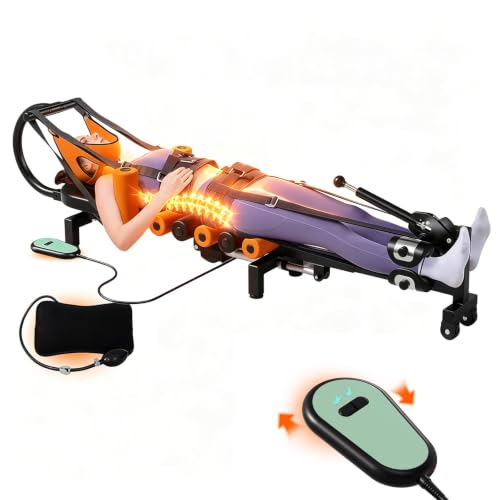
- Corded, remote-controlled motor
- Listed 46.45 × 16.9-inch footprint
- Roller, strap, and air bag included
Best For: Shoppers seeking remote control in a shorter bench
Lightweight Pick
Stamina InLine Back Stretch Bench

- 20.3-pound bench with transport wheels
- Manual crank and adjustable arm supports
- 250-pound weight capacity
Best For: Lightweight, non-inversion stretching at home
Compact Storage Pick

- 0.03-inch stated stretch increments
- 350-pound weight capacity
- 30 pounds; 7 inches high when stored
Best For: Fine manual adjustment with low-profile storage
High-Capacity Pick
Sunny Health & Fitness Reset Table

- 400-pound weight capacity
- Adjustable stretch, arms, and leg settings
- 85.2-by-37-inch listed footprint
Best For: Higher weight capacity with ample floor space
Remote-Controlled Pick
Professional Electric Traction Table

- Electric, adjustable traction
- Remote control for in-session changes
- Flat-lying, non-inversion design
Best For: Hands-free adjustment while lying flat
High-Capacity Manual Pick
Sunny Health & Fitness Reset Table

- Stated 400-pound capacity
- Adjustable stretch, arm, and leg settings
- Low-profile, no-hang design
Best For: Adjustable lumbar stretching with a stated weight limit
Dual-Zone Motorized Pick
Electric Spinal Decompression Table

- Push-button electric operation
- Cervical and lumbar stretching
- Stated 440-pound capacity
Best For: Motorized neck and lower-back stretching
Easy Electric Control – Motorized Decompression Bench
If you want a spinal decompression table for home without a manual crank, this model uses a push-button motor to provide a horizontal stretch. Adjustable shoulder and leg supports with sponge rollers help keep you positioned on the bench.
Best For: Adults who prefer motorized, flat-lying stretching over manual traction or inversion.
Pros:
- Motorized operation avoids hand-cranking.
- Adjustable supports accommodate positioning for neck and lower-back stretching.
- Steel frame and a one-year manufacturer warranty are listed.
Cons:
- Requires power for motorized operation.
- Listing does not specify a user weight limit.
This is a practical option if ease of operation matters most. Check its dimensions against your available floor space, and ask a clinician whether traction is appropriate for you.
Adjustable-Length Pick – Air-Cushioned Traction Table
This spinal decompression table for home combines automatic operation with an adjustable listed length of 65.3–74.8 inches. Its inflatable airbags, foam rollers, and head support straps offer several ways to position yourself for a flat-lying stretch.
Best For: Shoppers who want adjustable length and cushioned support in a non-inverting table.
Pros:
- Listed length adjusts from 65.3 to 74.8 inches.
- Inflatable airbags and foam rollers provide cushioned contact points.
- Automatic operation and a one-year warranty are listed.
Cons:
- The title states a 440-pound capacity, but the supplied specifications do not independently detail a tested weight rating.
- Its stated adjustment range should be checked against the intended user’s measurements.
The adjustable setup is its main draw. Confirm fit and the advertised capacity with the seller before ordering, especially if either is central to your decision.
Supportive Exit Design – Raised Traction Bench With Handrails
If getting on and off a spinal decompression table for home is a concern, this bench stands 24.8 inches high and includes foam-covered side handrails. Its steel frame, non-slip feet, and adjustable length are designed for at-home stretching.
Best For: Users who value handholds and a taller bench for getting up after stretching.
Pros:
- Side handrails offer a place to grip when standing up.
- Steel frame and non-slip feet support a stable setup.
- Head strap and adjustable frame allow neck and full-body stretching positions.
Cons:
- At 82.67 inches long and 18.5 inches wide, it needs substantial floor space.
- The notes give differing adjustment figures; verify fit before purchasing.
Its raised frame and handrails distinguish it from lower benches. The listing recommends users 60–74.8 inches tall, but confirm the sizing guidance because its stated frame ranges are inconsistent.
Remote-Control Option – Compact Electric Traction Bench
This spinal decompression table for home offers corded, motorized stretching controlled by a remote rather than a hand crank. The listing describes adjustable shoulder and leg supports, sponge rollers, and a flat-lying setup.
Best For: Shoppers who want remote-controlled traction in a relatively short bench.
Pros:
- Remote and motor provide powered adjustment.
- Listed footprint is 46.45 by 16.9 inches.
- Includes a motor, air bag, bench frame, sponge roller, and strap.
Cons:
- Corded operation requires access to an outlet.
- No user weight limit is supplied in the notes.
Consider this model for its remote control and listed footprint, not its promotional treatment claims. Verify the working length and intended fit before buying.
Lightweight Pick – Stamina InLine Back Stretch Bench
If you want a spinal decompression table for home without hanging upside down, the Stamina InLine bench offers a lever-operated stretch on a padded, steel-framed platform. At 20.3 pounds, it also has wheels for moving it between rooms.
Best For: Shoppers who want a lightweight, non-inversion bench with simple manual stretch control.
Pros:
- Cranking lever lets you apply traction gradually.
- Padded bench, ankle supports, and adjustable arm supports add comfort.
- Transport wheels and floor-protecting endcaps are practical home-use details.
Cons:
- 250-pound capacity is lower than the other tables here.
- Its 72-inch listed width calls for adequate floor space during use.
This is a straightforward choice if portability matters more than a high weight rating. Check the bench dimensions and adjustment range against your space and body size before buying.
Compact Storage Pick – Exerpeutic 100 Traction Table
The Exerpeutic 100 is a spinal decompression table for home users who want controlled stretching without going upside down. Its control wheel adjusts the stretch in stated 0.03-inch increments, while its 30-pound build and 7-inch stored height make storage a selling point.
Best For: Shoppers prioritizing fine manual adjustment and low-profile storage.
Pros:
- 350-pound weight capacity.
- Control wheel provides small, incremental stretch adjustments.
- Four arm-pad width settings and adjustable leg holders help tailor the fit.
- Stored height of 7 inches may allow it to fit under a bed.
Cons:
- Manual wheel operation may not suit someone seeking motorized adjustment.
- Measure under-bed clearance rather than assuming it will fit.
Its strongest distinction is the combination of precise manual control and compact storage. The adjustable supports also make it worth considering if fixed-position benches feel limiting.
High-Capacity Pick – Sunny Health & Fitness Reset Table
For a spinal decompression table for home with a higher stated weight limit, the Sunny Health & Fitness Reset Table supports up to 400 pounds. It uses a no-hang stretching setup with high-density foam padding and adjustable stretch intensity, arm position, and leg settings.
Best For: Shoppers who need a 400-pound capacity and have room for a larger table.
Pros:
- 400-pound stated weight capacity.
- Adjustable stretch and support positions allow a more personalized setup.
- High-density foam padding provides a cushioned contact surface.
Cons:
- Listed dimensions of 85.2 by 37 by 25.8 inches require substantial space.
- Its 17-kilogram listed weight makes it heavier than the other two options.
This is the capacity-focused option in the group, but its footprint deserves close attention. Measure your available floor area before choosing it over a smaller bench.
Remote-Controlled Pick – Professional Electric Traction Table
If you want a spinal decompression table for home without manual cranking or inversion, this flat-lying model uses electric controls to adjust the stretch. Its included remote lets you change settings while lying down.
Best For: Shoppers who want remote-controlled, adjustable traction in a flat-lying design.
Pros:
- Electric adjustment and multiple traction intensity levels.
- Remote control allows adjustments without getting up.
- Reinforced rollers, brackets, and traction components.
Cons:
- Assembly is required, though illustrated instructions are included.
- The supplied details do not specify a maximum user weight.
The remote is the main convenience advantage here. Confirm the table’s assembled dimensions and weight limit with the seller before buying, since neither is specified in the supplied details.
This spinal decompression table for home takes a low-to-the-ground, no-hang approach to lumbar stretching. The Sunny Health & Fitness Reset Table pairs adjustable stretch, arm, and leg settings with foam padding and a stated 400-pound weight capacity.
Best For: Shoppers prioritizing a stated weight capacity and adjustable, non-inverted lumbar stretching.
Pros:
- Stated 400-pound weight capacity and alloy-steel frame.
- Adjustable stretch intensity, arm position, and leg settings.
- High-density foam padding for support during sessions.
Cons:
- Its 84.8-by-22.6-inch footprint requires floor space.
- The supplied notes do not list motorized controls.
This is the clearest option of the three if a published weight rating matters most. Measure your available space before ordering, and expect to adjust the stretch without a listed electric drive.
For shoppers comparing a spinal decompression table for home that can address both neck and lower-back stretching, this model offers push-button motorized operation. Its horizontal design avoids hanging upside down, while platform rollers are intended to reduce friction during extension.
Best For: Shoppers seeking motorized, horizontal stretching for both cervical and lumbar areas.
Pros:
- Electric motor provides push-button stretching without manual cranking.
- Rolling platform and horizontal, non-inversion design.
- Stated 440-pound support capacity and one-year manufacturer warranty.
Cons:
- The supplied specifications list dimensions of 17.1 by 17.1 by 6.7 inches; verify the assembled table size before ordering.
- No remote control is specified in the supplied notes.
The dual-zone design and published capacity distinguish this option, but the listed dimensions warrant a seller check before you commit. The product claims relief for specific conditions; discuss therapeutic use with a healthcare professional rather than treating those claims as guaranteed outcomes.
How We Picked the Best Spinal Decompression Table for Home
We compared the listed products by traction approach, stated weight or height limits where provided, adjustability, likely space needs, and the amount of setup or supervision each design may require. The selection spans stretch benches, inversion-table alternatives, manual traction devices, and electric tables. A listing’s claims about sciatica, herniated discs, or back-pain relief are not proof of a medical outcome. We did not treat similarly named listings as different designs without evidence; the Sunny Health & Fitness Decompression Reset Table appears twice in the supplied selection, so check the seller, model details, and included accessories before assuming those entries differ.
Quick Comparison: Which Type Fits Your Needs?
Manual Benches and Stretch Systems
Consider these first if you want a simpler, generally less equipment-intensive way to stretch at home. Compare how the bench secures your body, how traction is adjusted, and whether you can get on and off it comfortably. A stated capacity—such as 350 or 440 pounds on specific listings—matters only if the complete product and its instructions confirm it applies to your intended use.
Electric and Professional-Style Tables
Powered models may offer more controlled adjustments, but they also call for closer attention to dimensions, power requirements, controls, assembly, and whether the manufacturer intends unsupervised home use. Do not assume a professional-style table is safer or more effective simply because it is motorized.
Key Buying Factors for a Spinal Decompression Table for Home
Fit, Capacity, and Access
Check the manufacturer’s user-height range, weight rating, restraint placement, and bed dimensions against your body and room. A table that technically supports your weight may still be a poor fit if its supports do not align comfortably or you cannot mount and dismount it safely.
Traction Control and Instructions
Look for clear instructions on positioning, adjustment, session limits, stopping, and release. Decide whether you prefer manually controlled stretching or powered operation, and confirm you can reach the controls and disengage without help if the product is meant for solo use.
Space and Ownership Costs
Measure the table’s full operating footprint, not just its stored dimensions. Check assembly requirements, floor protection, warranty terms, return shipping, and access to replacement parts—especially for large electric equipment.
Medical Suitability
Traction is not appropriate for everyone. Ask a qualified clinician before use if you have a diagnosed spinal condition, osteoporosis, recent surgery or injury, or symptoms that are worsening. Stop if use causes new or increased pain, numbness, or weakness; seek prompt medical advice for concerning symptoms.
Who Should Buy Which Spinal Decompression Table for Home?
Choose a straightforward stretch bench if your priority is a less complex setup and its fit and instructions suit you. Compare higher-capacity manual listings if you need a verified weight rating, but confirm the manufacturer’s full specifications. Consider an electric table only if its controls, available space, cost, and intended-use guidance make sense for your household. If you need treatment for a specific condition rather than general stretching, start with clinical advice before choosing any Spinal Decompression Table for Home.