The right stretching strap can make flexibility work more controlled, comfortable, and repeatable—especially when you are still learning proper positioning. Multi-loop designs, adjustable buckles, and clear exercise guidance can all help beginners build a consistent routine.
We compared 10 stretching straps for beginners across materials, loop layouts, adjustability, comfort, and intended use so you can choose a practical option for yoga, rehabilitation, or everyday mobility training.
Best 10 Stretching Straps for Beginners Picks for 2026
Top Choice

- Ten durable loops for varied positioning
- Includes exercise booklet and video guide
- USA-made, non-elastic 6-foot nylon strap
Best For: Beginners wanting guided, versatile stretching
Recovery Pick
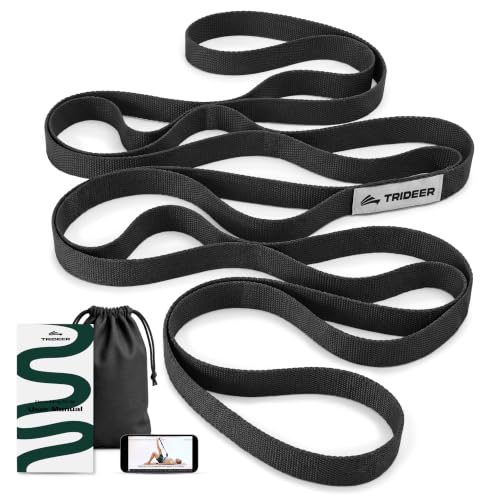
- Multi-loop design for controlled leg positioning
- 75-inch non-elastic construction
- Includes a user guide for home use
Best For: Home recovery and mobility training
Yoga Essential

- Secure adjustable metal D-ring buckle
- 8-foot length for supported yoga poses
- Durable polyester fabric rolls for storage
Best For: Beginner yoga and flexibility practice
Most Versatile
Acozycoo Loop Stretching Strap
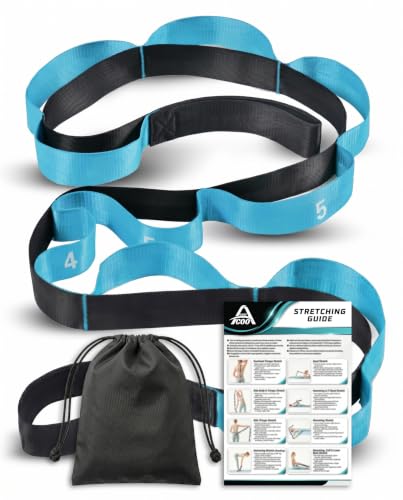
- Choose 86-inch numbered or 75-inch minimalist style
- Professional version includes pouch and guide
- Non-elastic nylon for controlled stretching
Best For: Beginners wanting configurable rehab or fitness use
Best for Home Recovery

- Non-elastic for steady, controlled holds
- Multiple loops adjust stretch depth
- Can support gentle leg-lifting tasks
Best For: Home physical therapy and beginner mobility work
Best Soft Adjustable Strap

- Soft 100% cotton construction
- Double D-ring adjusts strap length
- 1.5-inch width supports an easy grip
Best For: Beginner yoga, Pilates, and gentle stretching
Best for Guided Mobility
12-Loop Physical Therapy Stretch Strap

- 12 reinforced loops offer varied positions
- 8-foot length supports versatile stretching
- Includes an instruction manual and storage bag
Best For: Rehabilitation, recovery, and multi-position mobility work
Easy-Assist Pick
Elastic Multi-Loop Stretch Strap
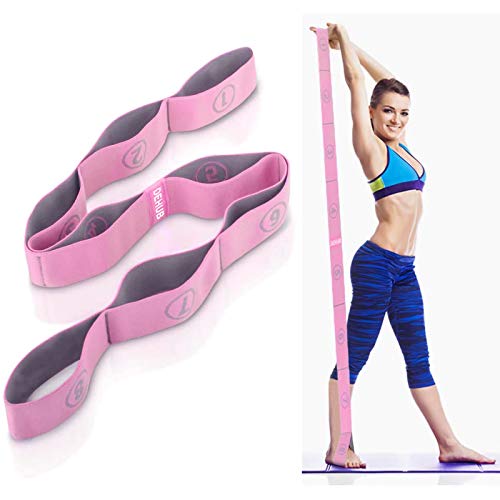
- Elastic design extends up to 2.5 times its length
- Padded outer loops and durable stitching
- Compact and washable for portable use
Best For: Beginners wanting elastic assistance for stretching and recovery
Long-Reach Pick
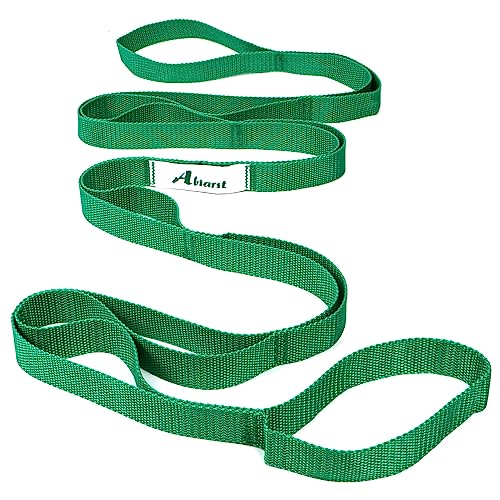
- 75-inch length gives beginners extra reach
- Ten loops enable varied positioning
- Washable, non-elastic fabric for controlled holds
Best For: Beginners needing a long strap for controlled flexibility work
Guide-Included Pick
A AZURELIFE 10-Loop Stretch Strap

- 76-inch strap with 10 non-elastic loops
- Includes a nine-exercise illustrated guide
- Double-lock seams and 12-month warranty
Best For: Beginners seeking guided, controlled stretching practice
Top Choice – OPTP Stretch Out Strap
For beginners comparing stretching straps for beginners, the OPTP Stretch Out Strap is a versatile, non-elastic option with ten loops and an included exercise booklet. Its 6-foot nylon design can support yoga, Pilates, physical therapy, mobility work, and lower-body stretching.
Best For: Beginners who want guided, versatile stretching and mobility work.
Pros:
- Ten durable loops provide multiple hand and foot positions.
- Includes a 40-page exercise booklet and video stretching guide.
- Suitable for yoga, physical therapy, Pilates, warmups, cooldowns, and mobility exercises.
- Made in the USA and backed by more than 27,000 reviews.
Cons:
- The non-elastic strap does not provide band-style stretch or rebound.
- Its one-size, 6-foot format may not suit every user or exercise.
The OPTP stands out when you want a proven, instruction-focused strap rather than a simple accessory. The loop layout and exercise resources make it especially approachable for building a consistent stretching routine.
Recovery Pick – Trideer Leg Lifter Strap
For stretching straps for beginners focused on recovery, the Trideer Leg Lifter Strap offers a straightforward multi-loop design modeled after straps used in physical therapy clinics. Its 75-inch non-elastic construction is suited to home stretching, mobility training, and leg positioning.
Best For: Beginners working on home recovery, leg mobility, or physical-therapy-style stretches.
Pros:
- Multi-loop design supports different grip and positioning options.
- Designed for knee replacement rehab, ACL recovery, and mobility training.
- Non-elastic construction provides controlled positioning during stretches.
- Includes a user guide.
Cons:
- The supplied notes do not specify a storage pouch or additional accessories.
- Its recovery-focused design may be less suited to users seeking a general yoga prop.
This is a practical choice if you want a simple leg-lifting and stretching aid without elastic resistance. The clinic-inspired loop arrangement can make controlled home exercises easier to organize.
Yoga Essential – Gaiam Adjustable Yoga Strap
Among stretching straps for beginners, the Gaiam Yoga Strap is a flexible starting point for learning supported yoga positions. The 8-foot polyester strap uses an adjustable metal D-ring buckle to create a secure loop or shorten the length for different stretches.
Best For: Beginners who primarily want a yoga strap for supported poses and flexibility work.
Pros:
- Adjustable metal D-ring buckle creates a secure loop and multiple lengths.
- Helps users reach limbs and hold stretches without over-extending.
- Durable polyester fabric is designed to resist fraying and breaking.
- Available in 6-, 8-, and 10-foot lengths; the listed version is 8 feet.
Cons:
- The buckle-based design requires adjustment rather than offering fixed numbered loops.
- Hand-wash and flat-dry care may be less convenient than machine washing.
The Gaiam is particularly appealing for yoga beginners who need help reaching or maintaining positions. Its buckle offers useful adjustability, while the long 8-foot format provides room for a range of poses.
Most Versatile – Acozycoo Loop Stretching Strap
For beginners choosing stretching straps for beginners, the Acozycoo offers two formats: an 86-inch professional strap with ten numbered loops or a lighter 75-inch minimalist version. The non-elastic nylon design is intended for physical therapy, leg lifting, yoga, Pilates, flexibility training, and everyday mobility.
Best For: Beginners who want a choice between numbered rehab loops and a compact everyday strap.
Pros:
- The 86-inch version has ten numbered loops for tracking positions and progress.
- The professional version includes a carry pouch and guided workout booklet.
- Heavy-duty non-elastic nylon provides stable, controlled leverage.
- The 75-inch option offers a lighter, 1-inch-wide format for travel or gym use.
Cons:
- The product has two configurations, so buyers must confirm which style they are selecting.
- The minimalist 75-inch version lacks printed numbers and the listed professional accessories.
Acozycoo is a strong fit when your needs may change from rehabilitation to general fitness. The numbered professional version favors structured progress, while the minimalist option keeps the setup lighter and simpler.
Best for Home Recovery – Trideer Loop Stretching Strap
For beginners looking for stretching straps for beginners, the Trideer Stretching Strap offers steady, non-elastic support for controlled mobility work. Its multiple loops make it easier to position your hands or feet and adjust the depth of a stretch gradually.
Best For: Home physical therapy, gentle leg and hip mobility, and beginners who want loop-based assistance without elastic rebound.
Pros:
- Non-elastic design stays steady without bouncing or sudden give.
- Multiple loops provide clear hand and foot positions for adjustable stretching.
- Can assist with leg lifting into bed or a car when flexibility is limited.
- Useful for legs, hips, lower back, ankles, and feet.
Cons:
- The 1-inch width may feel less comfortable during long holds for users with sensitive hands.
- It is designed for stretching and mobility, not elastic resistance training.
This is a practical choice when controlled movement and repeatable positioning matter more than resistance. Beginners can progress through different loops without forcing the stretch.
Best Soft Adjustable Strap – Slim Panda Cotton Yoga Strap
The Slim Panda Yoga Strap is a straightforward option for beginners comparing stretching straps for beginners. Its soft cotton construction, adjustable double D-ring buckle, and extra grip loop help users ease into poses while maintaining control.
Best For: Yoga, Pilates, physical therapy, balance work, and beginners who prefer a soft, adjustable strap rather than multiple sewn-in loops.
Pros:
- 100% cotton offers a soft, flexible grip.
- Double D-ring buckle allows the length to be adjusted for different stretches.
- Extra loop on one end provides an additional handhold.
- Wide 1.5-inch design is easy to hold and control.
Cons:
- The 6-foot length may provide less reach than longer straps.
- It has an adjustable buckle rather than a series of dedicated loops.
This strap suits beginners who want one adaptable belt for several activities. The cotton feel may be especially appealing if stiff or narrow straps are uncomfortable to grip.
Best for Guided Mobility – 12-Loop Physical Therapy Stretch Strap
For beginners who want more hand and foot positions, this 8-foot physical therapy strap is a versatile pick among stretching straps for beginners. Its 12 reinforced loops support gradual positioning for hamstrings, hips, calves, shoulders, and lower-back mobility.
Best For: Guided rehabilitation, athletic recovery, and users who want a longer, wider strap with many controlled grip options.
Pros:
- Twelve reinforced loops offer numerous hand and foot positions.
- Shock-absorbing SBR material is designed to reduce digging into the skin.
- Sweat-resistant surface is easy to clean.
- Includes an instruction manual and storage bag for transport.
Cons:
- The 8-foot length may be more strap than some beginners need.
- At 1.5 inches wide and 0.21 kg, it is less compact than a basic narrow strap.
- The loop layout may take some time to learn.
This model is a strong fit when versatility and guided positioning are priorities. The longer format and 12-loop layout give beginners room to explore different mobility exercises while keeping the strap non-elastic.
Easy-Assist Pick – Elastic Multi-Loop Stretch Strap
For beginners comparing stretching straps for beginners, this elastic multi-loop design offers a more forgiving feel and several handholds for assisted stretching. Its compact size and washable construction also make it convenient for home workouts, classes, or rehabilitation routines.
Best For: Beginners who want elastic assistance for yoga, Pilates, dance, warmups, or recovery-focused stretching.
Pros:
- Elastic material can extend up to 2.5 times its length for assisted mobility work.
- Multiple loops help with positioning and gradual stretching.
- Soft neoprene padding is included in the outer loops.
- Compact, washable, and easy to carry.
Cons:
- At 42.52 inches long, it is shorter than the 75- to 76-inch straps in this roundup.
- Elastic resistance may provide less fixed control than a non-elastic strap.
This is a practical choice if you prefer a softer, stretchier strap that can support assisted movement. Those wanting a rigid reference point for precise holds may prefer a non-elastic model.
Long-Reach Pick – Abiarst 10-Loop Stretch Strap
For beginners choosing stretching straps for beginners, this 75-inch non-elastic band provides a long reach and 10 clearly separated loops. The fixed fabric design is useful when you want consistent hand and foot placement during flexibility, Pilates, yoga, or physical-therapy exercises.
Best For: Beginners who need extra length and multiple handholds for controlled, non-elastic stretching.
Pros:
- 75-inch length offers more room to stretch than shorter straps.
- Ten individual loops support varied hand and foot positions.
- Durable, tight-knit fabric is washable and designed not to fray or break.
- Suitable for physical therapy, yoga, Pilates, dance, and daily stretching.
Cons:
- Non-elastic fabric does not provide spring-like assistance.
- The 1-inch width may feel narrower than wider strap designs.
The Abiarst is a straightforward option for learners who want a long, stable strap with plenty of loops. Its non-elastic construction favors controlled positioning over assisted recoil.
Guide-Included Pick – A AZURELIFE 10-Loop Stretch Strap
If you are new to stretching straps for beginners, the A AZURELIFE model combines a full 76-inch length with 10 non-elastic loops and an illustrated nine-exercise guide. Its multiple handholds are designed for gradual, unassisted stretching across yoga, Pilates, dance, and physical-therapy routines.
Best For: Beginners who want a durable, long strap with an included exercise guide.
Pros:
- Ten loops allow gradual progression and controlled positioning.
- 76-inch length provides ample reach for stretching routines.
- Polyester webbing uses tight-knit construction and double-lock seams.
- Includes a simple illustrated guide with nine exercises and a 12-month warranty.
Cons:
- Non-elastic construction may feel less accommodating than an elastic strap.
- Its 1-inch width may offer less surface area than wider alternatives.
This model stands out for its combination of length, loop variety, and beginner-oriented exercise guide. It is a solid fit for users who want structured, unassisted stretching rather than elastic support.
How We Picked the Best Stretching Straps for Beginners
We focused on features that matter when learning assisted stretches: secure hand and foot placement, useful loop spacing, durable construction, comfortable handling, and straightforward adjustment. We also considered whether each strap is better suited to general fitness, yoga, physical therapy, or targeted leg and knee mobility work.
Because product specifications and user needs vary, this list includes both simple buckle-style straps and multi-loop designs. Non-elastic straps generally provide more predictable support, while elastic models can offer a little more give during movement.
Quick Comparison
| Best For | Look For | Strap Style |
|---|---|---|
| First-time users | Multiple labeled or evenly spaced loops | Non-elastic multi-loop |
| Yoga and Pilates | Adjustable length and a secure buckle | Buckle-style yoga strap |
| Physical therapy | Wide webbing and easy-grip loops | Leg-lifter or therapy strap |
| Gentler assisted stretching | Controlled give and comfortable handling | Elastic or padded design |
Key Buying Factors for Stretching Straps for Beginners
Loop Design and Adjustability
Multiple loops make it easier to change your grip without rethreading the strap. A buckle-style model is more versatile when you need a custom length, but it may take slightly longer to adjust.
Length and Width
Longer straps are useful for hamstrings, shoulders, and full-body stretches, while a wider strap may feel more stable in your hands or around the foot. Check the listed dimensions if you are tall or plan to use the strap for assisted leg lifts.
Material and Stretch
Non-elastic webbing offers consistent resistance and helps prevent accidentally pulling deeper than intended. Elastic straps can feel more forgiving, but beginners should avoid using their rebound to force range of motion.
Comfort and Safety
Choose smooth, durable webbing with loops that do not pinch. Move slowly, keep joints aligned, and stop if you feel sharp pain, numbness, or tingling. If you are recovering from an injury, follow your clinician’s instructions.
Who Should Buy Which Stretching Straps for Beginners?
Choose a multi-loop strap if you want the simplest setup for hamstrings, calves, hips, and shoulders. A buckle-style yoga strap is a better fit for users who want one adjustable tool for yoga, Pilates, and general stretching. Look for a leg-lifter design if your priority is assisted range-of-motion work or physical therapy. An elastic option may suit users who prefer a softer feel, provided they can maintain slow, controlled movement.
For most beginners, a durable, non-elastic strap with several clearly spaced loops is the safest all-purpose starting point. It offers predictable support, easy progression, and enough versatility to remain useful as your flexibility improves.