Recovering from hip surgery often means avoiding awkward pivots, risky lifts, and unnecessary strain. The right transfer aid can make bedside, wheelchair, and car-to-seat moves feel far more controlled.
This roundup focuses on practical options for safer post-op transfers, with attention to stability, handle design, weight capacity, and ease of use.
Best 10 Hip Surgery Transfer Board Picks for 2026
Best for Heavy-Duty Support
DMI Heavy-Duty Wooden Transfer Board

- 440 lb weight capacity for dependable support
- Sanded, sealed wood with tapered ends for smoother transfers
- FSA/HSA eligible and useful for multiple seating surfaces
Best For: Post-surgery patients and caregivers needing a sturdy, straightforward transfer board.
Best for Safer Leg Lifts

- 42-inch length helps guide the leg with less bending
- Multi-loop handle improves grip and control
- Rigid reinforced strap adds stability for daily transfers
Best For: Recovery patients who need a sturdy leg-lifting aid for bed, car, or wheelchair transfers.
Best for Easy Car Transfers
Transfer Board Tubular Slide Sheet

- Slick tubular surface reduces friction during transfers
- Lightweight, foldable, and easy to store
- Waterproof and washable nylon construction
Best For: Seniors and post-hip surgery users needing a compact transfer aid for cars, beds, and wheelchairs.
Best for Controlled Rotating Transfers
Rotating Transfer Board with Dual Handles

- 360° rotation helps guide smoother transfers
- Dual handles improve caregiver control and leverage
- Non-slip base adds stability during use
Best For: People who need assisted, more controlled transfers after hip surgery.
Best for Secure Positioning
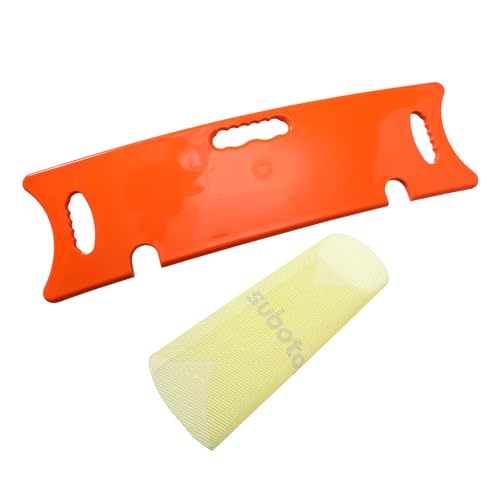
- 441 lb ABS board with a smooth glide surface
- Three built-in handles for easier placement and handling
- Includes a 10-inch non-slip round pad for added grip
Best For: Post-hip-surgery users and caregivers who want a sturdy board with extra traction and handle support.
Best for Controlled Pivot Transfers
Turntable Transfer Board with Dual Handles

- Rotating turntable reduces twisting during seated transfers
- Dual handles improve grip, leverage, and caregiver support
- Non-slip base and heavy-duty build suit frequent use
Best For: Post-surgery users and caregivers who want a controlled seated transfer aid with extra stability.
Best for Secure Grip
Transfer Board & Slide Sheet Set

- Includes a transfer board plus slide sheet
- Anti-slip backing and curved edges add stability
- Three handles improve grip during transfers
Best For: Caregivers and patients who want a safer, more controlled transfer setup.
Best with Extra Features
Heavy-Duty Wood Transfer Board with Handles

- Supports up to 500 pounds
- Cutout handle helps with grip and control
- Smooth sealed wood finish for safer sliding
Best For: Seniors, post-op patients, and caregivers needing a sturdy transfer board for routine use.
Best for No-Lift Transfers
Mobility Transfer Board with Sliding Disk

- Sliding disk helps with pivots and smoother transfers
- No-lift design reduces strain for users and caregivers
- Suitable for bed, car, and bathroom transfer needs
Best For: People recovering from hip surgery and wheelchair users who need a versatile no-lift transfer aid.
Best Simple Pick

- 440 lb weight capacity for secure daily transfers
- Lightweight 2.4 lb design is easy to carry
- Smooth hardwood surface helps sliding feel more controlled
Best For: People who need a sturdy, portable transfer board for post-op or daily mobility assistance.
Best for Heavy-Duty Support – DMI Heavy-Duty Wooden Transfer Board
If you need a dependable hip surgery transfer board for moving between a bed, wheelchair, chair, or commode, this DMI slide board is built for simple, secure transfers. The solid wood construction gives patients and caregivers a stable surface, while the tapered, sanded edges help make repositioning smoother.
Best For: Post-surgery patients, seniors, and caregivers who want a sturdy transfer board with a high weight capacity and a straightforward, no-frills design.
Pros:
- Solid Scotch pine construction supports up to 440 lbs.
- Rounded, sanded, and sealed edges help reduce snags and improve comfort.
- Works for transfers from beds, wheelchairs, chairs, sofas, and commodes.
- FSA/HSA eligible for eligible buyers.
Cons:
- Wood build is sturdy, but heavier and less portable than some plastic boards.
- No handles or cutout grips for carrying.
- May be too basic for users wanting extra transfer-assist features.
As a hip surgery transfer board, this model stands out for its strength and simple reliability rather than extra bells and whistles. It’s a practical pick if your priority is a durable board that can handle routine post-op transfers with confidence.
Best for Safer Leg Lifts – 42-Inch Multi-Loop Leg Lifter
If you’re shopping for a hip surgery transfer board alternative that helps you move your leg with less strain, this 42-inch leg lifter is a practical recovery aid. The rigid strap, multi-loop handle, and wide foothold make it easier to guide your leg into bed, a car, or a wheelchair without bending too far.
Best For: People recovering from hip or knee surgery who need a simple, sturdy tool for lifting and positioning the leg during daily transfers.
Pros:
- Multi-loop handle gives you several grip positions for better control.
- Rigid reinforced strap adds support and helps the loop hold its shape.
- Extra-wide foothold works with shoes, casts, and larger feet.
- Useful for bed, couch, wheelchair, and car transfers.
Cons:
- It helps lift the leg, but it is not a true transfer board.
- May feel bulky compared with simpler leg straps.
Overall, this is a solid choice if you want more control during recovery and need something that feels dependable for everyday movement. While it’s not a hip surgery transfer board, it can be a helpful mobility aid for getting in and out of seated positions with less effort.
Best for Easy Car Transfers – Transfer Board Tubular Slide Sheet
This hip surgery transfer board is designed to make vehicle, wheelchair, and bed transfers feel smoother with less twisting and less friction. Its tubular, slick nylon surface helps users reposition more easily, especially when getting in and out of a car or moving between a bed and chair.
Best For: Seniors, post-hip surgery patients, and caregivers who want a lightweight transfer aid for easier car, bed, and wheelchair moves.
Pros:
- Low-friction tubular design helps reduce strain during transfers
- Very lightweight and folds away easily for travel or storage
- Waterproof, washable nylon makes cleanup simple
- Useful for cars, wheelchairs, recliners, and bed repositioning
Cons:
- Small size may not suit users needing a larger transfer surface
- Not a rigid board, so it may feel less supportive for some users
For shoppers comparing a hip surgery transfer board, this model stands out for portability and smooth sliding rather than heavy-duty support. It is a practical pick if the main goal is easier repositioning with minimal bulk.
Best for Controlled Rotating Transfers – Rotating Transfer Board with Dual Handles
If you need a hip surgery transfer board that helps reduce twisting during bed, wheelchair, or sofa transfers, this rotating model is built for smoother, more predictable movement. The 360° turntable and non-slip base are designed to improve control for caregivers while supporting safer lateral transfers at home.
Best For: Seniors, post-op patients, and caregivers who want a more guided transfer board with added stability and assisted rotation.
Pros:
- 360° turntable helps make transfers more controlled and less strenuous
- Dual assisted handles add grip and leverage for caregivers
- Non-slip underside and guided rail system improve stability
- FSA/HSA eligible for buyers using health spending accounts
Cons:
- Requires caregiver assistance and pre-use adjustment for safe operation
- Not as simple or portable as a basic flat transfer board
- May be more than some users need for straightforward transfers
As a hip surgery transfer board, this is a strong choice if you want more control than a standard slide board can offer. It’s especially useful when safer pivoting and caregiver confidence matter more than minimal design.
Best for Secure Positioning – Heavy-Duty ABS Transfer Board
If you need a practical hip surgery transfer board for everyday moves, this sliding board focuses on stability and controlled lateral transfers between a bed, couch, toilet, tub, or wheelchair. The smooth ABS surface helps reduce friction, while the included non-slip pad and built-in handles make positioning easier for caregivers and users.
Best For: Post-hip-surgery users, caregivers, and anyone who wants a sturdy transfer board with extra grip and handle support for safer assisted transfers.
Pros:
- Heavy-duty ABS construction supports up to 441 lb with a smooth glide surface.
- Three built-in handles make lifting, positioning, and repositioning easier.
- Includes a 10-inch non-slip round pad for better traction on smooth surfaces.
- Tapered ends and a slim profile help it fit common transfer gaps.
Cons:
- At 29.5 inches long, it may not suit every transfer distance or setup.
- Users still need to test fit carefully and move slowly before regular use.
For shoppers comparing a hip surgery transfer board, this model stands out for its sturdy build and added grip features rather than ultra-light portability. It is a solid choice if your priority is controlled transfers and a more confident handoff between common surfaces.
Best for Controlled Pivot Transfers – Turntable Transfer Board with Dual Handles
If you need a hip surgery transfer board that helps reduce twisting during seated moves, this turntable-style model is built for controlled pivoting from a wheelchair to a bed, chair, or sofa. The dual assisted handles and non-slip base are geared toward safer caregiver-assisted transfers in home or clinical settings.
Best For: Post-surgery users, older adults, and caregivers who want a more controlled seated transfer with extra grip points and a professional medical finish.
Pros:
- Built-in rotating turntable helps limit awkward twisting during transfers
- Dual assisted handles give caregivers and users better leverage and stability
- Non-slip underside supports steadier placement on flat surfaces
- Heavy-duty design suits frequent daily use
Cons:
- Requires caregiver assistance for safe use
- Turntable tension may need adjustment before first use
For buyers comparing a hip surgery transfer board, the main advantage here is controlled seated rotation rather than a simple slide, which can make transfers feel more manageable when mobility is limited. It’s a practical pick if you want added stability and a more guided transfer process.
Best for Secure Grip – Transfer Board & Slide Sheet Set
If you need a hip surgery transfer board for moving between a wheelchair, car, toilet, or tub, this set adds a little extra control to the process. The included slide sheet helps reduce friction, while the board’s curved edges, anti-slip backing, and three-handle design are meant to make transfers feel steadier and easier for both patient and caregiver.
Best For: Caregivers and patients who want a safer, more controlled transfer setup with a board and slide sheet in one package.
Pros:
- Includes both a transfer board and a 28″ x 28″ slide sheet for smoother repositioning
- Anti-slip backing and curved edges help improve stability and comfort
- Three-handle design gives users more places to grip during transfers
- FSA/HSA eligible, which can help with out-of-pocket costs
Cons:
- Board size may feel limiting for larger users or wider transfer gaps
- Manual transfers still require proper technique and caregiver assistance
- Slide sheet may not be needed for every transfer scenario
This hip surgery transfer board stands out if you want a bundled, easier-to-handle option rather than a basic board alone. It’s a practical pick for everyday home use, especially when stability and smoother movement matter most.
Best with Extra Features – Heavy-Duty Wood Transfer Board with Handles
If you need a sturdy hip surgery transfer board for safer bed-to-wheelchair or chair-to-bed moves, this wood slide board is built for practical everyday use. Its cutout handle, smooth sealed surface, and 500-pound capacity make it a solid option for post-op recovery, senior care, and caregiver-assisted transfers.
Best For: Seniors, post-op patients, and caregivers who want a durable transfer board for routine home or rehab use.
Pros:
- Heavy-duty wood construction supports up to 500 pounds
- Cutout handle improves grip and control during transfers
- Smooth, sealed finish helps reduce snagging and skin irritation
- Useful for beds, wheelchairs, stools, and other transfer points
Cons:
- Wood build is less portable than some lightweight plastic boards
- May be too basic for users needing extra positioning features
- Multiple sizes can make picking the right fit a little confusing
For buyers comparing a hip surgery transfer board, this one stands out for strength and simplicity more than specialty extras. It is a straightforward mobility aid that prioritizes stable transfers and caregiver ease over advanced design features.
Best for No-Lift Transfers – Mobility Transfer Board with Sliding Disk
If you need a hip surgery transfer board that reduces strain during everyday moves, this sliding-disk system is designed to make transfers smoother between a wheelchair, bed, car seat, and bathroom fixtures. The rotating disk helps minimize lifting and friction, which can be especially helpful for post-op recovery and caregiver-assisted transfers.
Best For: People recovering from hip surgery, wheelchair users, and caregivers who want a no-lift transfer aid for routine bed, car, and bathroom movement.
Pros:
- Sliding disk design helps make turns and pivots easier during transfers
- No-lift approach can reduce physical strain on users and caregivers
- Works across multiple settings, including bed, car, and bathroom transfers
- Lightweight and portable for home use or travel
Cons:
- May take a little practice to get used to the rotating motion
- Best suited for controlled transfers rather than quick repositioning
- Lubrication and break-in may be needed before first use
Overall, this hip surgery transfer board stands out for its sliding-disk mechanism and practical no-lift design, making it a strong choice when safer, lower-effort transfers matter most. It is especially appealing if you want one mobility aid that can handle several common transfer scenarios without adding much bulk.
Best Simple Pick – Wooden 29" Transfer Board
If you need a practical hip surgery transfer board for safer bed, wheelchair, or car moves, this wooden slide board is built around stability and simplicity. Its smooth hardwood surface and cut-out handles make transfers easier for users who want more independence and for caregivers who want less strain.
Best For: Seniors, post-op recovery, and disabled users who need a sturdy transfer aid for frequent daily moves.
Pros:
- 440 lb capacity gives it strong support for everyday transfers
- Lightweight 2.4 lb build makes it easy to carry and position
- Smooth, sealed surface helps reduce snags during sliding transfers
- 29-inch length works well for bed, chair, and car use
Cons:
- Wood design may feel less cushioned than padded transfer aids
- Requires some upper-body or caregiver assistance for best use
Overall, this is a solid hip surgery transfer board if you want a straightforward, durable option that prioritizes load capacity and easy handling over extra features. It’s a dependable pick for home recovery and routine mobility support.
How We Picked the Best Hip Surgery Transfer Board
For a Hip Surgery Transfer Board, the most important factors are safe weight support, smooth board surface, comfortable handholds, and a shape that fits the user’s transfer routine. We also favored products that are straightforward to position and useful in common recovery settings like home, rehab, and vehicle transfers.
Quick Comparison
In general, longer boards can bridge wider gaps, while shorter boards are easier to store and maneuver in tight spaces. Models with cutout handles or added grips may be easier for caregivers to control, while rotating or disk-assisted designs can help reduce twisting during seated transfers. Wooden boards tend to feel rigid and stable; sliding-sheet style options may suit repositioning more than classic lateral transfers.
Key Buying Factors for a Hip Surgery Transfer Board
Length and Reach
Choose a board that spans the gap between transfer surfaces without forcing the user to overreach. If the wheelchair, bed, sofa, or car seat height varies a lot, a longer board may be more versatile.
Surface and Glide
Look for a smooth, low-friction surface that supports controlled movement. The goal is a stable slide, not a jerky shift. Rounded edges can also improve comfort and reduce snagging on clothing.
Handles and Control
Cutout handles and dual-grip designs can help caregivers guide placement and improve confidence during transfers. If hand strength is limited, a board with easier grip points may be especially valuable.
Weight Capacity and Build
Check the stated load rating and overall construction. Heavy-duty wood and reinforced composite designs are common choices for users who want a firmer feel and dependable support.
Use Case Fit
Not every Hip Surgery Transfer Board is ideal for every job. Some are better for wheelchair-to-bed transfers, others for car entry, and some are designed to reduce twisting or assist with repositioning. Match the design to the most frequent transfer you need to make.
Who Should Buy Which Hip Surgery Transfer Board?
Choose a basic wooden or heavy-duty slide board if you want a simple, rigid solution for everyday lateral transfers. Pick a model with handles if caregiver assistance is part of the routine. Consider a rotating or disk-based option if reducing pivoting is a priority. For car transfers or repositioning tasks, look for a board specifically shaped for those scenarios rather than a one-size-fits-all design.
For most post-op users, the best choice is the one that balances stability, ease of placement, and comfort while fitting the spaces you actually transfer between.