A walker can offer a steadier way to move, but the right design depends on where you walk, how much support you need, and whether you can use hand brakes reliably.
These 10 options include basic folding walkers, compact two-wheel models, seated rollators, upright walkers, and higher-capacity designs. Use the guide below to narrow the choices by fit and everyday use.
Best 10 Fall Prevention Walker Picks for 2026
Best Folding Rollator

- One-hand fold narrows rear wheels to 9.6 inches
- Seven handle heights and an 18-by-11-inch seat
- Capacity figures conflict; verify before buying
Best For: Seated walks and quick folding
Best for Travel

- 8-pound aluminum frame
- Folds to a 5-by-7-inch footprint
- Fixed wheels; capacity figures conflict
Best For: Travel and tight storage
Best Lightweight Standard Walker

- Weighs 6 pounds
- Eight listed height adjustments
- Round feet can be swapped for included skis
Best For: Lightweight, basic walking support
Best Bariatric Upright Option
Helavo Extra-Wide Upright Walker

- 500-pound stated capacity
- 20.1-inch-wide seat and cushioned armrests
- 28.3-inch frame width requires clearance
Best For: Higher-capacity upright support and seated breaks
Best for Protecting Floors
Loyoda Folding Walker with Glide Balls

- 350-lb weight capacity
- Includes two precut floor-friendly glide balls
- Folds with a trigger-release mechanism
Best For: Indoor users who want a foldable walker with floor-friendly glides
Best Upright Option
Drive Medical Elevate Upright Walker

- Adjustable padded forearm rests
- Padded seat and loop-lock brakes
- One-handed side-to-side fold
Best For: Adults who want upright forearm support and a built-in seat
Best High-Capacity Pick
Medline Bariatric Folding Walker
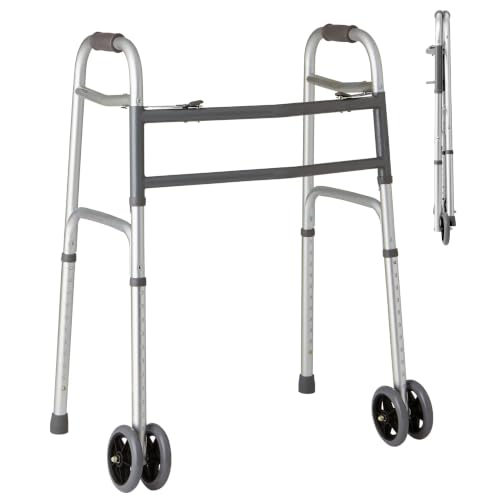
- 500-lb weight capacity
- 20.5 inches between grips
- Height adjusts from 33.5 to 43.5 inches
Best For: Larger adults who need a wider, higher-capacity folding walker
Best for Standing Practice
Adult Standing Walker with Eight Wheels

- Anti-tilt, eight-wheel frame
- Adjustable height and width
- 220-pound weight capacity
Best For: Adults seeking padded support for standing practice
Best for Compact Travel

- Weighs 7 pounds
- Folds to a 6-by-8-inch footprint
- Supports up to 300 pounds
Best For: Travel and errands when compact storage matters
Best for Arm Support

- Removable padded armrests
- 17–22-inch adjustable width
- 350-pound weight capacity
Best For: Adults wanting forearm support and a folding frame
Best Folding Rollator – STEPPILOT Titan Rollator
For shoppers comparing a fall prevention walker with a seat, the STEPPILOT Titan combines a one-hand folding design, adjustable handles, and 8-inch wheels for indoor and outdoor use. It also has hand brakes and a backrest for seated breaks.
Best For: Adults who want a seated rollator that folds quickly for storage or transport.
Pros:
- One-hand fold narrows the rear wheel width to 9.6 inches.
- Seven handle settings from 34 to 40 inches and an 18-by-11-inch seat.
- Includes a storage bag, cup holder, and cane holder.
Cons:
- At approximately 19.2–19.6 pounds, it is heavier to lift than the standard walkers in this roundup.
- The supplied notes conflict on capacity: the bullets say 350 pounds, while the details list 300 pounds. Verify before buying.
This is a practical pick if you value a seat and compact folding more than minimum lifting weight. Confirm the stated capacity and fit before purchase.
Best for Travel – Stander Space Saver Walker
If a fall prevention walker needs to fit easily into a car or crowded storage space, the Stander Space Saver Walker stands out for its 8-pound aluminum frame and compact fold. Its two fixed front wheels and rear ski glides provide rolling support without a rollator seat.
Best For: Adults who prioritize light lifting and compact storage for errands or travel.
Pros:
- Folds to a 5-by-7-inch footprint for storage.
- Weighs 8 pounds and arrives pre-assembled.
- Padded handles adjust from 32.5 to 39 inches.
Cons:
- No seat is listed for resting during walks.
- Fixed front wheels do not swivel.
- The supplied notes conflict on capacity: 300 pounds in the bullets and 400 pounds in the details.
Choose this model for portability rather than seated breaks or swivel-wheel maneuvering. Verify the weight limit with the seller if capacity is a deciding factor.
Best Lightweight Standard Walker – Loyoda Folding Walker
The Loyoda is a straightforward fall prevention walker option for buyers who prefer a lightweight, two-wheel standard frame over a seated rollator. It weighs 6 pounds and includes round rear feet plus ski glides that can be fitted in their place.
Best For: Adults seeking a light folding walker with adjustable height and a choice of rear feet or glides.
Pros:
- Six-pound aluminum frame is relatively easy to lift.
- Eight height adjustments are listed, with a stated range of approximately 31 to 38 inches.
- Includes 5-inch wheels, round feet, and replaceable ski glides.
Cons:
- No seat or backrest is listed.
- The notes do not specify a braking system; assess whether its wheel-and-glide setup suits your needs.
Its main appeal is simplicity and low weight, not amenities. Check the handle-height fit and choose the rear contact option appropriate for where you walk.
Best Bariatric Upright Option – Helavo Extra-Wide Upright Walker
For shoppers needing a higher-capacity fall prevention walker, the Helavo upright rollator lists a 500-pound capacity, cushioned armrests, and a 20.1-inch-wide seat. Its 28.3-inch overall width deserves a doorway check before purchase.
Best For: Larger adults who want upright forearm support, a spacious seat, and hand-operated brakes.
Pros:
- 500-pound stated capacity and adjustable seat height from 20.9 to 22.8 inches.
- Eight-inch flat-free rubber wheels and hand brakes for stopping and parking.
- Includes a padded backrest, storage bag, cup holder, and cane holder.
- Reflectors and a stepping aid add practical outdoor features.
Cons:
- The 28.3-inch-wide frame may be difficult to use through narrower openings.
- Folding reduces its length but not its stated 28.3-inch width.
This is the roomiest, highest-capacity option here, but measure doors and storage space first. As with any rollator, use the parking brakes before sitting.
Best for Protecting Floors – Loyoda Folding Walker with Glide Balls
For shoppers comparing a fall prevention walker for indoor use, the Loyoda pairs 5-inch wheels with two precut tennis glide balls designed to move across hard floors without scuffing them. Its aluminum frame supports up to 350 pounds.
Best For: Adults who want a foldable walker with floor-friendly rear glides.
Pros:
- Precut glide balls slip on without cutting.
- Trigger-release mechanism makes folding for storage or transport easier.
- Adjustable height, approximately 32–38 inches, helps users set the handles to a comfortable position.
Cons:
- No seat or hand brakes are listed.
- The 38-inch maximum handle height may not fit users who need a taller setting.
The included glides make this a practical choice for hardwood or similar floors; check the handle-height range before buying.
Best Upright Option – Drive Medical Elevate Upright Walker
If your fall prevention walker search calls for forearm support and a place to sit, the Drive Medical Elevate offers adjustable padded armrests, a padded seat, and loop-lock brakes. It is a rolling walker designed to support a more upright posture.
Best For: Adults within the stated 5’3″–6’5″ user-height range who prefer forearm support and a built-in seat.
Pros:
- Armrest height adjusts from 39 to 44 inches.
- Loop-lock brakes provide stopping and parking control.
- One-handed, side-to-side fold helps with storage and travel.
- 10-inch front and 8-inch rear casters support rolling maneuverability.
Cons:
- At approximately 22–23 pounds, it is heavier to lift than the other walkers in this roundup.
- Its 300-pound capacity is lower than the other two models listed here.
Choose this model for its posture-oriented design and seating, while accounting for its lifting weight and checking that the armrest range fits.
Best High-Capacity Pick – Medline Bariatric Folding Walker
For buyers who need a higher-capacity fall prevention walker, the Medline bariatric model supports up to 500 pounds. Its extra-wide frame provides 20.5 inches between the grips, with 5-inch wheels for moving over various surfaces.
Best For: Larger adults seeking a wider, higher-capacity folding walker.
Pros:
- 500-pound weight capacity and 20.5-inch space between grips.
- Push-button legs adjust from 33.5 to 43.5 inches.
- Two-button mechanism folds the walker flat for storage or travel.
- Ergonomic grips are designed to reduce hand fatigue.
Cons:
- Its 11-pound weight may be less convenient to lift than a lighter standard walker.
- No seat or hand brakes are listed.
This is the strongest capacity match of the three, especially if grip spacing matters; measure your available doorway and storage space for the extra-wide frame.
Best for Standing Practice – Adult Standing Walker with Eight Wheels
For shoppers comparing fall prevention walker options, this standing walker offers an anti-tilt, eight-wheel frame and double support pads for walking and standing practice. It fits users 58–71 inches tall and supports up to 220 pounds.
Best For: Adults who want adjustable, padded support for standing practice and everyday movement.
Pros:
- Anti-tilt chassis and eight wheels add side-to-side stability.
- Ten height settings and five width settings help tailor the fit.
- Includes brakes and a removable panel for sitting and resting.
Cons:
- 220-pound capacity is lower than the other walkers in this roundup.
- Its stated 36-by-39-inch footprint may be awkward in tight spaces.
The extensive adjustments are useful if padded standing support is the priority; check your available floor space and weight requirements before choosing it.
Best for Compact Travel – Stander Wonder Walker
If portability matters in a fall prevention walker, the Stander Wonder Walker folds into a compact 6-by-8-inch footprint and weighs 7 pounds. Its two front wheels and rear ski glides provide walking support without the bulk of a larger frame.
Best For: Adults who need a lightweight walker to transport on errands or trips.
Pros:
- Folds compactly for storage and travel.
- Adjustable handles range from 32.5 to 39 inches.
- Aluminum frame supports up to 300 pounds.
Cons:
- Organizer pouch is sold separately.
- Does not offer the padded forearm support found on platform-style walkers.
Its strongest advantage is easy transport. Check that the handle-height range and 25-inch overall width suit your fit and walking spaces.
Best for Arm Support – Delog Folding Platform Walker
This Delog model is a fall prevention walker option for shoppers who prefer padded armrests alongside hand grips. It pairs removable arm supports with 5-inch wheels, a folding aluminum frame, and a stated 350-pound capacity.
Best For: Adults who want forearm support in a folding walker with adjustable width.
Pros:
- Removable PU armrest pads and sponge handles provide two contact points.
- Width adjusts from 17 to 22 inches; height adjusts from 30 to 38 inches.
- One-click folding simplifies storage and transport.
Cons:
- At 8.6 pounds, it weighs more than the Stander travel walker.
- The stated fit range is for users approximately 5 feet to 6 feet 2 inches tall.
Consider this model when arm support and a higher weight capacity matter more than minimizing carry weight. Measure your doorway and confirm the adjusted width before ordering.
How We Picked These Fall Prevention Walker Options
We organized the 10 selected walkers around practical buying differences: support style, wheel configuration, stated weight capacity, arm support, folding design, and suitability for home or outdoor use. This is a comparison of listed features, not a claim that any walker has been clinically tested to prevent falls. A device only helps when it fits the user, the walking environment, and the tasks it will be used for.
Quick Comparison by Walker Type
Two-wheel folding walkers—including the Stander, Loyoda, and Medline options—put wheels at the front and use rear tips, skis, or glides. They suit users who want a conventional walker they can lift or advance with control. Rollators with seats can be convenient for longer outings and rest breaks, but their rolling design requires reliable brake use. Upright and platform walkers, such as the Helavo, Drive Medical, and Delog models, offer forearm or padded-arm support for people who struggle with a standard handgrip. The eight-wheel standing walker has a distinct configuration; check its dimensions, turning space, and use instructions before choosing it for a small home.
Key Buying Factors for a Fall Prevention Walker
Fit and Support
Check the manufacturer’s height range and adjustment increments. With a standard walker, the handgrips should allow a comfortable, slight elbow bend while standing upright. For a platform or upright model, confirm that the arm supports adjust to your forearms without forcing you to hunch or lean too far forward. Ask a clinician or physical therapist for help if you are unsure which support style is appropriate.
Wheels, Brakes, and Walking Surfaces
Consider door thresholds, rugs, pavement, and the space needed to turn. Rear skis or glides may move differently from rubber tips, especially on slick flooring. For any rollator, test whether you can squeeze and lock the brakes comfortably; do not use a seat unless its parking brakes are engaged and the manufacturer permits seated use.
Capacity, Width, and Storage
Choose a stated weight capacity that accommodates the user, and verify overall width against the narrowest doorway at home. Higher-capacity walkers may be wider and heavier. If the walker will travel by car, check folded dimensions and whether the user or caregiver can lift it safely.
Who Should Buy Which Fall Prevention Walker?
Choose a compact two-wheel walker if storage and straightforward indoor maneuvering matter most. Consider a heavy-duty folding or extra-wide upright model when capacity and usable width are priorities. Look at a platform walker if gripping a standard handle is difficult, subject to professional guidance. A seated rollator may suit someone who needs planned rest stops and can manage its brakes. If falls are frequent, balance is worsening, or weight-bearing is restricted, get an individualized mobility assessment rather than choosing a Fall Prevention Walker from features alone.