If you need a transfer aid for wheelchair-to-bed moves, car transfers, or stair evacuation, this Patient lift transfer chair is built around that job.
This review looks at where it fits, what its construction suggests, and where a buyer should be cautious.
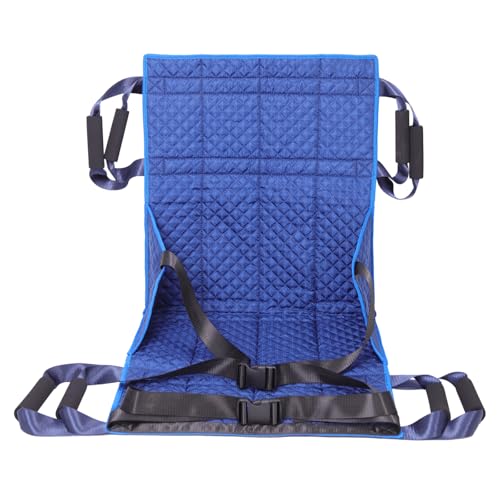
Transfer Chair Review Summary
The Patient lift transfer chair is best for buyers who want a simple, manual transfer aid with more control than a bare slide sheet and more portability than bulkier lifting equipment.
It is aimed at wheelchair users, older adults, disabled people, and caregivers who need help moving someone between a wheelchair, bed, car, chair, or stairs.
The main appeal is straightforward utility: a lightweight transfer pad with multiple handles, reinforced stitching, and a stated 260 lb support limit.
If your need is short-distance repositioning in the home, a care setting, or during emergency evacuation, this product makes sense as a practical assist tool rather than a fancy system.
Review Scorecard
| Category | Score | Buyer assessment |
|---|---|---|
| Transfer versatility | 8/10 | Listing supports bed, car, chair, and stair evacuation use. |
| Caregiver handling | 8/10 | Eight thickened sponge handles should improve grip and control. |
| Build confidence | 7/10 | Cross-reinforced stitching and heavy-duty materials are clear positives. |
| Comfort potential | 7/10 | Breathable Oxford fabric is a sensible choice for a contact surface. |
| Safety margin | 6/10 | The 260 lb limit is useful, but buyers must stay within it. |
| Everyday practicality | 8/10 | Lightweight design and simple manual use fit routine caregiving. |
| Long-term value | 7/10 | A 2-year warranty adds confidence for a product that sees repeated use. |
Overall, this is a reasonable fit for families and caregivers who need a versatile transfer aid more than a specialized medical device.
It is not trying to solve every mobility problem, but it does appear focused on common transfer scenarios where dependable handles and reinforced construction matter most.
Key Features and Specifications of Transfer Chair
The product is presented as a patient transfer pad and stair assist slide board for people who cannot move their lower limbs independently.
The listing also positions it as useful for elderly, disabled, and handicapped users, as well as caregivers working in home care or rehabilitation contexts.
Here are the most useful facts from the listing:
| Feature | Details |
|---|---|
| Intended use | Transfer between wheelchair, bed, car, or other chair; emergency evacuation on stairs |
| User fit | Wheelchair users, elderly, disabled, handicapped people, and people with limited lower-limb mobility |
| Material | Breathable Oxford fabric |
| Handles | 8 thickened sponge handles |
| Support straps | 2 reinforcing straps |
| Weight capacity | Up to 260 lbs |
| Construction | Cross-reinforced stitching, heavy-duty materials |
| Warranty | 2-year warranty |
The design language here is practical rather than clinical.
Breathable fabric, reinforced seams, and multiple handles all point to a reusable caregiver aid meant for repeated manual transfers.
The listing does not promise powered lifting or advanced mechanical features, so the value has to come from simplicity, sturdiness, and ease of use.
The most important spec for buyers is the weight limit.
A 260 lb support figure is enough for many households, but it also creates a hard boundary.
Any real buying decision should start with that limit, because the product is only useful if the intended user and transfer scenario remain comfortably within it.
Pros and Cons of Transfer Chair
Pros
- Useful for several common transfer situations: wheelchair to bed, car, chair, and stairs are all named in the listing.
- Eight handles should help caregivers position themselves and spread effort across multiple grip points.
- Breathable Oxford fabric is a sensible material choice for a product that may touch skin during repeated transfers.
- Reinforced stitching and heavy-duty materials suggest better durability than a thin disposable sheet.
- A 2-year warranty adds reassurance for buyers worried about early wear.
Cons
- The 260 lb limit may exclude some users or reduce how comfortably the product can be used near its top end.
- This is still a manual transfer aid, so it depends on caregiver strength, coordination, and safe technique.
- The listing gives limited detail on dimensions and setup, which makes it harder to judge fit before purchase.
- It is focused on short-distance transfers, not on independent mobility or powered lifting.
The strongest pros are all tied to the same theme: this product seems designed to make manual transfers easier to manage.
The main drawback is equally clear: it cannot replace proper lifting equipment when the transfer is complex, frequent, or high-risk.
Who Should Buy Transfer Chair?
Buyers who should consider this product include families caring for someone who still needs human-assisted transfers but does not require a full lift system.
It also fits caregivers who want one product that can support multiple everyday scenarios instead of buying separate aids for bed, car, and emergency use.
It is also a reasonable option for people who value simple gear with obvious features: handles, reinforcement, straps, and a stated weight capacity.
That kind of product is easier to understand than a more complex lift device, especially in a home setting.
You should probably skip it if:
- the intended user is over the stated 260 lb limit
- the transfer needs are frequent enough to justify a powered or more specialized solution
- you need exact product dimensions before deciding
- you want something for independent mobility rather than assisted transfers
In other words, this is for practical assistance, not autonomy.
If that matches the care situation, the design makes sense.
If it does not, the product will likely feel too limited.
Transfer Use and Care Considerations
Handle Placement and Grip
The listing’s eight thickened sponge handles are one of the clearest signs that this product is built for caregiver control.
Multiple handles can make it easier to coordinate two-person or multi-position assists, especially when moving a person between surfaces that do not line up perfectly.
Fabric, Comfort, and Durability
Breathable Oxford fabric and reinforced cross-stitching are practical choices for repeated use.
The material claims do not turn this into a premium medical device, but they do suggest a product intended to handle regular contact and friction better than a very basic sheet.
Transfer Scenarios
The product’s listed scenarios are the real story: wheelchair transfers, car transfers, chair transfers, and emergency stair evacuation.
That makes it a broad-use item for households and care environments where different transfer problems come up during the week.
Safety Boundaries
The stated weight limit matters more here than on many products because safe transfer work depends on the margin between the user, the caregivers, and the task.
Buyers should treat the 260 lb limit as a real constraint, not a marketing detail, and match the product to the person and setting before relying on it.
Alternatives to Transfer Chair
If you want a more established brand or a different transfer style, a few Amazon search paths are worth comparing:
Those alternatives cover slightly different needs.
A transfer board is better when you want a rigid sliding aid, while a transfer sheet or evacuation chair may fit different care routines and safety plans.
The right comparison depends on whether your priority is short-distance repositioning, caregiver ergonomics, or emergency evacuation.
Is Transfer Chair Worth It?
Yes, if you need a manual transfer aid for routine bedside, chair, car, or stair-related assistance and the weight limit fits your situation. The listing’s strongest points are its multiple handles, reinforced construction, breathable fabric, and broad transfer use case.
No, if you need a powered solution, exact sizing details, or support beyond 260 lbs. For the right household or care setup, this looks like a sensible, focused tool; for the wrong one, it will be too limited.