Choosing the right mobility aid can make everyday movement safer and less stressful. The best options improve balance, reduce strain, and support confident walking at home or on the go.
This roundup highlights 10 fall prevention walker picks for different needs, from compact folding designs to upright and transfer-focused models.
Best 10 Fall Prevention Walker Picks for 2026
Compact Stability
Drive Medical Two-Button Folding Walker with Wheels
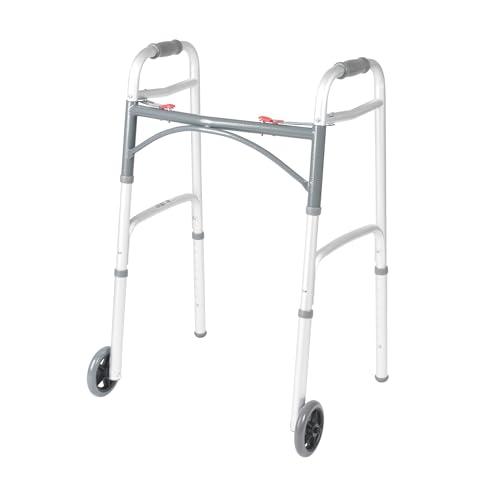
- Two-button folding release for simple use
- 5-inch wheels with rear glide caps
- Supports up to 350 lb with adjustable height
Best For: Seniors wanting a simple rolling walker for daily stability
Safe Transfer Support
Stand Assist Patient Transport Unit

- Helps with sit, stand, and transfer tasks
- Two locking casters improve stability
- Cushioned pads and foam handrails add comfort
Best For: Care settings and home caregivers handling assisted transfers
Hands-Free Everyday Mobility
Loyoda Folding Walker with Basket

- Built-in basket and pockets for small items
- 5-inch wheels with glide skis for smoother movement
- Folds easily and supports up to 350 lb
Best For: Adults who want a standard walker with storage and easy transport
Ultra-Light Premium Rollator
byACRE Carbon Ultralight Rollator Walker

- Weighs just 10.6 lb for easy handling
- Arrives fully assembled with no tools required
- Carbon frame, seat, and puncture-proof wheels
Best For: Seniors wanting a lightweight rollator with a seat
Compact Support for Tight Spaces
Narrow Folding Walker with Wheels

- Supports up to 350 lbs with thickened aluminum tubes.
- Folds down and weighs just 6.6 lbs for travel.
- Adjustable width and height help it fit narrow spaces.
Best For: Users who need a slim, portable walker for small rooms and doorways.
Upright Stability on Rough Ground

- GelSoft armrests aim to reduce elbow pressure.
- 8-inch wheels are built for rougher outdoor surfaces.
- Reinforced frame supports up to 300 lbs.
Best For: People who want upright support and comfort on mixed terrain.
Portable Balance for Small Spaces

- One-step folding design with a locking system.
- Weighs 9.5 lbs and supports up to 300 lbs.
- Open-frame narrow build helps in tight spaces.
Best For: Travelers and small-space users who want a compact folding walker.
Best Outdoor Rollator

- Large rubber wheels improve traction on rough surfaces
- Built-in cable and hand brakes help with safer control
- Foldable aluminum frame supports up to 300 lbs
Best For: Outdoor users who want a seat, brakes, and all-terrain wheels
Best Upright Support
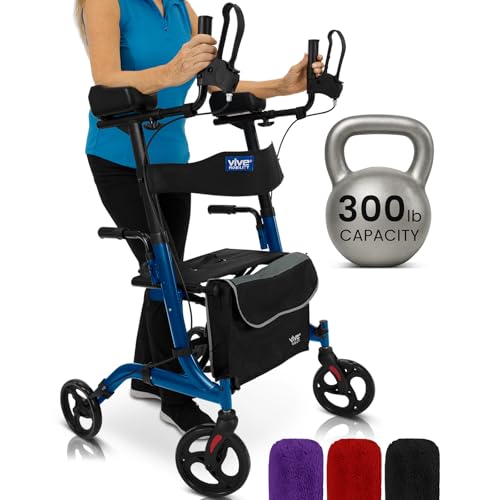
- Upright frame can reduce strain and improve posture
- Forearm pads and adjustable handles boost fit and comfort
- 8-inch flat-free wheels and loop brakes support stability
Best For: Seniors who prefer upright walking support with a seat
Compact Stability – Drive Medical Two-Button Folding Walker with Wheels
If you want a fall prevention walker that prioritizes steady support and easy handling, this Drive Medical model is built for everyday movement. Its two-button release, adjustable height, and 5-inch front wheels make it a practical choice for navigating hallways, rooms, and other indoor spaces.
Best For: Seniors or adults who want a lightweight rolling walker with simple folding controls and smooth indoor mobility.
Pros:
- Dual push-button operation makes folding and opening straightforward.
- 5-inch wheels and rear glide caps help it move smoothly across carpet, tile, and outdoor surfaces.
- Lightweight aluminum frame supports up to 350 lb while staying easy to handle.
- Adjustable height and ergonomic hand grips improve comfort and control.
Cons:
- Two-wheeled design is more basic than a full rollator with seat or storage.
- Best suited to walking support rather than transport or transfer assistance.
This is a straightforward option if you want dependable balance support without extra bulk. It focuses on stability, simple operation, and easy glide rather than added features, which makes it a sensible everyday walker.
Safe Transfer Support – Stand Assist Patient Transport Unit
This fall prevention walker alternative is designed for standing assistance and transfers rather than standard walking. It helps move patients between a bed, wheelchair, and toilet, with a compact frame that fits through most doorways and safety features aimed at reducing transfer-related risk.
Best For: Caregivers and facilities needing a stand-assist transfer aid for patients who can support 60-70% of their body weight.
Pros:
- Designed to prevent falls and reduce injury risk during transfers.
- Compact, narrow frame works through most doorways for home or facility use.
- Two locking casters add stability while rolling smoothly on indoor floors.
- Cushioned knee pads, seat, and foam handrails improve comfort and grip.
Cons:
- Not a standard walking walker for independent mobility.
- Requires the user to be able to stand enough to support 60-70% of body weight.
If the main concern is safe sit-to-stand and bedside transfer help, this unit is built for that job. It is a more specialized mobility aid than a traditional walker, but it offers focused support where transfers create the greatest fall risk.
Hands-Free Everyday Mobility – Loyoda Folding Walker with Basket
For shoppers looking for a fall prevention walker with a bit more convenience, this Loyoda model adds a basket and pockets to a lightweight folding frame. It combines stable walking support, adjustable height, and smooth movement on different surfaces with a design that is easy to fold and store.
Best For: Adults and seniors who want a lightweight standard walker with storage for daily errands and home use.
Pros:
- Basket and outer pockets keep essentials like a phone, glasses, or supplies close at hand.
- 5-inch wheels and glide skis help it move smoothly on different surfaces.
- Trigger release folding mechanism makes transport and storage easier.
- Lightweight aluminum frame supports up to 350 lb and adjusts from 32″ to 38″.
Cons:
- Storage basket adds convenience but also makes the walker less minimal than basic models.
- Standard walker design may not suit users wanting a seat or more advanced rollator features.
This is a practical pick if you want support plus a place to carry small items without using your hands. It keeps the familiar stability of a standard walker while adding everyday convenience and easy folding.
Ultra-Light Premium Rollator – byACRE Carbon Ultralight Rollator Walker
If you are comparing a fall prevention walker with a seat, this byACRE rollator stands out for being exceptionally light and ready to use right away. The carbon frame, foldable seat, and puncture-proof wheels make it a strong fit for people who want a stylish mobility aid for indoor and outdoor use.
Best For: Adults or seniors who want a very light rollator with a seat for daily outings and confident mobility.
Pros:
- At 10.6 lb, it is built for easy handling and portability.
- Arrives fully assembled, so there is no setup required.
- Carbon frame, foldable seat, and puncture-proof wheels support everyday use.
- Lifetime frame warranty adds peace of mind.
Cons:
- Premium design may be more than needed if you only want a basic walking aid.
- Rollator style is bulkier than a standard walker for tight spaces.
This model is best for shoppers who want a lightweight rollator that feels easy to live with and easy to move. It focuses on convenience, style, and reliable construction rather than simple utility alone.
Compact Support for Tight Spaces – Narrow Folding Walker with Wheels
If you need a fall prevention walker that feels stable without taking over the room, this narrow folding model is built for tight indoor spaces and everyday mobility. The adjustable width and height make it easier to fit through narrow hallways and bathroom doors, while the front wheels help keep movement smooth on most surfaces.
Best For: Seniors or recovering users who need a slim, portable walker for compact homes and travel.
Pros:
- Thickened aluminum frame is rated to support up to 350 lbs with a sturdy feel.
- Light 6.6 lb design folds for easier storage and transport.
- Width adjusts from 22.4″ to 26.4″ for narrow spaces.
- Height adjusts from 30.3″ to 37.4″ for a more customized fit.
Cons:
- Requires at least 22.5″ of doorway clearance at the slim setting.
- Front-wheel design is intended for general indoor and outdoor surfaces, not rough terrain.
Overall, this is a practical pick if your priority is a compact fall prevention walker that balances portability, adjustability, and dependable support. It is especially appealing for users who want a simple folding design that is easier to manage in smaller living spaces.
Upright Stability on Rough Ground – Z22 GelSoft Upright Rollator
This fall prevention walker is designed for users who want more upright support and better control on challenging surfaces. The adjustable armrests, reinforced frame, and large 8-inch wheels make it a strong option for people who need a steadier walk with less pressure on the arms and elbows.
Best For: Users who want an upright rollator with comfort-focused arm support and all-terrain wheels.
Pros:
- GelSoft armrests are designed to disperse elbow pressure for more comfortable support.
- 8″ wheels are made to handle gravel, potholes, snow, and slippery surfaces more easily.
- Reinforced triangular frame supports up to 300 lbs.
- Handle and seat heights are adjustable for a more customized fit.
Cons:
- Requires sufficient hand grip strength and upper body mobility.
- Uses a hand-brake system only, with no foot brake.
For shoppers comparing fall prevention walker options, this model stands out for upright posture support and terrain handling. It is best suited to users who are comfortable using a hand-brake rollator and want added cushioning at the arms during longer walks.
Portable Balance for Small Spaces – Lightweight Narrow Walker
If you want a fall prevention walker that is easy to store and maneuver, this lightweight narrow design is made for compact living spaces and travel. The open-frame layout removes rear bars for a more natural stride, while the adjustable handles and hand brakes help you keep control as you move.
Best For: Travelers and apartment dwellers who want a compact, easy-to-fold walker with simple handling.
Pros:
- Folds in one step and includes a locking system for secure storage.
- Weighs 9.5 lbs while still supporting up to 300 lbs.
- Narrow frame and open design work well in small hallways and tight turns.
- Height-adjustable handles and ergonomic grips support better comfort and control.
Cons:
- Not designed with a seat or rear support bars.
- Best suited to users who want a lightweight walker rather than a heavier-duty rollator.
This is a sensible option if your main goal is a compact fall prevention walker that is simple to fold, store, and steer in crowded areas. Its lightweight build and open-frame feel make it a practical everyday choice for smaller homes and travel.
Most Stable Rehab Pick – Adult Standing Walker for Seniors
If you’re shopping for a fall prevention walker that prioritizes steadiness over speed, this adult standing walker is built for controlled indoor mobility and rehab support. Its wide base, 2 side wheels, 2 rear wheels, and 6 brakes are designed to reduce backward tilting and help keep movement more secure.
Best For: Seniors, post-op users, and people in rehab who need upright support, height adjustability, and a very stable walking aid.
Pros:
- Strong electroplated carbon steel frame with a wide base for added stability
- 10-level height adjustment and 5-level width adjustment for a more tailored fit
- 8-wheel setup with 6 brakes to help control movement and reduce fall risk
- Includes a seat, making it more practical for rest during use
Cons:
- Best suited to users who want standing-frame style support, not a compact everyday walker
- Rated for up to 220.5 lbs, which is lower than some rollators
- Large frame may be less convenient in tighter spaces
Overall, this is a practical choice if your main goal is safer, steadier assisted walking with a rehab-focused design. It stands out more for support and stability than for portability.
Best Outdoor Rollator – 12-Inch Wheel Rollator Walker
This fall prevention walker is a strong fit if you need a rollator that feels stable outdoors as well as at home. The oversized 12-inch front wheels and shock-absorbing rubber design are made for uneven terrain, while the seat and backrest give you a place to rest when needed.
Best For: Users who want a wheeled walker with a seat for outdoor use, easy folding, and dependable braking control.
Pros:
- 12-inch front wheels and 10-inch rear wheels handle gravel, grass, and concrete better than small-wheel walkers
- Built-in brake cable design helps reduce tangling and tripping hazards
- Supports up to 300 lbs with a lightweight 19.2-pound aluminum frame
- Foldable in seconds and includes storage extras like a cup holder, bag, and cane holder
Cons:
- Bulkier than a basic walker due to its larger wheels and seat
- Best height range is tied to users around 5 feet to 6.4 feet tall
- More feature-heavy than users who only want a simple indoor aid may need
For buyers who want outdoor confidence without giving up a seat and braking support, this rollator is a practical pick. Its large wheels make it the most terrain-ready option in this group.
Best Upright Support – Vive Mobility Upright Walker
If your priority is a fall prevention walker that encourages a more upright posture, this Vive upright rollator is designed to help you stand taller and reduce strain on the hands and wrists. The forearm pads, adjustable handles, and 8-inch flat-free wheels make it a solid option for steady support on a variety of surfaces.
Best For: Seniors who want upright walking support, a seat for breaks, and adjustable arm positioning for better comfort.
Pros:
- Upright design can improve posture and reduce pressure on hands, wrists, neck, hips, and knees
- Forearm pads and height-adjustable handles help fit users from 5’2″ to 6’4″
- 8-inch flat-free wheels add stability across different surfaces
- Folds for transport and includes a detachable shoulder bag for essentials
Cons:
- At 20 pounds, it is not the lightest option for frequent lifting
- Upright style may take more getting used to than a standard walker
- Best fit is fairly height-specific, so very short users may need to look elsewhere
This model makes sense if posture, comfort, and stable rolling support matter more than having the simplest frame possible. It balances mobility and rest features well for everyday use.
How We Picked These Fall Prevention Walker Options
We focused on stability, ease of use, fit, portability, and support style. That means looking at frame design, wheel setup, braking or grip features, adjustability, weight capacity, and whether the aid is better for walking, standing support, or assisted transfers.
We also prioritized options that suit common real-world use cases, including narrow hallways, indoor recovery, outdoor terrain, and users who need extra support with posture or sit-to-stand movement.
Quick Comparison
Not every Fall Prevention Walker serves the same purpose. Standard two-button walkers are usually best for simple indoor support, while wheeled walkers and rollators are better for smoother mobility and longer distances. Upright walkers can help users stand taller and reduce forward bending, and transfer aids are designed for safer sit-to-stand assistance.
If space is tight, a narrow folding model may be the most practical choice. If terrain is uneven, bigger wheels and a sturdier frame are often worth prioritizing.
Key Buying Factors for a Fall Prevention Walker
Support Level
Match the device to the user’s balance needs. Some people need a basic walking frame, while others need a rollator with a seat, an upright frame, or a patient transfer aid for more controlled movement.
Size, Width, and Adjustability
A proper fit matters. Look for height-adjustable handles or armrests, and consider narrow frames for smaller spaces. Poor fit can reduce comfort and stability.
Wheels and Terrain
Wheel size affects maneuverability. Smaller wheels are often fine indoors, while larger wheels can handle thresholds, sidewalks, and uneven surfaces more easily.
Weight and Foldability
If the user travels often or stores the aid in a car, a lighter folding design can be a major advantage. Heavier models may offer more stability, but they are less convenient to transport.
Seats, Backrests, and Accessories
A seat and backrest are useful for users who tire easily. Baskets, skis, and other add-ons can improve day-to-day convenience, but they should not come at the expense of balance or easy handling.
Who Should Buy Which Fall Prevention Walker?
Buy a standard walker if the priority is simple, dependable indoor stability. Choose a rollator if the user wants more freedom, a seat, and smoother walking support. Pick an upright walker if posture support and reduced forward lean matter most. Select a transfer or standing frame if the main concern is safe sit-to-stand assistance or rehabilitation support.
For the best Fall Prevention Walker, focus on the user’s mobility level first, then choose the lightest, most comfortable design that still provides the needed support.