Choosing the right diabetic foot wound care shoes can make a real difference in comfort, protection, and pressure offloading during recovery.
Below, we focus on practical options that help reduce strain on sensitive feet, support healing, and fit different wound-care needs.
Best 10 Diabetic Foot Wound Care Shoes Picks for 2026
Forefoot Offloading Wedge Boot
BraceAbility Diabetic Forefoot Relief Shoe

- 15-degree wedge shifts pressure to the heel
- Square-toe design adds room and bumper protection
- Adjustable straps help fit bandaging and swelling
Best For: forefoot offloading during ulcer or post-op recovery
Classic Ortho Wedge

- Square-toe shape adds room and bumper protection
- Wedge heel helps with pressure reduction
- Ankle strap and buckle keep the shoe secured
Best For: straightforward post-op forefoot healing
Advanced Pressure-Relief Boot
Foot Defender Diabetic Ulcer Boot

- Clinically proven to offload 50% more pressure
- Absorbium insole adds impact absorption and moisture control
- Built specifically for diabetic foot ulcer treatment
Best For: maximum offloading for ulcers and pressure-sensitive injuries
Squared-Toe Post-Op Shoe
ProCare Forefoot Protection Shoe
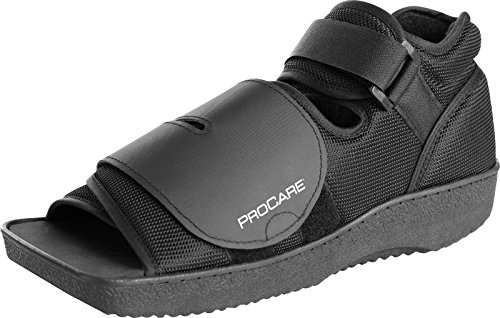
- Square toe adds room and bumper protection
- Rigid rocker sole helps reduce pressure
- Universal fit works on either foot
Best For: basic post-op dressing protection and stable walking
Heel Off-Loading Support

- 15-degree design shifts pressure to the forefoot.
- Breathable upper with non-slip rubber sole.
- Adjustable closure works over bandages.
Best For: heel pressure relief during wound or post-op recovery
Basic Recovery Shoe
Simple Square-Toe Post-Op Shoe
- Classic squared-toe post-op design.
- Synthetic unisex-adult construction.
- Lightweight format for recovery use.
Best For: buyers who want a straightforward post-op shoe
Discreet Recovery Shoe
Closed-Toe AllRound Healing Shoe

- Closed-toe design protects against debris and moisture.
- Wide opening and seamless interior aid comfort.
- Fits either foot with lightweight construction.
Best For: discreet wound care with easier on-and-off access
Diabetic Offloading Pick
Estinko Post Op Shoe for Ulcers & Fractures

- Decompression insole for diabetic foot and ulcer care
- Adjustable strap and square toe design for bandaged feet
- Anti-slip rubber sole with lightweight, breathable upper
Best For: diabetic ulcers, fractures, and post-op pressure relief
Roomy Recovery Choice
- XL fit for larger men’s and women’s sizes
- Decompression insole supports ulcer and wound offloading
- Open-toe, breathable recovery build with anti-slip sole
Best For: larger-foot recovery with swelling or wound dressings
Compact Recovery Fit
- Small size fits men’s 6.5-8 and women’s 8-9.5
- Decompression insole for diabetic foot and wound support
- Adjustable strap and breathable open-toe design
Best For: smaller-footed users needing wound-friendly offloading
Forefoot Offloading Wedge Boot – BraceAbility Diabetic Forefoot Relief Shoe
If you’re comparing diabetic foot wound care shoes, this BraceAbility wedge boot is built to shift pressure off the forefoot and toes while you walk. The 15-degree dorsi-angle bottom encourages heel weight-bearing, and the square-toe shape adds space plus a protective bumper for the front of the foot.
Best For: People recovering from a diabetic foot ulcer, forefoot surgery, or a broken toe who need targeted offloading in a universal-fit post-op shoe.
Pros:
- 15-degree wedge design helps reduce pressure on the forefoot and toes.
- Square-toe box adds comfort and helps protect against further damage.
- Adjustable medical-grade straps can accommodate bandaging and swelling.
- Removable orthopedic foam insole adds heel support, cushioning, and shock absorption.
Cons:
- Not water resistant.
- Fit depends on checking the sizing chart and may require sizing up for heavy bandaging.
- Designed as a healing shoe, so it is not meant for all-day casual wear.
This is a practical offloading option when the priority is reducing pressure on the front of the foot. Its wedge sole, roomy toe box, and adjustable fit make it a focused recovery shoe rather than a general walking shoe.
Classic Ortho Wedge – Darco Healing Shoe X-Large
For shoppers looking at diabetic foot wound care shoes, this Darco wedge healing shoe focuses on simple forefoot protection and pressure reduction. The square toe shape, wedge heel, and ankle strap are designed to support recovery after foot procedures or forefoot trauma.
Best For: Patients who want a straightforward wedge healing shoe for post-op forefoot care and stable ambulation.
Pros:
- Square toe design adds bumper-like protection and extra room.
- Wedge heel construction supports pressure reduction during walking.
- Ankle strap and buckle closure help keep the shoe secured.
- Made in the United States.
Cons:
- Details are limited compared with more feature-rich offloading boots.
- Fit is size-specific, so buyers need to confirm the X-Large sizing range.
This is a no-frills healing shoe that covers the basics: protection, room for the forefoot, and a wedge sole for easier ambulation. It’s best if you want a conventional post-op design rather than a more specialized boot.
Advanced Pressure-Relief Boot – Foot Defender Diabetic Ulcer Boot
If you want diabetic foot wound care shoes with a stronger offloading focus, the Foot Defender is built specifically to reduce pressure on the bottom of the foot. It uses proprietary materials, a moisture-wicking design, and an Absorbium insole to help reduce impact forces during recovery.
Best For: People managing diabetic foot ulcers or other foot injuries who want a clinically positioned protective boot with maximum pressure reduction.
Pros:
- Clinically proven to offload 50% more pressure than other protective boots on the market.
- Built specifically for diabetic foot ulcer treatment and other pressure-sensitive injuries.
- Absorbium insole provides impact absorption plus low-friction, moisture-wicking materials.
- Adjustable Velcro straps and removable cushion liner support a secure fit.
Cons:
- More specialized than a typical walking boot or diabetic shoe.
- Fit is tied to the listed large size range, so sizing should be checked carefully.
This boot is the most specialized pressure-relief option in the group. It stands out for its offloading claims and engineering focus, making it a strong choice when wound protection and force reduction are the top priorities.
Squared-Toe Post-Op Shoe – ProCare Forefoot Protection Shoe
Among diabetic foot wound care shoes, this ProCare post-op model is a practical choice for keeping dressings clean while giving the forefoot stable protection. The rigid rocker sole, square toe, and high ankle strapping are aimed at easier ambulation and better positioning after surgery or trauma.
Best For: People who need a basic universal-fit post-op shoe with forefoot protection and room for dressings.
Pros:
- Square toe design provides extra room and acts like a bumper.
- Rigid rocker sole helps reduce pressure during walking.
- High ankle strapping helps maintain foot position.
- Universal fit can be worn on either the left or right foot.
Cons:
- More basic than dedicated offloading boots.
- Buyers need to match the correct size range carefully.
This is a dependable, utilitarian post-op shoe that covers the essentials without extra complexity. It’s a good fit when you need dressing protection, forefoot room, and a stable sole for recovery walking.
Heel Off-Loading Support – Lightweight Heel Relief Wedge
If you need diabetic foot wound care shoes that shift pressure away from the heel, this post-op wedge is built for off-loading support. Its 15-degree design helps move body weight toward the forefoot, which can be useful during recovery from foot injury, surgery, fracture, or diabetic foot ulcer care.
Best For: People who need heel pressure reduced during recovery or ulcer off-loading.
Pros:
- 15-degree heel off-loading design helps reduce rearfoot pressure.
- Breathable upper and non-slip rubber sole support everyday wear.
- Moveable hook-and-loop closure allows height adjustment over bandaging.
- Multiple sizes make fit selection more flexible.
Cons:
- Sold as one shoe, not a pair.
- Fit depends on measuring foot length carefully against the size chart.
This is a straightforward healing shoe for focused heel relief, but it is most useful when your care plan calls for off-loading rather than a standard walking shoe. The adjustable closure and breathable build add practicality, while the one-shoe packaging is worth noting before ordering.
Basic Recovery Shoe – Simple Square-Toe Post-Op Shoe
For shoppers comparing diabetic foot wound care shoes, this squared-toe post-op shoe offers a simple, no-frills recovery option. Its compact synthetic build is designed for unisex adult use and is sized as a single medical shoe for postoperative support.
Best For: Basic post-op and wound-care wear when you want a simple square-toe medical shoe.
Pros:
- Squared toe shape is a classic post-op shoe design.
- Lightweight enough for everyday recovery wear.
- Unisex-adult sizing keeps it broadly usable.
Cons:
- Limited product details make feature comparison difficult.
- No closure, sole, or cushioning details were supplied.
- Only one shoe is implied by the medical-shoe format.
This is the most minimal option in the lineup, which may suit buyers who already know they want a straightforward post-op shoe. The lack of feature detail means it is best chosen for simplicity rather than specialized comfort extras.
Discreet Recovery Shoe – Closed-Toe AllRound Healing Shoe
If you want diabetic foot wound care shoes with a more discreet, closed-toe profile, this all-in-one healing shoe is designed for post-op recovery, wound care, and arthritis. It combines a wide opening, seam-minimized interior, and a lightweight bilateral fit for easier wear on either foot.
Best For: Discreet wound care and post-surgical use when comfort and easy entry matter.
Pros:
- Closed-toe round box adds protection while staying discreet.
- Wide opening makes it easier to put on and take off.
- Seamless interior helps reduce friction on sensitive skin.
- Lightweight, bilateral design fits left or right foot.
Cons:
- Sold as one shoe, so a pair requires buying two.
- Hand-wash-only care may be less convenient.
This model stands out for balancing protection and accessibility, especially if swelling or bandaging makes fit more difficult. The anti-slip EVA outsole and roomy midfoot accommodation add practical value for recovery-focused wear.
Diabetic Offloading Pick – Estinko Post Op Shoe for Ulcers & Fractures
If you need diabetic foot wound care shoes that prioritize pressure relief and easy wear, this Estinko post-op shoe is built around a decompression insole, open toe design, and adjustable strapping. It’s aimed at recovery situations where a stiff sole, lightweight build, and room for bandaging matter more than everyday sneaker comfort.
Best For: Diabetic foot ulcers, toe fractures, and post-op recovery when decompression and adjustability are the priorities.
Pros:
- Includes a PegAssist insole set designed to help offload sensitive areas.
- Adjustable straps and a square toe design make room for bandages.
- Rubber anti-slip sole and rigid rocker sole support steadier walking.
- Breathable, lightweight upper helps keep the foot from feeling too confined.
Cons:
- Sold as a single shoe, not a pair.
- Open-toe recovery style is functional, not subtle.
- Size choice needs attention since fit varies by male and female sizing.
Overall, this is a practical recovery shoe when your main goal is reducing pressure on a vulnerable foot while keeping the shoe easy to put on and remove. It focuses on treatment-friendly features rather than all-day casual wear.
Roomy Recovery Choice – Estinko X-Large Post Op Shoe
For shoppers comparing diabetic foot wound care shoes in a larger fit, this Estinko recovery shoe offers the same offloading-focused design with an XL size range. It combines a decompression insole, anti-slip sole, and adjustable strapping to support recovery when the foot needs space and protection.
Best For: Larger-footed users recovering from ulcers, fractures, or surgery who need a roomy, adjustable post-op shoe.
Pros:
- XL sizing covers men’s 12-13.5 and women’s 13.5-14.5.
- PegAssist insole is intended to help decompress ulcerated or sensitive areas.
- Open-toe, breathable build is meant to reduce stuffiness during recovery.
- Rubber sole and rigid rocker sole are designed for steadier walking support.
Cons:
- Only one shoe is included.
- Recovery-focused design is not meant for traditional casual wear.
- Users still need to verify the size chart carefully before buying.
This option stands out mainly for its larger size range while keeping the same practical recovery features. It’s a straightforward pick if you need a post-op shoe that can accommodate swelling, dressing, and pressure relief.
Compact Recovery Fit – Estinko Small Post Op Shoe
If you’re looking for diabetic foot wound care shoes in a smaller size, this Estinko post-op shoe gives you the same wound-friendly layout in a size S. The square toe, adjustable strap, and decompression insole are all aimed at making recovery more manageable when you need protection without extra bulk.
Best For: Smaller-footed adults recovering from diabetic foot issues, toe injuries, or post-surgical wounds.
Pros:
- Small size fits men’s 6.5-8 and women’s 8-9.5.
- Decompression insole supports diabetic foot, ulcers, and other foot wounds.
- Adjustable strapping helps accommodate bandaged feet.
- Open-toe, lightweight design is meant to stay breathable during wear.
Cons:
- Single-shoe purchase only.
- Open recovery style may feel less versatile than a regular shoe.
- Best fit depends on checking the manufacturer’s size chart.
As a smaller-size recovery option, this shoe keeps the same treatment-first features as the larger versions. It’s a sensible choice when the priority is offloading and easy adjustability rather than a standard walking-shoe feel.
How We Picked These Diabetic Foot Wound Care Shoes
We focused on shoes and boots designed for offloading, post-op protection, ulcer management, and safer daily movement. Priority went to models with pressure-relief features, secure closures, stable soles, protective toe boxes, and designs suited to recovery rather than casual walking.
We also considered fit range, ease of use, and whether the shoe is better for forefoot relief, heel relief, or general wound protection.
Quick Comparison
Not all Diabetic Foot Wound Care Shoes solve the same problem. Forefoot offloading styles are best when the front of the foot needs protection. Heel wedge and heel-relief models shift pressure away from the back of the foot. Squared-toe post-op shoes and protective boots are often better for general stabilization after surgery, fractures, or ulcer care.
If you need the most pressure reduction, look for a true off-loading design. If you need easier everyday wear, a more balanced healing shoe may be the better fit.
Key Buying Factors for Diabetic Foot Wound Care Shoes
Offloading Design
The main job of these shoes is to move pressure away from the wound. Check whether the shoe is built for the forefoot, heel, or full-foot protection so it matches the location of the injury.
Fit and Adjustability
Swelling is common during healing, so adjustable closures and a roomy fit matter. A shoe that is too tight can create new pressure points.
Stability and Sole Type
A stiff sole can limit motion and protect the foot, while a wedge sole may help redirect weight. Choose the sole style that supports the prescribed recovery approach.
Protection and Coverage
Look for a reinforced upper, closed toe, and enough coverage to shield dressings or sensitive tissue from impact and debris.
Who Should Buy Which Diabetic Foot Wound Care Shoes?
If your provider wants strict pressure relief for a forefoot wound or ulcer, choose an offloading shoe or wedge boot. If you are recovering from surgery, toe injury, or a mild fracture, a squared-toe post-op shoe may be enough. For heel wounds, a heel-relief or heel-wedge model is the more appropriate choice.
For people who need a simple, protective option for walking around the house or short outings, a balanced healing shoe or protective boot may offer the easiest everyday use. Always follow your clinician’s instructions, especially if you have diabetes, poor circulation, neuropathy, or an active ulcer.