The right stretching strap can make flexibility work more controlled, consistent, and easier to customize. Loop count, strap construction, and grip comfort all affect how confidently you can deepen a stretch.
We compared 10 options for yoga, physical therapy, rehabilitation, dance, gymnastics, cheerleading, and everyday mobility. Use the guide below to match the strap design to your routine and experience level.
Best 10 Stretching Straps for Flexibility Training Picks for 2026
Best Multi-Loop Value
Abiarst 10-Loop Stretching Strap
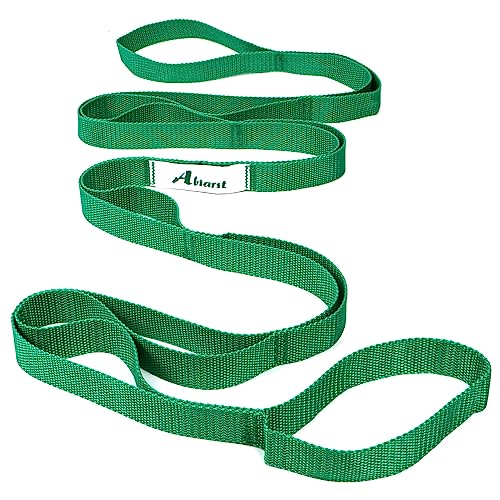
- Ten individual loops for adjustable positioning
- Long 75-inch non-elastic design
- Washable, durable fabric construction
Best For: Versatile home stretching, Pilates, yoga, and physical therapy
Best Elastic Option
Gaiam Restore Resistance Stretch Strap

- Six numbered loops plus stabilizing holds
- Medium elastic tension for gradual stretching
- Downloadable exercise guide included
Best For: Progressive warmups, cooldowns, yoga, and rehabilitation
Best Established Design
OPTP Original Stretch Out Strap

- Ten-loop, six-foot woven nylon strap
- Includes booklet and video guide
- Made in the USA for yoga and therapy use
Best For: Structured flexibility, mobility, and physical therapy routines
Best for Cheer and Dance
Myosource Kinetic Bands Stunt Strap

- Compact 39.5-inch static nylon design
- Made for cheer, dance, and gymnastics
- Lightweight and available in 12 colors
Best For: Portable athlete warmups, stunts, and flexibility practice
Best for Home Mobility

- Non-elastic strap offers steady, controlled holds
- Multiple loops help adjust depth and track mobility
- Useful for home therapy and assisted leg lifting
Best For: Home physical therapy and gentle mobility work
Best Adjustable Choice
Acozycoo Professional Loop Strap
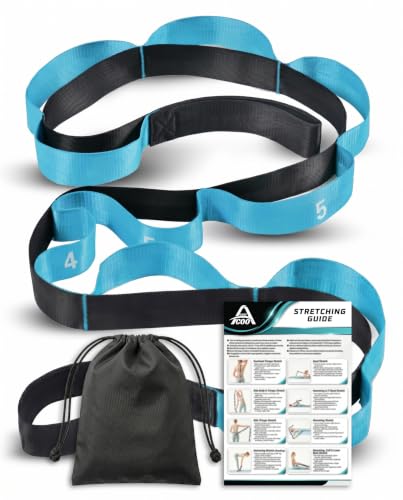
- Two styles cover professional and minimalist use
- 10 numbered loops support progress tracking
- Non-elastic nylon suits rehab and controlled stretching
Best For: Rehabilitation, travel, and versatile flexibility routines
Best for Progressive Training
12-Loop Resistance Stretch Band

- 12 numbered loops support measurable progress
- Elastic core provides controlled training tension
- Soft fabric suits yoga, dance, Pilates, and rehab
Best For: Progressive flexibility, splits, dance, and athletic training
Beginner-Friendly Pick
Oak-Sports 10-Loop Stretching Strap

- Non-elastic nylon for stable stretching
- 10 loops support varied positioning
- 75-inch length suits beginners
Best For: Beginners seeking a lightweight strap for yoga, exercise, or physical therapy
Most Adjustable Design
11-Loop Flexibility Stretch Strap

- 11 independent loops for precise positioning
- Nylon construction supports controlled stretches
- Suitable for yoga, dance, and therapy
Best For: Users who prioritize multiple grip positions for mobility training
Best Guided Option
Loop Strap with Carry Bag and Guide

- Numbered loops support consistent positioning
- Neoprene handles improve hand and foot comfort
- Includes carry bag and exercise guide
Best For: Users wanting guided, portable flexibility training
Best Multi-Loop Value – Abiarst 10-Loop Stretching Strap
For shoppers comparing stretching straps for flexibility training, the Abiarst offers a long, non-elastic design with 10 individual loops. Its 75-inch length gives you plenty of room for yoga, Pilates, physical therapy, and daily mobility work.
Best For: Users who want a durable, washable strap with multiple hand and foot positions for varied stretching routines.
Pros:
- Ten loops provide adjustable positioning for progressive stretches.
- Long 75-inch, 1-inch-wide design offers extra reach.
- Durable, washable, skin-friendly fabric is designed for repeated use.
Cons:
- Non-elastic construction does not provide built-in resistance.
- Only one strap is included.
The Abiarst is a practical choice when adjustability and reach matter more than stretch-band elasticity. It suits a broad range of flexibility and rehabilitation exercises.
Best Elastic Option – Gaiam Restore Resistance Stretch Strap
The Gaiam Restore is a useful pick among stretching straps for flexibility training if you prefer some resistance and give. Its elastic 39.75-inch design has six numbered loops plus two stabilizing handholds for gradually deepening stretches.
Best For: Beginners and rehabilitation users seeking medium tension for pre- and post-workout stretching.
Pros:
- Six numbered loops support progressive stretching positions.
- Medium stretch adds controlled flex and resistance.
- Includes access to a downloadable exercise guide.
Cons:
- Shorter than many six-foot non-elastic straps.
- Elastic construction may not suit users who want a fixed-length strap.
With its numbered loops and medium tension, the Gaiam Restore makes it easier to adjust intensity gradually. It is especially well suited to gentle mobility work and physical therapy routines.
Best Established Design – OPTP Original Stretch Out Strap
The OPTP Stretch Out Strap is a long-running choice for stretching straps for flexibility training, with a six-foot woven nylon body and 10 durable loops. It also includes a 40-page exercise booklet and video guide for structured mobility work.
Best For: Users who want a well-established, non-elastic strap with detailed instructional resources.
Pros:
- Ten loops support a wide range of lower- and upper-body stretches.
- Durable woven nylon is designed for heavy use.
- Includes a 40-page booklet and video stretching guide.
- Made in the USA.
Cons:
- Non-elastic design provides no stretch-based resistance.
- One-size format may not offer the adjustability of elastic bands.
The OPTP stands out for its combination of loop variety, durability, and guidance. It is a strong option for shoppers who want a dedicated mobility tool backed by comprehensive exercise instructions.
Best for Cheer and Dance – Myosource Kinetic Bands Stunt Strap
For athletes seeking stretching straps for flexibility training on the go, the Myosource Kinetic Bands Stunt Strap is a compact static nylon option. At approximately 39.5 inches long and available in 12 colors, it is designed for cheerleading, dance, gymnastics, and warmups.
Best For: Cheerleaders, dancers, gymnasts, and athletes who need a lightweight strap for practice, travel, or competitions.
Pros:
- Lightweight and portable for gym bags, backpacks, or travel.
- Heavy nylon construction is suited to static stretching.
- Free digital starter guide helps users begin a flexibility routine.
- Available in 12 colors.
Cons:
- Shorter 39.5-inch length may provide less reach for some stretches.
- Static design does not offer elastic resistance.
The Myosource focuses on portability and sport-specific flexibility rather than maximum length or loop adjustability. Its compact profile and color choices make it particularly appealing for young athletes and performance-focused training.
Best for Home Mobility – Trideer Loop Stretching Strap
For shoppers comparing stretching straps for flexibility training, the Trideer is a non-elastic option focused on controlled positioning rather than resistance. Its multiple loops support gradual stretching, mobility work, and assisted leg lifting at home.
Best For: Home physical therapy, post-surgery mobility routines, and gentle hamstring, calf, hip, back, ankle, and foot stretching.
Pros:
- Non-elastic design stays steady without rebound or surprise give.
- Multiple loops make grip, stretch depth, and progress easier to manage.
- Can assist with lifting a leg into bed or a car when mobility is limited.
- 75-inch polyester construction suits controlled daily stretching.
Cons:
- It is designed for stretching and mobility, not elastic resistance training.
- The 1-inch width may feel less comfortable during long holds for users with sensitive hands.
The Trideer stands out as a straightforward mobility aid for users who value predictable, gentle positioning. Socks or light gloves may improve comfort during extended sessions.
Best Adjustable Choice – Acozycoo Professional Loop Strap
The Acozycoo gives buyers two approaches to stretching straps for flexibility training: a longer professional version with numbered loops and accessories, or a compact minimalist version. Both use non-elastic nylon for stable leverage during stretching and rehabilitation.
Best For: Post-surgery knee rehabilitation, hamstring stretching, seniors, travelers, gym users, dancers, and anyone wanting a non-elastic strap with a choice of formats.
Pros:
- The 86-inch professional style has 10 numbered loops for tracking positions.
- The professional version includes a carry pouch and exercise guide.
- Heavy-duty nylon provides stable, non-elastic control without deformation.
- Can help position weak or injured legs on a bed, wheelchair, or in a car.
Cons:
- The numbered-loop accessories apply to the 86-inch professional style, not the minimalist version.
- The 1.5-inch professional strap may be less compact than the 75-inch option.
- It provides rigid resistance rather than elastic assistance.
Choose the professional style if measurable loop positions and included accessories matter most; choose the minimalist format for a lighter, simpler strap suited to travel or gym bags.
Best for Progressive Training – 12-Loop Resistance Stretch Band
Unlike rigid mobility straps, this 12-loop band adds elastic tension to stretching straps for flexibility training. Its numbered loops, soft fabric exterior, and compact design support progressive work across yoga, Pilates, dance, gymnastics, and rehabilitation.
Best For: Users progressing from beginner stretching to advanced flexibility work, including splits practice, ballet, leg extensions, and studio or home routines.
Pros:
- 12 numbered loops make positions and flexibility progress easier to track.
- Elastic material provides smooth, controlled tension for repeated stretching.
- Polyester-cotton fabric is designed to reduce pinching, slipping, and discomfort.
- Lightweight format suits home workouts, gyms, and studios.
Cons:
- Elastic construction may feel less predictable than a non-elastic therapy strap.
- Its 53.15-inch length is shorter than the 75- and 86-inch options in this roundup.
- The latex wire core may not suit users avoiding latex materials.
This is the most training-oriented option of the three, combining loop-based progress tracking with adjustable elastic tension. It is a strong fit for athletes and dancers who want support for more advanced flexibility goals.
Beginner-Friendly Pick – Oak-Sports 10-Loop Stretching Strap
For shoppers comparing stretching straps for flexibility training, this Oak-Sports model offers a straightforward, non-elastic design with 10 loops. Its 75-inch length and 1-inch width provide multiple hand and foot positions for yoga, Pilates, dance, daily exercise, or physical therapy.
Best For: Beginners who want a lightweight, versatile strap for general stretching and recovery routines.
Pros:
- Non-elastic nylon construction provides stable resistance during stretches.
- Ten loops offer adjustable hand and foot placement.
- Lightweight 75-inch design is easy to use and carry.
- Includes a 12-month warranty and customer service support.
Cons:
- The 1-inch width may provide less hand coverage than wider straps.
- It has no elastic give, so users must control stretch intensity themselves.
This is a practical choice if you want a simple looped strap with a beginner-friendly length and broad exercise compatibility. Its non-elastic build is particularly suited to controlled stretches rather than assisted bouncing movements.
Most Adjustable Design – 11-Loop Flexibility Stretch Strap
Among stretching straps for flexibility training, this 11-loop nylon strap stands out for its independent loop layout. The multiple grip points make it easier to adjust the working length during yoga, Pilates, ballet, CrossFit, or physical therapy stretches.
Best For: Athletes, dancers, and users who want many incremental grip positions for mobility work.
Pros:
- Eleven independent loops allow fine adjustment of hand and foot placement.
- Nylon construction provides a stable, non-elastic stretching surface.
- Designed for flexibility, range-of-motion, warm-up, and recovery exercises.
- Includes a 60-day worry-free warranty.
Cons:
- At 55 inches, it is shorter than several comparable stretching straps.
- The notes do not mention a carry bag or exercise guide.
The loop count is the main reason to choose this model. It gives users more adjustment points in a compact format, although its shorter length may be less suitable for stretches requiring substantial reach.
Best Guided Option – Loop Strap with Carry Bag and Guide
This looped strap is a strong option for stretching straps for flexibility training when you want added guidance and portability. The non-elastic nylon belt has numbered loops, ultra-comfort neoprene handles, a carry bag, and a stretching guide with beginner exercises.
Best For: Beginners and experienced users who want numbered positions, hand comfort, and included exercise guidance.
Pros:
- Numbered loops help users monitor positions and repeat stretches consistently.
- Ultra-comfort neoprene handles are designed to support hands and feet.
- Includes a carry bag and free guide with basic flexibility exercises.
- 78-inch length and 1.5-inch width provide generous working space.
Cons:
- The supplied configuration has 10 loops; the 12-loop, 96-inch version is a separate size option.
- At 200 g, it is heavier than some lightweight strap designs.
This model offers the most complete setup of the three for users who value structured practice. Numbered loops and the included guide can make it easier to build a consistent routine, while the carry bag supports use away from home.
How We Picked the Best Stretching Straps for Flexibility Training
We focused on features that affect real-world stretching rather than relying on product labels alone. The comparison considers loop layout, non-elastic versus elastic construction, adjustability, handling comfort, portability, and suitability for different training settings. We also included options designed for general mobility alongside straps marketed for physical therapy, dance, gymnastics, cheerleading, or rehabilitation.
A good strap should help you maintain alignment and gradually control range of motion without forcing a joint beyond a comfortable limit. Numbered or multiple-loop designs received particular attention because they make hand and foot placement easier to repeat from one session to the next.
Quick Comparison
| Best for | Look for | Why it matters |
|---|---|---|
| General flexibility | Multiple loops and durable webbing | Offers several grip positions as mobility improves |
| Physical therapy or rehab | Non-elastic strap with clear hand placement | Supports controlled, repeatable movement |
| Yoga and Pilates | Comfortable, lightweight construction | Easy to carry and use during floor-based sessions |
| Dance, gymnastics, or cheer | Long strap with versatile positioning | Accommodates leg, shoulder, and split-focused drills |
| Assisted hamstring stretching | Foot loop or leg-lifter design | Can make setup easier when reaching the foot is difficult |
Key Buying Factors for Stretching Straps
Loop Layout and Adjustability
More loops provide finer adjustments and can reduce the need to regrip during a stretch. Numbered loops are especially useful when tracking progress or following a therapist’s instructions. A simpler strap may be sufficient for basic yoga and mobility work.
Elastic or Non-Elastic Construction
Non-elastic straps provide a stable anchor and predictable resistance, making them a common choice for flexibility training and rehabilitation. Elastic models can offer a gentler, more dynamic feel, but they may be less precise for users who need consistent positioning.
Length, Width, and Comfort
Check whether the strap is long enough for your height, target stretches, and preferred grip. Wider webbing may feel more comfortable under load, while padded or finished handles can help prevent hand discomfort. Compact designs are convenient for travel but may offer fewer setup options.
Durability and Care
Look for reinforced stitching, secure loop construction, and materials that tolerate repeated pulling. Follow the care instructions, inspect the strap for fraying, and avoid using it if the webbing or seams show damage.
Who Should Buy Which Stretching Straps for Flexibility Training?
Choose a multi-loop non-elastic strap if you want one versatile tool for hamstrings, hips, shoulders, yoga, and physical therapy exercises. Beginners may prefer clearly numbered loops because they simplify setup and make gradual progress easier to monitor.
For rehabilitation or therapist-directed work, prioritize predictable tension, secure stitching, and easy-to-identify hand positions over extra stretch. Yoga and Pilates users who value portability should look for a lightweight strap that packs easily without sacrificing comfortable handling.
Dancers, gymnasts, and cheerleaders may benefit from a longer, more versatile design suited to leg lifts, split drills, and active flexibility work. If reaching the foot is difficult, a dedicated leg-lifter or foot-loop style can provide a simpler starting point. Regardless of the design, stretch gradually, avoid bouncing, and stop if you feel sharp pain, numbness, or unusual joint pressure.