Putting on socks can become difficult when limited hand strength, reduced reach, arthritis, pregnancy, or mobility restrictions make bending and pulling uncomfortable. The right sock aid can make the task easier while reducing strain on your hands, hips, and back.
These 10 options include molded aids, flexible sleeves, foam-grip handles, adjustable cords, and kits designed for everyday or compression socks. The best choice depends on your hand size, sock style, balance, and how much control you need during dressing.
Best 10 Sock Aids for Small Hands Picks for 2026
Flexible-Grip Pick

- Flexible shell suits weak hand strength
- Soft foam handles offer a comfortable grip
- Adjustable 38-inch ropes
Best For: Adults wearing regular socks who need flexible handling
Simple Trough Design

- Semi-flexible trough positions socks
- Foam disc helps prevent slipping
- 28-inch cord can be trimmed
Best For: Users wanting a compact, structured sock aid
Gentle Fabric Grip

- Three-finger design holds stockings
- Terrycloth and nylon grip fabrics gently
- Lightweight 2.4-ounce design
Best For: Users wearing regular socks who want a gentle fabric grip
Two-Piece Mobility Kit
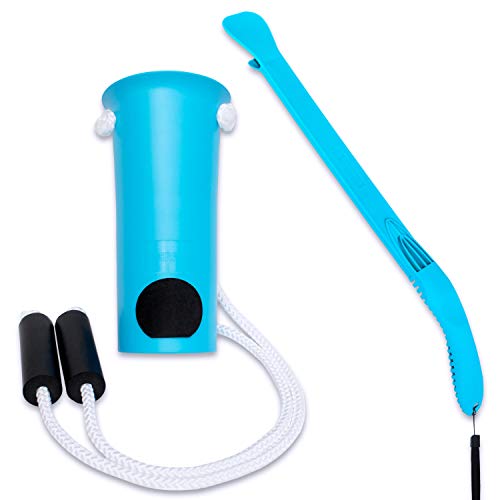
- Includes sock aid and removable doffer
- Flexible shell supports weak hand strength
- Helps with both putting on and removing socks
Best For: Users needing assistance with the full sock routine
Best Narrow-Fit Pick

- Designed for foot widths up to 4 inches
- Soft, flexible U-shaped ABS shell
- For regular socks, not compression socks
Best For: Users with foot widths of 4 inches or less
Best Adjustable Cord
Rehabilitation Advantage Sock Aid

- Adjustable braided cord for customized reach
- Single cord supports one-handed use
- Compact design with a repositionable grip pad
Best For: Users needing adjustable reach or one-handed operation
Best Lightweight Option
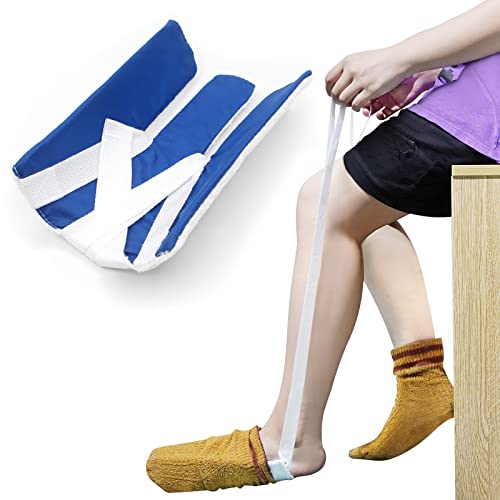
- Very light 2.4-ounce design
- Terry cloth grip and nylon low-friction side
- Works with multiple everyday sock styles
Best For: Users prioritizing lightweight, no-bending sock assistance
Wide-Foot Rope Helper
Sammons Preston 28-Inch Sock Aid

- 28-inch loop cord with foam handle
- No-slip pad and one-handed design
- Fits various sock and stocking sizes
Best For: Users needing grip assistance and broad sock compatibility
Adjustable-Length Tube Aid

- 33-inch rope helps limit bending
- Anti-slip foam holds socks in place
- Suitable for regular socks and stockings
Best For: Users wanting extra reach and adjustable rope length
Soft-Grip Terry Cover
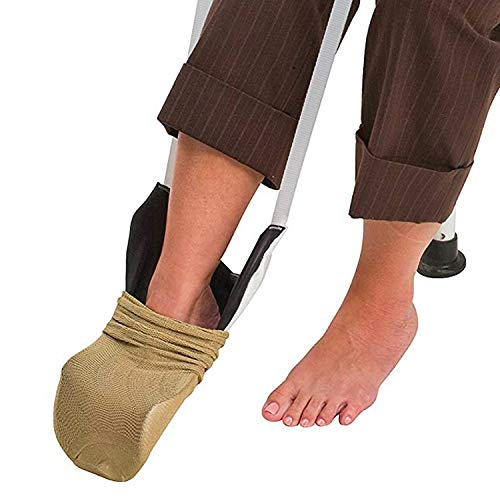
- Terry cover helps prevent slipping
- Nylon lining reduces friction
- Supports sitting or standing use
Best For: Adults needing no-bend dressing after mobility limitations or surgery
Flexible-Grip Pick – RMS Deluxe Sock Aid
For shoppers comparing sock aids for small hands, the RMS Deluxe Sock Aid stands out for its flexible shell and soft foam handles. It is designed to help users put on regular socks without bending, while adjustable ropes let you customize the reach.
Best For: Adults with weak hand strength who wear regular socks and need a comfortable, adjustable handle.
Pros:
- Flexible, contoured plastic shell is easier to load for users with weak hand strength.
- Soft, non-slip foam handles provide a comfortable grip.
- Adjustable 38-inch ropes accommodate different reach preferences.
- Works with several regular sock styles, including ankle, knee, athletic, and dress socks.
Cons:
- Not designed for compression socks, sheer anklets, or other very thin hosiery.
- Intended for foot widths measuring 5 inches or less.
This is a practical choice when grip comfort and flexible loading matter most. Its regular-sock limitation should be checked before purchase.
Simple Trough Design – Norco Molded Sock Aid
The Norco Molded Sock Aid is a straightforward option among sock aids for small hands, using a semi-flexible trough to position socks before pulling them onto the foot. Its single cord can be trimmed for a more personalized reach.
Best For: Users who prefer a compact, structured sock aid with one adjustable cord and a simple loading process.
Pros:
- Semi-flexible molded trough provides a structured surface for positioning socks.
- Foam underside helps keep the sock from sliding off prematurely.
- Adjustable 28-inch cord can be trimmed to suit the user’s reach.
- Compact design measures approximately 9.5 x 4 x 3 inches.
Cons:
- Uses a single cord handle rather than foam handles.
- The cord may require trimming to achieve the preferred length.
Choose this model if a compact trough and simple cord setup fit your routine. The structured design may be helpful when positioning the sock is the main challenge.
Gentle Fabric Grip – CAidRE Sock Aid
The CAidRE Sock Aid offers a fabric-covered alternative for shoppers seeking sock aids for small hands. Its three-finger design holds the stocking, while the terrycloth exterior and nylon interior are intended to provide a gentle but firm grip.
Best For: Adults with mobility limitations who want to put on regular dress, casual, or athletic socks without bending or twisting.
Pros:
- Unique three-finger design helps hold stockings in place.
- Terrycloth outside and nylon inside provide a gentle, firm grip.
- Designed to reduce friction and help avoid tearing fabric.
- Lightweight design weighs approximately 2.4 ounces.
Cons:
- Does not work well with compression socks.
- Fabric-covered construction may not suit shoppers seeking a rigid trough-style aid.
This model is worth considering when protecting regular sock fabric and keeping the device lightweight are priorities. Confirm that your socks are compatible before ordering.
Two-Piece Mobility Kit – RMS Sock Aid Kit
For shoppers comparing sock aids for small hands, the RMS Sock Aid Kit adds a remover to the standard sock-putting-on aid. The flexible shell is designed for easier loading, while the included doffer helps remove regular socks or stockings.
Best For: People with limited mobility or weak arm strength who need help both putting on and taking off regular socks.
Pros:
- Includes a deluxe sock aid and a sock or stocking remover.
- Flexible shell is designed for users with weak hand strength.
- Doffer design helps maximize leverage when removing regular socks.
- Smooth, flexible pieces help socks slide on and off without snagging.
Cons:
- Not intended for compression socks or compression stockings.
- Suitable for foot widths measuring 5 inches or less.
This kit makes the most sense when sock removal is as difficult as sock application. If you only need help putting socks on, a single sock aid may be sufficient.
Best Narrow-Fit Pick – KEKOY 4-Inch Sock Aid
For shoppers comparing sock aids for small hands or narrower feet, the KEKOY stands out for its specifically stated 4-inch foot-width limit. Its soft, flexible U-shaped shell is designed to hold the sock opening in place while reducing the need to bend.
Best For: People whose foot width is 4 inches or less, including users recovering from surgery, dealing with arthritis or limited mobility, or seeking more independence with regular socks.
Pros:
- Designed for foot widths measuring 4 inches or less.
- Soft, flexible ABS shell helps make sock insertion easier.
- Works with several regular sock styles, including ankle, knee, calf, athletic, and dress socks.
- U-shaped design helps keep the sock opening stable.
Cons:
- Not intended for compression socks or compression stockings.
- The narrow 4-inch fit may not suit wider feet.
This is a focused choice when a smaller foot opening is the priority. Confirm the 4-inch measurement and your sock type before buying.
Best Adjustable Cord – Rehabilitation Advantage Sock Aid
The Rehabilitation Advantage helper is a practical option among sock aids for small hands, especially when cord control and one-handed use matter. Its adjustable braided cord lets users set a pulling length that suits their reach, while the contoured shell supports easier sock loading.
Best For: Users with limited mobility, older adults, pregnant individuals, or people recovering from surgery who may need one-handed operation or a customized cord length.
Pros:
- Adjustable continuous braided cord accommodates different preferred lengths.
- Single-cord design can support putting on socks with one hand.
- Lightweight, compact construction is suitable for home use and travel.
- Slip-resistant foam pad can be positioned to help grip the sock.
Cons:
- The single helper is sold as one unit, not a pair.
- Its 9.5-inch length and 4-inch width may not fit every user or sock.
Choose this model if adjustable reach and a one-handed pulling method are more important than a specifically narrow foot-width rating. Included instructions may also help first-time users get started.
Best Lightweight Option – Dark Blue No-Bending Sock Aid
This dark blue sock helper is a lightweight choice for shoppers seeking sock aids for small hands and an easier no-bending routine. Its terry cloth side helps hold the sock, while the nylon side is designed to reduce friction as the aid is pulled upward.
Best For: Seniors, disabled users, pregnant individuals, and anyone who wants help putting on ankle, knee, calf-length, athletic, trouser, or other listed sock styles without bending or twisting.
Pros:
- Weighs 2.4 ounces, making it especially lightweight.
- Designed for putting on socks without bending, twisting, or turning.
- Terry cloth lining helps hold the sock while the nylon side reduces friction.
- Supports several sock types, including ankle, knee, calf-length, athletic, and trouser socks.
Cons:
- The supplied notes do not specify a small-foot or small-hand measurement.
- Although compression sock use is mentioned, the notes do not provide detailed compression-sock compatibility limits.
This model is worth considering when low weight and broad everyday sock compatibility are key priorities. Users needing a precise small-foot fit should verify dimensions before ordering.
Wide-Foot Rope Helper – Sammons Preston 28-Inch Sock Aid
For shoppers comparing sock aids for small hands, the Sammons Preston Sock and Stocking Aid offers a simple rope-and-trough design that can be used with one hand. Its 28-inch continuous-loop cord and foam handle help reduce bending and gripping demands.
Best For: Adults who need one-handed assistance, have limited range of motion, or prefer a sock aid that accommodates different sock and stocking lengths.
Pros:
- Continuous-loop cord with a comfortable foam handle supports one-handed use.
- No-slip pad helps keep the sock aid steady during use.
- Fits any length or size of sock or stocking, according to the supplied details.
- Can be positioned between the knees while loading a sock.
Cons:
- The 5.5-inch width is designed for wider feet and may feel large for some users with smaller feet.
- Loading the sock onto the trough may require some hand coordination.
This is a versatile option when grip assistance and broad sock compatibility matter most. Its wider plastic trough may be less targeted to very small feet, but the looped handle and no-slip pad can make dressing more manageable.
Adjustable-Length Tube Aid – Jellas 4-Inch Sock Helper Kit
The Jellas Sock Aid Kit uses a 4-inch-wide plastic tube and a long rope, making it a practical choice among sock aids for small hands. The frosted surface and anti-slip foam are designed to help the sock stay in place as you pull the tool upward.
Best For: Seniors and people with limited mobility, back issues, or difficulty bending who want a long-reach sock aid for regular socks and long stockings.
Pros:
- 33-inch rope can reduce bending and can be shortened with two knots.
- Anti-slip foam helps hold the sock on the tube.
- 4-inch tube accommodates feet up to the listed size range of 14 inches long and 4 inches wide.
- Can be assembled with or without nails depending on storage needs.
Cons:
- The supplied notes say it is not best for compression socks.
- The wide tube may not provide a close fit for every small foot.
- Arm injuries may affect the user experience.
Its adjustable rope length and anti-slip features make this a flexible option for users who want extra reach. Those seeking a tool specifically for compression socks or a very narrow foot fit may want a different design.
Soft-Grip Terry Cover – DMI Deluxe Sock Aid
The DMI Deluxe Sock Aid is a no-bend dressing tool with a terry cloth cover that helps prevent socks from slipping. For people comparing sock aids for small hands, its nylon lining is intended to reduce friction while pulling on socks or stockings.
Best For: Seniors and adults with limited range of motion or those recovering from hip, knee, or back surgery who want a covered sock helper.
Pros:
- Terry cloth cover helps keep the sock from slipping during use.
- Nylon lining reduces friction as the sock is pulled on.
- Can be used while sitting or standing.
- Designed to help users put on socks without bending.
Cons:
- The supplied notes do not specify a rope length or adjustable handle.
- Care requires hand washing with mild detergent and hang drying; it should not be machine washed.
- The notes identify it for tube socks, so sock compatibility may be more limited than universal designs.
This DMI model stands out for its soft, slip-resistant terry cover and low-friction lining. It is a sensible choice for no-bend dressing, provided the user is comfortable with its specified tube-sock format and hand-wash care.
How We Picked the Best Sock Aids for Small Hands
We focused on practical features that matter during daily dressing: handle comfort, grip security, opening size, cord adjustability, ease of loading, and compatibility with regular or compression socks. We also considered whether each design minimizes bending and can be controlled with limited strength or dexterity.
For shoppers specifically comparing Sock Aids for Small Hands, we gave extra attention to compact foot channels, manageable handles, lighter construction, and controls that do not require a wide reach. A device that fits the foot well but has awkward handles may still be difficult to use, so overall handling matters as much as the sock cradle.
Quick Comparison
| Best for | Look for | Useful feature |
|---|---|---|
| Small hands | Foam or contoured handles | Secure grip with less squeezing |
| Limited reach | Long cords or handles | Less bending and stretching |
| Compression socks | Sturdy, wide cradle | More support when pulling |
| Travel or storage | Lightweight construction | Easy packing and handling |
| Variable users | Adjustable cords | Personalized length and control |
Key Buying Factors for Sock Aids for Small Hands
Handle Design and Grip
Choose padded, textured, or contoured handles if gripping is painful or tiring. Large handles can be easier to hold, but they may be uncomfortable if your hand span is limited. Look for a shape that lets you pull with the palm rather than relying on fingertip strength.
Cradle Size and Sock Compatibility
Check the stated foot width and intended sock types. A snug cradle can hold thin everyday socks securely, while a wider or sturdier model may be better for thick socks and compression styles. Make sure the opening can be loaded without excessive stretching.
Cord Length and Adjustment
Adjustable cords are useful when users have different heights, reach limitations, or sitting positions. Longer cords reduce bending, but excess length can become harder to manage. Tie or secure the cords so they do not drag or tangle.
Stability and Loading
A sock aid should stay open while the sock is fitted and should release the fabric smoothly as the foot slides forward. Slip-resistant surfaces, molded guides, and firm construction can make loading easier, especially for users with weak hands.
Who Should Buy Which Sock Aids for Small Hands?
Choose a foam-handle or compact molded design if small hands, arthritis, or reduced grip strength are the main concerns. An adjustable-cord model is a better fit when reach varies or more positioning flexibility is needed. For compression socks, prioritize a sturdy cradle and enough leverage rather than the smallest overall size. If several people will use the device, select a versatile kit with adjustable controls and broad sock compatibility.
Before buying, confirm the product dimensions, intended sock thickness, and whether the handles can be used comfortably from a seated position. If swelling, severe weakness, or balance problems are involved, ask a clinician or occupational therapist to recommend the safest dressing aid.