A raised doorway threshold can make everyday movement difficult for wheelchair users, walker users, and anyone using a mobility scooter. The right ramp creates a smoother transition while helping reduce bumps, slips, and tripping hazards.
These 10 threshold ramps under $300 cover low-profile strips, rubber ramps, and higher-rise options for indoor and outdoor entrances. Use the buying guide below to match ramp height, surface, capacity, and installation style to your doorway.
Best 10 Threshold Ramps Under 300 Picks for 2026
Compact Aluminum Choice
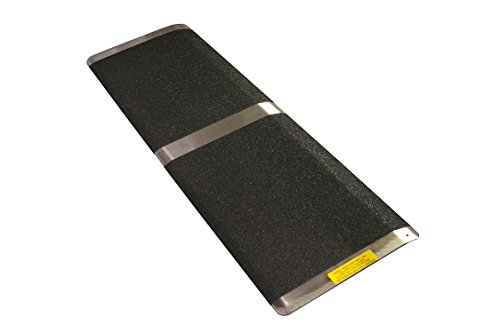
- 32-inch aluminum ramp for small thresholds
- Handles rises from 1/2 to 3/4 inch
- 600-pound capacity with included hardware
Best For: Low doorway thresholds and occupied mobility devices
Heavy-Duty Rubber Pick

- 3,300-pound capacity for demanding use
- 35.5-inch width and 1.8-inch rise
- Cuttable rubber design needs no installation
Best For: Wide doorways, garages, and mixed mobility equipment
Three-Inch Access Ramp

- 3-inch rise with beveled approach edges
- 35.5-inch width and grooved rubber tread
- Tool-free, one-piece portable design
Best For: Higher thresholds, garages, and uneven outdoor transitions
Low-Profile Flexible Pick
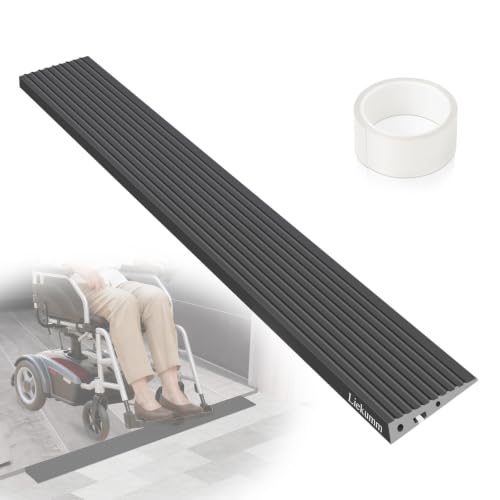
- 36-inch-wide rubber ramp for low thresholds
- Trim-to-fit design with a cable channel
- 2,200-pound capacity and textured surface
Best For: Adaptable indoor or outdoor doorway transitions
Best Peel-and-Stick Option
Self-Adhesive Rubber Threshold Strip

- Peel-and-stick installation
- Grooved anti-slip surface
- 2,500-pound load rating
Best For: Low doorway transitions requiring a cut-to-length ramp
Best 2-Inch Rise Ramp
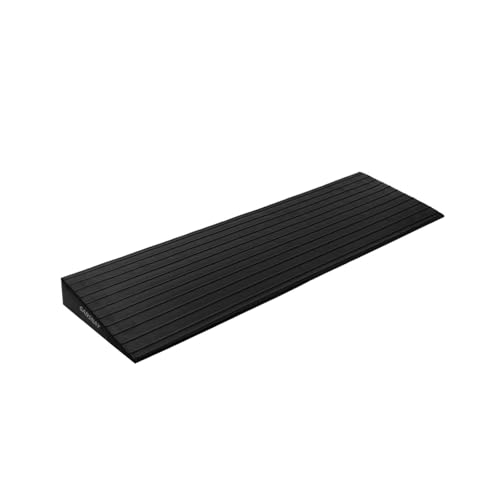
- Supports a 2-inch rise
- Lightweight and portable
- 1,200-pound load capacity
Best For: Higher indoor or outdoor doorway transitions
Best Heavy-Duty Low-Profile Ramp
Ruedamann 0.6-Inch Threshold Ramp

- 3,300-pound load capacity
- Low 0.6-inch rise
- Cuttable grooved rubber design
Best For: Heavy-use low thresholds in homes, garages, or commercial spaces
Heavy-Duty Pick
VEVOR 1.2-Inch Cuttable Rubber Threshold Ramp

- Supports up to 33,069 pounds
- 35.4-inch width can be trimmed
- Textured surface and included adhesive tape
Best For: Heavy-duty access over 1.2-inch thresholds
Balanced Everyday Choice
1-Inch Cut-to-Fit Rubber Threshold Ramp

- 2,000-pound stated capacity
- 35.5-inch width with cut-to-fit design
- Grooved surface and adhesive strips included
Best For: Everyday mobility access over 1-inch thresholds
Compact Flexible Pick
0.8-Inch Cuttable Rubber Threshold Ramp

- Supports up to 1,500 pounds
- Low 0.8-inch rise for smaller transitions
- Trim-to-fit and spliceable rubber design
Best For: Low home-entry thresholds and customizable layouts
Compact Aluminum Choice – Prairie View TH1032
For shoppers comparing threshold ramps under 300, the Prairie View Industries TH1032 is a compact aluminum option for small doorway transitions. Its 10-by-32-inch platform is designed for thresholds with a 1/2- to 3/4-inch rise and supports up to 600 pounds.
Best For: Occupied wheelchair or scooter passage over small indoor thresholds.
Pros:
- Grooved, high-traction surface helps provide a safer walking path.
- Aluminum construction and a 600-pound load capacity.
- Includes installation hardware and punched corner holes.
Cons:
- Limited to relatively low rises of 1/2 to 3/4 inch.
- Designed to attach to the edge of a threshold rather than simply sit in place.
The TH1032 stands out when a narrow, low-profile threshold solution is more important than broad height compatibility. Verify the rise and doorway width before purchasing.
Heavy-Duty Rubber Pick – Ruedamann 1.8-Inch Ramp
Among threshold ramps under 300, this Ruedamann model offers a heavy-duty rubber design for a 1.8-inch rise. It is sized 35.5 inches wide and can support up to 3,300 pounds, making it suitable for a range of mobility and rolling equipment.
Best For: Doorways, garages, and entryways needing a wide, high-capacity rubber transition.
Pros:
- Supports wheelchairs, scooters, walkers, carts, strollers, and robot vacuums.
- Textured grooves provide traction in wet or dry conditions.
- Can be cut to fit or combined for wider entrances.
- No installation is required; unpack and place it.
Cons:
- At 10.8 pounds, it is heavier than a small aluminum threshold ramp.
- Its 1.8-inch rise may not suit lower thresholds without a height difference.
This is a practical choice when load capacity and flexible placement matter. Measure the threshold height and available width, and account for the rubber ramp’s 10.8-pound weight.
Three-Inch Access Ramp – VEVOR Rubber Threshold Ramp
For a larger step-up, the VEVOR rubber threshold ramp is one of the more substantial threshold ramps under 300 to consider. Its 3-inch rise, beveled edges, and 35.5-by-17.7-inch footprint create a broad transition for doorways, garages, and other uneven surfaces.
Best For: Higher thresholds requiring a wide, stable approach for wheelchairs, scooters, or carts.
Pros:
- Beveled edges allow approaches from multiple sides.
- Grooved rubber surface provides traction and is suitable indoors or outdoors.
- One-piece design requires no tools for assembly or removal.
- Supports up to 2,200 pounds according to the product bullet notes.
Cons:
- At 29 pounds, it is considerably heavier than compact threshold ramps.
- The 3-inch height and 17.7-inch depth require substantial floor space.
- The notes contain inconsistent load-capacity figures, so verify the current listing before purchase.
The VEVOR is best when the priority is a substantial, portable rubber transition rather than a lightweight doorway insert. Confirm the rise, approach space, and current capacity specification.
Low-Profile Flexible Pick – LIEKUMM 3/4-Inch Ramp
The LIEKUMM is a low-profile option among threshold ramps under 300, measuring 36 inches wide and 3/4 inch high. Its rubber construction, trim-to-fit design, and built-in cable channel make it useful for doorways where a neat, adaptable transition is important.
Best For: Low thresholds, cable-containing doorways, and modular access for wheelchairs, scooters, carts, or walkers.
Pros:
- 36-inch width provides broad doorway coverage.
- Can be trimmed to fit and combined with additional ramps for wider access.
- Textured surface is designed to resist slipping, including when wet.
- Built-in cable groove and included double-sided tape support tidy placement.
Cons:
- Its 3/4-inch height is not intended for larger threshold rises.
- The 4-inch depth may provide a shorter approach than deeper ramps.
- Double-sided tape is supplied, but the notes do not describe additional fastening hardware.
This ramp fits buyers who want a lightweight, customizable solution for a modest rise. Check the threshold dimensions and cable location before trimming or securing it.
Best Peel-and-Stick Option – Self-Adhesive Rubber Threshold Strip
For shoppers comparing threshold ramps under 300, this self-adhesive rubber strip is a straightforward choice for low doorway transitions. It offers a grooved, anti-slip surface, can be cut to length, and installs without nails, glue, or assembly.
Best For: Indoor or outdoor doorways used by wheelchairs, scooters, strollers, skateboards, and pets.
Pros:
- Strong peel-and-stick backing supports tool-free installation.
- Grooved surface helps increase traction and provides drainage paths.
- Cuttable rubber design accommodates different doorway lengths.
- Rated for a 2,500-pound load.
Cons:
- The listed dimensions are relatively narrow at 2 inches wide.
- Installation depends on the adhesive backing adhering properly to the surface.
This is a practical pick when easy installation and a compact, adaptable design matter most. Measure the threshold and mounting surface carefully before applying the strip.
Best 2-Inch Rise Ramp – Odorless Rubber Doorway Ramp
Among threshold ramps under 300, this 2-inch-rise model is designed for more substantial doorway changes. Its 12.7-degree slope, grooved surface, portable weight, and cuttable rubber construction make it suitable for indoor and outdoor transitions.
Best For: Doorways, porches, laundry rooms, and garden-yard transitions used by wheelchairs, walkers, scooters, strollers, pets, or robot cleaners.
Pros:
- Accommodates a 2-inch rise with an 8.7-inch ramp depth.
- Lightweight at 4.4 pounds and requires no screws or tape.
- Grooved surface helps provide traction in indoor and outdoor conditions.
- Rated to hold up to 1,200 pounds and includes a 5-year warranty.
Cons:
- Robot-vacuum compatibility varies by model and climb angle.
- A saw is needed if the ramp must be cut to a custom size.
- The steeper 12.7-degree slope may not suit every mobility setup.
This ramp stands out for buyers needing a portable solution for a higher threshold. Confirm the rise, available approach space, and device clearance before ordering.
Best Heavy-Duty Low-Profile Ramp – Ruedamann 0.6-Inch Threshold Ramp
For threshold ramps under 300 that prioritize capacity without a tall rise, this Ruedamann model provides a 0.6-inch transition and a 3,300-pound load rating. The solid rubber body, reinforced frame, and grooved surface are suited to frequent household or commercial use.
Best For: Low thresholds in doorways, garages, stores, and entryways used by wheelchairs, carts, strollers, walkers, scooters, or robot vacuums.
Pros:
- High 3,300-pound load capacity supports heavy-duty use.
- Low 0.6-inch rise creates a gradual transition.
- Textured grooves provide traction in wet or dry conditions.
- Can be cut for different widths or combined for wider entrances.
Cons:
- Its low rise is intended for smaller threshold differences, not taller steps.
- The ramp weighs about 3.5 pounds, so it is less lightweight than some portable options.
- No installation hardware is included because it is designed for placement rather than fixed installation.
This is the strongest choice of the three for heavy loads and low-profile access. Check the threshold height and doorway width, then trim the ramp if needed for a closer fit.
Heavy-Duty Pick – VEVOR 1.2-Inch Cuttable Rubber Threshold Ramp
For shoppers comparing threshold ramps under 300, this VEVOR model stands out for its 1.2-inch rise, broad 35.4-inch width, and exceptionally high stated load capacity. Its solid rubber construction and included adhesive tape suit smooth, high-traffic surfaces.
Best For: Heavy-duty wheelchair, cart, stroller, and robot-vacuum access across doorways, garages, bathrooms, and smooth tile.
Pros:
- Supports up to 33,069 pounds without bending or warping, according to the product details.
- Textured anti-slip surface is designed to provide traction in wet or dry conditions.
- Can be trimmed to fit a threshold, with leftover material usable as a door stopper.
- Includes double-sided tape for placement on clean, smooth surfaces.
Cons:
- The product may have a mild rubber odor when first unpacked.
- Adhesive installation is intended for smooth surfaces and may not suit every floor type.
- Its 1.2-inch rise may not match thresholds of different heights.
This is the strongest option of the three for demanding loads and frequent use. Measure the threshold height and available width before ordering, and ventilate the ramp briefly if the initial rubber odor is noticeable.
Balanced Everyday Choice – 1-Inch Cut-to-Fit Rubber Threshold Ramp
If you are shopping for threshold ramps under 300 for a standard low doorway transition, this 1-inch rubber ramp offers a practical balance of width, traction, and installation convenience. It is sized for common mobility and household equipment while remaining cuttable for narrower openings.
Best For: Wheelchairs, power chairs, scooters, carts, bicycles, and robot vacuums crossing 1-inch door thresholds.
Pros:
- 35.5-inch-wide ramp supports up to 2,000 pounds.
- Deep grooves are designed to improve traction in wet or dry conditions.
- Can be trimmed for narrower openings or placed side by side for wider entryways.
- Includes double-sided adhesive strips to help reduce shifting on clean, dry, smooth surfaces.
Cons:
- A mild rubber odor or slight curve may be present after packaging.
- Adhesive strips may be less suitable for rough or dirty surfaces.
- Its 1-inch rise is intended for a specific threshold height, so measuring is important.
This model is a sensible middle-ground choice when the threshold is close to 1 inch and the opening needs a broad, low-profile transition. Let it lie flat in a ventilated area before installation if it arrives curved.
Compact Flexible Pick – 0.8-Inch Cuttable Rubber Threshold Ramp
Among threshold ramps under 300, this 0.8-inch rubber model is suited to smaller transitions where a lower rise is appropriate. Its cuttable, spliceable design and self-adhesive backing make it adaptable for home entrances, garages, and other uneven access points.
Best For: Wheelchairs, walkers, scooters, strollers, seniors, children, and pets crossing low indoor or outdoor thresholds.
Pros:
- Supports up to 1,500 pounds for a range of mobility equipment.
- Deep grooves provide traction and drainage channels for indoor or outdoor use.
- Can be trimmed to size or spliced with additional ramps for wider doorways.
- Self-adhesive backing allows installation without nails, screws, or glue.
Cons:
- The stated 0.8-inch rise may not cover taller thresholds.
- Its 12-inch listed length is shorter than the wider 35-inch-class options, so placement should be checked carefully.
- The adhesive-backed design may require a clean, suitable surface for secure placement.
This is the most flexible choice for low transitions and customized layouts. Confirm the actual threshold height and doorway width before buying, especially if you plan to join multiple pieces.
How We Picked the Best Threshold Ramps Under 300
We focused on ramps that address common doorway-access needs without exceeding the $300 budget. The selection includes several rise heights, from low-profile strips for small lips to taller ramps for more substantial thresholds. We also considered stated weight capacity, ramp width, material, traction, portability, and whether each design can be cut, secured, or installed with minimal tools.
Because doorway dimensions and mobility equipment vary, product specifications should be checked carefully before purchase. A ramp’s listed capacity should cover the combined weight of the user and mobility device, with a reasonable safety margin.
Quick Comparison
| Ramp type | Best suited for | Main advantage | Important check |
|---|---|---|---|
| Low-profile rubber strip | Small thresholds | Minimal height and easy placement | Exact rise measurement |
| Cuttable rubber ramp | Custom-width doorways | Can be trimmed to fit | Cutting tools and finished edges |
| Wide solid rubber ramp | Wheelchairs and scooters | Broad rolling surface | Available floor space |
| Portable molded ramp | Temporary or flexible use | Easy to reposition | Stability and storage |
Key Buying Factors for Threshold Ramps Under $300
Measure the Threshold Height
Measure from the floor to the highest point of the threshold, not just the visible edge. Choose a ramp designed for that rise; a ramp that is too low may leave a bump, while one that is too high can create an unnecessarily steep transition.
Match the Width and Approach
The ramp should provide enough usable width for the wheelchair, walker, or scooter. Check both the doorway opening and the landing area on each side. A wide ramp may improve alignment, but it also needs sufficient clearance when the door opens.
Check Traction, Capacity, and Stability
Non-slip rubber or textured surfaces are useful in damp areas, but traction can still vary with dirt, ice, and water. Confirm the manufacturer’s weight rating and look for a design that sits flat without rocking. Adhesive-backed strips may suit light-duty, semipermanent use; heavier ramps may need additional securing.
Consider Material and Maintenance
Rubber ramps are quiet and generally forgiving under wheels, while molded or metal designs may offer different durability and portability characteristics. For exterior use, verify weather suitability and keep drainage, temperature changes, and surface wear in mind.
Who Should Buy Which Threshold Ramps Under 300?
- For a very small lip: Choose a low-rise rubber strip or self-adhesive threshold ramp.
- For wheelchair or walker access: Select a ramp with a wide, stable surface and enough capacity for the equipment and user.
- For scooters or wider chairs: Prioritize a broad ramp and confirm the turning and approach space.
- For an unusual doorway width: Consider a cuttable rubber model, provided trimming will not compromise its edges or stability.
- For a taller threshold: Look for a ramp specifically rated for the measured rise rather than stacking smaller pieces.
- For temporary use: Favor a portable design that can be removed and repositioned without permanent changes to the doorway.
Before ordering, compare the ramp’s rise, width, capacity, surface, and installation method with the actual doorway. Those five checks will usually matter more than appearance or the lowest listed price.