The right insoles can improve comfort, reduce fatigue, and help your shoes provide more consistent support during training, competition, and everyday recovery. This roundup compares 10 options for runners, field athletes, court players, and active users with different arch and stability needs.
We included cushioned performance inserts, low-profile designs for tight footwear, and firmer orthotics aimed at overpronation or plantar fascia discomfort. Use the guide below to narrow the choices by fit, support level, activity, and shoe type.
Best 10 Orthotic Insoles for Athletes Picks for 2026
Lightweight Cushion Pick

- Lightweight foam absorbs impact
- Heel and forefoot cushioning
- Soft support with deep heel cup
Best For: Runners and athletes preferring cushioned, gentle support
Balanced Performance Support

- Firm-but-flexible neutral arch
- Dual-layer shock-absorbing foam
- Odor-control and anti-slip features
Best For: Neutral-arch athletes wanting structured running support
Everyday Running Comfort
Dr. Scholl's Run Active Comfort

- Three-zone shock reduction
- Reinforced low-arch support
- Trim-to-fit design with odor control
Best For: Women runners seeking cushioned, everyday comfort
Maximum Motion Control
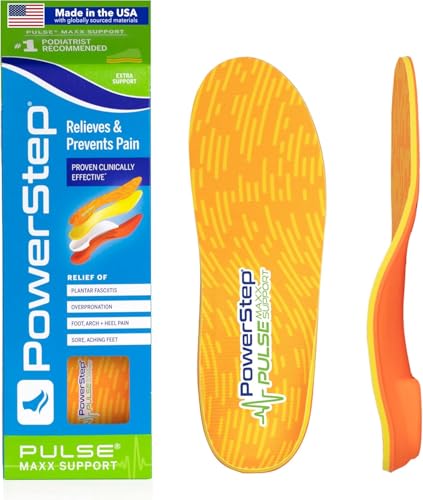
- Rigid shell for stronger correction
- Angled heel supports alignment
- Maximum cushioning for high activity
Best For: Runners needing firm overpronation support
Everyday Gel Cushioning

- Neutral arch fits most foot types
- Gel cushioning in heel and forefoot
- Moisture management for athletic use
Best For: Walking, running, cross-training, and casual wear
Lightweight Athletic Support

- Heel-to-toe foam and gel cushioning
- Moisture control and midfoot ventilation
- Neutral athletic shape with heel cup
Best For: Running, walking, sports, and everyday athletic comfort
Best Overall Support

- Moderate arch support with a semi-rigid shell
- Dual-layer cushioning for active use
- Made in the USA with a 30-day guarantee
Best For: Athletes needing cushioned, moderate support
Best for Versatile Training

- Shock absorption for athletic activities
- Flexible support for side-to-side movement
- Designed for sports and fitness classes
Best For: Men seeking flexible support for varied training
Best for Overpronation Control

- Angled heel post supports motion control
- Deep heel cradle improves stability
- Thick cushioning suits removable-insole shoes
Best For: Athletes needing firm support for overpronation
Lightweight Cushion Pick – Spenco Polysorb Cross Trainer
For athletes seeking orthotic insoles for athletes with a softer, lightweight feel, the Spenco Polysorb Cross Trainer combines impact cushioning with gentle arch support. Its heel and forefoot pads are designed for comfort during running, walking, and training.
Best For: Runners, walkers, and athletes who want cushioned support without a stiff feel.
Pros:
- Lightweight Polysorb foam helps absorb impact and reduce pressure.
- Heel and forefoot cushioning can help minimize fatigue.
- Deep heel cup helps center the foot for steadier movement.
- APMA Seal of Acceptance and one-year unconditional guarantee.
Cons:
- Soft arch support may not provide enough structure for athletes needing firm correction.
- The listed size fits Women’s 9–10.5/Men’s 8–9.5, so sizing options may be limited.
The Polysorb Cross Trainer is a practical choice when cushioning, stability, and a less rigid support profile matter more than aggressive motion control.
Balanced Performance Support – PowerStep Pulse Performance
The PowerStep Pulse Performance is a strong option for athletes comparing orthotic insoles for athletes with neutral arches. Its firm-but-flexible arch, full-length contact support, and dual-layer foam are suited to running and other workouts.
Best For: Athletes with neutral arches who want structured support, cushioning, and odor-control fabric in sneakers.
Pros:
- Full-length support helps support the entire foot.
- Dual-layer foam helps absorb stress and adds cushioning through the insole.
- Metatarsal cushioning may help with ball-of-foot discomfort and fatigue.
- Includes a 60-day guarantee and lifetime warranty on the plastic arch support against breakage under normal use.
Cons:
- The firm arch may feel less comfortable for athletes seeking plush or minimal support.
- This listing is specified for men’s 10–10.5/women’s 12 in a medium width.
With its blend of firm flexibility, cushioning, and anti-slip features, the Pulse Performance sits between a basic comfort insert and a more rigid corrective orthotic.
Everyday Running Comfort – Dr. Scholl's Run Active Comfort
Dr. Scholl’s Run Active Comfort offers a straightforward option for athletes looking for orthotic insoles for athletes with low arches. The trim-to-fit design uses a three-zone heel-to-toe layout to cushion impact and support movement from landing through push-off.
Best For: Women runners seeking shock reduction, odor control, and supportive cushioning for common running discomfort.
Pros:
- Three-zone design helps reduce shock from heel to toe.
- Reinforced arch support is designed to improve weight transition.
- Polygiene StayFresh technology helps neutralize odors.
- Trim-to-fit format allows adjustment for compatible footwear.
Cons:
- Its low-arch design may be unsuitable for high-arch users.
- As a comfort insole, it may offer less rigid correction than motion-control models.
This pair is best suited to runners prioritizing accessible cushioning and freshness over maximum structural support or aggressive alignment correction.
Maximum Motion Control – PowerStep Pulse Maxx
The PowerStep Pulse Maxx is built for athletes who need more corrective structure from orthotic insoles for athletes. Its rigid shell, angled heel, and targeted cushioning are designed for running shoes and high-activity use, particularly when overpronation is a concern.
Best For: Runners seeking maximum support and cushioning for overpronation-related foot, ankle, or lower-limb discomfort.
Pros:
- Rigid shell and angled heel provide stronger motion control and alignment support.
- Dual-layer cushioning helps absorb impact and reduce stress on joints and tendons.
- Designed specifically for running shoes and rigorous athletic activity.
- Pre-sized construction requires no trimming and includes a 30-day money-back guarantee.
Cons:
- More rigid support may require a gradual break-in period.
- It may feel excessive for athletes who do not need corrective motion control.
- The listed size fits men’s 6–6.5/women’s 8–8.5.
The Pulse Maxx is the most support-focused option in this roundup, making it a better match for high-activity runners who prioritize correction and stability over a soft, flexible feel.
Everyday Gel Cushioning – Sof Sole Women's Athlete
For athletes seeking orthotic insoles for athletes with a neutral arch fit, the Sof Sole Women’s Athlete is a flexible, trim-to-fit option for everyday training and casual wear. Gel pads in the heel and forefoot help cushion impact, while Hydrologix treatment is designed to manage moisture.
Best For: Walking, running, cross-training, and casual shoes for women with regular-shaped feet.
Pros:
- Neutral arch design suits most foot types.
- Gel pads cushion the heel and forefoot.
- Hydrologix treatment helps keep feet cool and dry.
- Can be trimmed to fit athletic or casual shoes.
Cons:
- Women’s sizing is limited to 8–11.
- Provides cushioning but does not offer corrective support.
This is a practical pick when comfort and moisture management matter more than structured motion control. Its neutral, flexible design makes it versatile, but athletes seeking targeted correction may need a more supportive model.
Thin Motion Control – PowerStep PULSE Thin
Among orthotic insoles for athletes, the PowerStep PULSE Thin is designed for cleats and tight running shoes where space is limited. Its motion-control design, arch support, and dual-layer cushioning target stability and impact management during rigorous activity.
Best For: Athletes needing thin, full-length support for running shoes or cleats, particularly with mild pronation or activity-related foot discomfort.
Pros:
- Thin profile is suited to cleats and tight-fitting running shoes.
- Motion control helps support alignment and stability.
- Dual-layer cushioning helps absorb impact.
- Top fabric helps manage heat, friction, and perspiration.
Cons:
- New users may need a gradual transition period.
- Support may feel structured compared with basic cushioning inserts.
- Available listing size is limited to men’s 6–6.5/women’s 8–8.5.
This model is the strongest choice here for athletes who prioritize stability in low-volume footwear. The corrective design may help address support needs, but its structured feel makes fit and gradual break-in especially important.
Lightweight Athletic Support – Sof Sole Men's Athlete
Sof Sole Insoles Men's ATHLETE Performance Full-Length Gel Shoe Insert, Men's 11-12.5
Check Price On AmazonThe Sof Sole Men’s Athlete combines lightweight heel-to-toe cushioning with a neutral athletic shape, making it a straightforward option for orthotic insoles for athletes who want comfort without adding much weight. Gel absorbs impact, while ventilation and moisture control support longer workouts.
Best For: Men who run, walk, or play sports and want cushioned, breathable inserts for athletic footwear.
Pros:
- Gel in the heel and forefoot helps absorb foot strikes.
- Foam provides heel-to-toe cushioning.
- Hydrologix technology helps wick moisture.
- Midfoot ventilation and a heel cup support comfort and stability.
Cons:
- Listed sizing is limited to men’s 11–12.5.
- Its neutral design may not meet the needs of athletes seeking strong corrective control.
This insert balances impact cushioning, moisture management, and a lightweight feel for general athletic use. Choose it for everyday comfort and stability rather than specialized motion correction.
Best Overall Support – PowerStep Pinnacle
For athletes who want dependable cushioning and moderate support, the PowerStep Pinnacle is a practical option among orthotic insoles for athletes. Its semi-rigid support shell, heel cushioning, and dual-layer construction are designed to help reduce foot stress during active use.
Best For: Athletes and active users seeking moderate arch support, cushioning, and help with plantar fasciitis-related foot discomfort.
Pros:
- Podiatrist recommended for foot pain, plantar fasciitis, and heel spurs
- Dual-layer cushioning helps reduce stress and fatigue
- Fits athletic, walking, running, and work shoes with removable factory insoles
- Made in the USA and backed by a 30-day money-back guarantee
Cons:
- Designed for shoes where the original insole can be removed
- Ordered by shoe size, so it is not intended to be trimmed
The Pinnacle balances cushioning with a moderately supportive profile, making it a versatile choice for active routines when comfort and arch stability are priorities.
Best for Versatile Training – Dr. Scholl’s Sport Insoles
Dr. Scholl’s Sport Insoles are designed for athletes who want shock absorption and flexible support across multiple activities. As orthotic insoles for athletes, they provide arch support and side-to-side stability for fitness classes and other athletic pursuits.
Best For: Men participating in varied sports, fitness classes, and athletic activities who want flexible support and shock absorption.
Pros:
- Designed to absorb shock and reduce stress on lower-body joints
- Flexible side-to-side support helps with multidirectional movement
- Suitable for multiple sports and athletic activities
Cons:
- Listed specifically for men
- Uses a high-arch design, which may not suit every foot shape
- Supplied as one pair, rather than multiple pairs
This is a straightforward athletic insert for users who prioritize movement flexibility and shock absorption over a more rigid corrective design.
Best for Overpronation Control – PowerStep Pinnacle Maxx
The PowerStep Pinnacle Maxx is built for athletes and active users who need stronger stability than a basic cushioned insert provides. Its angled heel post, deep heel cradle, and firm-but-flexible construction make it a targeted choice among orthotic insoles for athletes dealing with overpronation or flat feet.
Best For: Users with overpronation or flat feet who want motion control, heel stability, and substantial cushioning.
Pros:
- Angled heel post helps limit inward rolling and improve stability
- Deep heel cradle supports motion control and heel comfort
- Thick dual-layer cushioning provides support from heel to toe
- Ready to wear without trimming and made in the USA
Cons:
- Thickest Pinnacle design, so it requires removable factory insoles
- Firm support may feel less adaptable than a flexible insert
- Designed for a medium arch and medium shoe width
Choose the Pinnacle Maxx when controlling inward foot motion is more important than keeping the insole profile minimal. Its stability-focused design is suited to demanding daily activity and athletic footwear with enough interior space.
How We Picked the Best Orthotic Insoles for Athletes
We focused on the features that matter most during repeated impact and movement: arch support, heel cushioning, stability, breathability, moisture management, trim-to-fit flexibility, and compatibility with athletic footwear. The selection includes both neutral inserts and corrective designs so shoppers can compare comfort-oriented and motion-control options.
We also considered whether an insole is better suited to roomy trainers, running shoes, cleats, or narrow performance footwear. Because fit is highly individual, no single model is ideal for every athlete or foot shape.
Quick Comparison
| Best for | Look for | Common trade-off |
|---|---|---|
| Everyday training | Balanced cushioning and moderate support | May not control severe overpronation |
| Running and impact sports | Heel-to-toe cushioning and secure arch support | Can take time to break in |
| Cleats or tight shoes | Thin profile and minimal bulk | Less cushioning than full-volume inserts |
| Flat feet or overpronation | Firm structure and a stabilizing heel design | May feel too rigid for neutral-footed users |
Key Buying Factors for Orthotic Insoles for Athletes
Support and Stability
Choose moderate or firm support if your feet roll inward, your arches fatigue quickly, or you need help maintaining alignment. Neutral designs are often more comfortable when you have no specific stability concern. If you experience persistent pain, consult a podiatrist or physical therapist rather than relying on an insert alone.
Cushioning and Impact Control
Gel, foam, and polyurethane constructions can soften heel strikes and reduce underfoot fatigue. Runners and athletes training on hard surfaces may prefer fuller cushioning, while athletes who need ground feel may want a thinner, more responsive insert.
Fit, Volume, and Break-In
Check whether the insole replaces the shoe’s original footbed and whether it can be trimmed. A thick orthotic may crowd the toes or lift the heel in a low-volume shoe. Introduce firmer inserts gradually, starting with short sessions before wearing them for an entire workout.
Moisture and Durability
Breathable covers and odor-control materials are useful for frequent training. Durable foam and reinforced support components matter if you rotate through long runs, practices, or multiple games each week.
Who Should Buy Which Orthotic Insoles for Athletes?
For general training and all-day athletic comfort, start with a balanced cushioned model such as the Spenco, Sof Sole, or Dr. Scholl’s performance options. Runners seeking structured support can consider the PowerStep Pulse designs, choosing the neutral version for conventional support, the Maxx version for stronger overpronation control, or the Thin model for tighter shoes.
For plantar fascia discomfort, flat feet, or a need for firmer stability, the PowerStep Pinnacle and Pinnacle Maxx are the most targeted choices in this group. Select the standard Pinnacle for moderate support and the Maxx when maximum stability is the priority. Always verify sizing and shoe compatibility, and replace worn inserts when cushioning or structure begins to collapse.