If you’re looking to enhance your rehabilitation journey, hand therapy pegboards can be a game changer. These tools improve fine motor skills and hand-eye coordination, making them ideal for various recovery needs. With options tailored for both children and adults, you’ll find features that cater to your specific requirements. But how do you choose the right pegboard for your therapy? Let’s explore the top selections that can support your recovery process.
Wooden Pegboard for Finger Dexterity with Multifunctional Test Kit
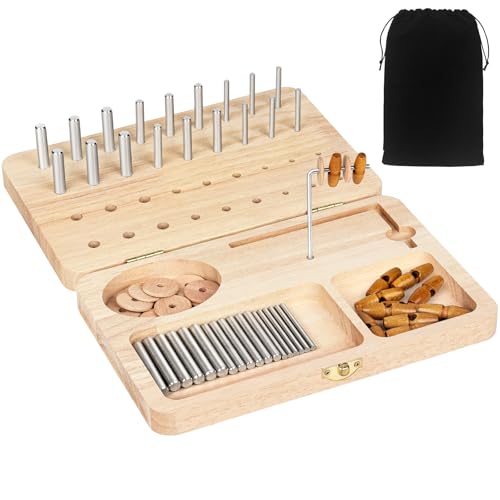
The Wooden Pegboard for Finger Dexterity with Multifunctional Test Kit is an essential tool for anyone recovering from hand injuries or neurological conditions like stroke or Parkinson’s. This 36-hole therapy pegboard includes various materials, such as stainless steel rods and wooden pieces, to enhance your fine motor skills. The integrated storage design makes it easy to transport and use in different settings. With progressive difficulty levels, you can improve hand-eye coordination and cognitive abilities while targeting your specific rehabilitation needs. Whether you’re at home or in a professional setting, this pegboard offers versatility and effectiveness in your recovery journey.
Best For: Individuals recovering from hand injuries or neurological conditions, such as stroke or Parkinson’s, who need to improve fine motor skills.
Pros:
- Versatile design allows for use in both professional rehabilitation settings and home environments.
- Progressive difficulty levels enable gradual skill enhancement, catering to various rehabilitation stages.
- Integrated storage makes it portable and easy to keep organized, ensuring all components are readily available.
Cons:
- Limited to specific rehabilitation needs, which may not appeal to individuals seeking general dexterity tools.
- May require supervision or guidance from a therapist for optimal use, especially for beginners.
- Some users might find the materials less durable if used frequently without proper care.
Wooden Pegboard for Occupational Therapy Tools

For anyone recovering from hand injuries or seeking to enhance finger dexterity, the YiePhiot Wooden Pegboard for Occupational Therapy stands out as a top choice. This pegboard features 20 slots and colorful sticks, allowing for easy identification during exercises. Made from carefully selected wood, it’s smooth to the touch and durable, ensuring a comfortable experience. Measuring just 7.07 x 5.51 inches, it’s lightweight and portable for use at home or in therapy settings. By using this tool, you’ll improve flexibility and motor control through repetitive stick insertion, making it ideal for rehab after finger injuries.
Best For: Individuals recovering from hand injuries or those looking to improve finger dexterity.
Pros:
- Durable and Comfortable: Made from selected wood with a smooth surface for a pleasant touch.
- Portable Design: Lightweight and compact, making it easy to use at home, in the office, or at rehabilitation centers.
- Effective Rehabilitation Tool: Promotes flexibility and motor control through structured repetitive exercises.
Cons:
- Limited Color Variety: Only two colors for the sticks, which may not appeal to all users.
- Size Constraints: Smaller dimensions may not be suitable for all hand sizes or therapeutic exercises.
- Basic Functionality: Lacks advanced features or technology that some users may prefer for rehabilitation.
Wooden Pegboard for Finger Dexterity and Hand Therapy

Looking to enhance finger dexterity and hand therapy? The upgraded 36-hole wooden pegboard is perfect for your rehabilitation journey. This multifunctional kit includes a variety of components like screws, allen wrenches, and a screwdriver, all designed to improve your fine motor skills and hand-eye coordination. With four exercise areas, you can gradually increase difficulty, adapting to your recovery stage. Made from solid wood, it’s durable and portable, featuring an integrated storage design for convenience. Ideal for stroke patients, brain injury survivors, or those recovering from hand surgeries, it also makes a thoughtful gift for anyone in need of hand therapy tools.
Best For: Individuals recovering from stroke, brain injuries, or hand surgeries who need to improve finger dexterity and hand coordination.
Pros:
- Versatile kit with multiple components to target different aspects of hand therapy.
- Durable and portable design allows for easy storage and transport.
- Adjustable difficulty levels cater to various recovery stages, making it suitable for a wide range of users.
Cons:
- May require supervision for individuals with severe motor impairments.
- Some users might find the setup and organization of components overwhelming.
- Limited to hand therapy; may not address other rehabilitation needs.
Wooden Peg Board for Occupational Therapy

Ideal for both children and adults, the Wooden Peg Board for Occupational Therapy enhances fine motor skills and hand-eye coordination through engaging activities. Measuring 9.37 x 8.58 inches, this sturdy beech wood board features 18 holes of varying sizes for inserting solid metal pegs. As you practice, you’ll improve finger dexterity, grip strength, and concentration. Its compact design with a protective lid makes it easy to transport, whether at home or in therapy settings. Plus, cleaning is a breeze with just a damp cloth. Rated 4.9 out of 5 stars, it’s a trusted tool in rehabilitation.
Best For: Individuals of all ages looking to improve fine motor skills, hand strength, and cognitive development through engaging and therapeutic activities.
Pros:
- Compact and portable design with a protective lid for easy transport.
- Made from sturdy beech wood with a polished surface, ensuring safety and durability.
- Highly rated by customers (4.9 out of 5 stars) for effectiveness in enhancing hand-eye coordination and dexterity.
Cons:
- Limited to specific activities involving peg insertion, which may not appeal to all users.
- Requires supervision for very young children to prevent potential choking hazards with the pegs.
- May not be suitable for users with severe physical limitations who cannot manipulate the pegs.
Foldable Wooden Pegboard for Finger Dexterity
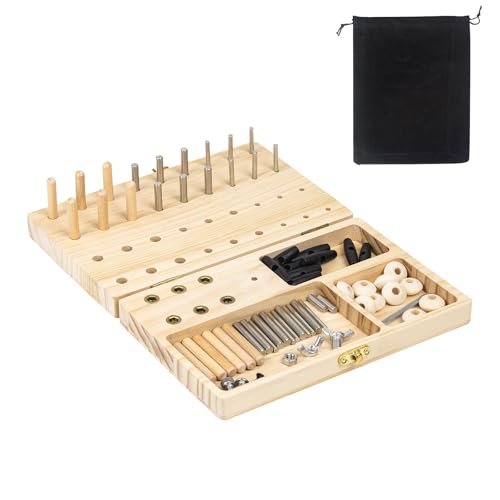
The Foldable Wooden Pegboard for Finger Dexterity stands out as an excellent choice for occupational therapists and patients focusing on rehabilitation. With 43 holes and strategically placed pegs, it enhances hand strength, dexterity, and mobility. You’ll find it effective for developing fine motor skills, whether you’re an athlete, musician, or simply looking to improve your hand function. Crafted from smooth solid wood and metal, it guarantees durability and safety with rounded edges. Lightweight and compact, it’s perfect for therapy sessions at home, in the office, or on the go, allowing you to track your progress from basic to advanced exercises.
Best For: Occupational therapists, athletes, musicians, and anyone looking to enhance finger dexterity and hand strength.
Pros:
- Durable construction with smooth solid wood and metal ensures longevity and safety.
- Compact and portable design allows for easy use at home, in the office, or while traveling.
- Versatile functionality supports various activities such as hand therapy, music practice, and sports training.
Cons:
- May not be suitable for individuals with severe hand injuries that require specialized equipment.
- Limited to finger dexterity exercises, which may not address all rehabilitation needs.
- The number of holes and pegs may be overwhelming for beginners or those new to hand exercises.
2026 Upgraded Wooden Finger Pegboard for Hand Rehabilitation

For adults recovering from strokes, hand injuries, or neurological conditions, the 2026 Upgraded Wooden Finger Pegboard stands out as an essential tool for rehabilitation. Crafted from high-density solid wood, it’s durable and splinter-free, ensuring long-term use without the risks of flimsy plastic. Its peg design effectively enhances finger dexterity, grip strength, and hand-eye coordination. Ergonomically designed pegs minimize slipping and reduce hand fatigue. Lightweight and compact, it’s perfect for therapy at home or on the go. With polished surfaces and rounded edges, it prioritizes safety, making it user-friendly for self-guided rehabilitation, complete with clear exercise guidelines.
Best For: Adults recovering from strokes, hand injuries, or neurological conditions affecting motor control.
Pros:
- Durable high-density solid wood construction ensures long-term use without splintering.
- Ergonomic design of pegs enhances grip comfort and minimizes hand fatigue during therapy.
- Lightweight and compact, making it easy to store and transport for rehabilitation sessions.
Cons:
- May not be suitable for individuals with severe motor impairments who require more specialized tools.
- Some users might find the pegboard less engaging compared to more interactive rehabilitation devices.
- Limited to finger dexterity exercises, lacking broader functionality for other types of rehabilitation.
YPCBYNBS Grooved Pegboard for Rehabilitation and Occupational Therapy

Looking to enhance your rehabilitation journey? The YPCBYNBS Grooved Pegboard is designed specifically for rehabilitation and occupational therapy. With 25 holes and uniquely positioned slots, it challenges your motor skills, including pinching and finger dexterity. The pegs require rotation for insertion, boosting your hand-eye coordination. Measuring 10 x 4.5 x 1 inches and weighing just 2 lbs, it’s lightweight and easy to handle. This pegboard is perfect for those recovering from strokes or neurological issues, helping improve visual motor coordination and hand dexterity. Plus, you can find it on Amazon, ensuring customer satisfaction and bulk pricing options.
Best For: Individuals recovering from strokes or neurological issues who need to improve motor skills and hand dexterity.
Pros:
- Enhances hand-eye coordination and fine motor skills through unique peg rotation.
- Lightweight and portable design makes it easy to use and store.
- Suitable for both rehabilitation and neuropsychological testing.
Cons:
- Requires some initial guidance for proper use, especially for beginners.
- Limited to motor skill evaluation; may not address other therapeutic needs.
- The complexity of the design might be challenging for some users.
36-Hole Wooden Pegboard for Occupational Therapy

Designed specifically for hand rehabilitation, the 36-hole wooden pegboard is an excellent choice for individuals recovering from injuries or conditions affecting their hands and wrists. This pegboard enhances your finger dexterity and fine motor coordination, making it ideal for post-surgery recovery or conditions like arthritis and Parkinson’s disease. With three sizes of round iron pegs, you can tailor your training to improve gripping, pinching, and twisting skills. Its durable wooden construction guarantees safety and easy cleaning, while nickel-plated pegs resist rust and corrosion. Experience the benefits of increased hand strength and improved concentration during your rehabilitation journey.
Best For: Individuals recovering from hand, wrist, and forearm injuries, including those with arthritis, stroke, or Parkinson’s disease.
Pros:
- Enhances finger dexterity and fine motor coordination.
- Durable wooden construction with easy maintenance and safety features.
- Tailored training options with three sizes of round iron pegs for varied rehabilitation exercises.
Cons:
- Limited to training for hand and finger rehabilitation; not suitable for other types of therapy.
- Requires supervision for individuals with severe disabilities to ensure safe use.
- May not provide enough challenge for advanced users or those with minimal rehabilitation needs.
Wooden Pegboard Hand Therapy Tool for Fine Motor Skills
The Wooden Pegboard Hand Therapy Tool stands out as an ideal choice for adults undergoing occupational therapy or rehabilitation, particularly those recovering from strokes or hand surgeries. This 36-hole board features various pegs that facilitate gripping, pinching, and twisting movements, essential for improving fine motor skills. Crafted from solid wood with rounded edges, it guarantees comfort and durability during use. You can easily incorporate it into your routine, whether at home or in a professional setting. Its portable design allows for convenient travel, while the smooth surface simplifies cleaning, making it a perfect tool for your rehabilitation journey.
Best For: Adults undergoing occupational therapy or rehabilitation, particularly those recovering from strokes, hand surgeries, or with fine motor skill impairments.
Pros:
- Enhances fine motor skills: The varied peg sizes allow for targeted exercises that improve gripping, pinching, and twisting movements.
- Durable and comfortable design: Made from solid wood with rounded edges, ensuring long-lasting use and user comfort.
- Portable and easy to clean: Its compact design makes it travel-friendly, and the smooth surface allows for easy maintenance.
Cons:
- Limited peg variety: The set only includes a fixed number of pegs in specific sizes, which may not cater to all individual needs.
- Potential for wear over time: While durable, the wooden material may be subject to wear and tear with frequent use.
- Initial cost: The investment in the tool may be a consideration for some users or therapy centers on a budget.
DICYWUDI Wooden Pegboard for Finger Dexterity and Strength Training

If you’re seeking an effective tool for enhancing finger dexterity and grip strength, the DICYWUDI Wooden Pegboard stands out as a top choice. Crafted from solid beech wood, this pegboard measures 9.37 x 8.58 inches and features 18 holes in three sizes. It’s perfect for various applications, including rehabilitation, sports training, and stress relief. Whether you’re a weightlifter, musician, or office worker, you’ll benefit from improved hand-eye coordination and targeted strength training. With rounded edges for comfort, this versatile tool is suitable for home or professional use. Plus, it makes a great gift for fitness enthusiasts!
Best For: The DICYWUDI Wooden Pegboard is best for athletes, musicians, and anyone looking to enhance their finger dexterity and grip strength.
Pros:
- Versatile Use: Suitable for rehabilitation, sports training, and stress relief.
- Quality Construction: Made from solid beech wood with rounded edges for comfort.
- Effective Training: Improves hand-eye coordination and targeted strength recovery.
Cons:
- Limited Size Options: Only available in one size which may not suit everyone’s needs.
- Potential Learning Curve: May require time to master effective use for beginners.
- Not Portable: The dimensions make it less convenient for travel compared to smaller tools.
Factors to Consider When Choosing Hand Therapy Pegboards
When you’re choosing a hand therapy pegboard, consider the material quality and durability to guarantee it lasts through rigorous use. Think about hole size variability, as it can affect the range of exercises you can perform. Finally, don’t overlook features like portability, design, and customization options to better suit your therapy needs.
Material Quality and Durability
Choosing the right hand therapy pegboard hinges on material quality and durability, as these factors directly impact its performance and lifespan. Solid wood options generally offer greater strength and longevity compared to flimsy plastic alternatives. High-density solid wood pegboards resist warping and cracking, ensuring they withstand daily use without degrading. Look for pegboards with rust-resistant metal components, like pegs and rods, to prevent corrosion from moisture exposure. A smooth, polished surface enhances safety by eliminating sharp edges, while rounded edges improve comfort during therapy sessions, reducing the risk of hand fatigue or injury. By considering these material qualities, you can select a pegboard that effectively supports your rehabilitation journey.
Hole Size Variability
While selecting a hand therapy pegboard, hole size variability plays an important role in ensuring the board meets your specific rehabilitation needs. Different hole sizes, typically ranging from 4mm to 8mm in diameter, allow you to tailor your training experience based on your dexterity and strength levels. This variability enables targeted exercises like gripping, pinching, twisting, and rotating, all crucial for enhancing fine motor skills and hand-eye coordination. As you progress, the inclusion of multiple hole sizes can provide the necessary challenge, motivating you to tackle more complex tasks. Choosing a pegboard that offers a range of hole sizes can greatly enhance your engagement and satisfaction during rehabilitation, making your recovery journey more effective and enjoyable.
Portability and Design
Considering the importance of mobility in hand therapy, portability and design are crucial factors to weigh when selecting a pegboard. Look for lightweight options that are easy to transport to various settings, like your home, office, or rehabilitation center. Pay attention to the weight and dimensions to guarantee you can handle it comfortably. Designs with integrated storage solutions can keep components organized during travel, reducing hassle. A foldable design adds convenience, allowing for easy storage without taking up too much space. Finally, prioritize pegboards with smooth surfaces and rounded edges for safe and comfortable use during therapy sessions. These features will enhance your overall experience, making therapy more effective and enjoyable.
Therapeutic Benefits Offered
Once you’ve found a portable and well-designed pegboard, it’s time to explore the therapeutic benefits these tools provide. Hand therapy pegboards can greatly improve your fine motor skills by encouraging precise insertion and manipulation of pegs, boosting your hand-eye coordination and cognitive abilities. They’re especially beneficial if you’re recovering from strokes, brain injuries, or surgeries, as they specifically target hand function and dexterity. Many pegboards come with various peg sizes and types, allowing you to progress through different difficulty levels as you recover. The repetitive exercises help restore flexibility, coordination, and grip strength. Plus, they can support treatments for conditions like Parkinson’s disease and arthritis, enhancing overall hand function and easing symptoms.
Customization Options Available
When selecting a hand therapy pegboard, you’ll want to contemplate various customization options that can enhance your rehabilitation experience. Many pegboards offer different peg sizes—like 4mm, 6mm, and 8mm—so you can tailor your training to your skill level and goals. Some include additional components, such as round wooden pieces, silicone rings, and beads, which allow for a broader range of exercises. The design often accommodates movements like gripping, pinching, and twisting, enabling you to focus on specific areas of dexterity and strength. Additionally, certain pegboards let you integrate tools like screwdrivers or allen wrenches, adding complexity to your sessions. Finally, portability and storage features make it easy to adapt your therapy to various environments.
User Safety Features
While customizing your hand therapy pegboard can greatly enhance your training, it’s equally important to prioritize user safety features. Look for pegboards with polished surfaces and rounded edges to prevent skin irritation and injuries during use. Choose options made from splinter-free materials for a safer rehabilitation experience.
Weight and stability matter too; heavier pegboards are less likely to tip over during vigorous exercises. Non-slip bases or pads can provide extra stability, preventing unwanted sliding. Additionally, make certain that your pegboard comes with clear instructional guidelines. These can help you perform exercises safely and effectively, reducing the risk of improper usage that could lead to injury. Your safety should always be a top priority during your rehabilitation journey.
Ergonomic Design Considerations
Choosing a hand therapy pegboard with ergonomic design features is essential for maximizing your rehabilitation experience. Look for pegs optimized for a comfortable grip to reduce hand fatigue during extended sessions. Rounded edges and smooth surfaces help minimize skin irritation and injuries, ensuring your safety and comfort. Pay attention to peg dimensions, as they should fit adult hand sizes to enhance usability and improve fine motor skills. Adjustable and varied hole sizes allow for progressive difficulty, catering to your recovery stages while preventing strain. Additionally, lightweight and compact designs make it easy to carry your therapy tools to different settings, encouraging consistent practice and supporting your journey toward recovery.
Versatility in Use
Versatility in hand therapy pegboards is essential for effectively addressing a range of rehabilitation needs. You’ll want a pegboard that accommodates various conditions, whether you’re recovering from a stroke, brain injury, or hand surgery. Look for designs that feature multiple hole sizes and types, allowing you to progress through different difficulty levels as your skills improve. Some pegboards come with additional accessories that enhance exercise variety, promoting thorough training. Their portability means you can use them at home, in rehab centers, or even on-the-go, adapting to your therapy environment. Additionally, versatile pegboards cater to diverse user groups, including athletes, musicians, and office workers, addressing specific dexterity and strength training needs tailored to you.