A balance board can add a gentle challenge to standing exercises, but the right choice depends on how much movement you can control. A simple rocker may feel more predictable; a 360-degree wobble board demands more coordination.
These 10 selected listings include wooden rockers, multidirectional wobble boards, and a slant-board option. Use the guide below to narrow the field by stability, surface grip, and intended use.
Best 10 Balance Boards for Seniors Picks for 2026
Best for Low-Impact Cardio

- Side-to-side skiing-style glide
- LCD and two resistance bands
- 300-pound capacity
Best For: Active balance practice with low-impact cardio
Best High-Capacity Rocker

- 500-pound stated capacity
- Nonslip silicone surface
- Carry openings; no assembly
Best For: Higher-capacity rocking balance practice
Best for Stretching and Balance

- Stretch and balance modes
- Three incline settings
- 450-pound stated capacity
Best For: Calf stretching and balance work in one board
Best Basic Rocker
StrongTek Wooden Balance Board
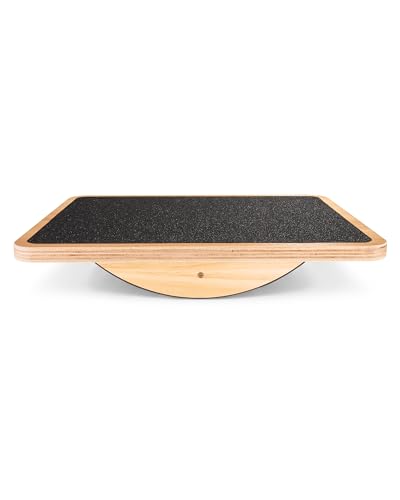
- Textured nonslip surface
- 350-pound stated capacity
- Lightweight at 4.7 pounds
Best For: Straightforward wooden rocker exercises
Best Adjustable Rocker
Fitterfirst Professional Rocker Board

- 20-inch-wide platform
- 10-, 12-, or 15-degree tilt settings
- 350-pound weight recommendation
Best For: Adjustable front-to-back balance practice
Best Compact Wobble Board
Amazon Basics Wood Wobble Balance Trainer
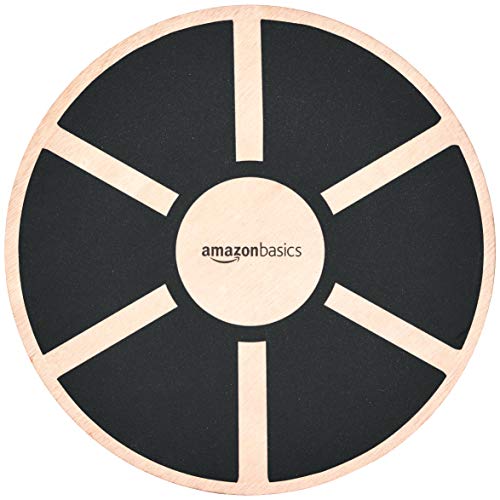
- 15.75-inch square platform
- Non-slip wood top
- 265-pound weight recommendation
Best For: Compact home balance and core workouts
Best Multidirectional Challenge
StrongTek Advanced Wooden Balance Board

- 360-degree directional wobble
- Cross-style base for a controlled feel
- Textured top; 350-pound weight recommendation
Best For: Adults seeking a step up from basic rocking
Best for Desk Use
Reinforced Wooden Balance Board

- Arrives assembled
- Anti-slip surface pads
- 350-pound stated capacity
Best For: Standing-desk breaks and balance practice
Best Basic Option

- 16-by-13-inch platform
- Full-surface anti-slip pads
- 350-pound stated capacity
Best For: Straightforward home or office balance practice
Best for Varied Exercises

- Supports varied exercises
- Anti-slip surface
- 350-pound stated capacity
Best For: Balance practice and floor-based workouts
Best for Low-Impact Cardio – MERACH Rocking Stepper
Among balance boards for seniors, the MERACH is a more active option: its side-to-side, skiing-style glide combines balance practice with low-impact cardio. It arrives ready to use and includes two resistance bands.
Best For: Older adults who want a compact cardio workout and feel comfortable with a moving platform.
Pros:
- LCD tracks steps, time, and calories.
- Compact design weighs about 11 pounds and requires no assembly.
- Steel construction supports up to 300 pounds.
Cons:
- Side-to-side motion may be challenging for beginners or anyone with balance difficulties.
- Offers a more active workout than a basic rocker board.
This is the pick for someone who wants movement as well as balance work. Follow the manufacturer’s caution if you are new to this exercise or have balance concerns.
Best High-Capacity Rocker – Advanced Wooden Balance Board
For shoppers comparing balance boards for seniors, this wooden rocker offers a roomy 17.5-by-13.4-inch platform and a stated 500-pound capacity. Its nonslip silicone surface is designed to provide grip during standing balance exercises.
Best For: Users seeking a higher-capacity rocker board for balance and coordination practice.
Pros:
- Supports up to 500 pounds.
- Nonslip surface and underside strips add grip.
- Built-in hand openings make the 6.2-pound board easier to carry; no assembly is needed.
Cons:
- Can tilt up to 25 degrees, which may feel demanding for a first-time user.
- Does not offer adjustable tilt settings.
The generous capacity distinguishes this board, but its rocking range makes controlled, supported practice a sensible starting point.
Best for Stretching and Balance – MUCITAGF 2-in-1 Slant Board
The MUCITAGF is a versatile option among balance boards for seniors who also want to work on calf stretching and ankle mobility. It switches between a three-angle slant board and a balance-training mode.
Best For: Users who want one board for calf stretches, mobility drills, and balance practice.
Pros:
- Incline adjusts to 25, 30, or 35 degrees.
- Separate modes support stretching and balance exercises.
- Wooden platform has a stated 450-pound capacity and a nonslip foot surface.
Cons:
- The lowest listed incline is 25 degrees, which may be too steep for some users.
- Stretching and balance training require switching modes.
Choose this board when mobility work matters as much as balance training; its adjustable incline is the main advantage over a dedicated rocker.
Best Basic Rocker – StrongTek Wooden Balance Board
The StrongTek basic rocker keeps things straightforward for shoppers looking at balance boards for seniors. Its textured standing surface, 17.5-by-13.5-inch footprint, and one-direction rocking motion suit simple balance exercises.
Best For: Users who prefer a compact, nonslip wooden rocker over a more complex trainer.
Pros:
- Textured surface offers grip and is designed to feel gentle under bare feet.
- Supports up to 350 pounds.
- Weighs 4.7 pounds for easier carrying and storage.
Cons:
- Basic rocker style offers less variety than a 360-degree wobble board.
- No adjustable difficulty setting is listed.
This is a practical choice if you want a portable rocker without added workout features. Start with controlled movements suited to your comfort level.
Best Adjustable Rocker – Fitterfirst Professional Rocker Board
For shoppers comparing balance boards for seniors, the Fitterfirst Professional Rocker Board offers a 20-inch-wide stance and a single plane of front-to-back movement. Its adjustable spheres let users select a 10-, 12-, or 15-degree tilt to suit their ability.
Best For: Adults who want adjustable, front-to-back balance practice or a board for knee, ankle, and leg rehabilitation.
Pros:
- 20-inch-wide platform provides room for a stable stance.
- Three tilt settings allow the difficulty to be adjusted.
- Baltic birch plywood construction supports up to 350 pounds.
Cons:
- Single-plane tilt does not offer multidirectional wobble.
- At 7.5 pounds, it is heavier than the other boards listed here.
The adjustable tilt is the main reason to choose this board: it offers a way to change the challenge while keeping movement front-to-back.
Best Compact Wobble Board – Amazon Basics Wood Wobble Balance Trainer
Among balance boards for seniors, this Amazon Basics model is a compact option for standing balance poses and other exercises. Its 15.75-inch square wood top has a non-slip surface, and the board weighs 3.4 pounds.
Best For: Adults seeking a smaller board for balance poses, core exercises, or home workouts.
Pros:
- Non-slip top helps provide secure footing.
- Supports varied exercises, including standing poses, planks, and push-ups.
- Solid wood top supports up to 265 pounds.
Cons:
- The 15.75-inch platform offers less standing room than a 20-inch board.
- Manufacturer warns against use on wet or smooth surfaces.
This is a practical choice if compact size and exercise variety matter most. Place it on a dry, non-slip surface as directed in the product notes.
Best Multidirectional Challenge – StrongTek Advanced Wooden Balance Board
For adults exploring balance boards for seniors who want a challenge beyond front-to-back rocking, this advanced StrongTek model offers 360-degree directional wobble. Its cross-style base has a larger floor contact area than a traditional round-base wobble board for a more controlled feel.
Best For: Adults ready to practice multidirectional balance, ankle control, and core engagement.
Pros:
- 360-degree movement adds variety to balance practice.
- Cross-style base is designed to feel more controlled than a round base.
- Textured top provides grip; wooden platform supports up to 350 pounds.
Cons:
- More challenging than a basic rocker board.
- Its 17.5-by-13.5-inch platform is narrower than the 20-inch Fitterfirst board.
Choose this version for its multidirectional movement, not as a substitute for a simpler rocker. The supplied product details identify this as the advanced 360-degree model.
Best for Desk Use – Reinforced Wooden Balance Board
Among balance boards for seniors, this wooden wobble board is a practical option if you want to add gentle movement to standing-desk time. It arrives assembled and has a textured, anti-slip surface.
Best For: Adults who want a ready-to-use board for standing-desk breaks and balance practice.
Pros:
- Double reinforcement bands and a stated 350-pound weight capacity.
- Anti-slip surface pads help provide foot grip.
- Pads along the bottom and edges are designed to limit floor scratches and noise.
Cons:
- Its 16.45-by-12.99-inch platform may feel compact for users who prefer a wider stance.
- No adjustable difficulty is described.
The assembled design makes this an easy board to set beside a desk; choose it if the platform dimensions suit your stance.
Best Basic Option – Anti-Slip Wooden Wobble Board
If you’re comparing balance boards for seniors, this basic wooden model offers a 16-by-13-inch platform for balance practice at home or movement during standing-desk work. It comes assembled, with anti-slip pads covering the standing surface.
Best For: Beginners who want a straightforward wobble board for home or office use.
Pros:
- Full-surface anti-slip pads provide grip underfoot.
- Double reinforcement strips support a stated capacity of up to 350 pounds.
- Bottom and edge pads are intended to reduce floor scratches and exercise noise.
Cons:
- The 16-by-13-inch platform may be narrow for a wider stance.
- No adjustable difficulty is listed.
This is a simple, ready-to-use choice rather than a configurable training board. Check the platform size against the stance you plan to use.
Best for Varied Exercises – Portable Wooden Rocker Board
For shoppers considering balance boards for seniors who also want a tool for other workouts, this wooden board is described for balance practice as well as push-ups, squats, and planks. Its compact design is intended for use at home, at the gym, or in an office.
Best For: Adults who want one portable board for balance exercises and floor-based workouts.
Pros:
- Anti-slip surface provides grip during exercises.
- Stated weight capacity is up to 350 pounds.
- Protection pads are intended to help prevent floor damage.
- Compact design is described as easy to transport and store.
Cons:
- The listed 13.5-by-3-by-17-inch dimensions do not clearly identify the usable standing-surface size.
- No adjustable difficulty is specified.
Its range of suggested exercises sets it apart, but confirm the usable platform dimensions before buying if foot placement is a priority.
How We Picked the Best Balance Boards for Seniors
We compared the selected listings by board type, stated grip features, intended uses, and whether the design suits a gradual approach to balance practice. The selection includes fixed-direction rockers, 360-degree wobble boards, a rocking stepper with resistance bands, and a slant board that also supports calf stretching. These are meaningful differences: a board meant for an advanced core workout may not be the easiest place to start.
Product names and listed weight capacities are not proof of stability or clinical suitability. Check the current specifications, dimensions, and return policy before buying. This guide does not replace advice from a physical therapist or clinician.
Quick Comparison
Rockers: A board that tips in one direction offers a more predictable motion and is a sensible starting point for many beginners. 360-degree wobble boards: These tilt in multiple directions, creating a harder coordination challenge. Slant boards: Consider one when calf stretching is also a priority, but check how its balance-training mode works. Stepper-style boards: Resistance bands add exercise options, though they also add setup and movements to manage.
Key Buying Factors for Balance Boards for Seniors
Movement and Progression
Start with the motion you can control, not the hardest board you might eventually use. Look for a broad standing surface and a manageable tilt. If choosing a board with multiple modes, confirm that its easiest setting is appropriate for your current ability.
Grip, Floor Surface, and Space
Look for a secure standing surface and a base that stays put on the floor you plan to use. Clear space around the board, wear supportive footwear if advised, and place a sturdy countertop or rail within reach. Avoid practicing next to rolling chairs or lightweight furniture.
Fit and Stated Capacity
Check usable platform dimensions, not just overall size, so your feet can sit comfortably. Confirm the manufacturer’s weight limit and whether any accessories change the setup. A higher stated capacity does not automatically mean the board will feel steadier.
Who Should Buy Which Balance Boards for Seniors?
New to balance practice? Compare the basic rocker options first, including the rocker configuration of the StrongTek board and the Fitterfirst rocker. Ready for more multidirectional movement? Compare the wooden wobble-board listings, including Amazon Basics, while paying close attention to platform size and grip. Want stretching alongside balance work? Look at the MUCITAGF 2-in-1 slant board. Want an exercise-focused setup? The MERACH rocking stepper adds resistance bands, but assess whether those extras suit your routine.
If you have fallen recently, experience dizziness, or have a condition affecting balance, ask a clinician which exercises and level of support are appropriate before stepping onto any board. Begin with supervision or a stable handhold when needed; a balance board is a training tool, not a fall-prevention guarantee.