Morton’s neuroma can make every step feel uncomfortable, especially in shoes that squeeze the forefoot. An insole with a well-placed metatarsal pad may help spread pressure away from the sensitive area, but fit matters as much as cushioning.
These 10 options span running-focused orthotics, supportive everyday inserts, and thinner designs for shoes with less room. Use the buying guide below to narrow your choice by shoe fit, pad placement, and support needs.
Best 10 Morton Neuroma Insoles Picks for 2026
Best for Running Shoes

- Full-length running insole
- Built-in metatarsal pad
- Odor-control top fabric
Best For: Forefoot support in sneakers
Best for Long Shifts
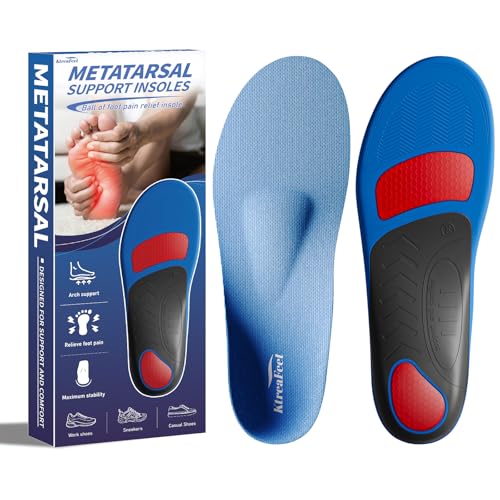
- Built-in metatarsal pad
- Gel at forefoot and heel
- Thicker fit for roomy shoes
Best For: Standing in roomy work or casual shoes
Best for Roomy Footwear
Deepballfeet Metatarsalgia Insoles

- Built-in forefoot cushioning
- Medium-arch support
- Gel at forefoot and heel
Best For: Wide or roomy everyday footwear
Best for Standard Arches

- Built-in metatarsal pads
- Contoured neutral arch support
- Deep heel cradle
Best For: Standard arches and removable factory insoles
Everyday Full-Length Pick
Kelaide Metatarsal Support Insoles

- Full-length insert with built-in metatarsal pad
- Medium-height neutral arch support
- Foam cushioning and breathable fabric
Best For: Everyday arch and forefoot support
Low-Profile Pick
Emsold Ultra Thin 3/4-Length Orthotic
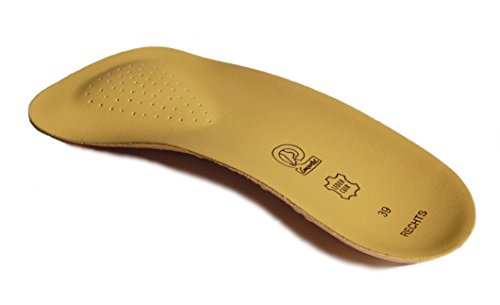
- Thin 3/4-length profile
- Soft integrated metatarsal pad
- Semi-rigid arch support and deep heel cup
Best For: Forefoot support in room-limited shoes
Heavy-Impact Pick
3810 Ultra Arch Support Insole

- Metatarsal pad and firm arch support
- Poron foam for heavy-impact cushioning
- Carbon-fiber component and deep heel cup
Best For: Demanding work and athletic use
High-Arch Pick
Cushwork X200 Metatarsalgia Insoles

- Metatarsal pad supports the forefoot.
- High-arch orthotic design.
- Cushioned EVA absorbs impact.
Best For: Roomy shoes and pronounced arch support
Standing-All-Day Pick
Orthotic Insoles with Metatarsal Pads

- Built-in pads support the forefoot.
- Deep U-shaped heel cup adds stability.
- PU foam and breathable fabric.
Best For: Long standing shifts in roomy shoes
Cushioned Support Pick
Cushwork X201 Neuroma Shoe Inserts

- Metatarsal pad supports the ball of the foot.
- High-arch orthotic structure.
- Foam cushioning absorbs impact.
Best For: Cushioned forefoot support in roomy footwear
Best for Running Shoes – PowerStep Pulse Plus Met
For runners comparing morton neuroma insoles, the full-length PowerStep Pulse Plus Met pairs a built-in metatarsal pad with total-contact foot support. Its odor-control top fabric is designed to reduce heat, friction, and perspiration in sneakers.
Best For: Runners who want forefoot support in sneakers.
Pros:
- Metatarsal pad targets ball-of-foot pressure.
- Full-length design provides total-contact support.
- Top fabric helps manage heat, friction, and perspiration.
Cons:
- Listed sizing covers only men’s 7–7.5 or women’s 9–9.5; check for your size.
- Primarily described for sneakers rather than dress shoes.
This is the sport-oriented pick of the group: consider it if sneaker use and a forefoot pad matter more to you than a dress-shoe-friendly profile.
Best for Long Shifts – KtreaFeet Metatarsal Insoles
These morton neuroma insoles combine a built-in metatarsal pad with arch support and gel cushioning at the forefoot and heel. The thicker construction is intended for roomy work boots, sports shoes, and casual shoes.
Best For: People who spend long periods standing in shoes with room for a thicker insert.
Pros:
- Built-in pad targets ball-of-foot pressure.
- Forefoot and heel gel pads add shock absorption.
- Arch support and a semi-rigid shell provide structure.
Cons:
- Thicker profile may crowd snug-fitting shoes.
- Listed size E fits men’s 8–9 or women’s 9–10; verify other sizes separately.
Choose this option when cushioning for walking or standing is a priority and your shoes can accommodate its added thickness.
Best for Roomy Footwear – Deepballfeet Metatarsalgia Insoles
If you wear wider or roomier shoes, these morton neuroma insoles offer built-in metatarsal cushioning, medium-arch support, and gel cushions at the forefoot and heel. Their PU foam and breathable fabric are intended for comfort during prolonged walking or standing.
Best For: People seeking forefoot and arch support in roomy or wide work boots, sports shoes, or casual shoes.
Pros:
- Metatarsal cushioning aims to distribute forefoot pressure.
- Dual gel cushions absorb impact at the forefoot and heel.
- Breathable fabric helps keep feet cool and dry.
Cons:
- Slightly thicker than regular insoles, so snug shoes may feel tight.
- Listed size F fits men’s 9.5–10.5 or women’s 10.5–11.5; confirm your size.
Its combination of forefoot padding and medium-arch support makes the most sense when you have enough shoe volume for the thicker insert.
Best for Standard Arches – PowerStep Pinnacle Plus Met
Among morton neuroma insoles, the PowerStep Pinnacle Plus Met is a structured choice for standard arches. It combines built-in metatarsal pads, a firm-but-flexible contoured arch, a deep heel cradle, and dual-layer cushioning.
Best For: People with standard arches who can remove their shoes’ factory insoles.
Pros:
- Metatarsal pads provide targeted forefoot cushioning.
- Contoured arch and deep heel cradle support stability.
- Dual-layer cushioning absorbs impact from heel to toe.
Cons:
- Designed for shoes with removable factory insoles.
- Gradual break-in is recommended, beginning with one hour a day.
This is the more structured PowerStep option here for standard arches; check shoe compatibility and allow time to adjust to the support.
Everyday Full-Length Pick – Kelaide Metatarsal Support Insoles
For shoppers comparing morton neuroma insoles for everyday shoes, these full-length Kelaide inserts combine a built-in metatarsal pad with medium-height, neutral arch support. A foam layer and breathable fabric add cushioning without making this a pad-only option.
Best For: Everyday wearers who want full-length arch support and a metatarsal pad in athletic, work, or walking shoes.
Pros:
- Built-in metatarsal pad targets ball-of-foot pressure.
- Full-length design pairs neutral arch support with foam cushioning.
- Breathable fabric helps manage heat and friction.
Cons:
- May require a gradual break-in period for first-time metatarsal-insole users.
- Fit in casual and dress shoes depends on available room.
Choose these if you prefer one insert supporting both the arch and forefoot. Check your shoe’s interior space, and build up wear time if the metatarsal pad feels unfamiliar.
Low-Profile Pick – Emsold Ultra Thin 3/4-Length Orthotic
If you need morton neuroma insoles that leave the toe area of your shoes open, the Emsold Ultra Thin uses a 3/4-length design. Its soft metatarsal pad sits alongside semi-rigid arch support and a deep heel cup, while a genuine leather cover finishes the insert.
Best For: People seeking forefoot support in shoes where a full-length insole may take up too much room.
Pros:
- 3/4-length, thin design fits into many shoe styles.
- Integrated soft metatarsal pad cushions and supports the forefoot.
- Deep heel cup and semi-rigid arch support add structure.
- Genuine leather cover is intended to help keep feet dry.
Cons:
- Does not provide full-length cushioning under the toes.
- Semi-rigid support may not appeal to those seeking a soft, flexible insert.
This is the space-conscious choice of the three, particularly for casual or dress shoes. Its structured feel makes it worth considering if you also want heel positioning and arch support.
Heavy-Impact Pick – 3810 Ultra Arch Support Insole
Among morton neuroma insoles aimed at demanding days, the 3810 Ultra Arch Support is built for athletic and work use. It combines a metatarsal pad with firm arch support, Poron foam strike pads, a carbon-fiber component, and a deep heel cup.
Best For: Wearers who want firm support and impact cushioning for work or athletic activity.
Pros:
- Metatarsal pad provides forefoot support.
- Poron foam strike pads are designed to absorb heavy impacts.
- Carbon-fiber component helps distribute pressure and support demanding use.
- Deep heel cup helps stabilize the foot.
Cons:
- High arch firmness may feel too structured for those who prefer softer support.
- Its heavy-impact design may be more than a casual-use shopper needs.
Pick this one when impact protection and a firmly supported arch matter more than a minimal insert. Its listed medium arch height and high firmness are useful distinctions when comparing fit and feel.
High-Arch Pick – Cushwork X200 Metatarsalgia Insoles
These morton neuroma insoles combine a metatarsal pad with high-arch support to address forefoot pressure. The cushioned EVA construction also provides shock absorption for everyday wear.
Best For: Shoppers who want metatarsal cushioning and high-arch support in roomy sneakers, work boots, or casual shoes.
Pros:
- Metatarsal pad provides targeted forefoot support.
- High-arch orthotic design supports the foot during walking.
- Cushioned EVA helps absorb impact.
Cons:
- Designed for roomy footwear, so it may be a poor fit in snug shoes.
- High-arch profile may not suit shoppers seeking minimal support.
The X200 is a practical option if you have room for a full insole and prefer pronounced arch support alongside a metatarsal pad.
Standing-All-Day Pick – Orthotic Insoles with Metatarsal Pads
For shoppers comparing morton neuroma insoles for long days on their feet, this pair combines built-in metatarsal pads with high-arch support. A deep U-shaped heel cup adds positioning support, while PU foam and breathable fabric address comfort during prolonged standing.
Best For: People who stand for extended periods and wear roomy work boots, wide-fit sneakers, or athletic shoes.
Pros:
- Built-in metatarsal pads help distribute forefoot pressure.
- Deep heel cup supports heel positioning and stability.
- Shock-absorbing PU foam and breathable fabric suit long wear.
Cons:
- Full-coverage design is best suited to spacious footwear.
- High-arch support may be more than some wearers want.
Choose this model if heel stability and standing comfort matter as much as metatarsal support; check shoe space before buying.
Cushioned Support Pick – Cushwork X201 Neuroma Shoe Inserts
These morton neuroma insoles pair a metatarsal pad with high-arch support and cushioned foam. They are designed for forefoot support in roomy footwear, including sneakers, work boots, and casual shoes.
Best For: Men or women seeking a foam insole with metatarsal support, high-arch structure, and room to spare in their shoes.
Pros:
- Metatarsal pad targets support at the ball of the foot.
- High-arch orthotic design adds structured support.
- Foam cushioning helps absorb impact.
Cons:
- Intended for roomy shoes rather than tight-fitting footwear.
- Pronounced arch support may not appeal to those wanting a flatter insert.
The X201 makes sense if you want a cushioned foam insert without giving up an orthotic-style arch and metatarsal pad.
How We Picked These Morton Neuroma Insoles
We focused on inserts designed for ball-of-foot discomfort and compared their listed features: metatarsal pads, arch support, cushioning, profile, and intended shoe use. The selection includes options for running shoes, everyday footwear, and shoes with limited space. Product descriptions cannot establish whether an insole will relieve your symptoms, so treat these as fit and feature comparisons rather than guaranteed results.
Quick Comparison: Start with Your Shoes
For roomy athletic shoes, a fuller orthotic such as the PowerStep Pulse Plus Met or Pinnacle Plus Met may be a practical starting point if you want a combination of metatarsal and arch support. For tighter-fitting shoes, consider a thinner option such as the Emsold Ultra Thin, while checking that your foot still has enough room above the toes. If you want softer underfoot feel, look at foam-cushion designs such as the 3810 Ultra Arch Support; if you prefer firmer structure, compare the arch-support-focused inserts.
The best choice is not necessarily the thickest or firmest. An insert that crowds the forefoot can work against the extra space you may be trying to create.
Key Buying Factors for Morton Neuroma Insoles
Metatarsal Pad Placement
A metatarsal pad generally belongs just behind the ball of the foot, not directly under the sore spot. Because built-in pads are not adjustable, check where the pad lands when you stand and walk. If it presses directly into the painful area or increases tingling, that design may not suit your foot.
Arch Support and Cushioning
Arch support can help distribute load across the foot, while cushioning may make hard surfaces feel less harsh. Neither substitutes for correct pad placement. Choose a level of firmness you can tolerate through a normal day rather than assuming stronger support is always better.
Volume, Width, and Shoe Compatibility
Check whether your shoes have removable factory liners and enough depth for a replacement insole. A full-length insert may take up toe room; a thin design may fit more easily but offer less cushioning. Pair any insert with shoes that have a wide toe box and avoid squeezing the forefoot. Follow the maker’s sizing and trimming instructions so the insert lies flat.
Who Should Buy Which Morton Neuroma Insoles?
Runners and walkers: Start with an athletic-shoe-oriented insert and test it during short outings before longer sessions. People seeking more structure: Compare the arch-support orthotics, including the PowerStep options and other heavy-duty designs. People with limited shoe space: Try a lower-profile insert, but prioritize toe room over keeping a particular shoe in rotation. People who dislike firm support: Consider a cushioned metatarsal-pad option and allow time to assess comfort.
If pain, numbness, or burning persists or worsens, consult a podiatrist or other qualified clinician. An insole can be one part of managing pressure; it does not replace a diagnosis or an individualized treatment plan.