If your feet roll inward more than feels comfortable, the right insoles may help you find a steadier fit in your shoes. But support varies: a firm running insert and a slim insole for dress shoes solve different problems.
These 10 picks span stability-focused, low-profile, and everyday options. Use the buying guide below to narrow your choice by arch shape, shoe space, and how you plan to wear them.
Best 10 Overpronation Insoles Picks for 2026
Best for Running
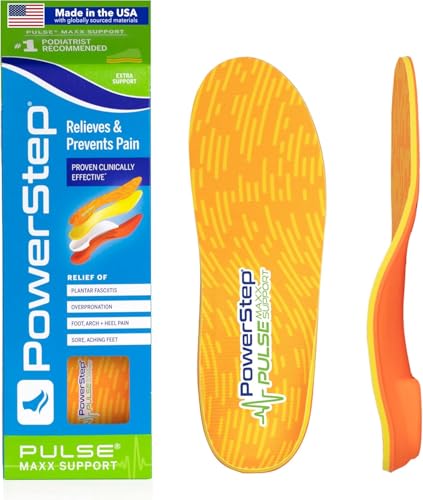
- Running-shoe-focused design
- Rigid shell and angled heel
- Dual-layer impact cushioning
Best For: Runners seeking firm motion control
Best for Maximum Stability

- Angled heel post
- Deep stabilizing heel cradle
- Thick dual-layer cushioning
Best For: Flat feet needing substantial support
Best for Low Arches

- Contoured low-arch support
- Deep heel cradle
- Dual-layer cushioning
Best For: Flat feet and low arches
Best for Moderate Support

- Supportive arch shape
- Dual-layer cushioning
- No trimming required
Best For: Everyday cushioned arch support
Best for Tighter Shoes

- Low-profile, full-length fit
- Neutral arch and deep heel cradle
- No trimming required
Best For: Mild to moderate pronation in removable-insole shoes
Best for High Arches
Spenco Total Support Max Insoles

- Firm high-arch contour
- Support pod helps slow overpronation
- Heel cup and metatarsal pad
Best For: High arches needing structured support and forefoot pressure relief
Best for Women's Flat Feet
Dr. Scholl's Stability Support Insoles

- Low-arch support for flat feet
- Motion-control stabilizing shell
- Shock-absorbing heel cup
Best For: Women with flat feet seeking daily stability
Best with Extra Features
Dr. Scholl’s Flat Feet Support Insoles

- Made for flat feet and overpronation
- Stabilizing motion-control shell
- Cushioned, shock-absorbing heel cup
Best For: Men with low or fallen arches
Best 3/4-Length Option
DR. POTTER+ Plantar Fasciitis Insoles

- Firm EVA arch and deep heel cup
- Metatarsal pad supports the forefoot
- Adhesive underside helps reduce sliding
Best For: 3/4-length support in varied shoes
Best Heavy-Duty Support
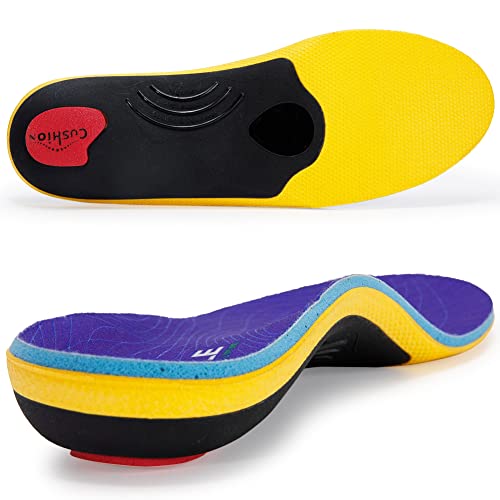
- Designed for wearers over 220 pounds
- Rigid high arch and deep heel cup
- Trim-to-fit with Poron heel cushioning
Best For: Firm support in work shoes and boots
Best for Running – PowerStep PULSE Maxx
If you need overpronation insoles for running shoes, the PowerStep PULSE Maxx pairs a rigid support shell and angled heel with dual-layer cushioning for high-activity use.
Best For: Runners who want motion control and cushioning in shoes with room for supportive inserts.
Pros:
- Angled heel and rigid shell provide added correction and stability.
- Dual-layer cushioning helps absorb impact during runs.
- Sized to fit without trimming; can be moved between shoes.
Cons:
- First-time orthotic users may need to build up wear time gradually.
- Its running-focused design may be more support than a casual shoe needs.
Choose this model when running-specific support is the priority; allow time to adjust to its firmer feel.
Best for Maximum Stability – PowerStep Pinnacle Maxx
Among overpronation insoles for everyday shoes, the PowerStep Pinnacle Maxx stands out for its slightly angled heel post, deep heel cradle, and thick dual-layer cushioning.
Best For: People with flat feet or inward foot rolling who want substantial support in shoes with removable factory insoles.
Pros:
- Angled heel post is designed to limit inward rolling.
- Deep heel cradle adds stability and motion control.
- Dual-layer cushioning extends from heel to toe.
Cons:
- Its thick profile requires shoes with removable factory insoles.
- The substantial support may not suit shoppers seeking a low-profile insert.
This is the more stability-focused Pinnacle option here. Check shoe space before buying, since its thicker build is a key fit consideration.
Best for Low Arches – PowerStep Pinnacle Low
The PowerStep Pinnacle Low is a practical choice for shoppers comparing overpronation insoles specifically for flat feet: its contoured, flexible support is shaped for low arches rather than a higher arch profile.
Best For: Low-arched or flat feet needing all-day support in walking, running, work, or casual shoes with removable factory insoles.
Pros:
- Low-arch contour and deep heel cradle target stability for flat feet.
- Dual-layer cushioning provides heel-to-toe comfort.
- Comes sized by shoe size, with no trimming required.
Cons:
- Requires footwear with removable factory insoles.
- Recommended gradual break-in takes up to two weeks.
Pick this version when arch shape is your deciding factor, and follow the gradual wear schedule if you’re new to supportive inserts.
Best for Moderate Support – PowerStep Pinnacle
For shoppers who want overpronation insoles with moderate support rather than the Maxx model’s angled-heel emphasis, the standard PowerStep Pinnacle combines arch support with dual-layer cushioning.
Best For: Everyday wearers who want cushioned arch and heel support in athletic, walking, running, work, or compatible casual shoes.
Pros:
- Supportive arch shape helps stabilize the foot and ankle.
- Dual-layer cushioning helps reduce foot stress and fatigue.
- Ordered by shoe size without trimming.
Cons:
- Designed for shoes with removable factory insoles.
- May not be the best match if you specifically need a low-arch contour or an angled heel post.
The standard Pinnacle is a versatile middle ground: consider it when cushioning and general arch support matter more than the specialized features of the Low or Maxx versions.
Best for Tighter Shoes – PowerStep Original Insoles
If you need overpronation insoles that fit shoes with limited room, PowerStep Original pairs a low-profile, full-length design with a contoured neutral arch. Its firm-but-flexible support is intended for mild to moderate pronation.
Best For: Neutral arches needing everyday support in shoes with removable factory insoles.
Pros:
- Low-profile shape suits many athletic, work, and select casual or dress shoes.
- Deep heel cradle adds stability alongside the contoured arch.
- Moves between shoes without trimming.
Cons:
- Designed for removable-insole shoes, so it may not suit footwear with fixed footbeds.
- Neutral-arch support may not be the right match for someone seeking high-arch or more aggressive correction.
Choose this option when shoe space is a priority and your pronation support needs are modest; check that your factory insoles can come out first.
Best for High Arches – Spenco Total Support Max Insoles
Spenco Total Support Max is a high-arch option among overpronation insoles. Its multi-density design combines a stiffer support pod intended to slow inward rolling with softer pods that absorb impact.
Best For: High-arched feet needing firm support, heel stability, and forefoot cushioning during long days on their feet.
Pros:
- Firm, contoured arch support and deep heel cup help keep the foot centered.
- Metatarsal pad helps relieve pressure at the ball of the foot.
- Ventilation features and an antimicrobial-treated top cover help manage moisture and odor-causing bacteria.
Cons:
- High-arch contour may not suit low or flat arches.
- Firm support may not appeal to buyers seeking a soft, cushion-first insert.
This is the more structured pick for high arches, particularly if forefoot pressure matters alongside pronation control. Its sized design aims to minimize trimming.
Best for Women's Flat Feet – Dr. Scholl's Stability Support Insoles
For women shopping for overpronation insoles for flat feet, Dr. Scholl’s Stability Support targets low arches with an arch-lifting shape and a motion-control stabilizing shell. The design also includes a shock-absorbing heel cup for daily wear.
Best For: Women with low arches or flat feet who want stability and cushioning for everyday activities.
Pros:
- Designed specifically for low arches and overpronation.
- Stabilizing shell supports foot alignment and a steadier stride.
- Cushioning and a shock-absorbing heel cup add underfoot comfort.
Cons:
- Women’s size 6–10 range excludes other sizes.
- Low-arch design is not intended as high-arch support.
This is the clearest match here for flat-footed shoppers who want everyday motion control; confirm your shoe size falls within the stated range.
Best with Extra Features – Dr. Scholl’s Flat Feet Support Insoles
These overpronation insoles are designed for men with flat feet or low arches who want support for everyday wear. An arch-cradling shape and motion-control shell aim to improve stability, while a cushioned heel cup helps absorb impact.
Best For: Men’s size 8–14 shoes when flat feet or fallen arches are the main concern.
Pros:
- Designed specifically for low arches and overpronation.
- Motion-control shell adds stability.
- Shock-absorbing heel cup cushions each step.
Cons:
- Listed only in men’s size 8–14.
- Low-arch design may not suit shoppers seeking high-arch support.
This is a practical pick if you prioritize low-arch support and steadier foot placement over a high-arch orthotic.
Best 3/4-Length Option – DR. POTTER+ Plantar Fasciitis Insoles
For shoppers comparing overpronation insoles that do not run the full length of a shoe, these DR. POTTER+ inserts pair a firm EVA arch with a deep heel cup. They also include a metatarsal pad for support under the ball of the foot.
Best For: People who want 3/4-length arch and metatarsal support across different shoe styles.
Pros:
- Deep heel cup is designed to stabilize foot placement.
- Latex metatarsal pad supports the ball of the foot.
- Gel at the heel adds cushioning; an adhesive underside helps limit sliding.
Cons:
- Metatarsal pad may require a gradual break-in period.
- This listed size fits men’s 9–11 or women’s 10–12.
The 3/4-length design is worth considering if you switch between shoes, but allow time to adjust to the prominent arch and metatarsal support.
Best Heavy-Duty Support – VALSOLE Heavy Duty Orthotics
These overpronation insoles target wearers over 220 pounds who want a firm, high-arch insert for work shoes or boots. A hard TPU support structure and deep heel cup provide stability, while the Poron heel pad adds shock absorption.
Best For: Heavier wearers seeking rigid arch support for long periods in work shoes or boots.
Pros:
- Designed for wearers over 220 pounds.
- Rigid high arch and deep heel cup emphasize stability.
- Trim-to-fit design and cushioned heel pad add practicality.
Cons:
- Super-high, rigid arch may not appeal to those who prefer soft support.
- This listed size is men’s 10–10½ or women’s 12–12½.
Choose this model when substantial structure is the priority; check the listed size and available shoe space before buying.
How We Picked the Best Overpronation Insoles
We focused on practical differences across the selected products: arch profile, heel stability, cushioning, shoe compatibility, and intended use. The list includes running-focused inserts, firmer options for everyday support, lower-profile designs for tighter shoes, and models marketed for flat feet or higher body weights. Manufacturer descriptions are a starting point, not proof that an insole will correct your gait or resolve pain. Fit and comfort matter more than the strongest claim on a package.
Quick Comparison: Which Type Fits Your Routine?
For running shoes, start with an insert designed for repeated impact that also holds your heel securely. For long days on your feet, look for a balance of support and cushioning that does not crowd your toes. If your shoes have limited room, a low-profile or three-quarter-length insert may fit more easily than a thick, full-length orthotic. If you prefer a noticeably firm feel, compare stability-focused designs before choosing a softer comfort insole.
Key Buying Factors for Overpronation Insoles
Arch Shape and Support Level
Match the contour to your foot rather than assuming a higher arch is better. An arch that presses painfully into your foot, or leaves a gap where you need contact, is unlikely to feel good all day. People with flat feet may prefer a gradual, supportive contour; others may want firmer structure. Break in a new pair gradually, especially if it feels different from your usual insoles.
Heel Stability, Cushioning, and Shoe Fit
A shaped heel cup and a stable base can help the foot feel more secure, while cushioning can make walking or running more comfortable. Neither feature substitutes for a shoe that fits. Check whether the insert is meant to replace your shoe’s removable liner; stacking both can make the shoe too tight. Confirm the length, width, trim-to-fit instructions, and available depth before buying, particularly for work or dress shoes.
Comfort Over Time
Try Overpronation Insoles in the shoes and socks you actually wear. Walk indoors first and check for heel slipping, toe pressure, rubbing, or new discomfort. A supportive insert should feel secure without forcing your foot into a painful position.
Who Should Buy Which Overpronation Insoles?
Runners can begin with the running-specific PowerStep Pulse Maxx. Shoppers seeking firmer everyday stability can compare the PowerStep Pinnacle Maxx and Spenco Total Support Max, while those needing less bulk can consider the PowerStep Pinnacle Low, PowerStep Original, or the three-quarter-length DR. POTTER+ insert. The standard PowerStep Pinnacle is another option if you want moderate arch support rather than a maximum-stability design. For flat-feet-focused shopping, the Dr. Scholl’s women’s Stability Support and men’s Flat Feet Support offer separate sizing options; check the listed size range rather than choosing by label alone. VALSOLE is marketed toward wearers over 220 pounds who want a firm, heavy-duty insert.
If you have persistent pain, numbness, or a known foot condition, ask a qualified clinician for guidance instead of relying on an over-the-counter insole alone.