Finding dependable mobility equipment does not always require a high-end budget. The best patient transfer chairs under $300 can help with short-distance movement, transfers, errands, and daily care when matched to the user’s strength and support needs.
This roundup compares lift chairs, lightweight transport wheelchairs, and transfer accessories by design, portability, safety features, weight capacity, and ease of use.
Best 10 Patient Transfer Chairs Under 300 Picks for 2026
Best Sit-to-Stand Aid

- 400-pound capacity
- Dual-locking caster brakes
- Adjustable padded support
Best For: Assisted sit-to-stand transfers for users with upper-body control
Best Lightweight Pick
Medline Ultra Lightweight Transport Wheelchair

- 19-pound aluminum frame
- 300-pound capacity
- Folds for car storage
Best For: Caregivers prioritizing portability and easy maneuvering
Best Multifunctional Design
5-in-1 Patient Lift Transfer Chair

- 440-pound capacity
- 180-degree split seat
- Adjustable 16.9–26-inch height
Best For: Caregiver-assisted bed, standing, and toilet transfers
Best Handbrake Option
Medline 12-Inch Wheel Transport Chair

- Caregiver hand brakes
- 300-pound capacity
- Folding aluminum frame
Best For: Controlled caregiver transport over indoor and outdoor routes
Heavy-Duty Home Care Pick

- 330.7-pound stated capacity
- 180-degree split seat with reclining design
- Includes tabletop and portable potty
Best For: Caregivers needing a multifunctional transfer and toileting chair
Best for Everyday Use
Medline Ultra Lightweight Transport Wheelchair

- 15-pound aluminum frame
- 300-pound stated capacity
- Folds for car and storage use
Best For: Caregiver-assisted mobility and travel
Best Multifunction Design
Drexo 5-in-1 Patient Lift Chair
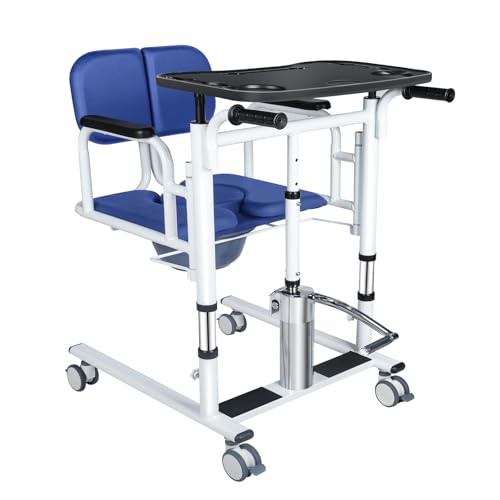
- 440-pound stated capacity
- Five-in-one transfer, commode, and shower functions
- Locking swivel casters and adjustable height
Best For: Caregivers managing multiple daily transfer and bathing needs
Best All-Terrain Mobility
Lightweight Ergonomic Transport Chair

- 23.1-pound frame with a 300-pound capacity
- Folds compactly for travel and storage
- Washable cushions and detachable shower-seat function
Best For: Travel and outdoor mobility with adjustable caregiver support
Best Transfer Aid
Heavy-Duty Wheelchair Transfer Pad

- 260-pound capacity in a lightweight folding pad
- Eight sponge handles for caregiver gripping
- Reinforced Oxford fabric with two transfer straps
Best For: Assisted transfers between wheelchairs, beds, cars, and seats
Best Wide-Seat Option
Invacare EasyGlide Transport Chair

- 19-inch-wide seat for a roomier fit
- Dual-fold design narrows to 9 inches
- Assembled steel chair with a three-year frame warranty
Best For: Adults needing a wider seat and compact caregiver transport
Best Sit-to-Stand Aid – VOCIC Patient Lift Chair
For shoppers comparing patient transfer chairs under 300, the VOCIC Sit to Stand Lift is a heavy-duty option for users who can sit upright and support their upper body. Its padded split seat, adjustable knee pad, and low-profile base are designed for assisted indoor transfers.
Best For: Adults who can sit independently and need caregiver-assisted sit-to-stand transfers at home or in professional care settings.
Pros:
- Supports up to 400 pounds with a reinforced aluminum frame.
- Dual-locking caster brakes help keep the unit stable during positioning.
- Padded handgrips, shin pads, and split-seat cushions improve comfort.
- Low 6-centimeter base can slide under much furniture.
Cons:
- Does not include or support a safety-belt restraint.
- Not recommended for completely immobile or paralyzed users.
- At 58 pounds, it is heavier than a basic transport wheelchair.
This is a focused sit-to-stand transfer aid rather than a general-purpose wheelchair. Confirm that the user can maintain core support and that the 400-pound capacity meets your needs before choosing it.
Best Lightweight Pick – Medline Ultra Lightweight Transport Wheelchair
Among patient transfer chairs under 300, the Medline Ultra Lightweight Transport Wheelchair stands out for easy lifting, folding, and car storage. Its aluminum frame weighs 19 pounds and combines a 19-inch seat with locking rear-wheel brakes.
Best For: Caregivers who need a lightweight, foldable chair for indoor and outdoor transport through doorways, ramps, and tight corners.
Pros:
- Weighs 19 pounds and folds compactly for vehicle transport.
- Supports up to 300 pounds.
- Swing-away footrests and desk-length cushioned arms help with entry and exit.
- Eight-inch rear wheels and swivel front wheels maneuver smoothly.
Cons:
- It is a transport chair propelled by a caregiver rather than a self-propelled wheelchair.
- The 19-inch seat may not suit users who need a wider seating surface.
- It has smaller rear wheels than the other Medline option listed here.
Choose this model when low weight and simple storage matter most. The no-assembly design and easy-clean nylon upholstery also make it practical for routine caregiving.
Best Multifunctional Design – 5-in-1 Patient Lift Transfer Chair
This 5-in-1 patient lift transfer chair is a versatile choice among patient transfer chairs under 300, combining sit-to-stand assistance with a 180-degree split seat, adjustable height, and four locking casters. It is intended for caregiver-assisted use with users who can sit independently.
Best For: Home transfers beside beds and toilets when caregivers want one compact chair with standing, transfer, commode, and table-related functions.
Pros:
- High-strength alloy frame supports up to 440 pounds.
- Seat height adjusts from 16.9 to 26 inches.
- Dual-lock brakes, safety straps, and split-seat buckles add transfer support.
- Includes a detachable commode bucket and removable desktop.
Cons:
- Requires caregiver assistance and is not for completely paralyzed users.
- Users must be able to sit independently.
- The supplied details do not specify the product weight.
Its adjustable height and split-seat design may reduce repeated repositioning during bed-to-toilet transfers. Measure doorways and surrounding spaces first, even though the chair is described as fitting through 24-inch doorways.
Best Handbrake Option – Medline 12-Inch Wheel Transport Chair
For patient transfer chairs under 300 with added caregiver control, the Medline Lightweight Foldable Transport Wheelchair offers hand brakes plus rear-wheel locking brakes. Its 12-inch rear wheels, aluminum frame, and folding design suit routine indoor and outdoor transport.
Best For: Caregivers who want a foldable transport chair with hand-operated braking and larger rear wheels for maneuvering over ramps and around doorways.
Pros:
- Hand brakes allow easy caregiver speed and stopping control.
- Supports up to 300 pounds while weighing 26 pounds.
- Twelve-inch rear wheels improve maneuverability compared with smaller-wheel designs.
- Swing-away, detachable footrests simplify entry and exit.
Cons:
- It is designed for caregiver pushing and is not described as self-propelled.
- The 18-inch seat is narrower than the other Medline model’s 19-inch seat.
- At 26 pounds, it is less lightweight than the 19-pound transport chair.
This is a practical fit when braking control and larger rear wheels are more important than minimum carry weight. It arrives without assembly and folds for storage in a vehicle trunk.
Heavy-Duty Home Care Pick – Hydraulic Patient Lift Chair
For shoppers comparing patient transfer chairs under 300, this hydraulic lift chair stands out for its 330.7-pound capacity, 180-degree split seat, and included portable potty. It is designed to help caregivers move a seated user between beds, sofas, toilets, and other locations without lifting the person.
Best For: Caregivers assisting seated adults at home, in nursing facilities, or in hospitals who need transfer, toileting, and dining functionality in one chair.
Pros:
- Supports up to 330.7 pounds with a steel frame and reinforced joints.
- 180-degree reclining split seat can simplify lateral transfers.
- Includes a detachable tabletop and portable potty for added daily-care convenience.
- Adjustable height and wipeable, detachable components support easier cleaning.
Cons:
- Requires caregiver assistance and is not intended for users who cannot sit upright.
- Needs doorways wider than 22.8 inches and more than 5 inches of clearance beneath the bed.
- At about 81.6 pounds, it is substantially heavier than a basic transport wheelchair.
This is a feature-rich option when transfer support and toileting matter more than portability. Confirm the doorway, bed-clearance, height, and user-position requirements before ordering.
Best for Everyday Use – Medline Ultra Lightweight Transport Wheelchair
Among patient transfer chairs under 300, this Medline transport wheelchair is a practical choice for routine mobility and vehicle travel. Its 15-pound aluminum frame folds compactly, while swing-away footrests and locking brakes support easier transfers and handling.
Best For: Adults who need a lightweight transport chair for indoor or outdoor trips, tight spaces, ramps, and car-trunk storage.
Pros:
- Ultra-light 15-pound aluminum frame with a 300-pound capacity.
- Folds easily for storage and transport, with footrests that swing away and lock in place.
- Eight-inch rear wheels and swivel front wheels help with maneuverability.
- Includes cushioned desk-length armrests, a cup holder, and easy-clean nylon upholstery.
Cons:
- This is a transport wheelchair, so it is intended to be pushed by a caregiver rather than independently propelled.
- It does not provide a hydraulic lift, split seat, or integrated commode.
- The 19-inch seat width should be checked against the user’s needs before purchase.
Choose this model when low weight and easy folding are the priorities. It is better suited to conventional wheelchair transport than to specialized bed-to-chair or toileting transfers.
Best Multifunction Design – Drexo 5-in-1 Patient Lift Chair
For buyers searching patient transfer chairs under 300, the Drexo combines transfer assistance with wheelchair, shower-chair, commode, and bedside-commode functions. Its 180-degree split seat, adjustable height, locking swivel casters, and safety strap are intended to help caregivers manage daily transfers.
Best For: Caregivers who want one chair for bed, toilet, shower, and room-to-room transfers and need a higher stated capacity.
Pros:
- Advertised capacity of up to 440 pounds with reinforced crossbars and anti-tip features.
- Five-in-one design includes wheelchair, shower chair, commode, transfer aid, and bedside commode functions.
- Four 360-degree swivel casters have push-to-lock brakes for positioning and stability.
- Five-level height adjustment, removable armrests, a safety strap, and a detachable commode bucket add flexibility.
Cons:
- Requires caregiver operation and is not suitable for users unable to maintain an upright seated position.
- Should not be used through doorways narrower than 24.5 inches or where bed clearance is below 5.1 inches.
- The supplied notes indicate assembly is required, and the exact assembled weight is not clearly provided.
This model offers the broadest range of care functions in the group, especially for users who need toileting and shower access as well as transfers. Measure the home’s doorways and bed clearance, and verify the capacity requirements before purchase.
Best All-Terrain Mobility – Lightweight Ergonomic Transport Chair
For shoppers comparing patient transfer chairs under 300, this lightweight transport chair combines a 300-pound capacity with a foldable design for travel and everyday outings. Its adjustable components, cushioned seating, and larger rear wheels make it a versatile option for caregivers who need portability without giving up comfort.
Best For: Travel, outdoor paths, and users who need a lightweight chair with adjustable support.
Pros:
- Weighs 23.1 pounds while supporting up to 300 pounds.
- Folds to 20 x 11 x 26 inches for cars, taxis, subways, and storage.
- Includes removable, machine-washable cushions and a detachable seat that can function as a shower seat.
- 12-inch rear wheels, swiveling front wheels, safety belt, and dual-action brakes support maneuverability and stability.
Cons:
- The chair has several adjustable features that may require setup with the included tool.
- It is designed as a transport chair, so the user generally relies on a caregiver for propulsion.
Choose this model when portability, washable cushioning, and mixed indoor-outdoor use matter most. Its 300-pound capacity is notable in a lightweight frame, but buyers should still confirm the fit and handling needs of the intended user.
Best Transfer Aid – Heavy-Duty Wheelchair Transfer Pad
Among patient transfer chairs under 300, this product is a transfer pad rather than a chair, making it useful for caregivers who need help moving someone between a wheelchair, bed, car, or seat. The Oxford fabric, reinforced stitching, multiple handles, and 260-pound capacity are designed for controlled assisted transfers.
Best For: Home caregivers transferring adults with limited lower-body mobility between common seating and resting surfaces.
Pros:
- Supports up to 260 pounds while weighing about 0.84 kg.
- Eight thickened sponge handles provide multiple gripping points.
- Reinforced stitching and two straps are intended to improve durability and transfer control.
- Washable, folding design and one-year warranty add practical convenience.
Cons:
- It is not a wheelchair or transport chair and does not provide seating or wheels.
- Safe use requires caregiver assistance and proper transfer technique.
- Its 260-pound capacity may not suit users above that limit.
This is a compact companion to a wheelchair rather than a replacement for one. It may be a practical choice for repeated household transfers, provided caregivers follow the included instructions and stay within the stated weight capacity.
Best Wide-Seat Option – Invacare EasyGlide Transport Chair
For buyers seeking patient transfer chairs under 300, the Invacare EasyGlide offers a 19-inch seat, a steel frame, and a compact dual-fold design. It arrives assembled and includes a seatbelt, swing-away footrests, storage, and solid TPU casters for caregiver-guided indoor or travel use.
Best For: Adults who want a wider transport-chair seat and caregivers who prioritize compact storage.
Pros:
- Extra-wide 19 x 16-inch seating area supports a less restrictive fit.
- Backrest folds down and the chair narrows to 9 inches for storage or transport.
- Arrives fully assembled and includes a breathable nylon seat, back pocket, seatbelt, and swing-away footrests.
- Heavy-duty steel frame, push-to-lock brakes, and a 250-pound maximum weight recommendation.
Cons:
- At 26 pounds, it is heavier than the 23.1-pound chair in this roundup.
- The 250-pound weight recommendation is lower than some competing options.
- Its fixed 19-inch seat may not provide the right fit for every user or caregiver setup.
The EasyGlide stands out for its wider seat and storage-friendly folding system. It is a strong fit when comfort and compact packing are more important than minimizing chair weight, with the added reassurance of a three-year frame warranty.
How We Picked the Best Patient Transfer Chairs Under 300
We focused on practical equipment for caregivers and users who need help moving between beds, chairs, bathrooms, vehicles, or rooms. The selection includes sit-to-stand lift chairs, compact transport wheelchairs, all-terrain-style mobility chairs, and a transfer pad.
We compared each option’s transfer method, seat design, frame portability, wheel configuration, brakes, seatbelt availability, weight capacity, and ease of storage. Because needs vary considerably, no single chair is ideal for every user. Always confirm the manufacturer’s capacity limits and follow the product’s instructions.
Quick Comparison
- Best for assisted standing: Sit-to-stand lift chairs with split seats and adjustable height.
- Best for routine transport: Lightweight, foldable transport wheelchairs with attendant handles and brakes.
- Best for vehicle storage: Ultra-lightweight or compact folding wheelchair designs.
- Best for outdoor flexibility: Models with larger rear wheels and more robust rolling components.
- Best for repositioning support: A heavy-duty transfer pad with multiple handles.
Key Buying Factors for Patient Transfer Chairs Under $300
Transfer and Positioning Design
A lift chair with a 180-degree split seat may allow a caregiver to position the chair around a user and transfer them with less lifting. These products are most useful when the user can participate in standing or tolerate supported repositioning. A transfer pad is a different tool: it assists caregivers but does not replace a wheelchair or lifting system.
Weight Capacity and Fit
Check both the listed weight limit and the seat dimensions. A 19-inch seat may suit many adults, but hip width, clothing, cushions, and posture should be considered. Stay below the stated capacity with a meaningful safety margin, and verify that the chair fits through doorways and around bathroom fixtures.
Brakes, Wheels, and Stability
Locking casters are important during transfers. Transport wheelchairs with handbrakes can give attendants better control, while larger wheels may handle uneven surfaces more comfortably. Never assume a chair designed for transport is suitable for independent self-propulsion.
Portability and Daily Operation
Foldable frames, detachable cushions, folding backrests, and manageable overall weight make equipment easier to store and take in a vehicle. Consider who will lift the folded chair and whether the caregiver can operate the brakes, footrests, and safety belt without assistance.
Who Should Buy Which Patient Transfer Chairs Under 300?
Choose a sit-to-stand lift chair for users who need substantial transfer assistance but can stand with support and are being moved mainly indoors. Look for adjustable height, secure casters, and a capacity appropriate for the user.
Choose a lightweight transport wheelchair for users who can sit safely but rely on a caregiver to push them through appointments, shopping trips, or around the home. Prioritize brakes, a seatbelt, folding convenience, and comfortable seat width.
Choose a larger-wheel or all-terrain-style chair when routes include outdoor paths or mildly uneven ground, while recognizing that no budget transport chair should be treated as an off-road mobility device without confirming its specifications.
Choose a transfer pad when the main challenge is moving a user between surfaces and multiple caregivers need secure handholds. For users with limited weight-bearing ability, serious balance concerns, or complex medical needs, consult a qualified clinician or mobility specialist before purchasing.