The best portable golf launch monitors make practice more measurable without requiring a permanent simulator setup. These compact devices can track key shot data at home, on the range, or wherever you work on your swing.
Our 2026 picks range from simple radar-based trainers to advanced simulator-ready systems with club metrics, app connectivity, and virtual-course support. Use the guide below to narrow the options by accuracy, features, portability, and budget.
Best 10 Portable Golf Launch Monitors Picks for 2026
Best All-Around Choice
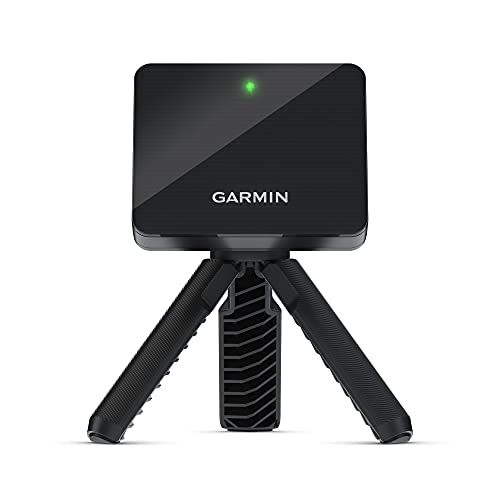
- Tracks key club and ball metrics through the Garmin Golf app
- Includes swing video, training mode, and shot dispersion analysis
- Up to 10 hours of battery life with IPX7 water resistance
Best For: Golfers wanting comprehensive practice and virtual-play features
Best Subscription-Free Value

- Measures club speed, ball speed, smash factor, and distances
- Includes speed training plus on-course and range modes
- Free app provides lifetime session history with no subscription
Best For: Golfers seeking core feedback without recurring app fees
Best Standalone Display
Blue Tees Rainmaker Launch Monitor

- Built-in 4.3-inch color display provides instant shot feedback
- Offers 21-plus metrics through the app and nine on-device
- Compatible with E6 Connect and GSPro simulator platforms
Best For: Golfers wanting screen-based practice and simulator flexibility
Best for Detailed Swing Analysis
Rapsodo MLM2PRO Golf Simulator

- Combines Doppler radar with dual cameras for shot tracking
- Captures 15 metrics, including spin, club path, and launch angle
- Includes swing video, tripod, case, and three Pro V1 balls
Best For: Golfers prioritizing video review and detailed practice data
Best for Easy Setup
- Tracks club and ball metrics through the Garmin Golf app
- Includes training mode, dispersion charts, and swing video
- Offers optional play on more than 42,000 virtual courses
Best For: Golfers wanting extensive practice and analysis features
Best for iPhone Users

- Reports speed, launch angle, carry distance, and shot shape
- Adds video replay with an on-screen shot tracer
- Works at the range, backyard, or with an indoor net
Best For: iPhone and iPad golfers wanting visual shot feedback
Best for Simple Feedback

- Uses Doppler radar and atmospheric-pressure sensors
- Provides LCD and voice feedback during practice
- Stores club statistics and offers ball-free speed training
Best For: Golfers seeking simple real-time training feedback
Speed Training Pick
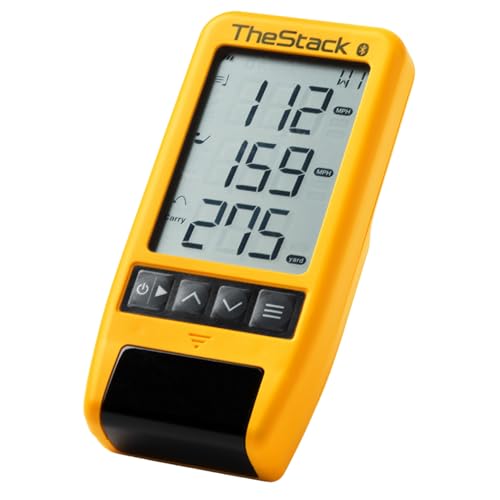
- Measures swing and ball speed with estimated carry and smash factor
- Bluetooth connection to TheStack App
- iOS-only wedging and putting features
Best For: TheStack speed training and connected wedge practice
Simulator-Ready Choice

- Indoor and outdoor shot tracking
- Includes 3D Driving Range and E6 Connect
- Built-in screen, voice output, and multiple training modes
Best For: Home simulator use plus outdoor practice
Best Simple Value

- Doppler radar measures speed with or without a ball
- No app, Bluetooth, Wi-Fi, calibration, or subscription
- Stores 500 swings and uses AAA batteries
Best For: Affordable, straightforward speed training anywhere
Best All-Around Choice – Garmin Approach R10
The Garmin Approach R10 is a versatile option among portable golf launch monitors, working at home, indoors, or on the driving range. It tracks key club and ball metrics through the Garmin Golf app, while its included phone mount and up to 10 hours of battery life make practice sessions easier to manage.
Best For: Golfers who want broad practice features, swing video, and virtual-course options in a portable setup.
Pros:
- Tracks club speed, ball speed, swing tempo, spin, launch angle, and more.
- Training mode provides club-by-club statistics and shot dispersion charts.
- Automatically records swing videos with the related shot metrics.
- Offers up to 10 hours of battery life and IPX7 water resistance.
Cons:
- Many features require a compatible smartphone and the Garmin Golf app.
- Virtual rounds and tournaments require an active subscription.
- Accuracy is specified within stated tolerances rather than as tour-level precision.
The Approach R10 stands out for combining launch data, swing recording, training tools, and optional virtual play. It is a strong choice when you want one portable monitor for both practice analysis and at-home entertainment.
Best Subscription-Free Value – Shot Scope LM1
The Shot Scope LM1 is a straightforward choice among portable golf launch monitors for golfers focused on speed and distance feedback. It measures club speed, ball speed, smash factor, carry distance, and total distance, then stores session history in a free app with no subscription fees.
Best For: Golfers who want essential shot data, speed training, and app history without recurring costs.
Pros:
- Displays club speed, ball speed, smash factor, carry distance, and total distance.
- Includes dedicated speed training for clubs and speed sticks.
- Free Golf GPS app includes lifetime session history with no subscription required.
- Offers more than five hours of battery life and USB-C charging.
Cons:
- Its listed tracking focuses on core speed and distance metrics rather than a larger metric set.
- IPX3 protection is rain-ready but less robust than higher water-resistance ratings.
- The supplied notes do not list simulator or virtual-course compatibility.
The LM1 keeps the experience focused and cost-conscious. Its selectable practice modes and no-fee app history make it appealing for golfers who primarily want measurable feedback without paying for an ongoing membership.
Best Standalone Display – Blue Tees Rainmaker Launch Monitor
The Blue Tees Rainmaker is a flexible pick among portable golf launch monitors, with a built-in 4.3-inch color display for immediate feedback without requiring a phone. It supports indoor and outdoor practice, offers standalone training modes, and can connect with E6 Connect and GSPro for simulator play.
Best For: Golfers who want an integrated screen, no-subscription standalone practice, and compatibility with popular simulator platforms.
Pros:
- Shows nine real-time metrics on the device and offers 21-plus metrics through the app.
- Works with E6 Connect and GSPro for virtual ranges and course play.
- Includes standalone training modes with no subscription required for standalone use.
- Features IPX4 water resistance, USB-C charging, and more than six hours of battery life.
Cons:
- Advanced app features come with a 12-month Premium LAUNCH App membership rather than being entirely fee-free.
- Enhanced spin accuracy depends on using compatible RCT golf balls.
- Its package weight is higher than some compact launch-monitor setups.
The Rainmaker is especially practical for golfers who prefer not to rely on a phone for every shot. Its screen, training modes, and simulator compatibility give it a broad range of uses from quick range sessions to home golf setups.
Best for Detailed Swing Analysis – Rapsodo MLM2PRO Golf Simulator
The Rapsodo MLM2PRO combines Doppler radar with dual cameras, making it one of the more analysis-focused portable golf launch monitors. It captures 15 metrics, records swings from different angles, and includes three Titleist Pro V1 balls for supported practice sessions indoors or outdoors.
Best For: Golfers who want detailed shot data, video-based swing review, and access to simulator training features.
Pros:
- Dual radar-and-camera tracking measures 15 key metrics, including spin rate, club path, and launch angle.
- Captures swing video and provides slow-motion views for contact analysis.
- Premium trial includes simulated courses, third-party app integration, target range, and speed training.
- Includes three Titleist Pro V1 golf balls, a tripod, carrying case, and charging cable.
Cons:
- The Premium/Core trial lasts 21 days, so some listed features may require continued membership afterward.
- Its full feature set depends on a compatible Android or iOS device.
- The supplied warranty is one year.
The MLM2PRO is a compelling fit when video and deeper metrics matter as much as basic distance numbers. Its camera system and simulator-oriented trial make it better suited to structured practice than simple range-only feedback.
Best for Easy Setup – Garmin Approach R10
The Garmin Approach R10 is a versatile option for golfers comparing portable golf launch monitors for home practice, indoor sessions, or the driving range. It tracks metrics such as clubhead speed, ball speed, swing tempo, spin, and launch angle through the Garmin Golf app, while its battery lasts up to 10 hours.
Best For: Golfers who want broad shot data, swing video, training tools, and optional virtual-course play.
Pros:
- Tracks a wide range of club and ball metrics through a compatible smartphone.
- Training mode includes club statistics and shot-dispersion charts.
- Automatically recorded swing videos can include the swing’s metrics.
- Supports virtual rounds on more than 42,000 courses with an active subscription.
Cons:
- Requires a compatible smartphone and Garmin Golf app for tracking and analysis.
- Virtual courses and tournaments require an active subscription.
- This listing is renewed and includes a 90-day limited warranty.
With its substantial metric coverage and practice features, the Approach R10 is a strong fit for golfers who want one portable unit for range work and home training. Keep the renewed condition and subscription requirement in mind when comparing total value.
Best for iPhone Users – Rapsodo MLM
The Rapsodo MLM is a compact choice among portable golf launch monitors, delivering shot-by-shot feedback at the range, in the backyard, or with an indoor net. Its iPhone and iPad app reports ball speed, club speed, launch angle, carry distance, and shot shape, with video replay and shot tracing.
Best For: iPhone and iPad golfers who want portable shot feedback and visual swing review.
Pros:
- Provides ball speed, club speed, launch angle, carry distance, and shot shape.
- Records swings with an on-screen tracer for video review.
- Lightweight handheld design is suitable for range, backyard, or indoor-net practice.
- Includes a carrying case and charging cord.
Cons:
- Compatible with iPhone and iPad only.
- Simulator courses and game modes require the premium app option.
- It does not offer the broader device compatibility of some smartphone-based alternatives.
The Rapsodo MLM makes sense if you already use an iPhone or iPad and value carry-distance feedback alongside swing video. Buyers using Android devices should look elsewhere, and premium simulator features should be treated as an additional consideration.
Best for Simple Feedback – Voice Caddie SC200Plus
The Voice Caddie SC200Plus is a straightforward option for golfers comparing portable golf launch monitors for real-time training. Doppler radar and atmospheric-pressure sensors collect shot data, while its LCD display and voice output provide immediate feedback without relying on a phone app.
Best For: Golfers who prioritize quick feedback, club-distance tracking, and extended battery life.
Pros:
- Uses Doppler radar technology and atmospheric-pressure sensors for data collection.
- Provides real-time feedback through an LCD display and voice output.
- Stores shot data and club statistics for reviewing average distances.
- Swing Speed Mode supports tempo and speed practice without a ball.
Cons:
- The supplied notes do not specify the full list of tracked shot metrics.
- Its focus is training feedback rather than app-based video or virtual-course features.
- Advanced users may prefer a monitor with more detailed connected analysis.
The SC200Plus is appealing for golfers who want audible, at-a-glance feedback and club-distance storage with minimal setup. Its swing-speed mode also makes it useful for indoor practice, while the simpler feature set may not satisfy golfers seeking extensive app analysis.
Speed Training Pick – TheStack Radar
TheStack Radar is a focused option for golfers comparing portable golf launch monitors for speed training, wedge practice, and on-course speed checks. It measures swing speed and ball speed, then estimates carry distance and smash factor while sending training data to TheStack App over Bluetooth.
Best For: Golfers using TheStack’s speed-training system who want connected practice feedback and dedicated wedge sessions.
Pros:
- Measures swing speed, ball speed, estimated carry distance, and smash factor.
- Connects to TheStack App on iOS and Android for speed training.
- Includes access to gamified Stack Wedging features and bonus Stack Putting access on iOS.
- Compact and lightweight at approximately 0.12 kg.
Cons:
- Wedging and putting features are currently iOS-only.
- Some app functionality requires a compatible Apple device and iOS 15 or later.
TheStack Radar stands out when app-connected speed and wedge practice matter more than broad simulator features. Android users can access speed training, but iOS users get the fullest feature set.
Simulator-Ready Choice – Voice Caddie SC4 PRO
The SC4 PRO is a versatile choice among portable golf launch monitors, combining indoor and outdoor shot tracking with a built-in screen and voice output. It measures ball and club data through impact and ball flight, while also supporting practice modes, a 3D driving range, and E6 Connect without a monthly subscription.
Best For: Golfers who want one portable unit for home simulator use, outdoor practice, target training, and swing-speed work.
Pros:
- Designed for indoor and outdoor use with the Prometrics accuracy engine.
- Includes 3D Driving Range and E6 Connect access.
- Offers simulator, practice/target, and speed-training modes.
- Works with standard golf balls and does not require specially marked balls.
Cons:
- Its 590-gram weight is greater than pocket-sized radar options.
- Advanced analysis and additional features rely on the VOICECADDIE S app.
Choose the SC4 PRO if you value a broader practice and simulator package rather than a minimal speed sensor. Its screen, voice output, included virtual features, and no-subscription positioning make it a flexible home-and-range option.
Best Simple Value – PRGR HS 130-A
The PRGR HS 130-A keeps portable golf launch monitors straightforward: its Doppler radar measures club-head speed with or without a ball, then calculates ball speed, smash factor, and estimated carry and total distance. It needs no app, Wi-Fi, Bluetooth, calibration, or subscription, making it easy to use at the range, in a garage, or at the gym.
Best For: Golfers who want affordable, uncomplicated swing-speed feedback and a monitor that supports speed training without a phone.
Pros:
- Measures club-head speed without a ball, supporting dedicated speed training.
- Calculates ball speed, smash factor, carry distance, and total distance.
- Stores up to 500 past swings and runs on AAA batteries.
- Pocket-sized design and IP54 water resistance support portable practice.
Cons:
- Does not offer Bluetooth, Wi-Fi, or app-based analysis.
- Its distance figures are estimates rather than a full simulator experience.
The PRGR HS 130-A is a strong fit for players who prefer immediate numbers over connected features. Its ball-free speed measurement and simple battery-powered operation make it especially practical for repeatable swing-speed sessions.
How We Picked the Best Portable Golf Launch Monitors
We compared these Portable Golf Launch Monitors by looking at the measurements they provide, indoor and outdoor performance, setup requirements, app compatibility, simulator support, battery life, portability, and overall training value. We also considered whether each model is better suited to casual practice, serious swing analysis, or full simulator use.
Radar-based units generally offer flexible placement and work well outdoors, while camera-based systems may provide more detailed club and ball data when positioned correctly. No launch monitor replaces good setup and consistent strikes, so practical usability matters as much as a long feature list.
Quick Comparison
| Best For | What to Look For |
|---|---|
| Basic range feedback | Carry distance, total distance, ball speed, and simple setup |
| Swing-speed training | Club speed, swing metrics, and fast feedback between shots |
| Indoor practice | Short-space compatibility, alignment aids, and adequate lighting |
| Golf simulation | Compatible apps, virtual courses, and E6 or GSPro support |
| Advanced analysis | Spin, launch angle, shot shape, and club-path information |
Key Buying Factors for Portable Golf Launch Monitors
Data and Accuracy
Decide which numbers actually support your goals. Distance and ball speed may be enough for gapping and practice, while launch angle, spin, dispersion, and club data are more useful for detailed swing work. More measurements do not automatically mean better results if the device is difficult to align or calibrate.
Indoor and Outdoor Use
Check the minimum space, ball requirements, lighting conditions, and placement instructions before buying. Outdoor range use is usually more forgiving, while indoor tracking can depend heavily on room length, ceiling height, lighting, and the device’s view of the ball.
Apps, Devices, and Simulation
Review whether the monitor requires iOS, Android, a subscription, or additional software. If you want virtual rounds, confirm compatibility with platforms such as E6 or GSPro and check whether the required cables, memberships, or accessories cost extra.
Portability and Battery Life
A compact design, reliable battery, clear display, and quick setup make a launch monitor more likely to be used consistently. Consider whether you need a built-in screen or are comfortable viewing results on a phone or tablet.
Who Should Buy Which Portable Golf Launch Monitors?
Choose a straightforward model such as the PRGR or Shot Scope option if you primarily want quick distance and swing-speed feedback. Golfers who want a portable practice system with broader shot tracking should consider the Garmin Approach R10, Voice Caddie, or TheStack Radar.
For app-based training and more detailed analysis, the Rapsodo MLM or MLM2PRO models are strong candidates, especially if you already use a compatible iPhone or iPad. Golfers building an indoor-outdoor simulator setup should focus on the Blue Tees Rainmaker or SC4 PRO, while checking software and space requirements first.
Before ordering, confirm the exact model number, supported mobile devices, included accessories, and any recurring software costs. The best choice is the one that delivers the data you need and is simple enough to use every time you practice.