Finding a transport wheelchair that fits through tight interior doors can make daily transfers, travel, and home mobility much easier. The best compact models balance a manageable overall width with dependable brakes, supportive seating, and a folding design that caregivers can handle.
This roundup compares 10 transport wheelchairs for narrow doorways, including lightweight options, swing-away footrests, lift-up armrests, caregiver hand brakes, and travel-friendly folding frames. Check the measurements carefully, since seat width alone does not determine whether a chair will clear your doorway.
Best 10 Transport Wheelchairs for Narrow Doorways Picks for 2026
Best Narrow-Entry Pick
SOFTFISH Compact Transport Wheelchair
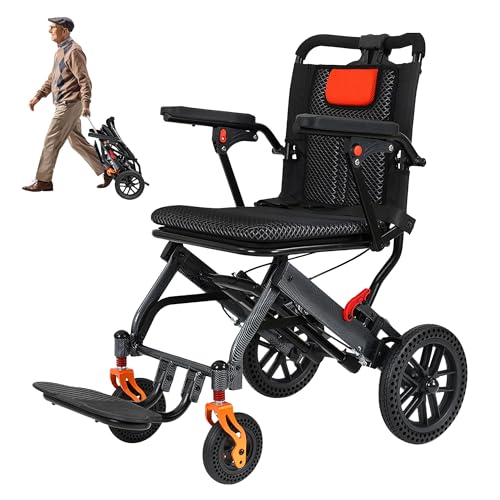
- 21.5-inch frame for tighter spaces
- Puncture-resistant honeycomb tires
- Folds compactly for travel and storage
Best For: Compact indoor maneuvering and assisted outings
Best Heavy-Duty Value
Medline Folding Steel Transport Wheelchair

- 250-pound weight recommendation
- 19-inch seat with swing-away footrests
- Folds for car transport and storage
Best For: Durability and a roomier assisted-transport fit
Best Lightweight Capacity
Drive Medical Expedition Transport Wheelchair
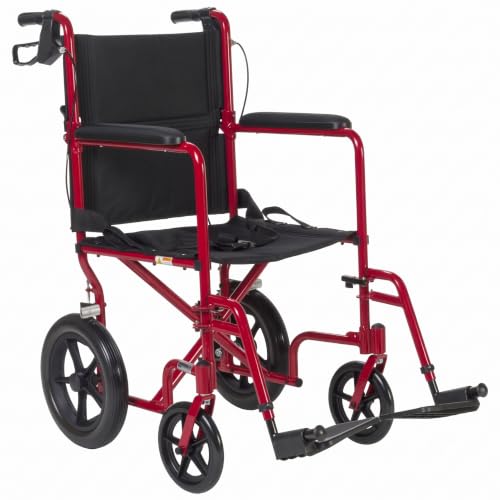
- Lightweight 19-pound aluminum frame
- 300-pound maximum recommended weight
- 12-inch rear wheels with curb assist
Best For: Portable use when capacity matters
Best Shock-Absorbing Ride
Dacare Narrow Folding Transport Wheelchair
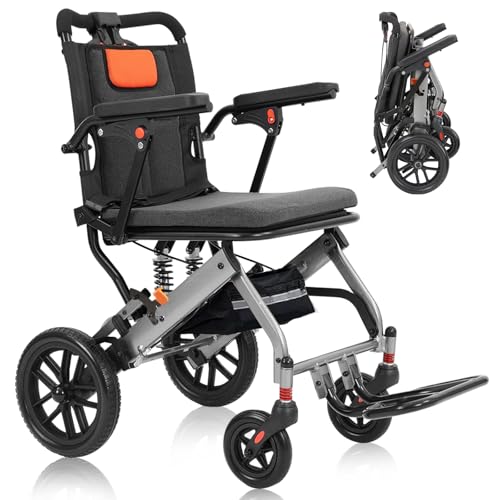
- 21.5-inch frame for narrow spaces
- Front and rear spring suspension
- Compact fold with transfer-friendly arms and footrests
Best For: Small users seeking a smoother travel ride
Best Lightweight Narrow-Doorway Pick
Drive Medical Folding Transport Wheelchair

- 20-inch open width; folds to 9 inches wide
- Lightweight 19-pound aluminum frame
- Swing-away footrests and 300-pound capacity
Best For: Caregivers prioritizing easy lifting and compact storage
Best Maneuverability for Tight Spaces
Medline Lightweight Transport Wheelchair

- 12-inch rear wheels improve maneuverability
- Handbrakes and rear locking brakes
- 19-inch seat with swing-away footrests
Best For: Indoor navigation, ramps, and controlled caregiver transfers
Best Feature-Rich Narrow-Doorway Design
Premium Folding Travel Wheelchair

- 22-inch overall width for tight indoor spaces
- Adjustable caregiver handles and 320-pound capacity
- Folding frame with telescopic pull handle
Best For: Travel and home care where adjustability and capacity matter
Best Narrow-Doorway Lightweight Pick
Medline Ultra Lightweight Transport Wheelchair

- 15-pound aluminum frame folds for car storage
- 23.25-inch overall width with an 18-inch turn radius
- 300-pound capacity and swing-away footrests
Best For: Caregivers prioritizing low weight and easy indoor maneuvering
Best Telescopic-Handle Option
Lightweight Foldable Travel Transport Chair
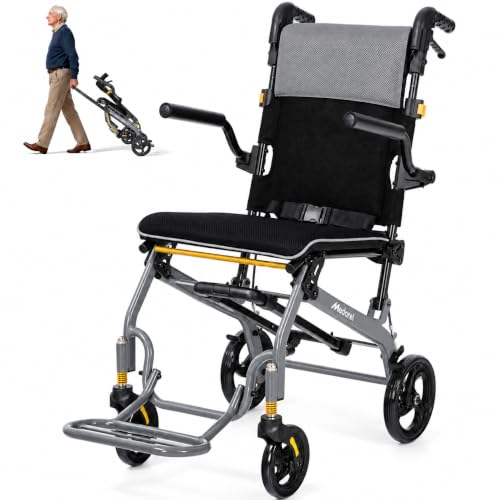
- Folds in about three seconds and includes a pull handle
- Swivel front wheels with shock-absorbing springs
- 16.9-inch seat and 220-pound capacity
Best For: Travelers needing easy folding and luggage-style portability
Best Compact Folding Design
SOFTFISH Compact Transport Wheelchair

- 20.1-inch frame fits tighter indoor spaces
- Foot-activated one-step folding and pull handle
- Safety belt, brakes, and flip-back armrests
Best For: Caregivers navigating narrow hallways and compact travel spaces
Best Narrow-Entry Pick – SOFTFISH Compact Transport Wheelchair
For shoppers comparing transport wheelchairs for narrow doorways, the SOFTFISH stands out with a 21.5-inch frame and 360-degree swivel front wheels. Its aluminum construction, foldable components, and compact folded size also make it practical for travel, appointments, and storage in smaller spaces.
Best For: Users who need a compact transport chair for narrow indoor spaces, travel, and everyday assisted outings.
Pros:
- 21.5-inch frame helps with hallways, doorways, elevators, and bedrooms.
- 10-inch honeycomb tires resist punctures while providing shock absorption.
- Folding armrests and footrests can simplify side transfers.
- 20-pound aluminum chair folds to 20.5 x 11.8 x 28 inches for storage.
Cons:
- Its 16.2-inch seat is relatively compact and may not suit larger users.
- Maximum recommended weight is 220 pounds.
This is a strong fit when maneuverability and compact storage matter most. Confirm the 16.2-inch seat width and 220-pound capacity before purchasing.
Best Heavy-Duty Value – Medline Folding Steel Transport Wheelchair
The Medline folding transport wheelchair offers a sturdy steel frame, a 19-inch seat, and 8-inch wheels designed to maneuver around tight corners, doorways, and ramps. It is a practical option among transport wheelchairs for narrow doorways, though its overall steel construction is heavier than the most portable models.
Best For: Users who prioritize a durable frame, a roomier seat, and a 250-pound weight recommendation.
Pros:
- Steel frame supports up to 250 pounds.
- 19-inch-wide by 16-inch-deep seat provides a more spacious fit than compact chairs.
- Swing-away, detachable footrests support easier entry and exit.
- Folds with a fold-down backrest for vehicle transport and storage.
Cons:
- At 30 pounds, it is heavier to lift than the aluminum alternatives.
- The supplied dimensions and 36-inch turn radius suggest checking available doorway and turning space.
The Medline balances durability and transfer convenience with indoor maneuverability. It is a sensible choice when seat space and capacity are more important than minimum carry weight.
Best Lightweight Capacity – Drive Medical Expedition Transport Wheelchair
The Drive Medical Expedition is a 19-pound aluminum transport chair with an 18.5-inch seat and large 12-inch rear wheels. For buyers considering transport wheelchairs for narrow doorways, its lightweight design and hand brakes are appealing, although its listed 38-inch width should be checked carefully against the intended doorways.
Best For: Caregivers who want a lightweight, foldable chair with a higher 300-pound weight recommendation.
Pros:
- 19-pound aluminum frame is easy to lift and carry.
- 12-inch rear wheels and curb-assist technology help with bumps and uneven surfaces.
- Companion-activated loop-lock hand brakes support stopping and parking.
- Folds using a rear-lever system for storage and travel.
Cons:
- Its listed 38-inch width may not suit narrow doorways; measure first.
- The 3-foot turn radius is less compact than the narrow-frame models.
This model is especially attractive for caregivers who regularly load a chair into a vehicle. Its higher capacity and low carry weight are useful, but doorway measurements are essential for narrow-space use.
Best Shock-Absorbing Ride – Dacare Narrow Folding Transport Wheelchair
The Dacare transport wheelchair combines a 21.5-inch frame with spring-loaded front casters and rear shock springs. That combination makes it a compelling option among transport wheelchairs for narrow doorways when a smoother ride, compact storage, and assisted transfers are all priorities.
Best For: Smaller users who need a narrow travel chair with suspension for outings, hospital visits, and indoor navigation.
Pros:
- 21.5-inch frame is designed for hallways, doorways, elevators, and bedrooms.
- Front and rear spring suspension helps absorb vibration and impact.
- Foldable armrests and footrests support easier side transfers.
- 20-pound aluminum chair folds to 20.5 x 11.8 x 28 inches.
Cons:
- The 16.2-inch seat is recommended in the notes for small children or small elderly users.
- Maximum recommended weight is 220 pounds.
- The listed 34-inch turn radius may require more maneuvering room than the frame width alone suggests.
The suspension system is the main differentiator, making this a useful choice for users who find rigid transport chairs uncomfortable over uneven surfaces. Verify the compact seat dimensions and turning space before ordering.
Best Lightweight Narrow-Doorway Pick – Drive Medical Folding Transport Wheelchair
For shoppers comparing transport wheelchairs for narrow doorways, the Drive Medical Folding Transport Wheelchair stands out for its 20-inch open width and lightweight 19-pound aluminum frame. It also folds to 9 inches wide for storage and transport.
Best For: Caregivers who need a compact, lightweight chair for indoor use, errands, and car travel.
Pros:
- 20-inch open width and 9-inch folded width suit tight storage spaces.
- 19-pound aluminum frame is easier to lift and transport.
- Swing-away footrests support easier transfers.
- Includes padded armrests, a seat belt, and maintenance-free 8-inch composite wheels.
Cons:
- The 14.5-inch space between the arms may feel narrow for some users.
- Its 8-inch wheels may be less suitable for uneven outdoor surfaces than larger wheels.
This is a practical choice when doorway access, portability, and simple storage matter most. Its 300-pound capacity and compact folded profile add everyday versatility.
Best Maneuverability for Tight Spaces – Medline Lightweight Transport Wheelchair
The Medline Lightweight Foldable Transport Wheelchair is a strong option among transport wheelchairs for narrow doorways, combining swivel front wheels with larger 12-inch rear wheels. Its compact folding design is intended for maneuvering around tight corners, doorways, and ramps.
Best For: Users who want smoother indoor maneuverability along with handbrakes and a spacious seat.
Pros:
- 12-inch rear wheels and swivel front wheels help navigate corners and doorways.
- Hand brakes and rear-wheel locking brakes support controlled transfers.
- 19-inch-wide, 16-inch-deep seat provides a spacious seating area.
- Folds easily with detachable swing-away footrests and requires no assembly.
Cons:
- At about 25 to 26 pounds, it is heavier than the 19-pound Drive model.
- The listed folded width is 10 inches, so it needs slightly more storage space.
Choose this Medline model if wheel size and braking control are more important than minimizing carry weight. Its 300-pound capacity and easy-clean nylon upholstery make it well suited to regular outings.
Best Feature-Rich Narrow-Doorway Design – Premium Folding Travel Wheelchair
This premium folding travel wheelchair offers a 22-inch overall width, making it a feature-rich option among transport wheelchairs for narrow doorways. It adds adjustable caregiver handles, a 320-pound capacity, and a folding design with a telescopic pull handle for travel.
Best For: Adults and seniors who want a narrow, portable chair with adjustable pushing ergonomics and added home-care versatility.
Pros:
- 22-inch overall width is designed for home doorways, bathrooms, hallways, and elevators.
- Adjustable-angle caregiver handles can accommodate different pushing heights.
- Supports up to 320 pounds and includes an integrated brake system and safety belt.
- Folds with a suitcase-style pull handle; removable cushions can be wiped clean.
Cons:
- The carbon steel frame may be heavier than an aluminum transport chair.
- Its 22-inch width is narrower than many full-size chairs but wider than the Drive model.
- The supplied notes do not specify the chair’s item weight.
This model is appealing when comfort features, caregiver adjustability, and a higher weight capacity outweigh the need for the lightest possible frame. Verify the actual doorway clearance before purchasing, especially for older or unusually narrow openings.
Best Narrow-Doorway Lightweight Pick – Medline Ultra Lightweight Transport Wheelchair
For shoppers comparing transport wheelchairs for narrow doorways, the Medline Ultra Lightweight Transport Wheelchair combines a 23.25-inch overall width with swivel front wheels and an 18-inch turn radius. Its 15-pound aluminum frame also makes it easier to lift into a vehicle.
Best For: Caregivers who want a lightweight chair for indoor maneuvering, routine transfers, and car transport.
Pros:
- 15-pound folding aluminum frame with a 300-pound weight capacity
- 8-inch rear wheels and swivel front wheels help with tight corners, doorways, and ramps
- Swing-away footrests, desk-length cushioned arms, and a standard cup holder
- No assembly required; easy-clean nylon upholstery
Cons:
- The 19-inch seat is wider than the compact frame may suggest
- Manual propulsion requires a caregiver to push the chair
Its combination of low weight, folding storage, and responsive wheels makes this a practical narrow-doorway option. The 300-pound capacity adds versatility, while the included footrests and cup holder support everyday convenience.
Best Telescopic-Handle Option – Lightweight Foldable Travel Transport Chair
This folding travel chair is worth considering among transport wheelchairs for narrow doorways because its 360-degree swivel front wheels are designed for agile maneuvering in tight spaces. The 21-pound aluminum chair folds in about three seconds and includes a retractable handle for carrying or pulling.
Best For: Travelers and caregivers who need a portable chair for homes, hospitals, airports, and vehicle transport.
Pros:
- Folds and unfolds in approximately three seconds for convenient transport
- 360-degree swivel front wheels with shock-absorbing springs support tight-space maneuvering
- Telescopic handle allows the folded chair to be pulled like luggage
- Flip-up armrests and footrests, adjustable backrest, and breathable cushions
Cons:
- Its 21-pound weight is heavier than some ultra-light transport chairs
- 220-pound maximum weight recommendation limits capacity compared with some alternatives
The fast-folding design and pull handle are particularly useful when moving through travel hubs or loading a trunk. Its 16.9-inch seat offers a more compact profile, though buyers should confirm the capacity suits the intended user.
Best Compact Folding Design – SOFTFISH Compact Transport Wheelchair
For especially tight interiors, the SOFTFISH is one of the more compact transport wheelchairs for narrow doorways, with a 20.1-inch frame and 360-degree swivel front wheels. Its foot-activated folding design reduces bending, while the telescoping pull handle helps with post-folding transport.
Best For: Caregivers navigating narrow hallways, bedrooms, elevators, and other confined spaces.
Pros:
- 20.1-inch narrow frame and compact 15.8-by-16.5-inch seat
- Foot-activated one-step folding reduces hand effort and bending
- Flip-back armrests and footrests help clear the side-entry transfer path
- Safety belt, brakes, removable cushion, and telescoping pull handle included
Cons:
- 220-pound maximum weight recommendation
- The supplied guidance recommends side entry only for getting in and out
- The compact seat may feel limiting for some users
This model emphasizes compact handling and caregiver convenience rather than a high weight capacity. The narrow frame, swivel wheels, and foot-activated fold make it a strong fit for assisted trips through tight indoor spaces.
How We Picked These Transport Wheelchairs for Narrow Doorways
We focused on features that matter when a chair must move through constrained spaces and remain practical for everyday caregiving. The selection includes lightweight and ultra-lightweight frames, folding designs, caregiver-operated hand brakes, swing-away or foldable footrests, and armrests that can improve side transfers.
We also considered seat-width options, wheel size, portability, handle design, cushioning, and frame construction. Product listings can vary in exact dimensions and weight capacity, so confirm the manufacturer’s specifications before ordering—especially if the chair will be used in an older home, apartment, bathroom, or vehicle.
Quick Comparison
| Feature | Why It Matters | What to Check |
|---|---|---|
| Overall width | Determines whether the chair clears door frames and hallways | Compare the manufacturer’s full chair width with your narrowest opening |
| Folded size and weight | Affects vehicle storage and lifting | Look for a folding frame, pull handle, or compact footrest design |
| Caregiver controls | Helps with stopping and maneuvering | Check for hand brakes, locking brakes, and ergonomic push handles |
| Transfer access | Makes side transfers easier | Consider removable or lift-up armrests and swing-away footrests |
Key Buying Factors for Transport Wheelchairs for Narrow Doorways
Measure More Than the Seat
A 19-inch seat does not mean the entire chair is 19 inches wide. Armrests, wheel hubs, hand rims, and brake hardware can add several inches. Measure the clear opening of each doorway, including trim and hinges, then compare it with the chair’s listed overall width. Leave extra clearance for turning and avoid assuming a chair can pass straight through every opening.
Balance Width with Comfort
Narrower chairs can be easier to navigate, but the seat must still provide adequate hip room and support. Check seat depth, upholstery, back support, and the stated user weight capacity. A snug fit may improve control, while insufficient space can make longer trips uncomfortable and transfers harder.
Prioritize Folding and Transfer Features
For frequent car travel, choose a frame that folds quickly and is light enough for the person loading it. Lift-up armrests and swing-away footrests can help with lateral transfers, while detachable or foldable components reduce the storage footprint. Telescoping handles and pull rods are useful when the folded chair must be moved separately.
Check Brakes, Wheels, and Terrain
Caregiver hand brakes are valuable on slopes and during controlled stops, but they do not turn a transport chair into a self-propelled wheelchair. Smaller wheels are often compact, while larger rear wheels may roll more smoothly over thresholds and uneven surfaces. Confirm whether the chair is intended primarily for indoor use, paved travel, or both.
Who Should Buy Which Transport Wheelchairs for Narrow Doorways?
Choose an ultra-lightweight folding model if portability, car storage, and lifting are your main concerns. Choose a chair with lift-up armrests and swing-away footrests if transfers are frequent. Choose hand brakes and a supportive push handle for caregivers who regularly manage ramps, inclines, or longer outings. Choose a more generously sized seat when comfort and user fit matter more than the smallest possible footprint.
Before purchase, verify the chair’s overall width, folded dimensions, weight capacity, seat measurements, brake configuration, and warranty. If the chair will pass through a particularly tight doorway, measure the route from the entrance to the destination—not just the door itself.