Finding the right upright walker can make daily movement feel more secure and less tiring. The best models support a more natural standing posture while adding practical features such as padded armrests, seats, storage, adjustable height, and easy-fold frames.
We compared 10 upright walkers under $300 across comfort, maneuverability, stability, portability, and user capacity to help you choose a model that fits your home, routine, and mobility needs.
Best 10 Upright Walkers Under 300 Picks for 2026
Best All-Terrain Comfort
Helavo Upright Walker with Seat

- 10-inch puncture-proof rubber front wheels
- Padded armrests and cushioned resting seat
- 300-pound capacity with parking brake
Best For: Outdoor walking and comfortable seated breaks
Best Narrow Heavy-Duty Design
Folding Adjustable Upright Walker

- 450-pound weight capacity
- Adjusts from 18 to 22 inches wide
- Folds quickly with tool-free assembly
Best For: Bariatric support in narrow spaces
Best Lightweight Seated Option
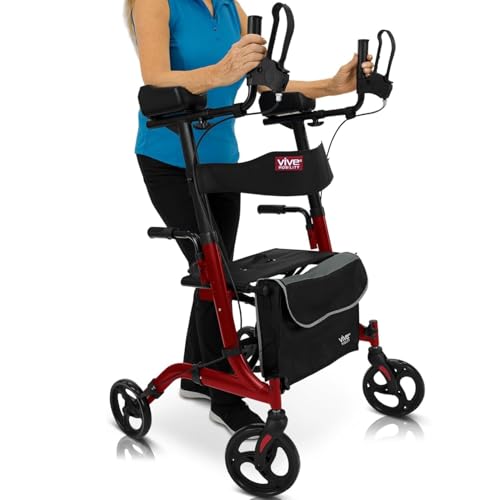
- 20-pound foldable aluminum frame
- Adjustable forearm pads and 41-52-inch handles
- 17.5-inch seat with detachable storage bag
Best For: Portable everyday walking with seated rests
Best Bariatric Seat and Stability
Helavo Extra Wide Upright Walker

- 500-pound capacity with 20.1-inch seat
- Eight-inch flat-free rubber wheels
- Dual brakes, stepping aid, and storage bag
Best For: Extra-wide bariatric support and seated comfort
Flexible Support Pick
Goplus Folding Walker with Armrests
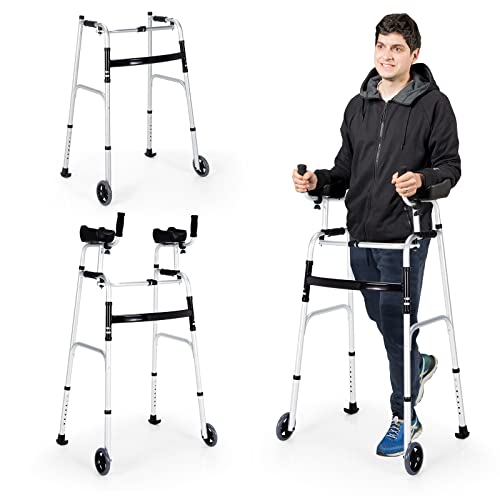
- Removable padded armrests
- Folds with one hand
- Fixed or rolling modes
Best For: Adjustable upper-body support and flexible indoor mobility
Best for Everyday Use
VOCIC Z22 GelSoft Upright Rollator

- 8-inch all-terrain wheels
- GelSoft padded armrests
- Built-in seat with 300-pound capacity
Best For: Outdoor mobility with seated rest and cushioned forearm support
Compact Everyday Pick

- Lightweight 11-pound frame
- Removable soft armrests
- Folds with two buttons
Best For: Everyday mobility, storage, and convertible forearm support
Best Adjustable Fit
HOMLAND Upright Walker with Seat

- Dual height adjustment for a broad user range
- Padded arm supports and memory-foam seat
- Foldable steel frame with 8-inch swivel wheels
Best For: Seniors prioritizing fit, forearm support, and seated comfort
Best All-Terrain Comfort – Helavo Upright Walker with Seat
For shoppers comparing upright walkers under 300, the Helavo H1160 stands out as an outdoor-friendly rollator with padded armrests, large puncture-proof rubber wheels, and a built-in seat. Its aluminum frame supports up to 300 pounds while remaining relatively manageable at 22.7 pounds.
Best For: Users who want upright support, outdoor cushioning, and a comfortable place to rest during trips.
Pros:
- 10-inch puncture-proof rubber front tires provide cushioning across varied surfaces.
- Padded armrests and height-adjustable ergonomic handles encourage a more natural walking position.
- Includes a cushioned seat, adjustable backrest, cup holder, cane holder, and parking brake.
- Supports users up to 300 pounds and includes a two-year warranty that can be extended to three years.
Cons:
- At 26.4 inches wide and 22.7 pounds, it may be less convenient in very tight indoor spaces.
- The supplied details list a fixed 46.9-inch overall height, so fit should be checked carefully before purchase.
The Helavo H1160 is a practical choice when outdoor stability and seated breaks matter more than an especially narrow frame. Its all-in-one accessories and safety-focused braking system add everyday convenience.
Best Narrow Heavy-Duty Design – Folding Adjustable Upright Walker
Among upright walkers under 300, this folding model is notable for its adjustable width and unusually high 450-pound capacity. It can narrow to 18 inches for doorways, switch to standard walker mode, and adjust in height for a broad range of users.
Best For: Bariatric users and anyone who needs a compact, width-adjustable walker for narrow indoor spaces.
Pros:
- H-frame construction supports up to 450 pounds.
- Five width settings adjust from 18 to 22 inches for easier passage through tight areas.
- Ten height positions span 42 to 51 inches.
- Folds with a one-touch button and assembles without tools in about five minutes.
Cons:
- The supplied notes do not list a built-in seat, so it is less suited to users who need frequent seated rests.
- Its 11-pound weight and standard-walker configuration may offer less rollator-style cushioning than models with larger rubber tires.
This walker prioritizes adjustability, doorway access, and weight capacity. It is a strong fit for users who need heavy-duty support without committing to a permanently wide frame.
Best Lightweight Seated Option – Vive Mobility Upright Walker
For those seeking upright walkers under 300, the Vive Mobility Upright Walker combines a 300-pound capacity with a foldable aluminum frame weighing 20 pounds. Its adjustable forearm supports, flat-free wheels, and integrated seat make it suitable for errands and everyday mobility.
Best For: Users who want a foldable upright rollator with adjustable arm support and convenient on-the-go seating.
Pros:
- Eight-inch flat-free wheels provide stability across many surfaces.
- Forearm pads adjust forward and backward to accommodate different arm lengths.
- Handles adjust from 41 to 52 inches and are designed for users approximately 5 feet 2 inches to 6 feet 4 inches tall.
- Includes a 17.5-inch seat, detachable shoulder bag, loop brakes, and a folding frame.
Cons:
- The stated 300-pound capacity is lower than the heavy-duty model in this roundup.
- Its 25-inch width may still be restrictive in especially narrow doorways.
- The warranty is one year, shorter than the standard warranty described for the Helavo H1160.
The Vive is a balanced option for users who value portability and rest breaks. Its adjustable forearm positioning and relatively light 20-pound frame make it easier to tailor and transport.
Best Bariatric Seat and Stability – Helavo Extra Wide Upright Walker
This Helavo model is a standout among upright walkers under 300 for users who need extra width and substantial weight capacity. It supports up to 500 pounds, provides a 20.1-inch seat, and uses flat-free rubber wheels for indoor and outdoor maneuverability.
Best For: Larger users who need a spacious seat, high weight capacity, and adjustable upright support.
Pros:
- Extra-wide frame and 20.1-inch seat support users up to 500 pounds.
- Eight-inch shock-absorbing, flat-free rubber wheels are designed for varied terrain.
- Handle height adjusts from 41.5 to 47.6 inches, with a seat height range of 20.9 to 22.8 inches.
- Includes a padded backrest, dual brakes, stepping aid, reflectors, cup holder, cane holder, and storage bag.
Cons:
- Its 28.3-inch width requires more doorway and storage clearance than narrow walkers.
- The extra-wide design may be less convenient for cramped indoor layouts.
- The supplied details list a one-year warranty, extendable to three years, rather than a three-year standard warranty.
Choose this Helavo when capacity, seating space, and stability are the primary priorities. The wide frame and accessory package are useful, but shoppers should measure doorways and storage areas first.
Flexible Support Pick – Goplus Folding Walker with Armrests
For shoppers comparing upright walkers under 300, the Goplus offers a flexible platform-style design with removable padded armrests. Its folding frame, adjustable supports, and selectable fixed or rolling modes make it suitable for home use, rehabilitation, and convenient storage.
Best For: Adults who want adjustable forearm support with the option to convert to a more traditional walker.
Pros:
- Removable padded armrests provide comfortable upper-body support and can be detached.
- One-click folding design is convenient for car storage or compact rooms.
- Seven-level height adjustment and four-level armrest adjustment help accommodate different users.
- Can switch between interactive rolling and fixed modes.
Cons:
- The two included wheels are unidirectional rather than fully swiveling.
- The supplied specifications list a 9-pound item weight and a 220-pound title capacity, while the details also state 440 pounds; verify the current listing before purchase.
- Wheels should not be screwed too tightly, or they may stick.
This Goplus model stands out for adjustability and versatility, especially if you need arm support now but may prefer a standard walker configuration later. Check the listing carefully for the applicable weight rating.
Best for Everyday Use – VOCIC Z22 GelSoft Upright Rollator
The VOCIC Z22 is a feature-rich option among upright walkers under 300, combining a seat, padded GelSoft armrests, and large 8-inch wheels. Its reinforced frame and adjustable seat and handle heights are designed for users who want support while walking and a place to rest.
Best For: Adults seeking an upright rollator for varied outdoor terrain, seated breaks, and cushioned forearm support.
Pros:
- GelSoft armrests are designed to cushion elbows and reduce walking impact.
- Eight-inch treaded wheels are intended for gravel, potholes, and slippery surfaces.
- Adjustable handle height and seat height allow a more customized fit.
- Flip-out armrests create additional seat width, and the walker has a 300-pound capacity.
Cons:
- The hand-brake system requires sufficient hand grip strength and upper-body mobility.
- At 10 kg, it is heavier than some compact folding walkers.
- Quick assembly is required before use.
Choose the Z22 when seating, larger wheels, and padded arm support matter more than minimum weight. Its hand-brake requirement makes user grip strength an important consideration before ordering.
Compact Everyday Pick – Medline Forearm Walker
For a straightforward choice among upright walkers under 300, the Medline Upright Walker uses a lightweight aluminum frame with soft removable armrests and dual wheels. Its folding two-button mechanism and no-tool assembly are useful for storage, travel, and everyday indoor mobility.
Best For: Adults who want a lightweight, foldable forearm walker that can also convert to a traditional walker.
Pros:
- Weighs 11 pounds while supporting up to 300 pounds.
- Removable soft armrests allow use as a traditional walker.
- Height-adjustable legs and length-adjustable handles support a more natural posture.
- Folds with a simple two-button mechanism and assembles without tools.
Cons:
- The 31-inch width may be less convenient in narrow hallways or doorways.
- Its 5-inch dual wheels are smaller than those on some outdoor-focused rollators.
- The supplied details list handle adjustment dimensions rather than a complete overall height range, so confirm fit before purchase.
The Medline is a practical balance of weight, adjustability, and storage convenience. It is best suited to buyers who value a compact folding design and convertible arm support over large outdoor wheels or a built-in seat.
Best Adjustable Fit – HOMLAND Upright Walker with Seat
For shoppers comparing upright walkers under 300, the HOMLAND stands out for its broad height range, padded arm support, and built-in seat. Its steel frame, 8-inch swivel wheels, and folding design make it suitable for everyday indoor and outdoor mobility.
Best For: Seniors who want extensive height adjustment, padded forearm support, and a comfortable seat for rest breaks.
Pros:
- Dual adjustments accommodate users from approximately 4’9″ to 6’4″.
- Padded, length-adjustable arm supports and a wide memory-foam seat enhance comfort.
- 8-inch puncture-proof swivel wheels support smooth maneuvering indoors and outdoors.
- Folds for transport and includes a storage bag.
Cons:
- At 24.5 pounds, it is heavier than some aluminum alternatives.
- The listed maximum capacity is 300 pounds, leaving no additional capacity margin for heavier users.
The HOMLAND is a well-rounded choice when posture support and adjustability matter most. Its steel construction and padded seating add confidence and comfort, while the folding frame helps with storage and travel.
Best Wide-Seat Design – Aliseniors Upright Walker
Among upright walkers under 300, the Aliseniors model is designed for users who want upright posture support without giving up seating space. Its wide frame, all-terrain tires, and relatively light aluminum construction suit open indoor areas, porches, and outdoor paths.
Best For: Users who need a roomy seat and stable outdoor rolling, particularly in open spaces with doorways at least about 30 inches wide.
Pros:
- Adjustable padded armrests support an upright walking position for users about 5’2″ to 6’2″.
- Wide breathable mesh seat provides a comfortable place to rest.
- 8-inch solid polyurethane tires and swiveling front wheels handle grass, gravel, dirt, and sidewalks.
- One-hand folding design, detachable backpack-style bag, and cane or umbrella holder improve portability.
Cons:
- The 28.7-inch frame may be difficult to maneuver through narrower doorways.
- Its 300-pound capacity is a maximum rating rather than a higher-capacity bariatric margin.
The Aliseniors is compelling for shoppers who value a generous seat and outdoor versatility. Before buying, measure doorways and indoor routes carefully because its wide frame favors open living areas and exterior use.
Best All-Terrain Wheel Setup – FlyingJoy Upright Rollator
This FlyingJoy rollator is a practical option among upright walkers under 300 for shoppers focused on larger wheels and indoor-outdoor transitions. Its aluminum frame, adjustable handles, seated design, and airless tires combine portability with support for uneven surfaces.
Best For: Adults and seniors who need shock-absorbing wheels, adjustable height, and a foldable seat walker for errands or outdoor walks.
Pros:
- 10-inch front and 8-inch rear puncture-proof tires help absorb vibration on uneven surfaces.
- Five height settings adjust the handles from 46.5 to 50.5 inches.
- Padded armrests and ergonomic handles support a more upright walking posture.
- Folds quickly, weighs 23.76 pounds, and supports up to 300 pounds.
Cons:
- The listed handle-height range may not suit shorter users.
- Its numerous braking, fastening, and support features may require more familiarization than a basic rollator.
Choose the FlyingJoy if wheel size and surface comfort are central to your decision. The airless tire system and triangular aluminum frame are useful for mixed terrain, while the folding mechanism makes storage and vehicle transport easier.
How We Picked the Best Upright Walkers Under 300
We focused on features that affect real-world comfort and control rather than judging models by appearance alone. Our comparison considers arm support, handle and forearm height adjustment, wheel size, frame width, braking controls, seat design, folding convenience, and stated weight capacity.
We also included different formats, from compact upright walkers for tighter indoor spaces to wider bariatric designs and all-terrain rollators. Product specifications can vary by seller, so confirm dimensions, included accessories, and capacity before ordering.
Quick Comparison
| Feature | Why It Matters |
|---|---|
| Upright arm support | Can reduce wrist strain and encourage a more elevated posture. |
| Seat | Useful for planned rest breaks, errands, and longer outings. |
| Frame width | Determines whether the walker can pass through doorways and narrow aisles. |
| Wheel design | Larger or all-terrain wheels generally handle outdoor surfaces more easily. |
| Weight capacity | Should exceed the user’s weight with an appropriate safety margin. |
| Foldability | Makes storage and vehicle transport more convenient. |
Key Buying Factors for Upright Walkers Under $300
Fit and Adjustability
Measure the user while wearing everyday shoes and follow the manufacturer’s height guidance. The forearm supports should allow relaxed shoulders and comfortable elbows, while the frame should not force the user to lean forward. Check both the adjustment range and whether the settings lock securely.
Width, Weight, and Maneuverability
Measure the narrowest doorway, hallway, bathroom entrance, and storage area at home. A wider frame may improve stability and capacity but can be difficult to turn indoors. Also consider the walker’s own weight: a heavy model may feel stable yet be challenging to lift into a car.
Wheels and Brakes
Small wheels can be easier to control on smooth floors, while larger wheels are usually more suitable for thresholds, pavement, and uneven outdoor paths. Test that the hand brakes are reachable and that the parking brakes engage firmly. Users with limited grip strength may need guidance from a clinician or caregiver.
Seat, Storage, and Accessories
A padded seat is valuable when fatigue is predictable, but it adds weight and may increase the folded size. Look for a stable seat height, a backrest if needed, and storage that does not interfere with walking. Removable armrests can improve flexibility but should be reinstalled securely before use.
Who Should Buy Which Upright Walkers Under 300?
For compact indoor use: Choose a narrower, height-adjustable model that turns easily and fits through your home’s tightest openings.
For longer outings: A seated upright rollator with dependable brakes, storage, and comfortable padding is the better choice for planned rest breaks.
For larger users: Consider a bariatric frame with a clearly stated capacity and wider seat, but verify that it still fits through essential doorways.
For mixed indoor and outdoor use: Prioritize larger wheels, a stable frame, and tires designed for uneven surfaces. Regardless of price, have a healthcare professional confirm that the walker’s height, posture, and braking setup are appropriate before regular use.