A walking pad can make it easier to move during the workday or fit a short walk into a small space. The right one depends on where you will use it: a low-profile model may suit a standing desk, while handles and incline may matter more for dedicated workouts.
These 10 picks cover under-desk, incline, and folding options. Use the buying guide below to narrow down the features worth paying for.
Best 10 Walking Pads Picks for 2026
Most Versatile Incline
LONTEK 15% Incline Walking Pad with Handles
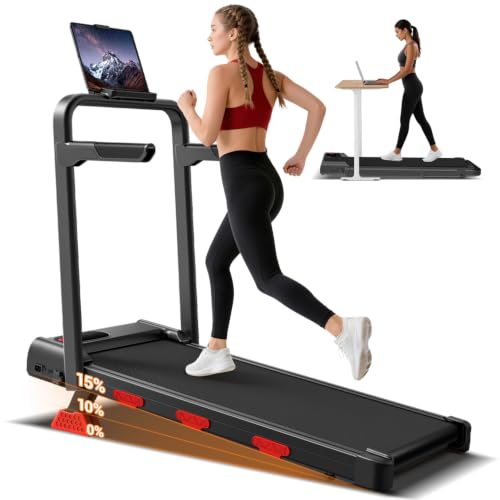
- Flat, 10%, or 15% manual incline
- 0.6–6.2 mph; 350 lb stated capacity
- 37.4-by-15-inch cushioned belt
Best For: Small spaces and varied incline walking
Best for Structured Workouts
FOUSAE 10% Incline Walking Pad
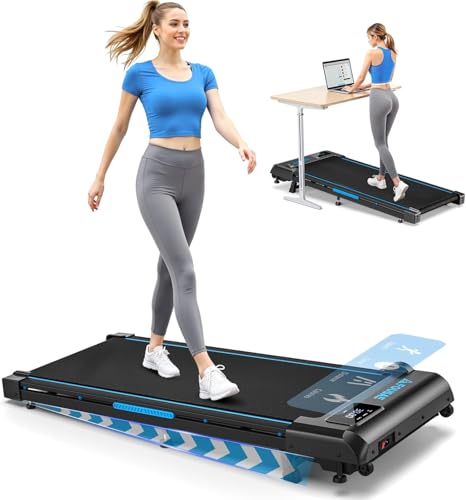
- 12 preset HIIT programs
- 40-by-16-inch cushioned belt
- 0.6–6.2 mph; manual 10% incline
Best For: Preset interval workouts at home
Best for Desk Walking
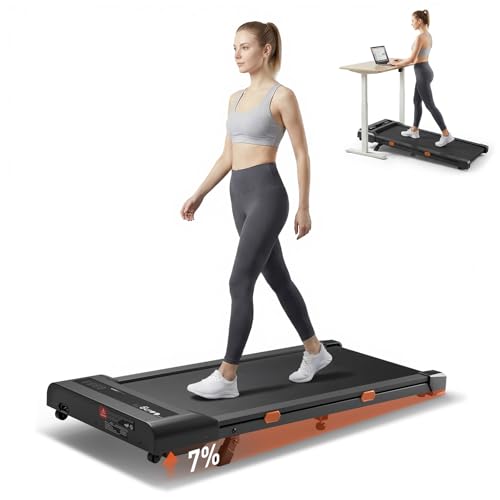
- 0.6–4 mph walking range
- Fixed 7% manual incline
- App or remote control; 36.4 lb listed weight
Best For: Handrail-free walking at a desk
Best for Added Support
Viamotion Walking Pad with Handlebar

- Handlebar for added support
- 0.6–3.8 mph speed range
- LED tracks time, distance, speed, and calories
Best For: Supported walking in a small home
Best for Small Spaces

- Slim 4.33-inch profile
- Wheels and no assembly required
- Remote control and LED display
Best For: Desk walking in rooms with limited storage
Best with a Support Handle

- Manual incline for varied walks
- Support handle for balance
- 0.6–3.8 mph speed range
Best For: Home walkers wanting a handhold and incline option
Best Low-Profile Incline

- 5% manual incline
- 1–6 km/h stated speed range
- Textured 38 x 90 cm deck
Best For: Walkers wanting incline without assembly
Best for Workout Variety
CHAOKE 10% Incline Walking Pad

- 0.6–6.2 mph speed range
- 10% incline and 12 HIIT programs
- App connectivity and built-in speakers
Best For: Varied home workouts and under-desk walking
Best Folding Handlebar Option
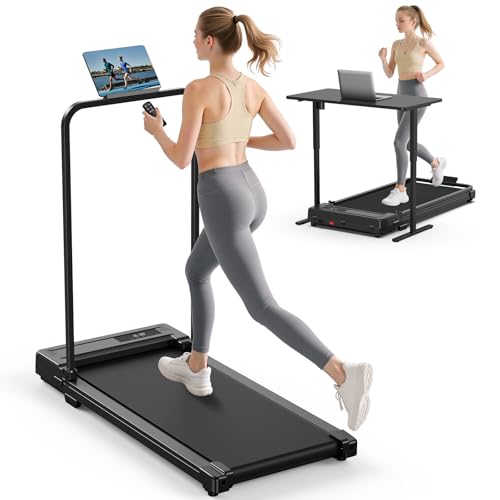
- Foldable handlebar setup
- 4 mph maximum speed
- Remote and LED workout display
Best For: Small spaces needing a handlebar and flat storage
Best Straightforward Incline Pick

- 9% manual incline
- Up to 6.2 mph with 12 presets
- 330 lb stated capacity
Best For: Compact incline workouts without app features
Most Versatile Incline – LONTEK 15% Incline Walking Pad with Handles
Among walking pads for varied home workouts, the LONTEK stands out for its three manually set grades: flat, 10%, and 15%. Its handlebar and removable device holder add convenience when you want to walk or jog without holding a phone.
Best For: Small-space users who want a handlebar and a steeper manual incline option.
Pros:
- Flat, 10%, and 15% incline choices.
- 0.6–6.2 mph speed range and 350 lb stated capacity.
- LED workout metrics, cushioned 37.4-by-15-inch belt, and removable device holder.
Cons:
- Incline changes require repositioning the legs or pads by hand.
- The 15-inch-wide belt may feel narrow to some users.
Choose this model if incline variety matters more than on-the-fly adjustment. Check that its belt dimensions suit your stride before buying.
Best for Structured Workouts – FOUSAE 10% Incline Walking Pad
If you want walking pads with more workout options, the FOUSAE combines a manually adjustable 10% incline with 12 preset HIIT programs. Its 0.6–6.2 mph range covers desk-paced walking through light jogging.
Best For: Home users who want preset intervals, workout countdowns, and a roomier belt.
Pros:
- 12 HIIT programs plus time, distance, and calorie countdown modes.
- 40-by-16-inch belt with a five-layer construction and cushioning components.
- Double-frame design and 350 lb stated capacity.
Cons:
- The incline must be adjusted manually.
- The supplied notes do not specify the unit’s overall dimensions or storage clearance.
This is the stronger fit when you plan to use guided workout modes rather than simply accumulate steps. Measure your available floor space before committing.
Best for Desk Walking – Cybergoing T10 Walking Pad
For walking pads meant to fit into a daily desk routine, the handrail-free Cybergoing T10 keeps things simple. It offers app or remote speed control, a 0.6–4 mph range, and a fixed 7% manual incline set before use.
Best For: People who want a compact, handrail-free pad for walking and brisk walking.
Pros:
- App and remote speed controls.
- 36-by-15-inch belt and 36.4 lb listed weight.
- 300 lb stated capacity and one-year warranty.
Cons:
- The 7% incline is fixed rather than adjustable during a workout.
- Its 4 mph maximum is lower than the faster models here.
The T10 makes sense when straightforward walking matters more than jogging speed or variable hills. Set the incline before stepping on, and consider whether a handrail-free design suits you.
Best for Added Support – Viamotion Walking Pad with Handlebar
If you prefer walking pads with something to hold, this Viamotion model pairs a handlebar with a manual incline listed as four degrees. Its 0.6–3.8 mph speed range focuses on walking rather than faster jogging.
Best For: Walkers who prioritize a handlebar, basic workout feedback, and storage options.
Pros:
- Handlebar provides a place to steady yourself while walking.
- LED display shows time, distance, speed, and estimated calories.
- Can be stored upright or moved beneath suitable furniture, according to the listing.
Cons:
- 3.8 mph maximum limits faster-paced workouts.
- 265 lb stated capacity is lower than the other three models here.
This is a practical choice for supported, moderate-paced walking. Check your furniture clearance and storage dimensions carefully, as the supplied folded-size figures are not clearly smaller than the in-use footprint.
Best for Small Spaces – XM-A1 Compact Walking Pad
For shoppers comparing walking pads for a small apartment or home office, the XM-A1 offers a slim, flat design that stores beneath furniture. It arrives ready to use, with remote speed control and an LED workout display.
Best For: Walking at a desk or fitting light exercise into a room with limited storage space.
Pros:
- Measures 42.91 x 19.69 x 4.33 inches and has transport wheels.
- Five-layer anti-slip belt, cushioning, and a 38.5 x 94 cm walking area.
- Remote and LED display make speed and workout metrics easy to check.
Cons:
- No incline or support handle is listed.
- The 38.5 cm belt width may feel narrow to some walkers.
This is a straightforward pick if easy storage matters more than extra workout settings. Check that its belt dimensions suit your stride before buying.
Best with a Support Handle – Elseluck Incline Walking Pad
Among walking pads that offer more than flat walking, this Elseluck model adds a manual incline and a support handle. Its 0.6–3.8 mph range accommodates slow desk walks as well as quicker sessions away from a desk.
Best For: Walkers who want a handhold and an optional uphill challenge at home.
Pros:
- Manual incline adds variety without requiring a faster pace.
- Handle offers something to hold for balance.
- Remote, LED tracking, and transport wheels support convenient daily use.
Cons:
- Incline adjustments are manual.
- Supplied specifications conflict on weight capacity: the bullets say 265 pounds, while the details say 220 pounds.
The handle and incline make this a more versatile option than a basic flat pad. Confirm the applicable weight rating with the seller before ordering.
Best Low-Profile Incline – 5% Incline Walking Pad
If you want walking pads with an incline but prefer a low-profile deck, this model pairs a 5% manual incline with a stated 1–6 km/h speed range. Its five-layer textured belt and shock absorption are designed for steady walking.
Best For: Walkers seeking an incline option in a pad that needs no assembly.
Pros:
- 5% manual incline adds a workout option.
- 38 x 90 cm walking deck has a textured, cushioned belt.
- Ships ready to use and weighs approximately 16.25 kg according to the bullets.
Cons:
- Incline must be adjusted manually.
- Supplied dimensions conflict, so verify clearance before planning under-furniture storage.
The incline is the main reason to choose this over a flat pad. Because the listed measurements differ between the bullets and details, confirm its actual size before purchase.
Best for Workout Variety – CHAOKE 10% Incline Walking Pad
Among walking pads, this CHAOKE model offers an unusually broad 0.6–6.2 mph speed range, a 10% incline, and 12 HIIT programs. It suits shoppers who want both slow under-desk walks and faster workouts from one compact machine.
Best For: Home users who want incline training, programmed workouts, and app-connected audio.
Pros:
- Speed range covers working, walking, and running.
- App connectivity, built-in speakers, and 12 HIIT programs add workout options.
- Supports up to 330 lb and arrives preassembled with transport wheels.
Cons:
- The 45.67 × 19.09-inch footprint still needs adequate floor and storage space.
- No handlebar is listed, which may matter to users who prefer a handhold.
This is the more feature-rich pick for varied sessions; check that its dimensions and handle-free design fit how you plan to use it.
Best Folding Handlebar Option – Compact 4 MPH Walking Pad
If you want walking pads that can switch between a handrail setup and flat storage, this model is worth a look. It reaches 4 mph, includes a detachable phone holder, and folds to approximately 104 × 47 × 10.5 cm.
Best For: Small-space users who want a handlebar for some sessions and a flat pad for storage or desk use.
Pros:
- Handlebar, folding design, and built-in wheels offer flexible setup and storage.
- LED display tracks time, speed, calories, and distance; remote includes a pause function.
- Five-layer belt and 90 × 38 cm running area provide a defined walking surface.
Cons:
- Top speed is 4 mph, below the other two models here.
- Switching to flat under-desk use requires unscrewing the handlebar bolts.
Choose this one primarily for its folding handlebar arrangement, not for high-speed running or a quick, tool-free mode change.
Best Straightforward Incline Pick – CHAOKE 9% Incline Walking Pad
This CHAOKE model is one of the walking pads to consider if you want incline workouts without app or speaker features. Its 9% manual incline, up-to-6.2 mph speed range, and 12 preset programs cover more than basic desk walking.
Best For: Users seeking a compact, preassembled pad with manual incline and preset workouts.
Pros:
- 9% manual incline and 12 programs support varied workouts.
- Supports up to 330 lb and has a 95 × 38 cm belt.
- Arrives assembled, with transport wheels and a clearly marked lubrication port.
Cons:
- Incline adjustment is manual rather than automatic.
- Its 38 cm belt width may feel narrow for some runners.
The practical draw is its combination of incline, workout presets, and easy initial setup. Check the belt width against your stride before choosing it for faster sessions.
How We Picked These Walking Pads
We organized the selected models around practical buying needs: under-desk use, compact storage, adjustable incline, higher advertised speeds, and the option of a handlebar. The product names identify features such as 5% to 15% incline and speeds up to 6.2 mph, but a listing alone cannot establish how quiet, durable, or comfortable a machine will be. Check current specifications, warranty terms, and recent owner feedback before buying.
Quick Comparison: Which Style Fits Your Routine?
For workday walking, start with a low-profile under-desk model and confirm it clears your desk. For more demanding sessions, look at the incline-equipped options from LONTEK, FOUSAE, CHAOKE, and the other listed incline models; their advertised incline ranges differ. If you prefer a handhold or want to store the machine upright or folded, compare the handlebar and folding designs. If app control or a built-in speaker matters to you, one of the listed models advertises both—but those extras should come after basic fit and usability.
Key Buying Factors for Walking Pads
Desk Clearance and Walking Space
Measure from the floor to the underside of your desk, then allow for the pad’s height and your shoes. Also check belt length and width against your stride. A compact footprint saves floor space, but a belt that feels too short can make walking awkward, particularly at faster speeds.
Speed, Incline, and Handles
Choose speed based on how you will actually use the machine. Gentle walking while typing calls for a different setup than brisk exercise away from a desk. Several listed products advertise speeds up to 6.2 mph, but that does not mean every model is intended for comfortable running. Incline can make a walk more challenging, though it may raise the deck and reduce desk clearance. A handlebar offers something to hold during exercise; check whether it must be raised during operation.
Noise, Storage, and Ownership Costs
Motor sound and footfall noise both matter, especially in shared spaces. A floor mat may help protect flooring and reduce vibration, but it will not make a machine silent. Compare folded or stored dimensions, machine weight, wheel placement, and where the power cord will reach. Before ordering, review the weight limit, maintenance instructions, return policy, and warranty coverage.
Who Should Buy Which Walking Pads?
Desk workers: Prioritize low deck height, easy speed adjustments, and a belt suited to your stride. Small-space households: Measure the storage spot first, then compare compact and folding models. Incline walkers: Choose an incline range you will use, while accounting for extra height. Buyers who want more support: Consider a handlebar model and verify its operating and storage positions. The best choice is the one that fits your space and routine—not simply the model with the longest feature list.