The right weighted vest can make familiar workouts more challenging without requiring heavier dumbbells or complicated equipment. These 10 options cover light everyday walking, running, rucking, and demanding strength-training sessions.
We compare adjustable designs, weight ranges, comfort features, fit, visibility, and intended use so you can choose a vest that adds resistance without becoming a distraction.
Best 10 Weighted Vests Picks for 2026
Best Adjustable Range

- Available from 6 to 30 pounds
- Reflective stripe for outdoor visibility
- Evenly distributed iron-sand filling
Best For: Flexible strength, walking, and running workouts
Best Heavy-Duty Option
RUNFast 40lbs Pro Weighted Vest

- Adjusts in 4-pound increments
- Supports loads up to 40 pounds
- Attached belt aids setup
Best For: Heavy strength and cross-training sessions
Best Washable Design
Sportneer Adjustable Weighted Vest

- Adjustable from 2 to 18 pounds
- Removable weights simplify cleaning
- Zipper and reflective strips add convenience
Best For: Flexible home, walking, and jogging workouts
Best Beginner-Friendly Fit

- Weight options run from 6 to 30 pounds
- Padded shoulders help distribute pressure
- Neoprene body with reinforced seams
Best For: Gradual progression in walking and strength training
Comfort-Focused Pick
BAGAIL Comfort-Fit Weighted Vest
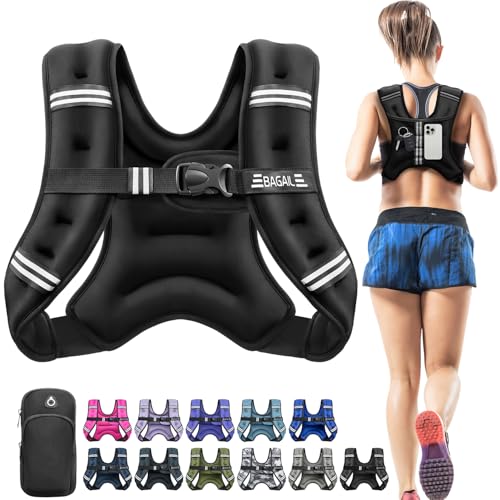
- Even-weight iron-sand and neoprene construction
- 5–30 lb options with close, stable fit
- Reflective strips, phone pouch, and rear mesh pocket
Best For: Comfort-conscious outdoor walkers, runners, and athletes
Progressive Training Pick

- Adjustable from 2.5 to 40 pounds
- Padded shoulders and adjustable waist belt
- Reinforced construction with reflective stripes
Best For: Progressive strength, cardio, and conditioning workouts
Low-Profile Pick
JFIT Slim Adjustable Weighted Vest

- Compact design stays close to the body
- Adjusts from 2.5 to 8 pounds
- Flexible tiles and 13 pockets support comfort
Best For: Light resistance, walking, cardio, and everyday workouts
Versatile Pick
ZELUS Adjustable Weighted Vest

- 6- to 30-pound options
- Evenly distributed iron sand
- Reflective strips and storage pockets
Best For: Beginners and general fitness users
Best Simple Pick
APEXUP Adjustable Weighted Vest

- 20-, 30-, and 40-pound options
- Removable 2.5-pound iron blocks
- 1000D nylon with reinforced stitching
Best For: Experienced trainees and rucking workouts
Comfortable Outdoor Pick
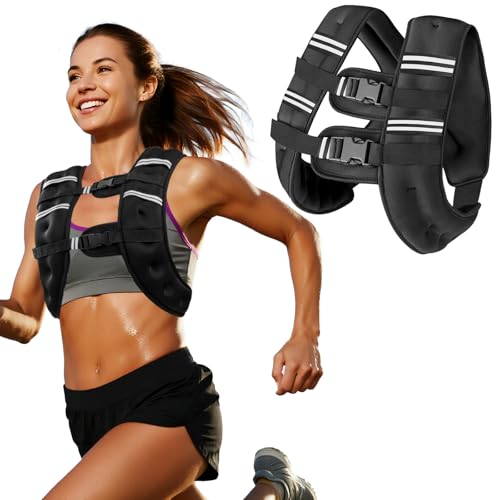
- 6- to 30-pound weight options
- Evenly distributed iron sand
- Front-and-back reflective strips
Best For: Indoor exercise and low-light outdoor training
Best Adjustable Range – Poudee Weighted Vest
The Poudee weighted vest is a flexible option for shoppers comparing weighted vests for strength training, running, walking, jogging, and CrossFit-style workouts. It is available in multiple weight options, including the listed 12-pound version, and uses adjustable straps for a closer fit.
Best For: Adults who want a straightforward weighted vest with multiple weight choices and reflective visibility details.
Pros:
- Available in weight options from 6 to 30 pounds.
- Adjustable straps and breathable materials support a snug, mobile fit.
- Reflective stripe improves visibility during outdoor workouts.
- Iron-sand filling is designed for even weight distribution.
Cons:
- The supplied listing details are for the 12-pound size, so confirm the desired weight before ordering.
- Hook-and-loop closure may be less convenient than a zipper design.
Choose this model if you want one vest line that can accommodate different training loads. Its reflective detail and even-fill design also make it practical for walking or jogging outside.
Best Heavy-Duty Option – RUNFast 40lbs Pro Weighted Vest
The RUNFast 40lbs Pro is a high-load choice among weighted vests, with weight adjustments in 4-pound increments up to 40 pounds. Its one-piece design includes an attached belt for setup and is intended for cross training, strength training, and general workouts.
Best For: Experienced adults seeking a weighted vest that can support heavier resistance during strength-focused training.
Pros:
- Adjustable in 4-pound increments up to 40 pounds.
- One-size design is intended to fit a range of users.
- Attached belt simplifies setup.
- Suitable for cross training and strength workouts.
Cons:
- Its 40-pound maximum may be more weight than beginners need.
- The supplied details do not mention reflective elements or breathable fabric.
This vest stands out for its substantial capacity and simple adjustment system. It is a better match for users already comfortable training with added load than for someone starting with light resistance.
Best Washable Design – Sportneer Adjustable Weighted Vest
The Sportneer adjustable weighted vest is a versatile pick for shoppers who want removable resistance and easier maintenance. Its listed configuration adjusts from 2 to 18 pounds using weight packs, while a zipper, double locks, and reflective strips support everyday training use.
Best For: Men and women who want a washable, incrementally adjustable vest for walking, jogging, home workouts, and strength training.
Pros:
- Removable packs allow adjustment from 2 to 18 pounds.
- Weights can be extracted for cleaning.
- Zipper design makes the vest easier to put on and remove.
- Reflective strips are included on the front and back.
Cons:
- The listed 2-to-18-pound configuration may not suit users seeking heavier resistance.
- Shoulder and waist straps require manual adjustment for the best fit.
For buyers prioritizing convenience, this is one of the more adaptable weighted vests in the group. The removable packs and washable construction are particularly useful when the vest is used regularly or shared between training routines.
Best Beginner-Friendly Fit – Zeerun Weighted Vest
The Zeerun weighted vest is designed for gradual progression, with options ranging from 6 to 30 pounds. Its neoprene construction, padded shoulders, adjustable buckle, elastic band, and reflective stripes make it a practical option for walking, running, and strength training.
Best For: Beginners and fitness enthusiasts who want to increase resistance gradually while prioritizing a snug, cushioned fit.
Pros:
- Offers eight weight choices from 6 to 30 pounds.
- Thickened shoulder pads help disperse pressure.
- Adjustable buckle and elastic band are designed to reduce shifting.
- Double-stitched seams and neoprene construction support durability.
Cons:
- The listed product size is 10 pounds, so verify the selected weight.
- The buckle closure may take more adjustment than a zipper.
This model is appealing for users who prefer to start lighter and progress over time. The padded, adjustable design aims to keep the vest stable, while reflective strips add a useful detail for outdoor sessions.
Comfort-Focused Pick – BAGAIL Comfort-Fit Weighted Vest
For shoppers comparing weighted vests for walking, running, rucking, or general conditioning, the BAGAIL Comfort-Fit emphasizes a close, stable fit. It uses iron sand and breathable neoprene for even distribution, with sizes available from 5 to 30 pounds.
Best For: Walkers, runners, and athletes who prioritize comfort, visibility, and storage.
Pros:
- Evenly distributes weight with a body-hugging, neoprene design intended to reduce bounce and chafing.
- Available in multiple resistance levels from 5 to 30 pounds.
- Reflective strips, a detachable phone pouch, and a rear mesh pocket support outdoor workouts.
- Includes unconditional lifetime support.
Cons:
- Care is limited to wiping clean; it should not be machine washed.
- The included phone pouch is designed for most phones up to 7 inches, so larger devices may not fit.
The BAGAIL is a practical choice when comfort and convenience matter as much as added resistance. Its storage and reflective details make it particularly useful for outdoor training.
Progressive Training Pick – CAP Adjustable Weighted Vest
The CAP Adjustable Weighted Vest is built for progressively increasing resistance during strength training, running, walking, and conditioning. Its included weight packets let users customize the vest from 2.5 to 40 pounds.
Best For: Adults seeking adjustable resistance for full-body workouts and progressive training.
Pros:
- Adjustable resistance from 2.5 to 40 pounds using individual 2.5-pound packets.
- Padded shoulders and an adjustable waist belt help create a secure, evenly distributed fit.
- Reinforced nylon and polyester construction is designed for long-lasting use.
- Reflective stripes improve visibility during low-light walking or running.
Cons:
- The listed warranty is limited to 30 days.
- At the supplied 40-pound configuration, it is heavier and less focused on lightweight everyday wear.
Choose the CAP when adjustability is the main priority. The removable weight packets make it easier to start lighter and increase resistance as training progresses.
Low-Profile Pick – JFIT Slim Adjustable Weighted Vest
The JFIT Slim Adjustable Weighted Vest suits shoppers who want a compact weighted vest for walking, running, classes, or bodyweight training. Its Delta Flex tiles adjust resistance from 2.5 to 8 pounds while staying close to the torso.
Best For: Walkers, active-aging users, and fitness enthusiasts who prefer lighter, flexible resistance.
Pros:
- Low-profile cropped design measures 13.5 inches wide by 17 inches long.
- Adjustable 2.5–8-pound system uses flexible Delta Flex weight tiles.
- Thirteen pockets help distribute weight evenly and reduce shifting.
- Includes side lacing, reflective detailing, and an interior valuables pocket.
Cons:
- Its 8-pound maximum is lower than the other listed vests.
- Hand washing or spot cleaning is required after removing the weights.
The JFIT is the most compact option in this group and is well suited to lighter daily training. Its flexible weights and close fit may appeal to users who dislike bulky or rigid vest designs.
Versatile Pick – ZELUS Adjustable Weighted Vest
The ZELUS weighted vest is a practical choice for adding resistance to running, strength training, yoga, jogging, and other workouts. With weight options from 6 to 30 pounds, evenly distributed iron sand, adjustable straps, and useful storage pockets, it offers a flexible way to increase training difficulty.
Best For: Beginners and general fitness users who want multiple weight options, a secure fit, and visibility for outdoor workouts.
Pros:
- Available in several weight options from 6 to 30 pounds.
- Evenly distributed iron sand adds resistance without bulky equipment.
- Adjustable buckle straps fit chest sizes from 31.5 to 45 inches.
- Reflective strips and storage pockets support outdoor convenience.
Cons:
- The listed fit range may not suit every body type.
- The vest requires wiping with a damp cloth rather than machine washing.
Choose a lighter version for gradual progression or a heavier option for more demanding sessions. Its adjustable fit and reflective details make it a well-rounded option for everyday indoor or outdoor training.
Best Simple Pick – APEXUP Adjustable Weighted Vest
The APEXUP weighted vest is designed for users who want a durable, adjustable load for rucking, running, calisthenics, and strength training. Removable 2.5-pound cast-iron blocks let you tailor the resistance, while reinforced nylon, padded straps, and a waist belt help keep the vest stable.
Best For: Experienced trainees who need a rugged vest for heavier outdoor or high-repetition workouts.
Pros:
- Removable 2.5-pound cast-iron blocks allow load adjustments.
- Available in 20-, 30-, and 40-pound configurations.
- 1000D nylon and reinforced stitching are built for demanding use.
- Padded shoulder straps, a waist belt, and reflective strips improve usability.
Cons:
- Its heavier load range may be excessive for beginners.
- The vest weighs 14.92 kg in the supplied 30-pound configuration.
APEXUP stands out when durability and adjustable resistance matter more than a lightweight design. It is a strong match for progressive rucking and bodyweight training, provided you are comfortable handling a heavier vest.
Comfortable Outdoor Pick – Zikopomi Weighted Vest
The Zikopomi weighted vest adds resistance to walking, running, cross-training, gymnastics, and strength workouts. Its evenly distributed iron sand, double-stitched construction, adjustable elastic straps, and front-and-back reflective strips make it a practical option for varied training routines.
Best For: Men and women seeking a straightforward weighted vest for indoor exercise or low-light outdoor training.
Pros:
- Weight options range from 6 to 30 pounds.
- Even weight distribution helps balance the added resistance.
- Adjustable straps accommodate different body and chest shapes.
- Reflective strips improve visibility in low-light conditions.
Cons:
- It may have a slight harmless odor when first removed from the packaging.
- The supplied notes do not specify a chest-size measurement range.
Zikopomi is a flexible pick for users who value adjustability and visibility across several types of exercise. Allow it to air out for one to two days if needed, then select the weight that fits your current training level.
How We Picked These Weighted Vests
We focused on vests with clearly stated weight capacities, adjustable loading options, and designs suited to common training goals. The selection includes lightweight models for walking and beginners, midrange options for general fitness, and high-capacity vests for rucking or strength work.
We also considered fit, weight distribution, adjustability, movement, padding, ventilation, reflective details, and how practical each vest is for its intended activity. A vest that works well for short strength sessions may not be the best choice for running or extended walks, so use case matters as much as maximum load.
Quick Comparison
| Best For | What to Look For | Recommended Weight Range |
|---|---|---|
| Beginners and walking | Light, secure fit with gradual adjustment | 2–10 lb |
| Running and general fitness | Low bounce, close fit, reflective details | 6–20 lb |
| Rucking and conditioning | Higher capacity with stable weight distribution | 20–40 lb |
| Strength training | Durable construction and substantial adjustability | 20 lb and up |
Key Buying Factors for Weighted Vests
Weight and Adjustability
Choose a vest that supports your current ability while leaving room for progression. Fixed-weight designs are simple, but adjustable models let you increase resistance gradually and remove weight for different exercises. More weight is not automatically better; excessive loading can alter your form and increase joint stress.
Fit and Movement
The vest should sit close to your torso without restricting breathing or shoulder movement. Adjustable straps, evenly distributed pockets, and a secure closure help prevent shifting. For running, prioritize a snug, low-profile design with minimal bounce. For walking or rucking, capacity and load stability may matter more than a streamlined shape.
Comfort and Visibility
Look for breathable materials, padded contact points, and surfaces that reduce chafing. Reflective stripes are useful when walking or running in low-light conditions, although they do not replace lights or high-visibility clothing. A washable or removable-weight design can also make regular use more convenient.
Durability and Intended Activity
Check the stated weight limit, construction, closures, and loading system. High-capacity training vests need stronger materials and dependable weight retention, while a lightweight walking vest may prioritize comfort and easy adjustment.
Who Should Buy Which Weighted Vests?
Beginners: Start with a light, adjustable vest and use it for walking or controlled bodyweight exercises. Increase load only after you can maintain good posture and comfortable movement.
Runners: Choose a close-fitting, lightweight model with minimal bounce and reflective accents. Avoid starting with a heavy load, particularly if you are not accustomed to impact training.
Ruckers and conditioning athletes: Look for a higher-capacity vest with stable distribution, secure closures, and enough adjustment to match different distances and workouts.
Strength-training users: A durable, highly adjustable vest is the most versatile choice for squats, step-ups, lunges, push-ups, and loaded carries. Regardless of your goal, begin conservatively and stop if the vest causes pain, numbness, or compromised form.