Finding a comfortable walker can be difficult for shorter users when standard frames leave the handles, armrests, or seat at the wrong height. The best upright walkers for short adults provide a more natural standing position without becoming bulky or difficult to transport.
This roundup compares compact and adjustable models with features such as forearm supports, seats, folding frames, and small-space-friendly designs. Use the guide below to match each option to your height, mobility needs, and daily routine.
Best 10 Upright Walkers for Short Adults Picks for 2026
Best Compact Option
Stander Space Saver Walker Short
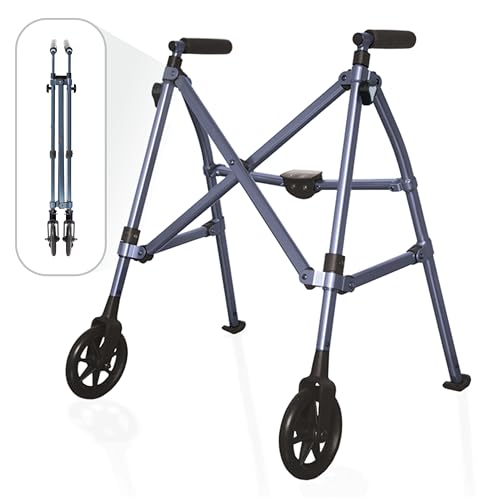
- Folds to a 5-by-7-inch footprint
- 28–33-inch adjustable padded handles
- Lightweight two-wheel design with rear ski glides
Best For: Petite adults needing a portable, space-saving walker
Best Upright Comfort
VOCIC Z22 GelSoft Upright Walker

- Padded GelSoft armrests and adjustable handles
- 8-inch all-terrain wheels with flexible steering
- Seat, brakes, and 300-pound capacity
Best For: Users needing arm-supported upright walking and outdoor mobility
Best Low-Height Budget Pick

- 25–32.5-inch height adjustment
- Lightweight 7-pound folding design
- 5-inch wheels and cross-braced frame
Best For: Short adults and youth needing basic low-height support
Best Outdoor Cushioning
Helavo Upright Walker with Seat

- 10-inch puncture-proof rubber front tires
- Padded armrests, seat, and backrest
- Cup holder, cane holder, and parking brake
Best For: Outdoor users wanting upright support and seated rest
Best for Easy Setup
Stander Wonder Walker Lite Short

- 32.5–39-inch adjustable handle range
- Only 6 pounds with compact folding
- 300-pound capacity and narrow frame
Best For: Petite adults needing a lightweight, portable standard walker
Best Forearm-Support Option

- Removable padded armrests
- Height-adjustable legs and handles
- Folds with a two-button mechanism
Best For: Users wanting forearm support and an upright posture
Best Seated Rollator
ELENKER Upright Walker with Seat
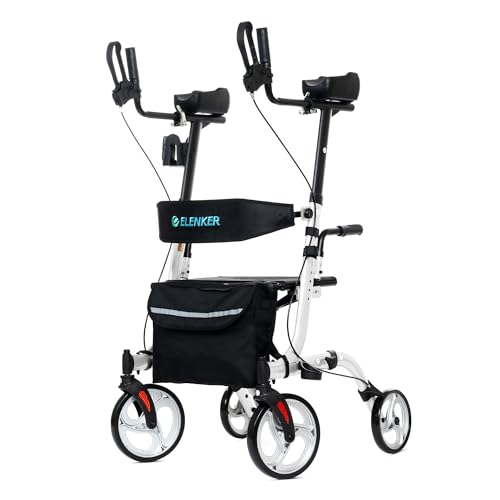
- 38–47-inch padded armrest height
- Built-in seat and backrest
- Large wheels, brakes, bag, and cane holder
Best For: Users wanting a rolling walker with a convenient rest seat
Best Narrow Heavy-Duty Pick
Adjustable Upright Walker with Removable Armrests

- 10 height settings from 42 to 51 inches
- Narrows to 18 inches for tight spaces
- 450-pound capacity with one-touch folding
Best For: Shorter adults needing a narrow, high-capacity walker
Best Seated Option
HOMLAND Upright Rollator with Adjustable Arms

- Arm support adjusts from 37 to 47 inches
- Padded seat and backrest for rest breaks
- 8-inch swivel wheels and folding design
Best For: Shorter adults wanting upright support with a seat
Best Lightweight 2-in-1
VEVOR Folding Walker with Removable Armrests

- Adjusts from 39.6 to 43.9 inches
- 10.1-pound frame supports up to 450 pounds
- Two armrest configurations and one-click folding
Best For: Petite users wanting a lightweight, lower-height walker
Best Compact Option – Stander Space Saver Walker Short
For shoppers comparing upright walkers for short adults, the Stander Space Saver Walker Short is a compact, lightweight choice with handles adjustable from 28 to 33 inches. Its two fixed front wheels and rear ski glides are designed for steady movement around the home, while the folding frame suits travel and storage.
Best For: Petite adults who prioritize portability, compact storage, and a low adjustable handle height.
Pros:
- Folds to a compact 5-by-7-inch footprint for travel or storage.
- Weighs about 7 to 8 pounds and arrives pre-assembled.
- Adjustable padded handles accommodate heights from 28 to 33 inches.
- Aluminum frame supports up to 300 pounds according to the product description.
Cons:
- Fixed front wheels are less maneuverable than swivel wheels.
- Rear ski glides may provide less rolling ease than four-wheel designs.
- It does not include a seat.
This is a practical pick when compact folding and a lower handle range matter more than seating or all-terrain maneuverability. Confirm the handle height and weight-capacity specifications before purchase.
Best Upright Comfort – VOCIC Z22 GelSoft Upright Walker
The VOCIC Z22 is an upright rollator with padded GelSoft armrests, a seat, and 8-inch all-terrain wheels. For people considering upright walkers for short adults, its adjustable handle range begins around 39.6 inches, so it is better suited to users who need a taller standing posture than a traditional low-height walker.
Best For: Adults seeking arm-supported upright walking, a built-in seat, and larger wheels for uneven terrain.
Pros:
- GelSoft armrests are designed to cushion and distribute elbow pressure.
- Handle height adjusts from approximately 39.6 to 47 inches.
- 8-inch wheels and textured tires are intended for gravel, potholes, and slippery surfaces.
- Includes a seat with adjustable height and a reinforced 300-pound-capacity frame.
Cons:
- At about 22.5 pounds, it is substantially heavier than compact walkers.
- The lowest listed handle height may be too tall for some short adults.
- Hand brakes require sufficient grip strength and upper-body mobility.
The Z22 offers more support and outdoor capability than a basic walker, but its minimum height should be checked carefully. It is a better match for shorter users who still need an upright rollator’s taller arm position.
Best Low-Height Budget Pick – Medline Junior Folding Walker
The Medline Junior/Lower Height Folding Walker is designed specifically for smaller adults and youth, making it a strong option among upright walkers for short adults who need a low adjustment range. Its legs adjust from 25 to 32.5 inches, and the lightweight steel frame folds for storage or travel.
Best For: Short adults or older children who want a lightweight, low-height walker for indoor and outdoor use.
Pros:
- Height adjusts from 25 to 32.5 inches for smaller users.
- Weighs about 7 pounds and folds flat with a two-button mechanism.
- Five-inch wheels support smoother movement across various surfaces.
- Side cross braces and a sturdy frame add stability.
Cons:
- The standard walker design does not include a seat or upright armrests.
- Its steel construction may feel less lightweight than an aluminum model.
- Supplied details list differing capacity figures, so buyers should verify the current specification.
With one of the lowest adjustment ranges in this group, the Medline is particularly practical for users who find conventional walkers too tall. Choose it for basic support and easy folding rather than seated rest or forearm-supported posture.
Best Outdoor Cushioning – Helavo Upright Walker with Seat
The Helavo Upright Walker combines padded armrests, height-adjustable ergonomic handles, a seat, and puncture-proof 10-inch rubber front tires. For buyers researching upright walkers for short adults, its fixed 46.9-inch overall height and tall-rollator design make careful fit checking especially important.
Best For: Users who need a supportive upright posture, large outdoor wheels, and a built-in seat for rest breaks.
Pros:
- Padded armrests are designed to reduce shoulder and back strain.
- 10-inch puncture-proof rubber front wheels provide cushioning across outdoor surfaces.
- Includes a cushioned seat, backrest, cup holder, and cane holder.
- Aluminum frame supports up to 300 pounds and includes a parking brake.
Cons:
- At 22.7 pounds, it is not a lightweight travel walker.
- The 26.4-inch width may be challenging in narrow indoor spaces.
- The listed 46.9-inch height may be too tall for some short adults.
The Helavo is compelling for outdoor comfort and rest stops, but it is not a low-profile model. Check the overall dimensions and armrest or handle fit before choosing it for a shorter user.
Best for Easy Setup – Stander Wonder Walker Lite Short
For shoppers comparing upright walkers for short adults, the Stander Wonder Walker Lite Short stands out for its petite-friendly height range, narrow frame, and exceptionally light weight. Its adjustable handles reach 32.5 to 39 inches, while the U-shaped design helps bring the walker closer to the body.
Best For: Petite adults and seniors who prioritize portability, compact storage, and basic walking support.
Pros:
- Adjustable handle height from 32.5 to 39 inches.
- Weighs just 6 pounds and folds to a compact 5-by-7-inch footprint.
- 23-inch-wide aluminum frame supports up to 300 pounds.
- Arrives ready to use without assembly.
Cons:
- Its standard walker design does not include a seat or wheels.
- The maximum handle height may not suit taller users.
With its short-user-oriented adjustment range and travel-friendly folding design, this is a practical choice when easy lifting and storage matter more than rollator-style features.
Best Forearm-Support Option – Medline Upright Walker
The Medline Upright Walker is worth considering among upright walkers for short adults who want forearm support and a more natural posture. Its arm handles adjust from 11.5 to 13.5 inches, while height-adjustable legs and 5-inch dual wheels help it move across surfaces.
Best For: Adults who prefer padded forearm rests and an upright walking position in a foldable aluminum frame.
Pros:
- Soft, removable armrests provide forearm support and can convert the unit into a traditional walker.
- Height-adjustable legs and length-adjustable handles allow fit customization.
- Folds with a simple two-button mechanism for storage or travel.
- Weighs 11 pounds and supports up to 300 pounds.
Cons:
- The listed overall height range is 46 to 53 inches, which may be too tall for some shorter adults.
- At 11 pounds, it is heavier than the Stander model.
This model offers useful posture-oriented features and removable armrests, but shoppers should carefully verify the fit because its listed height range is substantially taller than a petite-specific walker.
Best Seated Rollator – ELENKER Upright Walker with Seat
For those seeking upright walkers for short adults with a place to rest, the ELENKER Upright Walker combines forearm armrests, large wheels, and a built-in seat. The armrest height is listed at 38 to 47 inches, and the folding rollator includes brakes, a storage bag, and a cane holder.
Best For: Adults and seniors who want rolling mobility support with an occasional seat for resting.
Pros:
- Padded armrests help maintain a more upright position and reduce shoulder and back stress.
- Includes a breathable mesh seat, backrest, and locking rear brakes.
- 10-inch front and 8-inch rear wheels support maneuverability on smooth surfaces.
- Folds for storage and includes a detachable bag and cane holder.
Cons:
- At 24 pounds and 26 inches wide, it is less portable than lighter standard walkers.
- The listed armrest range begins at 38 inches, which may not fit every short adult.
- It is designed for smooth indoor and outdoor surfaces rather than uneven terrain.
The ELENKER is the feature-rich choice here, especially for users who value a seat and rolling convenience. Its larger footprint and higher weight make fit and transport important considerations.
Best Narrow Heavy-Duty Pick – Adjustable Upright Walker with Removable Armrests
For shoppers comparing upright walkers for short adults, this model stands out for its adjustable width and arm-supported design. It narrows to 18 inches, adjusts from 42 to 51 inches high, and folds with one touch for storage or travel.
Best For: Shorter adults who need a narrow, heavy-duty walker for tight indoor spaces.
Pros:
- Adjusts across 10 height positions from 42 to 51 inches.
- Width adjusts from 18 to 22 inches for narrow doorways.
- Supports up to 450 pounds and includes removable armrests.
- Folds quickly and assembles without tools.
Cons:
- Its 11-pound weight may be less convenient for some users to lift.
- It is a standard walker rather than a rollator with a seat.
This is a practical choice when fit, doorway clearance, and weight capacity matter most. Its minimum height of 42 inches may still be too tall for some very petite users, so measure carefully before ordering.
Best Seated Option – HOMLAND Upright Rollator with Adjustable Arms
Among upright walkers for short adults, this HOMLAND rollator offers a lower adjustment range plus a seat for planned rest breaks. Its arm support adjusts from 37 to 47 inches, while the seat adjusts from 20 to 23 inches and the frame folds for transport.
Best For: Adults from approximately 4 feet 9 inches upward who want upright support and an integrated seat.
Pros:
- Arm support adjusts from 37 to 47 inches for a lower fit.
- Includes a padded seat, backrest, and sit-to-stand handles.
- 8-inch puncture-proof swivel wheels support indoor and outdoor use.
- Folds for storage and includes a storage bag.
Cons:
- At 24.5 pounds, it is considerably heavier than the other listed walkers.
- Its maximum weight capacity is 300 pounds.
- The seat adds bulk compared with a basic walker.
This is the most comfort-oriented option in the group for users who benefit from sitting during outings. Check the arm and seat measurements, and remember that the supplied height range begins around 4 feet 9 inches.
Best Lightweight 2-in-1 – VEVOR Folding Walker with Removable Armrests
For upright walkers for short adults with a lower adjustment requirement, this VEVOR model ranges from 39.6 to 43.9 inches. Its removable armrests provide two configurations, and the lightweight aluminum frame folds with one click.
Best For: Shorter adults seeking a lightweight, high-capacity walker for indoor use and occasional outdoor mobility.
Pros:
- Height adjusts from 39.6 to 43.9 inches.
- Armrest length has four adjustment levels.
- Weighs 10.1 pounds while supporting up to 450 pounds.
- Includes solid 5-inch wheels and one-click folding.
Cons:
- Its two-wheeled design does not offer a built-in seat.
- The supplied notes do not specify a width adjustment range.
- It requires more user control than a seated rollator when stopping or resting.
The lower minimum height makes this a strong fit candidate for petite users, while its 10.1-pound weight is useful for transport. Choose it when you want arm support and a compact folding frame without a seat.
How We Picked the Best Upright Walkers for Short Adults
We focused on walkers designed for petite users or models offering a genuinely useful low height range. Our comparison considered handle and armrest adjustability, overall width, wheel size, folding convenience, frame stability, weight capacity, braking features, and whether a built-in seat adds practical value. We also separated compact junior-style walkers from larger upright rollators, since the right choice depends on both body size and required support.
Product descriptions and specifications should always be checked against your own measurements. A walker that is labeled “short,” “junior,” or “petite” may still be too tall for some users.
Quick Comparison
- Best for tight spaces: Compact folding two-wheel or narrow-frame designs are easier to maneuver through hallways and doorways.
- Best for resting: Upright rollators with padded seats are useful when walking involves frequent breaks.
- Best for forearm support: Armrest-style walkers can reduce the need to grip standard handles, but require careful height and elbow positioning.
- Best for travel: Lightweight folding models are easier to place in a vehicle or carry between rooms.
- Best for higher weight limits: Heavy-duty options may provide more capacity, though they are often wider and heavier.
Key Buying Factors for Upright Walkers for Short Adults
Fit and Height Adjustment
Measure from the floor to your wrist crease while standing comfortably in supportive shoes, then compare that measurement with the walker’s handle or armrest range. Your elbows should remain slightly bent rather than locked, and your shoulders should stay relaxed. Forearm platforms should support you without forcing your wrists or elbows into an awkward angle.
Width, Turning, and Wheel Design
Measure doorways, bathroom entrances, and the spaces where you normally turn. Smaller wheels and narrow frames improve indoor maneuverability, while larger solid or rubber tires generally handle thresholds and uneven surfaces more confidently. Check the listed width with wheels and armrests installed.
Brakes, Seat, and Storage
If you choose a rollator with a seat, confirm that the brakes lock securely before sitting. A seat is helpful for planned rests but adds weight and width. Look for easy-to-reach hand brakes, a stable frame, and storage that does not interfere with your stride or folding mechanism.
Portability and Capacity
Compare the folded dimensions and actual product weight, not just the word “lightweight.” Ensure the stated weight capacity exceeds the user’s weight and accounts for clothing or carried items. A heavier-duty frame may be worthwhile if stability is more important than easy lifting.
Who Should Buy Which Upright Walkers for Short Adults?
Choose a compact junior or petite-height walker if you mainly need indoor support and prioritize a narrow footprint. Select a folding travel model if the walker will regularly go in a car or be stored in a small home. A seated upright rollator suits users who need frequent rest stops, while an armrest or forearm walker is better for people who find standard handgrips uncomfortable or tiring. Heavy-duty narrow models are worth considering when capacity and reinforced construction matter most, provided the frame still fits your home. When in doubt, ask a physical therapist or clinician to check the height, posture, and walking pattern before relying on a new device.