The best adaptive utensils for one-handed use can make everyday meals easier when grip strength, tremors, arthritis, or limited hand movement affects standard silverware.
This roundup compares angled, weighted, offset, rocker-knife, and built-up-grip options so you can match the utensil design to the user’s abilities, eating habits, and comfort.
Best 10 Adaptive Utensils for One Handed Use Picks for 2026
Best Travel-Friendly Set
Lightweight Foam-Grip Adaptive Utensils

- Soft, lightweight non-slip foam handles
- Four-piece set with rocker knife
- Includes reusable canvas travel wrap
Best For: Portable everyday dining for weak grips or tremors
Best One-Handed Cutting Tool
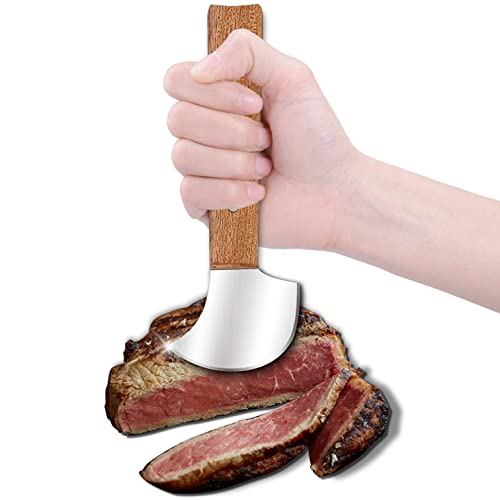
- Rocker action supports downward cutting
- Vertical wood handle helps reduce slippage
- Portable stainless steel knife with sheath
Best For: One-handed cutting of meals and food preparation
Best Weighted Set
Blue Adaptive Utensils for Tremors

- Weighted design supports steadier control
- Wide rubberized handles improve grip
- Includes four essential dining utensils
Best For: Users with tremors, arthritis, or limited dexterity
Best Compact Two-in-One

- Combines fork and spoon functions
- Offset shape supports limited wrist motion
- Lightweight, dishwasher-safe design
Best For: Right-handed users needing a simple one-utensil solution
Flexible Grip Set

- Four-piece set with fork, knife, tablespoon, and teaspoon
- Bendable fork and spoons for a personalized angle
- Wide grips support control and either-hand use
Best For: Users who need adjustable utensils and broad compatibility
Stability Support Set

- 42-degree angle helps limit wrist rotation
- 2.5-ounce weighting supports steadier handling
- Large silicone grips are designed for easy control
Best For: Right-handed users seeking weighted tremor support
Senior-Friendly Option

- Thicker handles help accommodate limited mobility
- Angled pieces support reduced dexterity
- Stainless steel set is dishwasher safe
Best For: Right-handed seniors needing simple wrist-friendly utensils
Complete Dining Kit
9-Piece Weighted Adaptive Utensils Set

- Complete set includes utensils, dishware, suction mats, and travel bag
- 45° angles and 2.5–2.9-ounce weighting support steadier eating
- Dishwasher-safe stainless steel and silicone construction
Best For: Right-handed users who want a full adaptive dining setup
Customizable Grip Aid
Foam Tubing for Utensils and Tools
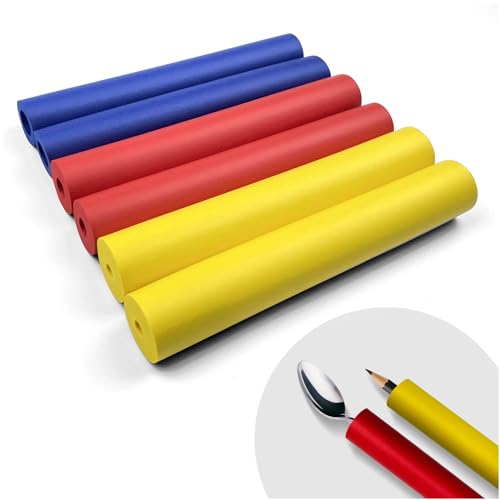
- Six foam tubes fit utensils, pens, toothbrushes, and more
- Three inner diameters accommodate different handle sizes
- Cut-to-length, water-resistant, non-slip design
Best For: Users who want to modify existing utensils and everyday tools
Essential Silverware Set
4-Piece Weighted Adaptive Utensils
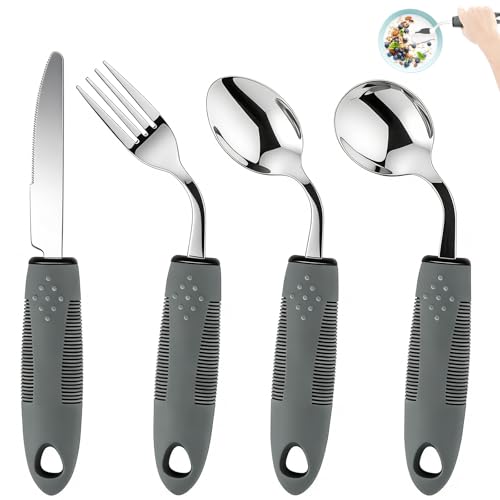
- 45° angles help minimize wrist movement
- Weighted design and textured handles support control
- Dishwasher-safe stainless steel with silicone grips
Best For: Right-handed users seeking core weighted adaptive silverware
Best Travel-Friendly Set – Lightweight Foam-Grip Adaptive Utensils
For shoppers comparing adaptive utensils for one handed use, the BUNMO set combines lightweight foam handles with a curved rocker knife that can help reduce hand strain during meals. It includes the basic pieces needed for dining at home or while traveling.
Best For: Older adults or users with weak grips, tremors, or hand fatigue who want a portable four-piece set.
Pros:
- Soft, lightweight, non-slip foam handles provide a comfortable grip.
- Includes a fork, tablespoon, teaspoon, and curved rocker knife.
- Reusable canvas wrap keeps the set organized for restaurants and travel.
- Rust-resistant stainless steel utensils are dishwasher safe.
Cons:
- The foam handles may be less suitable for users who prefer a heavier utensil.
- The set does not include additional specialized utensils.
This is a practical all-in-one choice when portability and reduced hand strain matter. The included rocker knife is especially useful for cutting without a conventional sawing motion.
Best One-Handed Cutting Tool – Vertical-Grip Rocker Knife
Among adaptive utensils for one handed use, this compact rocker knife focuses on cutting control. Its vertical wood handle and rocking action are designed to increase downward force while limiting hand slippage when cutting common foods.
Best For: One-handed diners and people with hand injuries, tremors, arthritis, or Parkinson’s who primarily need help cutting food.
Pros:
- Rocker design can cut foods such as bread, pizza, vegetables, meat, and steak.
- Vertical handle supports one-handed use and helps limit slippage.
- Stainless steel blade and solid wood handle provide a compact, portable design.
- Dishwasher safe and usable in dishes, bowls, or cans.
Cons:
- This is a single knife rather than a complete utensil set.
- The sharp blade requires careful handling and storage.
If cutting is the main mealtime obstacle, this focused tool may be more useful than replacing an entire place setting. Its included leather sheath also makes it easier to carry for dining out.
Best Weighted Set – Blue Adaptive Utensils for Tremors
This BUNMO set is a strong option for shoppers seeking adaptive utensils for one handed use with added weight and broad rubberized handles. The four-piece design is made to provide more control during everyday meals for users with tremors or limited hand mobility.
Best For: Adults with hand tremors, Parkinson’s, arthritis, or dexterity challenges who prefer a weighted, wide-grip utensil set.
Pros:
- Weighted utensils and large rubberized handles support steadier handling.
- Includes a fork, knife, tablespoon, and teaspoon.
- Curved knife can cut from above and horizontally.
- Durable stainless steel construction is rust resistant and dishwasher safe.
Cons:
- The weighted design may feel too substantial for users who need ultralight utensils.
- The set is presented in a blue adaptive style, which may not suit every preference.
This set prioritizes grip support and control over minimal weight. It is a sensible choice when standard flatware feels difficult to hold, especially during repeated daily use.
Best Compact Two-in-One – Right-Handed Offset Spork
For a simple approach to adaptive utensils for one handed use, this right-handed offset spork combines a fork and spoon in one lightweight utensil. Its easy-grip handle and offset shape are intended for people with limited wrist or hand range of motion.
Best For: Right-handed users who want one lightweight utensil for eating with reduced wrist movement.
Pros:
- Combines spoon and fork functions in one utensil.
- Offset design is suited to limited wrist or hand range of motion.
- 4.5-inch gray plastic handle provides a grip-easy surface.
- Stainless steel construction is dishwasher safe up to 180 degrees.
Cons:
- Designed specifically for right-handed use.
- It is a single spork rather than a complete place setting.
- The two-in-one format may be less suitable for users who need a separate knife.
This spork is a convenient minimalist option for meals where one utensil can cover most needs. Its offset right-handed design makes it particularly relevant when wrist mobility is restricted.
Flexible Grip Set – Bendable Adaptive Utensils
If you need adaptive utensils for one handed use, this four-piece set offers bendable pieces and wide grip handles designed to support users with arthritis, hand tremors, Parkinson’s, or reduced grip strength. The fork, tablespoon, and teaspoon can be adjusted to a preferred position, while the knife is shaped to work with either hand.
Best For: Users who want customizable utensil angles and a complete set for improving control and mealtime independence.
Pros:
- Includes a fork, tablespoon, teaspoon, and dinner knife.
- Bendable utensils allow users to set a more comfortable eating position.
- Wide grip handles and palm-aligned ribs support dexterity and control.
- Usable by both right- and left-handed diners; dishwasher safe up to 125 degrees.
Cons:
- The handle ribs on the fork and spoons are specifically aligned for right-handed use, while the knife fits both hands.
- The set does not specify added weight for tremor management.
This is a flexible choice when adjustability matters most. Its four-piece format and ambidextrous knife make it practical for varied mealtime needs, though users seeking weighted utensils may prefer another design.
Stability Support Set – Angled Weighted Utensils
For adaptive utensils for one handed use, this set combines a 42-degree angle, 2.5-ounce weighting, and large non-slip handles. The design is intended to reduce wrist rotation and provide steadier control for people with Parkinson’s, hand tremors, arthritis, or limited hand mobility.
Best For: Users who benefit from weighted, angled utensils and a textured silicone grip for daily meals.
Pros:
- Angled design may reduce wrist rotation and fatigue.
- 2.5-ounce weight is intended to improve stability for hand tremors.
- Large textured handles with non-slip silicone grips support easier holding.
- Stainless steel eating surfaces and silicone handles are dishwasher safe.
Cons:
- This listed version is right-handed.
- The added weight may not suit users who find heavier utensils tiring.
- The supplied notes describe a fork, knife, and soup spoon, while calling it a four-piece set; verify the exact package contents before ordering.
Among these options, this set is the most focused on stability through weighting and angled construction. It is worth considering for tremor-related control, provided the right-handed configuration and added weight match the user’s needs.
Senior-Friendly Option – Angled Bended Utensils
These bended adaptive utensils are a straightforward option for anyone comparing adaptive utensils for one handed use. Their thicker handles and angled stainless steel construction are designed to reduce wrist strain and help seniors with stiff hands, stiff wrists, or limited dexterity feed themselves more independently.
Best For: Right-handed seniors who want a simple, dishwasher-safe set with thicker handles and angled utensils.
Pros:
- Thicker handles accommodate limited mobility and may reduce wrist strain.
- Angled design supports users with reduced dexterity.
- Stainless steel construction is durable and easy to clean.
- Dishwasher safe and intended to promote independent self-feeding.
Cons:
- Suitable for right-handed use only.
- The three-piece set offers fewer pieces than some competing sets.
- The notes do not mention weighting or non-slip handle material.
This set keeps the design simple, focusing on thicker handles and an angled shape rather than weighting or extensive adjustability. It is a sensible fit for right-handed seniors who prioritize easy cleaning and basic wrist support.
Complete Dining Kit – 9-Piece Weighted Adaptive Utensils Set
For shoppers seeking adaptive utensils for one handed use, this 9-piece set combines weighted, 45°-angled silverware with dining accessories. The textured silicone handles, included plate, bowl, suction mats, and travel wrap make it a broad option for home meals, assisted living, or travel.
Best For: Right-handed users with tremors, arthritis, weak grip, or limited hand mobility who want a complete dining setup.
Pros:
- Includes spoons, fork, two knives, plate, bowl, suction mats, and storage bag.
- Approximately 2.5–2.9-ounce weighting and 45° spoon and fork angles may improve stability and reduce wrist movement.
- Stainless steel heads and food-grade silicone handles are dishwasher safe.
Cons:
- The set is specified for right-handed use.
- The broad collection may include more pieces than shoppers seeking utensils only.
This is the most comprehensive choice of the three, especially when spill-control and travel accessories matter alongside the utensils. Its weighted design is intended to support steadier eating, though users should consider whether the added weight suits their strength and comfort.
Customizable Grip Aid – Foam Tubing for Utensils and Tools
This foam grip tubing offers a flexible approach to adaptive utensils for one handed use by enlarging the handles of existing forks, spoons, and other tools. With three inner diameters and cut-to-length foam, it can be tailored to different grip needs rather than replacing an entire utensil set.
Best For: People with arthritis, tremors, weakness, or limited dexterity who need a built-up grip for utensils, pens, grooming tools, or toothbrushes.
Pros:
- Six 8-inch tubes provide multiple pieces for different everyday tools.
- Three inner diameters—0.27, 0.39, and 0.71 inches—offer sizing flexibility.
- Cuttable, water-resistant, non-slip foam is designed for easy cleaning and customization.
Cons:
- This is grip tubing, not a complete utensil set.
- Users must cut the tubing to the desired length.
- Grip fit depends on matching the tube’s inner diameter to the utensil or tool.
Choose this option when versatility and customization are more important than ready-to-use weighted silverware. It can adapt many household items, but it requires a little preparation and does not provide the angled or weighted features found in the dedicated utensil sets.
Essential Silverware Set – 4-Piece Weighted Adaptive Utensils
For a focused set of adaptive utensils for one handed use, this four-piece option provides core silverware without the extra dishware and accessories. Its 45°-angled spoon and fork, weighted construction, and oversized textured handles are designed to support control during meals.
Best For: Right-handed users with hand tremors, Parkinson’s, arthritis, weak grip, or stroke-recovery needs who want essential weighted silverware.
Pros:
- 45°-angled spoon and fork may reduce wrist strain and required movement.
- Approximately 2.5–2.9-ounce weighting is intended to steady hand movements.
- Oversized, textured silicone handles provide traction, and the stainless steel utensils are dishwasher safe.
Cons:
- The set is intended for right-handed use.
- It includes four utensils rather than a complete dining collection.
- Added weight may not suit every user’s strength or comfort needs.
This is a practical middle ground for shoppers who want dedicated weighted utensils without a larger accessory bundle. It covers everyday silverware essentials while keeping the design focused on grip, angle, and stability.
How We Picked the Best Adaptive Utensils for One Handed Use
We focused on practical features that can reduce the need for two-handed coordination: angled handles, built-up foam grips, balanced or weighted construction, offset sporks, and rocker-style knives. We also considered whether each option supports a specific use case, such as tremors, weak grasp, arthritis, limited wrist motion, or independent meal preparation.
Because comfort and control vary widely, the list includes both complete utensil sets and specialized aids. Product descriptions were compared for handle shape, utensil variety, approximate weight, handedness, portability, and cleaning convenience. Users with significant weakness, pain, or neurological symptoms should confirm suitability with an occupational therapist.
Quick Comparison
| Design | Best for | Main advantage | Potential limitation |
|---|---|---|---|
| Angled utensils | Limited wrist movement | Places the utensil at a more natural angle | May require adjustment to the bend |
| Weighted utensils | Tremors or unsteady hands | Can provide added stability | May be tiring for weak users |
| Built-up foam grips | Weak grasp or arthritis | Requires less finger squeezing | Foam can need careful cleaning |
| Offset sporks | One-handed eating | Combines scooping and piercing | Less specialized than separate utensils |
| Rocker knives | Cutting with one hand | Uses a rocking motion instead of sawing | Usually complements, rather than replaces, a full set |
Key Buying Factors for Adaptive Utensils for One-Handed Use
Handle Size and Grip Texture
A thick, non-slip handle is often easier to hold than a narrow metal shaft. Foam tubing can customize existing utensils, while molded or padded handles offer a more finished solution. Make sure the grip fits comfortably without forcing the fingers into a tight position.
Angle and Orientation
Angled or bent utensils can reduce wrist twisting and help direct food toward the mouth. Check whether a model is right- or left-handed, particularly with offset sporks and utensils designed around a specific wrist position.
Weight and Balance
Additional weight may dampen some tremors, but it is not automatically better. Someone with limited strength may find a lightweight set easier to lift repeatedly. Look for a comfortable balance between stability and fatigue.
Utensil Coverage and Care
A four-piece set commonly includes a fork, spoon, teaspoon, and knife, while some kits add duplicates or travel storage. Confirm dishwasher compatibility, drying requirements, and whether removable foam or tubing can be cleaned thoroughly.
Who Should Buy Which Adaptive Utensils for One Handed Use?
- For tremors: Consider a moderately weighted set with a broad, secure grip; test weight before committing to daily use.
- For arthritis or weak grasp: Choose lightweight utensils with built-up handles or add grip tubing to familiar silverware.
- For restricted wrist motion: Angled or bendable utensils may reduce the need to rotate the forearm.
- For one-handed cutting: Pair a complete adaptive set with a rocker knife for foods that require cutting.
- For travel or caregivers: A set with a case or wrap can keep utensils together and easier to transport.
When possible, trial the utensil while seated at the user’s normal dining surface. The best choice should feel secure, support a natural wrist position, and remain comfortable through an entire meal.