The best golf launch monitors with club data do more than estimate distance. They show how club speed, attack angle, face delivery, and impact efficiency shape every shot, giving golfers clearer feedback for practice and equipment decisions.
This roundup compares 10 options for different budgets and use cases, from compact Doppler radar units to premium simulator systems with highly detailed club and ball measurements.
Best 10 Golf Launch Monitors with Club Data Picks for 2026
Best All-Around Value

- 21+ ball and club metrics through the app
- Indoor, outdoor, E6, and GSPro compatibility
- No subscription required for standalone use
Best For: Portable practice and flexible home simulation
Best for Speed Training

- Tracks club speed, ball speed, and smash factor
- Dedicated mode for clubs and speed sticks
- Free app with lifetime history and no subscription
Best For: Speed practice and essential shot analysis
Best Premium Simulator

- Three-camera tracking for club and ball metrics
- 10-inch touchscreen with impact video
- Virtual play available with Garmin membership
Best For: Integrated indoor training and simulation
Best for Indoor Accuracy
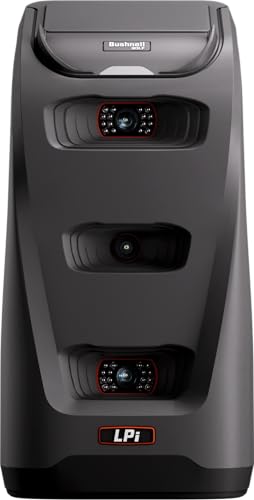
- Three-camera infrared impact measurement
- Detailed ball and club data
- Indoor simulation with Foresight+ connectivity
Best For: Indoor golfers prioritizing camera-based accuracy
Best Near-Zero-Latency Pick
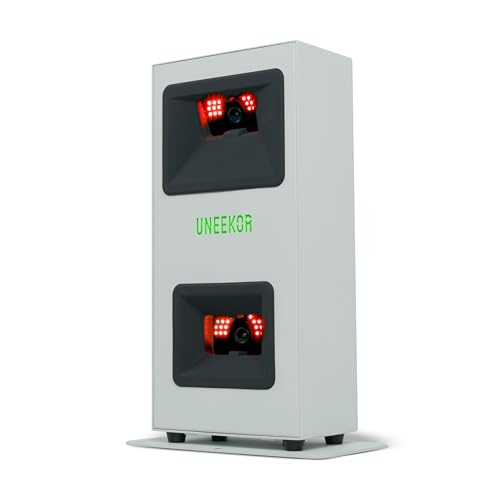
- Near-zero-latency tracking with no ball stickers
- 15 ball data points and session reports
- Supports GSPro, E6 Connect, TGC19, and more
Best For: Dedicated home simulator setups needing responsive tracking
Best Portable Option
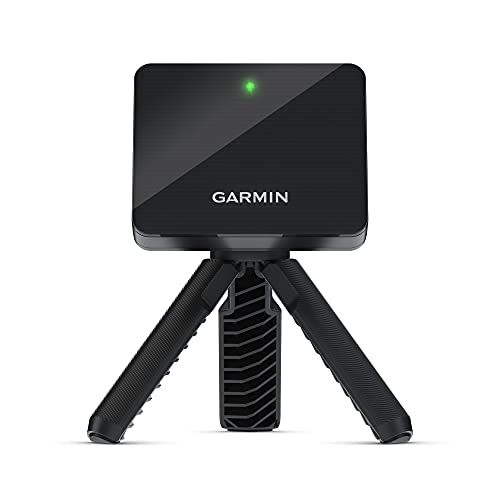
- Tracks club and ball metrics through the Garmin Golf app
- Up to 10 hours of battery life
- Works at home, indoors, or on the driving range
Best For: Mobile practice and range sessions
Best Swing-Analysis Bundle

- Captures 15 club and ball metrics
- Combines Doppler radar with dual cameras
- Includes three Titleist Pro V1 golf balls
Best For: Mobile swing training with video and simulator features
Best Budget Speed Trainer

- Measures club speed with or without a ball
- Tracks speed, smash factor, and distance estimates
- Stores 500 swings with no app or subscription
Best For: Portable swing-speed training and simple club-data feedback
Best Full-Data Simulator Bundle
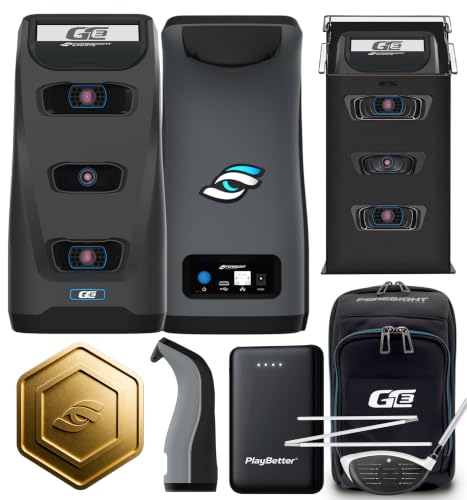
- Three-camera capture for ball and club data
- Measures path, attack angle, spin, and launch metrics
- Includes simulation access and protective accessories
Best For: Detailed indoor/outdoor practice and golf simulation
Best Voice-Feedback Trainer

- Real-time LCD and voice shot feedback
- Swing-speed mode works without a ball
- Stores club statistics and average distances
Best For: Simple, audible practice feedback indoors or outdoors
Best All-Around Value – Blue Tees Rainmaker
The Blue Tees Rainmaker is a versatile choice for golfers shopping for golf launch monitors with club data. Its Doppler radar provides immediate feedback indoors, outdoors, or at the range, while the app expands access to 21+ ball and club metrics.
Best For: Golfers who want portable practice, club-distance tracking, and optional simulator compatibility without requiring a subscription for standalone use.
Pros:
- Tracks 9 metrics on the built-in display and 21+ through the app.
- Supports club-distance tracking, shot dispersion, and advanced analytics.
- Works with E6 Connect and GSPro for simulator play.
- Offers IPX4 water resistance, adjustable radar alignment, and 6+ hours of battery life.
Cons:
- Expanded metrics and analytics require using the Blue Tees app.
- Spin accuracy is enhanced with compatible RCT golf balls.
The Rainmaker balances portability, useful club data, and simulator features. It is a strong fit for buyers who want one launch monitor that can move between practice sessions and home golf.
Best for Speed Training – Shot Scope LM1
The Shot Scope LM1 focuses on the core measurements many golfers need from golf launch monitors with club data: club speed, ball speed, smash factor, carry distance, and total distance. Its dedicated speed-training mode also makes it useful beyond ordinary range sessions.
Best For: Golfers who prioritize club-speed practice, straightforward shot feedback, and app-based session history without recurring fees.
Pros:
- Measures club speed, ball speed, smash factor, carry distance, and total distance.
- Includes a dedicated speed-training mode for clubs and speed sticks.
- Offers on-course, practice-range, and speed-training session types.
- Provides lifetime session history in a free app with no subscription required.
Cons:
- Its listed data set is more focused than the feature set of premium simulator monitors.
- Battery life is rated at 5+ hours.
The LM1 is a practical, focused option for golfers who want essential club and ball speed information rather than an elaborate simulator setup. Its free app and speed mode add useful value for regular practice.
Best Premium Simulator – Garmin Approach R50
The Garmin Approach R50 is a premium option for golfers seeking golf launch monitors with club data and a built-in simulator experience. Its three-camera system tracks club and ball measurements, while the 10-inch touchscreen displays training tools, impact video, and shot dispersion information.
Best For: Golfers who want an integrated touchscreen simulator with detailed club tracking, visual feedback, and optional virtual-course play.
Pros:
- Uses a three-camera system to measure ball speed, launch angle, face to path, spin, and axis.
- Tracks statistics for each club and displays shot-dispersion charts.
- Provides high-speed impact videos for immediate feedback.
- Supports HDMI output and virtual rounds on more than 43,000 courses with an active Garmin Golf membership.
Cons:
- Virtual rounds and Home Tee Hero require an active subscription.
- Battery life is up to 4 hours.
- Its 9-pound weight is less portable than compact range-focused monitors.
The R50 stands out when a large built-in display and broad training features matter more than minimal size. It is especially compelling for golfers building a dedicated indoor practice or simulator environment.
Best for Indoor Accuracy – Bushnell Launch Pro i
The Bushnell Launch Pro i is designed specifically for indoor use and uses a three-camera infrared imaging system to measure performance at impact. For shoppers comparing golf launch monitors with club data, it provides club head speed, smash factor, carry distance, launch angle, total spin, and other detailed measurements.
Best For: Indoor golfers who want camera-based launch and club data with a path to Foresight+ simulator software.
Pros:
- Uses camera-based measurement intended to deliver Tour-level accuracy.
- Provides complete ball and club data, including club head speed and smash factor.
- Designed for indoor golf simulation and personal launch-monitor use.
- Includes a 30-day Foresight+ trial and essential setup accessories.
Cons:
- Ball and club data require an active software subscription.
- Its design is specifically oriented toward indoor simulator use.
- Foresight+ membership is needed for the connected simulation experience.
The Launch Pro i is best suited to buyers who value camera-based impact measurement and plan to practice indoors. Factor ongoing software costs into the purchase if detailed data and simulation are priorities.
Best Near-Zero-Latency Pick – EYE MINI CORE
The EYE MINI CORE is a strong option for golfers seeking golf launch monitors with club data, especially if simulator play and fast visual feedback matter. Its VIEW software analyzes 15 ball data points, while Club Optix can add real-time club visuals through a software upgrade.
Best For: Home simulator users who want detailed ball analysis, low-latency tracking, and compatibility with popular third-party golf software.
Pros:
- Uses high-speed cameras and infrared sensors for near-zero-latency tracking.
- Reads any dimple pattern without requiring ball stickers.
- Includes VIEW software, session reports, and a three-month Ultimate Package trial.
- Works with GSPro, E6 Connect, TGC19, and Creative Golf 3D.
Cons:
- Club Optix requires a software upgrade.
- Simulation requires a relatively powerful PC, including an RTX 4070-class GPU specification.
- Some software and third-party platforms require subscriptions.
Choose the EYE MINI CORE if you are building a dedicated simulator and value responsive tracking plus expandable club feedback. It is less compelling for golfers seeking a simple, low-setup range device.
Best Portable Option – Garmin Approach R10
The Garmin Approach R10 is a portable choice for golfers comparing golf launch monitors with club data. Paired with a smartphone and the Garmin Golf app, it tracks club head speed, ball speed, swing tempo, spin, launch angle, and other metrics indoors, at home, or on the driving range.
Best For: Golfers who want a compact, battery-powered monitor for practice sessions at home or on the range.
Pros:
- Tracks club head speed, ball speed, swing tempo, ball spin, launch angle, and more.
- Training mode provides club-by-club statistics and a shot dispersion chart.
- Offers up to 10 hours of battery life.
- Includes a phone mount, tripod stand, carry case, and microUSB cable.
Cons:
- Requires a compatible smartphone and Garmin Golf app to view and analyze metrics.
- Virtual rounds and global tournament features require an active subscription.
- Listed accuracy is approximately plus or minus 3 mph for club head speed and plus or minus 1 mph for ball speed.
The Approach R10 makes sense when portability and practice feedback matter more than a built-in screen or a dedicated simulator installation. Its app-based design keeps the device convenient for moving between locations.
Best Swing-Analysis Bundle – Rapsodo MLM2PRO
The Rapsodo MLM2PRO combines Doppler radar with dual cameras to capture club and ball information, making it a practical pick among golf launch monitors with club data. It records 15 metrics, including club speed, club path, spin rate, spin axis, carry distance, and launch angle.
Best For: Golfers who want club-and-ball metrics, swing video, and simulator features in a mobile training setup.
Pros:
- Dual radar-and-camera tracking is designed to provide shot data across indoor and outdoor practice.
- Captures 15 metrics, including club speed, club path, spin, carry, and launch angle.
- Records swings from different angles and shows club-ball contact in slow motion.
- Includes three Titleist Pro V1 golf balls, a tripod, and carrying case.
Cons:
- Premium simulator courses and additional features depend on the included trial and membership access.
- Third-party app integration is listed among the premium trial features rather than as an unconditional feature.
- Battery life is not specified in the supplied product details.
The MLM2PRO is a well-rounded fit for players who want more than basic distance numbers. Its combination of club metrics, camera-based swing review, and optional simulator content supports both structured practice and entertainment.
Best Budget Speed Trainer – PRGR HS 130-A
If you want golf launch monitors with club data at a relatively accessible price, the PRGR HS 130-A focuses on the essentials: club head speed, ball speed, smash factor, and estimated carry and total distance. Its Doppler radar works with or without a ball, making it especially practical for speed training without an app, calibration, or subscription.
Best For: Golfers who want portable club-speed feedback and simple swing-speed training at the range, in a garage, or at the gym.
Pros:
- Measures club head speed without requiring a ball.
- Tracks club speed, ball speed, smash factor, carry, and total distance.
- Stores up to 500 past swings and runs on AAA batteries.
- Compact, water-resistant design with no app, Wi-Fi, or Bluetooth required.
Cons:
- Does not provide the broader ball and club metrics offered by more advanced camera-based monitors.
- Distance measurement is listed for a 135–270-yard range.
The PRGR HS 130-A is a straightforward choice when club speed is the priority. It delivers useful training feedback with minimal setup, though golfers seeking detailed launch, spin, path, or angle-of-attack data will need a more feature-rich monitor.
Best Full-Data Simulator Bundle – Foresight Sports GC3
For golfers comparing golf launch monitors with club data, the Foresight Sports GC3 provides a much broader picture of each swing. Its three-camera system measures ball and club information, while indoor/outdoor operation and included simulation access make this bundle suited to serious practice and home simulator setups.
Best For: Golfers who want detailed ball-and-club measurements, simulation capability, and a portable monitor for indoor and outdoor use.
Pros:
- Uses three high-speed cameras to capture ball and club data.
- Measures launch angle, ball speed, spin, spin axis, carry, club head speed, smash factor, club path, and angle of attack.
- Works indoors and outdoors without recalibration between environments.
- Includes 30 days of Foresight+ Gold Membership with Course Pass Pro plus a case, sling bag, charger, and accessories.
Cons:
- Its extensive features and simulator focus make it a more involved investment than basic radar monitors.
- The included Foresight+ access is limited to 30 days.
The GC3 is the strongest option here for cause-and-effect swing analysis and simulator use. It offers the most complete data set in this lineup, but its advanced capabilities are best justified by golfers who will use detailed practice or simulation features regularly.
Best Voice-Feedback Trainer – Voice Caddie SC200Plus
The Voice Caddie SC200Plus is a user-friendly pick among golf launch monitors with club data, combining Doppler radar with an LCD display and voice output. It provides real-time shot feedback, stores club statistics, and includes a swing-speed mode for practicing without a ball.
Best For: Golfers who want quick, audible feedback, club-distance tracking, and simple indoor or outdoor practice.
Pros:
- Offers real-time shot data on an LCD display with voice output.
- Swing-speed mode supports practice without a ball.
- Stores shot data and club statistics for reviewing average distances.
- Adjustable loft angles help simulate different club conditions.
Cons:
- The supplied notes do not specify the full range of club and ball metrics it measures.
- Its listed model year is 2019, so it may lack newer monitor features.
The SC200Plus emphasizes convenience rather than exhaustive swing diagnostics. Its voice feedback and stored club statistics make it easy to use during practice, while golfers wanting detailed path, spin-axis, or attack-angle information may prefer a higher-end system.
How We Picked the Best Golf Launch Monitors with Club Data
We focused on launch monitors that provide meaningful club information alongside ball-flight data. The selected models vary in measurement depth, portability, simulator compatibility, price, and indoor or outdoor performance, so the list covers more than one type of golfer.
We also considered setup requirements, data presentation, practice features, battery life, software support, and compatibility with platforms such as E6, GSPro, and TGC 2019. A monitor that produces many numbers is not automatically the best choice; the right model should deliver useful data consistently in the environment where you plan to use it.
Quick Comparison
- Best for premium simulator detail: Foresight Sports GC3 and Bushnell Launch Pro.
- Best for an integrated simulator experience: Garmin Approach R50.
- Best for portable versatility: Garmin Approach R10 and Rapsodo MLM2PRO.
- Best for compact speed and distance feedback: PRGR HS 130-A and Voice Caddie.
- Best for value-focused club and ball metrics: Blue Tees Rainmaker, Shot Scope LM1, and EYE MINI CORE.
Key Buying Factors for Golf Launch Monitors with Club Data
Club Metrics and Measurement Accuracy
Check which club metrics are actually included. Club speed, smash factor, attack angle, club path, face angle, and face-to-path can be especially useful for diagnosing swing direction and impact quality. Some monitors estimate certain measurements, while others use cameras or advanced radar systems to capture more detailed data.
Indoor Space and Setup
Indoor use requires enough ball flight or hitting-room depth, plus a suitable net, screen, or impact area. Camera-based units may need precise placement and lighting, while radar monitors often need specific distances from the ball. Confirm these requirements before buying.
Software, Courses, and Subscriptions
If you want virtual golf, compare included software with ongoing subscription costs. GSPro, E6, and TGC 2019 support can significantly affect the long-term value, and some features may require a compatible computer, tablet, or phone.
Portability and Everyday Usability
For range sessions, prioritize battery life, quick setup, readable displays, and reliable outdoor tracking. For a permanent simulator, connectivity, mounting, calibration, and data export may matter more than compact size.
Who Should Buy Which Golf Launch Monitors with Club Data?
Choose a premium camera-based system if you want detailed club delivery data, dependable indoor performance, and a long-term simulator centerpiece. Choose a portable midrange monitor if you practice both at home and on the range and want a balance of metrics, portability, and software access.
Choose a compact entry-level monitor if your main goals are club speed, ball speed, carry distance, and swing feedback rather than full simulator play. Golfers who want the broadest data set should compare the exact metrics, required subscriptions, and indoor limitations of each finalist before ordering.