A good balance trainer for rehab can make recovery safer, more effective, and easier to stick with. Whether you’re rebuilding ankle stability, improving proprioception, or easing back into exercise, the right tool should match your current ability and goals.
Below, we compare 10 of the best options for home physical therapy, stability work, and progressive balance training so you can choose with confidence.
Best 10 Balance Trainer for Rehab Picks for 2026
Best for Multi-Plane Rehab
OPTP Dynamic Duo Balance Trainers

- Pair format supports single-side or tandem training
- Multi-plane design helps build ankle and foot control
- Slip-resistant bases improve everyday training safety
Best For: People recovering from ankle or foot issues who want progressive balance and stability training.
Best Portable Pick
ProsourceFit 14" Balance Disc Trainer

- Portable 14-inch inflatable disc
- Textured surface for grip and comfort
- Works for rehab drills or seat support
Best For: People who want a compact balance trainer for rehab, posture, and light core work.
Best for Progressive Rehab Training
Balance Board Set for Foot & Ankle Strength
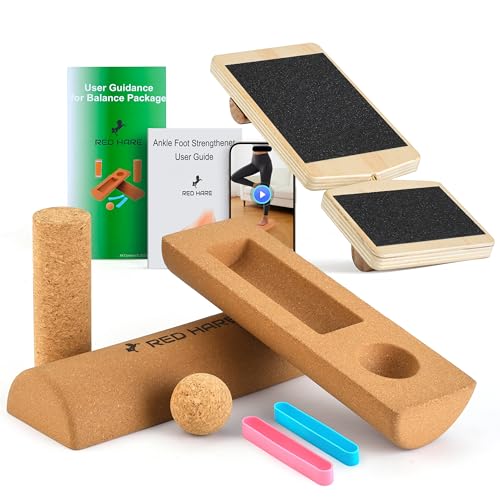
- Cork board plus ankle board support rehab and progression
- Barefoot-friendly surface is comfortable and non-slip
- Round and pointed bars add easy-to-hard training levels
Best For: People who want one compact balance trainer for rehab, fall prevention, or ankle conditioning at home.
Best for Intermediate Rehab
THERABAND Stability Trainer Pad

- Intermediate foam gives a balanced rehab challenge
- Lightweight pad works at home, clinic, or on the go
- Textured non-slip surface adds confidence during drills
Best For: Adults, seniors, and rehab users who want a mid-level foam balance pad for stability training.
Best for Rehab Progression
Ankle Balance Board for Rehab & Injury Recovery

- Textured, non-slip design helps support safer training
- Good for ankle rehab, warmups, and balance work
- Includes a free progressive workout guide
Best For: Athletes and rehab users who want a sturdy balance trainer for rehab with guided progression.
Best for Heavy-Duty Rehab
Professional Wooden 360° Rotating Balance Board

- 500 lb capacity with solid wood construction
- 360° rotating base for stability and coordination work
- Anti-slip top and no-assembly setup
Best For: People who want a durable rehab-focused balance board for home or gym use.
Best for Cushioning
Stability Trainer Pad for Therapy & Fitness
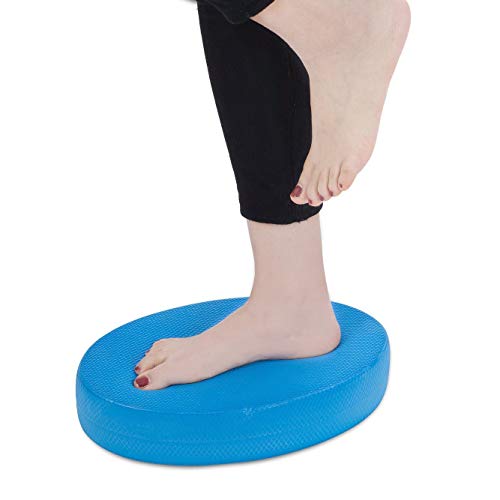
- Soft foam surface supports balance and rehab drills
- Non-slip and water-resistant for easy maintenance
- Compact and portable for home or studio use
Best For: Rehab users and beginners who want a cushioned foam balance pad for low-impact stability training.
Best for Guided Ankle Rehab
Adjustable Ankle Balance Board

- Designed for ankle sprains, plantar fasciitis, and Achilles rehab
- Includes exercise cards plus QR video demos for guided training
- Portable setup works well at home, work, or while traveling
Best For: People recovering from ankle or foot injuries who want guided balance training.
Best for Guided Rehab Workouts
Bosu Balance Ball Exercise Trainer

- Helps train balance, coordination, and core stability.
- Includes guided workouts plus a pump for setup.
- Supports rehab-style training and full-body exercise.
Best For: Home rehab users who want a guided, versatile balance trainer.
Best for Rehab Balance Drills
ProsourceFit Exercise Balance Pad
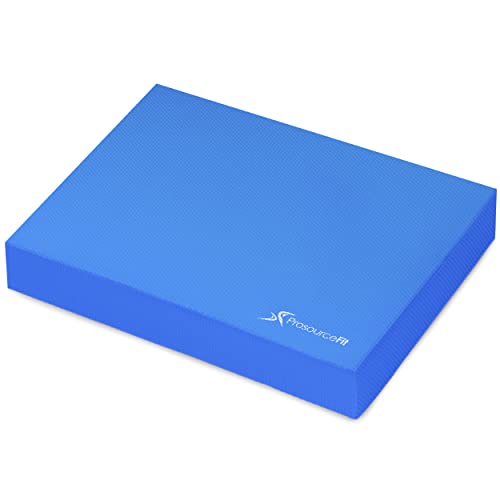
- Unstable foam surface supports balance and core rehab work
- Non-slip, sweat-resistant TPE material is easy to clean
- Lightweight, versatile pad for therapy, yoga, and kneeling
Best For: Rehab users, beginners, and older adults who want a simple stability pad for balance training.
Best for Multi-Plane Rehab – OPTP Dynamic Duo Balance Trainers
If you want a balance trainer for rehab that goes beyond a basic wobble board, the OPTP Dynamic Duo gives you a more dynamic way to work on ankle control, foot strength, and coordination. The pair can be used separately or together, making it easy to scale exercises from gentle recovery work to more challenging stability drills.
Best For: Physical therapy patients, athletes, and home users who need multi-plane balance and ankle-strengthening exercises during rehab.
Pros:
- Pair design lets you train one side at a time or use both together.
- Supports multi-plane movement for balance, mobility, and coordination work.
- Slip-resistant bases add confidence on common indoor surfaces.
- Useful for rehab, conditioning, and core stability routines.
Cons:
- Less familiar than a standard foam pad or wobble board.
- May feel advanced for users who need only very gentle stability work.
Overall, this is a smart pick if you want a balance trainer for rehab that can progress with your recovery and support more varied lower-body and core exercises. Its dual-trainer format and stable base make it a practical option for structured home rehab or clinic-style training.
Best Portable Pick – ProsourceFit 14" Balance Disc Trainer
If you want a simple, low-cost balance trainer for rehab, this ProsourceFit balance disc is a practical place to start. Its wobble-friendly surface helps challenge core engagement and stability work, while the included pump makes it easy to adjust firmness for different exercises or seated support.
Best For: Rehab routines, posture training, and light balance work at home or in a therapy setting.
Pros:
- Compact and easy to move between rooms, bags, or workout spaces
- Dual-textured surface adds grip and versatility for exercise or sitting
- Inflatable design lets you fine-tune firmness for comfort and difficulty
Cons:
- Less stable than a fixed balance board, so it may not suit advanced users
- 14-inch size can feel small for some standing drills
As a balance trainer for rehab, this disc works well for gentle stability training and seated posture support, especially if you want something portable and easy to set up. It is a straightforward option rather than a heavy-duty rehab tool, but that simplicity is part of the appeal.
Best for Progressive Rehab Training – Balance Board Set for Foot & Ankle Strength
This balance trainer for rehab pairs a cork balance board with an ankle balance board, giving you a practical way to work on foot strength, ankle stability, and coordination from basic recovery through more advanced drills. The natural cork surface adds comfort for barefoot use, while the interchangeable bars let you scale the difficulty as you improve.
Best For: People who want one compact balance trainer for rehab, fall prevention, or athletic foot-and-ankle conditioning at home.
Pros:
- Two-board system covers both rehab-focused stability work and progression training
- Cork surface feels comfortable, grippy, and barefoot-friendly
- Round and pointed bars make it easier to match beginner or advanced difficulty
- Compact design is easy to store and use in home workouts or PT routines
Cons:
- Not a full-body balance tool; it’s mainly for feet, ankles, and lower legs
- May be too challenging for users who need very gentle early-stage rehab
- Size may feel limiting for users with larger adult feet near the upper range
As a balance trainer for rehab, this set stands out because it combines comfort, adjustability, and progression in one package. It’s a smart pick if you want a single solution that can support recovery work now and still stay useful as your stability improves.
Best for Intermediate Rehab – THERABAND Stability Trainer Pad
If you want a balance trainer for rehab that adds challenge without feeling unstable, this THERABAND foam pad is a strong middle-ground option. The intermediate firmness gives you more movement than a firm surface while still offering enough support for physical therapy, core work, and gentle balance drills at home or in a clinic.
Best For: People who need an intermediate-level balance pad for rehab, stability work, and low-impact exercise.
Pros:
- Intermediate blue foam offers a manageable challenge for balance and control work
- Compact, lightweight, and easy to use for standing, kneeling, or seated exercises
- Non-slip textured surface and included exercise guide make it practical for home or clinic use
- Water-resistant and supports up to 300 lbs for everyday rehab routines
Cons:
- May feel too soft for users who want a very firm rehab surface
- Not a true wobble board, so advanced instability training is limited
- Single-pad design is best for basic balance drills rather than full training systems
For a balance trainer for rehab, this pad stands out because it balances comfort, portability, and challenge better than improvised surfaces. It’s a sensible pick if you want a simple foam platform that supports steady progression without adding bulk.
Best for Rehab Progression – Ankle Balance Board for Rehab & Injury Recovery
If you want a balance trainer for rehab that’s simple to use but still progression-friendly, this ankle balance board is a practical pick. It’s designed to help rebuild ankle stability, improve coordination, and support recovery after sprains while still working for pre-workout warmups and general mobility work.
Best For: Athletes, rehab patients, and home users who want a sturdy balance trainer for rehab with a guided progression plan.
Pros:
- Textured top and non-slip base help keep workouts stable and safer.
- Supports rehab, warmups, and balance training for sports like basketball and running.
- Heavy-duty ABS construction is rated for 350+ lbs.
- Includes a free workout guide with beginner-to-advanced plans.
Cons:
- Basic black design and no extra accessories beyond the guide.
- May feel too simple for users wanting advanced wobble-board features.
For shoppers comparing a balance trainer for rehab, this model stands out for its straightforward design, safety-focused surface, and built-in progression guide. It’s a smart choice if you want dependable ankle work without paying for a more complex setup.
Best for Heavy-Duty Rehab – Professional Wooden 360° Rotating Balance Board
If you want a balance trainer for rehab that also doubles as a core and stability tool, this wooden 360° rotating board is built for versatile home use. Its sturdy construction, anti-slip surface, and 500 lb capacity make it a practical choice for controlled rehab drills, standing balance work, and light strength training.
Best For: Users who want a durable, high-capacity rehab board for ankle, knee, and general balance training at home or in the gym.
Pros:
- Solid wood build with a 500 lb weight capacity
- Anti-slip surface adds grip and confidence during rehab exercises
- 360° rotating base supports balance, coordination, and core work
- No assembly required, so it’s ready to use right out of the box
Cons:
- Rotation-based design may feel less stable for absolute beginners
- Wood construction is durable, but not as cushioned as foam rehab tools
This is a strong pick if you want a more rugged balance trainer for rehab rather than a lightweight wobble pad. It’s especially appealing for buyers who need a sturdy platform for progressive stability training and controlled movement practice.
Best for Cushioning – Stability Trainer Pad for Therapy & Fitness
If you want a simple balance trainer for rehab, this foam pad is a practical pick for adding instability without bulky equipment. Its thick, soft surface can help support ankle work, knee-friendly drills, and controlled balance practice for therapy, yoga, Pilates, or dance training.
Best For: Rehab users, beginners, and home exercisers who want a lightweight foam balance pad for stability drills and low-impact training.
Pros:
- Soft, thick foam adds a forgiving surface for balance and rehab exercises
- Non-slip, water-resistant design is easy to clean after workouts
- Compact 12.2″ x 8.3″ size makes it easy to carry and store
- Versatile for therapy, yoga, Pilates, fitness, and dance work
Cons:
- Smaller size may feel limited for taller users or two-foot drills
- Foam construction is best for light to moderate training, not advanced instability
Overall, this is a straightforward balance trainer for rehab if you want a portable foam pad that softens floor work while still challenging stability. It’s a good fit for gentle progressions, but buyers looking for heavier-duty balance equipment may want a larger platform.
Best for Guided Ankle Rehab – Adjustable Ankle Balance Board
If you want a practical balance trainer for rehab, this adjustable single-leg board is built for ankle sprains, plantar fasciitis, Achilles tendonitis, and general stability work. It combines wobble-based training with a visual exercise card set and QR-linked video demos, which makes it easier to follow a safe routine at home.
Best For: People recovering from ankle or foot injuries who want guided, at-home balance and mobility training.
Pros:
- Targeted rehab design for ankle recovery, mobility, and re-injury prevention
- Includes 7 exercise cards and QR video demos for clearer form guidance
- Portable enough for home, office, or travel use
- Useful for both recovery and ongoing balance/stability training
Cons:
- Single-leg wobble training may feel challenging for true beginners
- Best suited to lower-body rehab, not full-body fitness
- Needs consistent use to see meaningful improvement
This is a strong balance trainer for rehab if you want something more structured than a basic wobble board. The added exercise guidance makes it easier to train confidently and stick with a recovery plan.
Best for Guided Rehab Workouts – Bosu Balance Ball Exercise Trainer
If you want a balance trainer for rehab that also supports general fitness, this BOSU-style platform is a practical pick. The unstable surface helps train core control, coordination, and lower-body stability, while the included workout guidance makes it easier to use for therapy-style routines at home.
Best For: Home users, beginners in rehab, and anyone who wants a versatile balance tool for strengthening stability, posture, and core engagement.
Pros:
- Unstable platform helps improve balance, proprioception, and coordination.
- Useful for rehab, physical therapy, core training, and full-body conditioning.
- Includes a pump and guided workouts for easier setup and use.
- Supports up to 350 lbs with a non-slip, durable design.
Cons:
- Not the most specialized option if you only need clinical rehab equipment.
- Inflatable design may require occasional adjustment or re-inflation.
- Learning curve can be challenging for very deconditioned users.
This is a strong balance trainer for rehab when you want one piece of equipment that bridges therapy work and everyday fitness. It is especially appealing if you value guided exercises and a stable-feeling, durable platform that can progress with your strength and coordination.
Best for Rehab Balance Drills – ProsourceFit Exercise Balance Pad
If you want a simple balance trainer for rehab, this cushioned foam pad gives you an unstable surface for ankle, foot, and core work without taking up much space. It is a practical pick for physical therapy exercises, beginner stability training, and low-impact strength drills.
Best For: Rehab users, older adults, and beginners who want an affordable stability pad for balance work and gentle physical therapy.
Pros:
- Creates a challenging unstable surface for balance, stability, and core exercises
- Non-slip TPE foam is sweat-resistant, easy to clean, and lightweight to carry
- Versatile enough for rehab drills, yoga, kneeling, or standing desk support
Cons:
- Too small for users who want a full-length balance platform
- Foam softness may feel too easy for advanced athletes
- Not a medical device, so it is best used as part of a broader rehab plan
This balance trainer for rehab works well when you need a portable, no-fuss pad to rebuild confidence on your feet and add controlled instability to everyday exercise. It is especially useful for home routines that focus on gradual progress rather than intense training.
How We Picked the Best Balance Trainer for Rehab
We focused on designs commonly used for rehabilitation and stability work, with an emphasis on gradual progression, anti-slip support, and versatility. For a Balance Trainer for Rehab, the most useful options are those that can help you start conservatively and increase challenge without forcing advanced movements too early.
We also considered comfort, surface texture, size, durability, and whether each product suits common rehab goals such as ankle sprains, foot strengthening, core stability, and return-to-sport conditioning.
Quick Comparison
Foam pads are usually best for low-impact stability, pain-sensitive rehab, and beginner control. Balance discs and wobble boards add more instability and work well for ankle and core strengthening. Rotating boards and BOSU-style trainers are more advanced and tend to suit users who already have a basic foundation and want a bigger challenge.
Key Buying Factors for a Balance Trainer for Rehab
Stability Level
Choose a trainer that matches your current stage of recovery. If you’re early in rehab, a foam pad or stable disc can provide enough challenge without overwhelming your balance.
Surface and Traction
Look for non-slip bases and textured top surfaces. Good traction matters for safety, especially when you’re training in socks or doing single-leg drills.
Progression Options
The best rehab tools allow progression. A versatile Balance Trainer for Rehab should support simple stance work first, then more advanced tasks like single-leg holds, squats, or reach exercises as you improve.
Comfort and Impact
Foam options are gentler on joints and often preferred for knee, ankle, or post-injury work. Harder platforms and boards create more feedback but may be less forgiving if you’re still recovering.
Size and Storage
If you plan to use your trainer at home, consider footprint and portability. Compact pads and discs are easier to store, while larger platforms can offer more exercise variety.
Who Should Buy Which Balance Trainer for Rehab?
Beginners, older adults, and anyone doing gentle rehab usually benefit most from foam pads or stable balance discs. If you’re rehabbing a sprain, strengthening the feet and ankles, or working on gait and posture, these are often the safest starting points.
Intermediate users who want more challenge may prefer wobble boards, rotating boards, or BOSU-style trainers. These are better for people progressing beyond basic stability drills, or for athletes returning to running, court sports, or jumping.
If you want one versatile Balance Trainer for Rehab and general fitness, look for a model that offers enough instability to challenge you now but won’t outgrow you too quickly.