When caring for someone with dementia, ensuring their safety is a top priority. Door alarms can be an essential tool in preventing wandering and providing peace of mind for you as a caregiver. With various options available, it’s important to know what features matter most. Let’s explore the ten best door alarms that can enhance safety and support your caregiving efforts. You might find the perfect solution you didn’t even know existed.
Caregiver Pager Door Alarms for Dementia Patients and Home Security

If you’re looking for a reliable way to enhance the safety of dementia patients at home, the YisTech Caregiver Pager Door Alarms stand out with their impressive detection area of nearly 260 feet. With three sensors and two receivers, you can easily monitor multiple entry points. The adjustable volume levels and 58 ringtones guarantee alerts are noticeable, while the built-in LED indicator supports those with hearing difficulties. Installation is a breeze—simply plug in the receiver and use the adhesive for sensors. Plus, you can expand the system by adding more sensors and receivers as needed, providing extensive security.
Best For: Individuals caring for dementia patients, children, or those seeking to enhance home security with a reliable door alarm system.
Pros:
- Wide Detection Area: Covers nearly 260 feet, allowing for monitoring of multiple entry points efficiently.
- Adjustable Alerts: Offers 5 volume levels and 58 ringtones, making it customizable to suit different needs.
- Easy Installation: Simple plug-and-play setup with expandable options for additional sensors and receivers.
Cons:
- Not Smart Home Compatible: Lacks integration with smart home systems, limiting advanced functionality.
- Battery Dependency: Requires batteries for sensors, which may need regular replacement.
- Limited Warranty: Only a 30-day return policy, which may not provide adequate assurance for long-term use.
Door Alarms with 130 dB Loud Alerts (2 Pack)

For caregivers and families looking to enhance safety for dementia patients, the TRYONIX Door Alarms with 130 dB loud alerts are an excellent choice. These alarms provide instant notifications when doors or windows open, ensuring you’re alerted right away. With a wide gap sensor that detects openings up to 1.2 inches, they fit various setups, including sliding doors and older frames. You can choose between a soft chime for daily use or the loud alarm for urgent situations. The easy adhesive installation means you can set them up quickly, making them a practical solution for enhancing home security and peace of mind.
Best For: Families, caregivers, and individuals looking to enhance safety for elderly or dementia patients at home.
Pros:
- Loud 130 dB alarm provides immediate alerts for significant entry points, enhancing security.
- Wide gap sensor detects openings up to 1.2 inches, making it versatile for various door types.
- Easy installation with peel-and-stick adhesive allows for quick setup without the need for tools.
Cons:
- Requires 4 AAA batteries per unit, which may need frequent replacement if used often.
- Some users may find the loud alarm too startling for regular use.
- Limited to door and window openings; does not monitor other areas of the home.
Caregiver Pager Door Alarms for Dementia Patients and Home Security
YisTech Caregiver Pager Door Alarms stand out as an ideal solution for families caring for dementia patients, thanks to their adjustable volume control that reaches up to 110 decibels. With three sensors and two receivers, you can monitor nearly 260 feet of detection area. This system not only alerts you to visitors but also helps keep track of children or elderly loved ones opening doors or windows. The built-in LED indicator supports those with hearing difficulties, ensuring everyone stays safe. Plus, installation is a breeze—just plug in the receiver and use double-sided adhesive for the sensors.
Best For: Families caring for dementia patients or young children who require monitoring for safety and security.
Pros:
- User-friendly installation with plug-and-play setup and double-sided adhesive for sensors.
- Adjustable volume control with 5 levels and a maximum output of 110 dB, accommodating various needs.
- Built-in LED indicator aids those with hearing impairments, enhancing accessibility.
Cons:
- Not smart home compatible, limiting integration with other smart devices.
- Battery-powered sensors may require regular battery changes, adding to maintenance.
- Limited to 20 sensors and receivers, which may not suffice for larger homes needing extensive coverage.
Caregiver Pager Door Alarms for Dementia Patients and Home Security
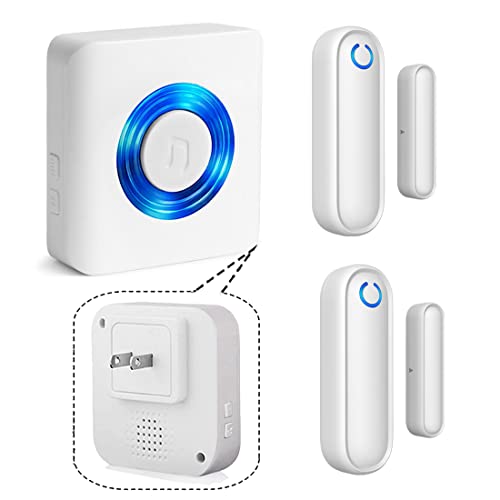
Caregiver Pager Door Alarms are an excellent choice for families caring for dementia patients, as they provide a reliable alert system that enhances safety at home. With a detection area of nearly 260 feet, these alarms alert you when doors or windows are opened, ensuring you’re always informed. You can customize alerts with 58 melodies and adjust the volume up to 110 dB for maximum effectiveness. Plus, installation is simple with plug-and-play features. Battery-powered and expandable, these alarms can support multiple sensors and receivers, making them a versatile and efficient solution for home security and peace of mind.
Best For: Families caring for dementia patients or children who need additional safety measures at home.
Pros:
- Wide detection range of nearly 260 feet ensures alerts are received promptly.
- Customizable alerts with 58 melodies and adjustable volume levels for personalized use.
- Easy installation with plug-and-play features and battery-powered convenience.
Cons:
- Battery dependency may require regular checks and replacements.
- Limited range for wireless communication may not cover larger homes effectively.
- Loud chime at maximum volume may be startling for some users.
120 DB Loud Door and Window Open Alarm Sensor (3 Pack)
The DB Loud Door and Window Open Alarm Sensor (3 Pack) is an excellent choice for ensuring the safety of dementia patients. With a powerful 120 dB alarm, it alerts you to any door or window openings, making it audible over 750 feet. This wireless system installs easily with adhesive tape, requiring no complicated wiring. Designed for discreet placement, it helps prevent unauthorized entries and keeps your loved ones secure. Each sensor runs on three LR44 batteries, lasting 6-12 months. Plus, the package includes anti-noise ear plugs and a user manual, making setup straightforward and hassle-free.
Best For: This product is best for families with young children, caregivers of dementia patients, and businesses looking to enhance security against intruders.
Pros:
- Loud alarm: The 120 dB alarm is effective in alerting you to any unauthorized access, making it audible from a distance of over 750 feet.
- Easy installation: The wireless design and adhesive tape allow for quick and simple setup without the need for wiring.
- Battery life: Each sensor operates on LR44 batteries, providing a long-lasting performance of 6-12 months with a low battery indicator.
Cons:
- Limited range: The minimum working distance of 8mm may require careful placement to ensure functionality.
- Battery dependency: Being battery-powered means that regular battery replacements are necessary to maintain operation.
- False alarms: Depending on environmental factors, the sensors may trigger false alarms if not positioned correctly.
Door Chime Alarm System with 2 Sensors and 1 Receiver
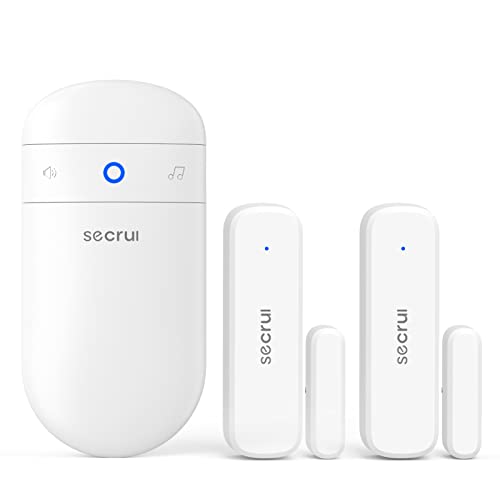
For families caring for dementia patients, the Door Chime Alarm System with 2 Sensors and 1 Receiver offers an essential layer of security and peace of mind. This system alerts you when doors open, making it perfect for monitoring loved ones. With 58 chimes and 5 volume levels, you can easily customize notifications. The colorful LED indicator provides visual alerts, enhancing awareness. Installation is straightforward, using 3M tape or screws for a quick setup. With a 500FT range and expandable options, you can add more sensors for different entry points, ensuring extensive coverage throughout your home.
Best For: Families caring for dementia patients who need an effective way to monitor door activity for enhanced security and peace of mind.
Pros:
- 58 customizable chimes and 5 volume levels for tailored alerts.
- Easy installation with no complex wiring required.
- Expandable system allows for additional sensors to cover multiple entry points.
Cons:
- Requires 1 AAA battery for each sensor, which may need regular replacement.
- Limited to the range of 500FT between the receiver and sensors; may not cover larger properties.
- May not be suitable for outdoor use without proper protection from the elements.
Satisure Wireless Door Open Contact Sensor Alarm Chime
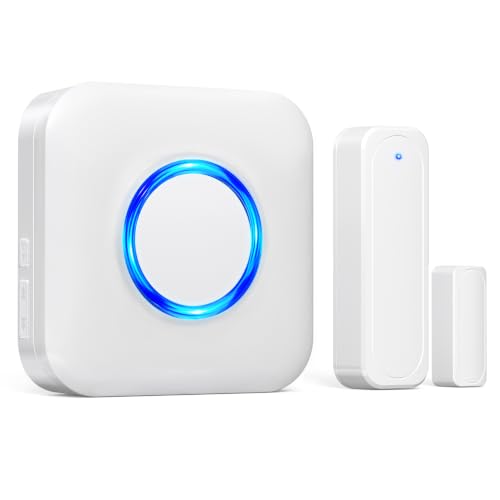
With a remarkable wireless range of 600 feet, the Satisure Wireless Door Open Contact Sensor Alarm Chime is an excellent choice for families caring for dementia patients. Its plug-and-play installation makes setup a breeze—simply peel and stick the sensor and plug in the receiver. You’ll appreciate the customizable alerts, featuring 58 chimes and 5 volume levels, ensuring you can find the perfect setting for your home. Plus, the upgraded low-power battery design lasts for up to 7200 triggers, making it low-maintenance. With a 30-day return policy and lifetime support, you can trust Satisure to enhance safety and peace of mind.
Best For: Families caring for dementia patients who require a reliable and customizable door alert system.
Pros:
- Plug-and-play installation allows for quick and easy setup without any wiring.
- Customizable alerts with 58 chimes and 5 volume levels cater to individual preferences and needs.
- Long-lasting battery design supports up to 7200 triggers, ideal for low-maintenance environments.
Cons:
- Limited range of 600 feet may not be sufficient for very large properties or extensive outdoor use.
- Dependence on batteries may require occasional replacements, which could be inconvenient.
- Potential for interference from other wireless devices could affect performance in congested areas.
Caregiver Pager WiFi Door Alarm for Dementia Patients

Designed specifically for dementia patients, the Caregiver Pager WiFi Door Alarm offers peace of mind by sending instant notifications to your smartphone whenever doors or windows are opened. This system includes two sensors and one gateway, ensuring thorough monitoring of your home. You can customize alerts with 32 ringtones and adjust the volume across five levels, catering to various needs. The app allows multiple users to receive notifications, making it easy for family or caregivers to stay informed. With expandable options for additional sensors, this door alarm enhances safety while providing support for both you and your loved ones.
Best For: The Caregiver Pager WiFi Door Alarm is best for families caring for dementia patients, children, or those seeking enhanced home security.
Pros:
- Instant notifications to smartphones for immediate alerts on unauthorized exits or openings.
- Customizable ringtones and volume levels cater to individual preferences and needs.
- Expandable system allows for the addition of more sensors or receivers for comprehensive coverage.
Cons:
- Requires a stable WiFi connection for optimal functionality.
- May not be suitable for users who prefer a simpler, non-tech solution.
- Initial setup may be challenging for individuals who are not tech-savvy.
SanJie Wireless Door Sensor Chime

The SanJie Wireless Door Sensor Chime serves as an essential tool for caregivers looking to enhance the safety of elderly individuals with dementia. It alerts you when a door opens, making it perfect for monitoring movement at home. With 26 chimes and 5 adjustable volume levels, you can customize alerts to your preference, reaching up to 110dB. Installation is straightforward—just plug in the receiver and use adhesive tape for the sensor. Operating within a 500-foot range, you can expand the system with unlimited sensors, allowing you to identify which door is triggered, ensuring peace of mind for everyone involved.
Best For: The SanJie Wireless Door Sensor Chime is best for caregivers monitoring elderly individuals with dementia, parents overseeing toddlers, and business owners tracking customer entries.
Pros:
- 26 customizable chimes and 5 adjustable volume levels, allowing personalized alerts.
- Easy installation with pre-paired components and adhesive sensor attachment.
- Expandable system that supports unlimited sensors, enabling identification of which door is opened.
Cons:
- The range may be limited in larger homes or buildings with multiple walls.
- Power outages could reset settings if not using the memory function.
- Some users might find the 110dB volume too loud for quiet environments.
Sanjie Door Window Alarms – 5 Pack

For caregivers seeking reliable safety solutions, the Sanjie Door Window Alarms – 5 Pack stands out as an essential tool for protecting dementia patients. With a powerful 125dB alarm, these wireless sensors alert you immediately when doors or windows are opened, ensuring peace of mind. Their versatile application allows installation on various surfaces, including sliding doors and cabinets, making them ideal for homes, offices, and more. Installation is a breeze with 3M double-sided tape, and you can choose from three sound modes. Plus, with a battery life of up to 13 months, you can rely on them without constant maintenance.
Best For: Caregivers seeking reliable safety solutions for protecting dementia patients and enhancing home security.
Pros:
- Powerful 125dB alarm provides immediate alerts for added safety.
- Versatile application allows installation on various surfaces, including doors, windows, and cabinets.
- Easy installation with 3M double-sided tape and long battery life of up to 13 months.
Cons:
- Limited sound options may not suit all preferences or situations.
- Indoors only installation limits use in outdoor environments.
- Requires battery replacement every 13 months, which may be inconvenient for some users.
Factors to Consider When Choosing Door Alarms for Dementia Patients
When choosing door alarms for dementia patients, you’ll want to contemplate several key factors. Think about the volume levels, notification types, and how easy the system is to install. Additionally, evaluate the wireless range and whether the system can expand as needs change.
Alarm Volume Levels
Choosing the right alarm volume level is essential for effectively alerting caregivers to potential exits by dementia patients. Alarm options typically range from silent chimes to loud alarms exceeding 130 dB. Look for models with adjustable volume settings, allowing you to customize alerts based on your environment and hearing abilities. A high maximum output volume of around 110 dB guarantees that alarms are audible throughout your home, even in noisy surroundings. Some alarms also feature visual alerts, like LED indicators, which can assist those with hearing impairments. Additionally, having multiple ringtones or alarm sounds can help you easily distinguish between alerts, making it simpler to respond appropriately when necessary. Choose wisely for enhanced safety and peace of mind.
Notification Types Available
Selecting the right notification type for door alarms can greatly enhance safety for dementia patients. These alarms typically offer various options like audible alarms, chimes, and visual alerts such as LED indicators to meet different sensory needs. You’ll find many devices with adjustable volume levels, allowing you to choose from silent notifications to loud alerts, with some reaching up to 130 dB. Customizable ringtones or chimes let you select specific sounds for different doors or situations, adding convenience. Additionally, smart technology can send notifications directly to your smartphone, ensuring you receive alerts no matter where you are. Visual indicators, like flashing lights, are essential for those who are hearing impaired, ensuring they notice alerts promptly.
Installation Ease
Finding the right door alarm is only part of the equation; installation ease plays an essential role in guaranteeing that the system functions effectively. Look for alarms that feature plug-and-play installation, allowing you to set them up quickly without complex wiring or tools. Consider those with adhesive mounting options, enabling easy attachment to doors and windows without damaging surfaces. Choose systems that come pre-paired to simplify the installation process and reduce setup time. Verify the alarm includes a clear user manual or instructional guide to facilitate straightforward installation and configuration. Finally, examine the expandability of the system; some alarms allow for easy addition of more sensors or receivers, enhancing coverage with minimal installation effort.
Wireless Range
When it comes to door alarms for dementia patients, the wireless range is vital for effective monitoring. You’ll typically find options ranging from 260 feet to 600 feet, allowing you to guarantee coverage throughout your home. A longer wireless range helps monitor larger areas, making it easier to alert caregivers if a patient tries to exit. It’s important to choose systems that maintain a reliable connection within that range, as walls and other obstacles can interfere with performance. Additionally, some alarms offer multiple sensors, helping you cover various entry points while keeping a single receiver within the effective range. A good wireless range not only enhances security but also gives caregivers peace of mind, knowing they’ll be alerted promptly.
Expandability Options
Expanding your door alarm system can greatly enhance security for dementia patients. When choosing an alarm, look for systems that support multiple sensors and receivers, allowing coverage for various entry points in your home. Some models can accommodate up to 50 door or window sensors, providing extensive monitoring capabilities. Customizable alerts are also essential; different sounds or notifications for each sensor help you quickly identify which entry point is being accessed. Opt for systems that enable easy expansion without complicated installation, so you can add devices as needs change. Finally, consider the wireless range—some alarms work effectively up to 600 feet, ensuring thorough coverage throughout larger homes.
Power Source
Choosing the right power source for door alarms is essential to guarantee consistent monitoring for dementia patients. You’ll want to evaluate battery-powered options, as they assure mobility and are easy to install without needing nearby electrical outlets. Look for models with low battery indicators to alert you before power runs out, maintaining safety. Some alarms are corded, requiring proximity to an outlet but providing longer operational life without the hassle of battery replacements. Pay attention to battery life specifications to avoid frequent changes, and check how many batteries are needed for operation. Alarms with fewer batteries can be more convenient for daily management, making it easier for caregivers to confirm the device is always ready to protect.
Customization Features
Customizing door alarms for dementia patients can greatly enhance their effectiveness and ease of use. Look for alarms that offer multiple ringtones; this allows you to differentiate alerts for various doors or windows easily. Adjustable volume levels are essential too, so you can set the sound to a comfortable level that’s clear without being disruptive. If you have caregivers who are hearing-impaired, consider systems with visual alerts like LED indicators. Pairing multiple sensors to a single receiver is another smart choice, enabling you to monitor various entry points throughout the home. Finally, opt for systems with user-friendly installation options, such as adhesive mounting, ensuring you can set everything up without needing extensive technical skills.
Support for Hearing Impaired
How can you guarantee that door alarms effectively support hearing-impaired dementia patients? Start by choosing alarms with built-in LED indicators that provide visual alerts, making it easier for those with hearing difficulties to notice when a door is opened. Look for models with adjustable volume levels so you can set the audible alerts to a comfortable level. It’s also wise to select devices offering various ringtones, helping users differentiate alerts for different situations. Aim for an alarm output of at least 110 decibels, as this can effectively grab the attention of those who are hard of hearing. Finally, confirm compatibility with hearing aids or other assistive devices to maximize accessibility and effectiveness. Your choices can greatly enhance safety and peace of mind.