A shoulder immobilizer should keep your arm in the position your clinician recommends without making everyday wear unnecessarily awkward. The right choice depends on more than the injury name: strap placement, sizing, and whether you need a waist strap or abduction pillow all matter.
These 10 listings include standard slings, sleep-oriented designs, and an abduction sling. Several are size variants or closely related listings, so compare the exact configuration before buying.
Best 10 Orthopedic Shoulder Immobilizer Picks for 2026
Neck-Pressure Pick
Dual-Strap Mesh Shoulder Immobilizer

- Cross-back straps distribute weight
- Breathable, rigid-free mesh
- One-handed hook-and-loop adjustments
Best For: Adults seeking close-to-body support with less concentrated neck pressure
Everyday Convenience Pick
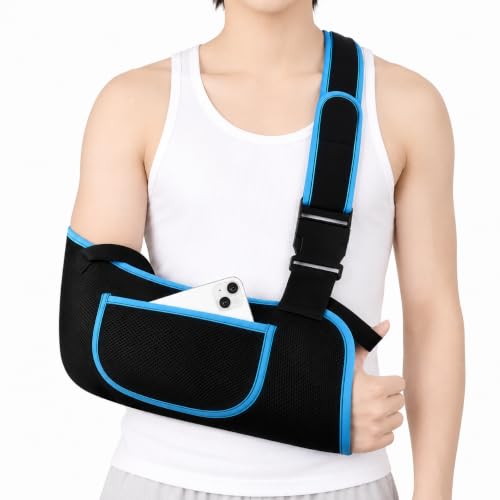
- Quick-release, one-handed adjustments
- Two pockets and a thumb loop
- Sized by arm length
Best For: Daily wear with easy adjustments and small-item storage
Secure Wrap Pick

- T-shaped strap limits arm swinging
- Sponge-padded shoulder strap
- Fit uses underbust and forearm measurements
Best For: Close-to-body support with a torso-wrapping strap
Abduction Support Pick

- Removable 15-degree abduction pillow
- Adjustable waist and shoulder straps
- Thumb loops and two interior pockets
Best For: Care plans calling for abduction positioning
Roomier Sleep Pick

- Soft, perforated foam-and-fabric build
- Cross-back straps reduce neck pressure
- Fits either arm; check large-size chart
Best For: Adults wanting a soft, large sling for sleep
Adjustable Strap Pick
Comforband Deluxe Immobilizer, Medium

- Perforated foam arm holder
- T-shaped neck and waist straps
- Reversible after strap reorientation
Best For: Adults wanting a trimmable-strap medium sling
Mid-Size Sleep Pick
- Soft build without hard hardware
- Cross-back straps ease neck pressure
- Listed for a 31.5–39.5-inch bust
Best For: Adults wanting a soft medium sling for sleep
Waist-Strap Pick
Comforband Deluxe Shoulder Immobilizer
- Waist strap limits arm swing
- Breathable perforated-foam holder
- Reconfigurable for either arm
Best For: Adults seeking a large sling with added waist-strap stability
Padded-Strap Pick

- Sponge-filled shoulder strap
- Breathable mesh arm pocket
- Two small storage pockets
Best For: Adults wanting a padded medium sling for either arm
Large Mesh Pick

- Breathable sandwich mesh
- Padded, adjustable shoulder strap
- Fits either arm
Best For: Shoppers needing a large padded mesh sling
Neck-Pressure Pick – Dual-Strap Mesh Shoulder Immobilizer
This orthopedic shoulder immobilizer uses two straps that cross at the upper back to distribute the arm’s weight instead of placing it all on one side of the neck. A wide chest strap holds the arm close to the body.
Best For: Adults who want a soft, adjustable sling with less concentrated neck pressure, including for use during sleep.
Pros:
- Breathable honeycomb mesh contains no rigid plastic or metal.
- Cross-back straps help balance the load and resist slipping.
- Hook-and-loop closures can be adjusted with one hand.
Cons:
- One-size design may require adjustment to get a secure fit.
- No abduction pillow is included for positioning the arm away from the body.
Choose this model if strap comfort and close-to-body support matter more than specialized abduction positioning. Adjust the sling and chest strap together to find a stable fit.
Everyday Convenience Pick – Quiheat Mesh Arm Sling
This orthopedic shoulder immobilizer pairs a breathable mesh pouch with a padded, adjustable shoulder strap. Quick-release buckles, side pockets, and a thumb loop make it a practical option for daily wear.
Best For: Teens and adults who want a sized sling with easy one-handed adjustments and storage for small essentials.
Pros:
- Quick-release buckles and hook-and-loop straps allow one-handed use.
- Dual side pockets and a thumb loop add everyday convenience.
- Mesh fabric and a padded strap are designed for extended wear.
Cons:
- Choosing a size requires an elbow-to-middle-finger-base-knuckle measurement.
- The listed M size fits arm lengths of 11–13 inches; casts or thick clothing should be included when measuring.
Its useful extras distinguish it from a basic sling. Check the size before ordering, particularly if you’ll wear it over a cast, brace, or bandage.
Secure Wrap Pick – Velpeau T-Strap Immobilizer
This orthopedic shoulder immobilizer uses a T-shaped strap that wraps around the torso to keep the arm close and limit swinging. A sponge-padded shoulder strap helps make that secure design more comfortable.
Best For: People who prioritize close-to-body arm support and are willing to measure both underbust and forearm length for fit.
Pros:
- T-shaped wrap adds stability by holding the arm against the body.
- Padded shoulder strap helps spread pressure away from the neck.
- Can be configured for either arm and is made without neoprene or latex.
Cons:
- Fit requires two measurements; the listed Large corresponds to a 33.5–41-inch underbust and forearm length under 13.8 inches.
- It arrives configured for the right arm, so left-arm use requires changing the strap orientation.
The wrap is the main reason to choose this sling over a simpler arm pouch. Confirm both measurements before buying, and allow time to reconfigure it if needed for the left arm.
Abduction Support Pick – Vive Shoulder Abduction Sling
Unlike a standard close-to-body orthopedic shoulder immobilizer, the Vive sling includes a removable contoured pillow that positions the arm at 15 degrees of abduction. Adjustable shoulder and waist straps hold the setup in place.
Best For: Adults whose prescribed support calls for an abduction pillow after a shoulder injury or procedure.
Pros:
- Removable pillow allows use with or without 15-degree abduction support.
- Adjustable waist and padded shoulder straps fit either arm.
- Includes thumb loops, two interior pockets, and an attached foam exercise ball.
Cons:
- Waist strap is specified for waists up to 45 inches.
- The pillow and additional straps make it a more involved setup than a basic sling.
Choose this model when abduction positioning is part of your care instructions; the removable pillow offers flexibility if those instructions change. Confirm the intended arm position with your clinician.
Roomier Sleep Pick – Velpeau Arm Sling, Large
If you need an orthopedic shoulder immobilizer with a soft, hardware-free feel, this large Velpeau sling is designed for sleep and everyday wear. Its foam-and-fabric construction and perforations offer a breathable alternative to rigid materials.
Best For: Adults seeking a large, reversible sling for sleeping or keeping an injured arm close to the body.
Pros:
- Cross-back design and padded straps help distribute pressure away from the neck.
- Wide chest straps limit arm swinging.
- Hook-and-loop fasteners allow quick fit adjustments; works on either arm.
Cons:
- Large size requires checking the fit chart; the listing specifies a 39.5–51.3-inch bust.
- Hand wash only.
The soft build makes this a practical choice when sleeping comfort matters, provided the large size fits and the level of immobilization matches your clinician’s guidance.
This Comforband orthopedic shoulder immobilizer combines a perforated foam arm holder with T-shaped neck and waist straps. The waist strap keeps the arm close to the torso, while the strap layout is designed to move pressure away from the neck.
Best For: Adults who want a medium sling with adjustable shoulder and waist straps for either arm.
Pros:
- Lightweight, ventilated arm holder uses soft-touch materials.
- Waist strap helps prevent the arm from swinging.
- Shoulder and waist straps can be trimmed to length for a customized fit.
Cons:
- Ships configured for the right arm; left-arm use requires changing the strap orientation.
- Trimming straps is less reversible than simply readjusting them.
Choose this model if a secure waist strap is a priority. Check the size chart first—the brand recommends sizing up if you fall between sizes.
For shoppers considering a softer orthopedic shoulder immobilizer, this medium Velpeau sling uses perforated foam and fabric rather than hard plastic or metal. Its cross-back layout and wide chest straps are designed to support the arm during sleep and routine wear.
Best For: Adults seeking a medium, left- or right-arm sling with a soft feel for sleeping.
Pros:
- Listed at 0.42 lb for size medium, with breathable, absorbent materials.
- Cross-back straps help reduce pressure on the neck.
- Hook-and-loop closures make tightness easy to adjust.
Cons:
- Medium is listed for a 31.5–39.5-inch bust; consult the size chart before ordering.
- Hand wash only.
This is the medium-size counterpart to Velpeau’s large sling. The manufacturer advises checking with your doctor before use to confirm that its support is appropriate for your injury.
Waist-Strap Pick – Comforband Deluxe Shoulder Immobilizer
This orthopedic shoulder immobilizer pairs a breathable, perforated-foam arm holder with a T-shaped shoulder-and-waist strap setup. The waist strap holds the arm close to the body, making it a practical choice when limiting arm swing is a priority.
Best For: Adults who want a large sling with a waist strap to help stabilize the arm against the body.
Pros:
- Waist strap helps prevent the arm from swinging.
- T-shaped strap design shifts pressure away from the neck.
- Can be configured for either arm.
Cons:
- Ships set up for the right arm; left-arm use requires changing the strap orientation.
- Check the size chart carefully, and choose the larger size if between sizes.
The adjustable straps allow a tailored fit, though cutting them to length is a more deliberate step than simply tightening a buckle.
This medium orthopedic shoulder immobilizer combines a breathable mesh arm pocket with a sponge-filled shoulder strap and movable pad. Its buckle and hook-and-loop adjustment offer a straightforward way to put it on and set the strap length.
Best For: Adults who want a medium sling with extra shoulder padding and small storage pockets.
Pros:
- Breathable sandwich-mesh arm pocket.
- Padded shoulder strap with a movable pad.
- Two small pockets and a design that works on either arm.
Cons:
- Hand wash only.
- Check the medium sizing before ordering; the notes do not provide fit measurements.
The mesh and padding make this a comfort-focused option, while the small pockets add a useful everyday detail. Confirm that its pocket-and-strap design matches the support your clinician recommends.
This large orthopedic shoulder immobilizer uses breathable sandwich mesh and a sponge-filled shoulder strap with a movable pad. The arm pocket, buckle, and adjustable hook-and-loop strap are designed for use on either the left or right arm.
Best For: Shoppers seeking the large size of VISKONDA’s padded mesh sling for either arm.
Pros:
- Lightweight, breathable mesh construction.
- Padded strap and movable shoulder pad.
- Two small storage pockets.
Cons:
- Hand wash only.
- No waist strap is described in the supplied product details.
This is the large-size alternative to VISKONDA’s medium sling, with the same comfort-oriented features. If keeping the arm close against the torso is essential, check whether this strap arrangement meets your care instructions.
How We Picked the Best Orthopedic Shoulder Immobilizer
We organized the 10 selected listings around the differences that affect a purchase: arm support, shoulder and waist straps, sizing, left- or right-arm compatibility, sleep-oriented designs, and abduction support. The list includes repeated or closely related listings, including different sizes of a Velpeau sleep sling. Count the options as listings, not 10 distinct designs, and confirm the size and features on the page you order from. We cannot determine clinical effectiveness from a product description; follow your treating clinician’s instructions on positioning and wear time.
Quick Comparison: Which Style Fits Your Instructions?
Standard arm sling: A starting point when you have been told to support the forearm and limit shoulder movement. Look for an adjustable shoulder strap and a pouch that supports the elbow and wrist.
Sling with a waist strap: Adds a way to keep the arm closer to the body. Check whether the strap can be positioned comfortably and whether your care plan calls for that degree of restraint.
Sleep-oriented sling: Worth considering if overnight wear is prescribed. Prioritize a secure fit that does not shift easily, and ask your clinician how your arm should be positioned for sleep.
Abduction sling: Uses a pillow to hold the arm away from the torso. Choose this style only when that position has been prescribed; it is not interchangeable with a standard sling.
Key Buying Factors for an Orthopedic Shoulder Immobilizer
Required Position Comes First
Before comparing comfort features, confirm whether you need a standard sling, a waist strap, or an abduction pillow. A product described as suitable for a rotator cuff or clavicle injury is not automatically appropriate for your specific treatment or recovery stage.
Size, Side, and Adjustability
Use the seller’s measurements rather than relying on labels such as medium or large. Check forearm coverage, wrist support, and whether the sling fits your left or right arm. Adjustable straps should let you maintain the prescribed position without digging into your neck or letting your hand hang unsupported.
Comfort During Actual Wear
Consider where straps and edges will contact your skin, especially if you will wear the brace for long periods. Easy-to-reach fasteners may also matter when dressing with limited arm movement. Comfort is important, but it should not come at the cost of the position you were told to maintain.
Who Should Buy Which Orthopedic Shoulder Immobilizer?
Choose a standard adjustable sling if your instructions call for basic arm support. Consider a waist-strap model if you need help keeping the arm close to your body. Compare sleep-oriented options if overnight use is required, and select the correct size rather than assuming related listings fit alike. Buy an abduction sling when your clinician specifies an abduction pillow. If the required position or fit is unclear, ask your care team before ordering.