Choosing the right adaptive eating knife can make everyday meals easier, safer, and more independent. The best options reduce strain, improve control, and help users cut food with less frustration.
Below, we focus on designs that work well for limited hand strength, tremors, arthritis, and one-handed use, so you can quickly compare the most practical choices for 2026.
Best 10 Adaptive Eating Knife Picks for 2026
Built-Up Everyday Set
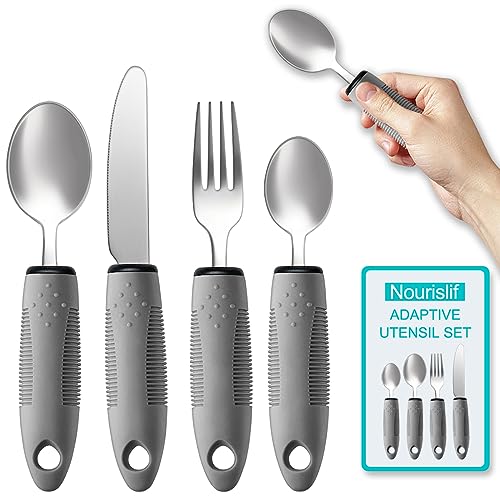
- Includes knife, fork, spoon, and teaspoon
- Contoured enlarged handle for easier grip
- Dishwasher-safe stainless steel construction
Best For: A complete adaptive flatware set for easier daily meals
Angled Cutting Aid

- Ergonomic right-angle grip reduces wrist strain
- Serrated 6-inch stainless steel blade
- Designed for right-handed users
Best For: Right-handed buyers who need an angled knife for easier cutting
Rocker Dinner Knife

- Rocking motion reduces cutting effort
- Vertical grip adds control and stability
- Dishwasher-safe steel blade with safety cover
Best For: People who want a one-handed rocker knife for easier table cutting
Therapy Rocker Knife

- Ambidextrous T-handle supports flexible grip positions
- Rocker motion helps users cut with less strain
- Dishwasher-safe stainless steel blade
Best For: Therapy users and adults with weak grasp who need an ambidextrous rocker knife
Weighted Adaptive Utensils Set
4-Piece Rocker Knife Dining Kit

- 3 oz weighted design adds stability
- Includes rocker knife, fork, and spoons
- Built-up textured handles for easier grip
Best For: Users who need a complete adaptive utensil set for tremors, arthritis, or Parkinson’s
Built-Up Rocker Knife

- Wide built-up handle for stronger control
- Rocker motion supports one-handed cutting
- Ambidextrous design suits either hand
Best For: Adults needing a simple rocker knife for arthritis, tremors, or weak grip
Curved One-Handed Rocker Knife
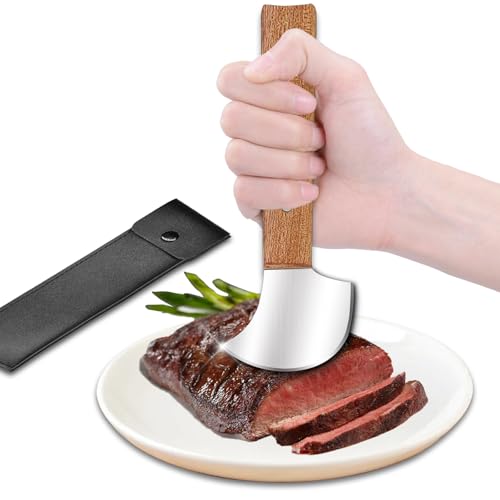
- Curved blade supports one-handed cutting
- Vertical grip helps increase downward force
- Compact size includes portable storage
Best For: Users needing a compact rocker knife for travel, bowls, and everyday meals
Wooden-Handle Rocker Knife

- Rocking motion supports one-handed cutting.
- 4-inch T-handle improves leverage and control.
- Dishwasher safe up to 125 degrees.
Best For: Adults with weak grip, arthritis, or limited hand coordination
Big-Grip Assistive Rocker
Norco Big-Grips Serrated Rocker Knife
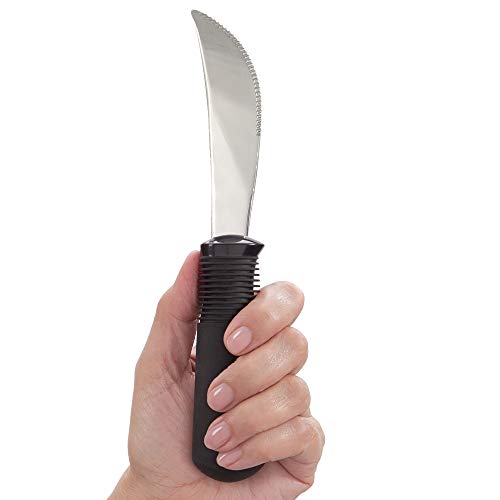
- Wide non-slip handle reduces strain on fingers and wrist.
- Curved serrated blade cuts with one-hand rocking motion.
- Dishwasher safe, durable stainless steel build.
Best For: Users who need a larger, more stable adaptive knife grip
Travel-Ready T-Handle Rocker
Big Grip T-Handle Rocker Knife

- Flexible ribbed T-handle improves control with weak or wet hands.
- Curved stainless blade cuts with one-handed rocking motion.
- Includes a protective blade cover for safer storage.
Best For: One-handed users who want safer storage and easy grip
Built-Up Everyday Set – Adaptive Utensils 4-Piece Set
This adaptive eating knife is part of a 4-piece built-up utensil set designed to make mealtimes easier for people with weak grip, hand tremors, arthritis, or Parkinson’s. The enlarged handle is contoured for a steadier hold, and the stainless steel construction keeps the set practical for daily use.
Best For: Adults who want a full adaptive flatware set with a comfortable, easy-grip knife included.
Pros:
- Built-up 1.25-inch handle supports a more secure grip.
- Includes tablespoon, teaspoon, knife, and fork in one set.
- Rustproof stainless steel construction is dishwasher safe.
- Lightweight design is easier to manage for limited hand strength.
Cons:
- Not a specialized knife shape, so it may not help with cutting motion as much as rocker styles.
- Only one color/finish option is listed.
For shoppers who want an all-in-one adaptive dining setup, this set is a straightforward choice. It focuses on grip comfort and everyday durability rather than a specialized cutting mechanism.
Angled Cutting Aid – Serrated Right Angle Knife
ABLE-T Serrated Right Angle Knife, Approved by a Certified Occupational Therapist - 1 Count, Grey
Check Price On AmazonThis adaptive eating knife uses a right-angle ergonomic design to reduce wrist strain and make cutting easier for users with arthritis, hand injury, or limited range of motion. The serrated 6-inch stainless steel blade is suited to foods like steak, bread, and tomatoes, though it is designed specifically for the right hand.
Best For: Right-handed users who need an angled knife with a serrated blade for softer foods and everyday cutting.
Pros:
- Certified occupational therapist-approved design.
- Angled grip helps minimize wrist strain.
- Serrated blade handles bread, steak, and juicy foods well.
- Stainless steel blade is dishwasher safe.
Cons:
- Right-hand orientation only.
- Hand wash instructions in the notes conflict with the dishwasher-safe blade claim.
- Single-knife package only.
If you want a purpose-built adaptive knife rather than a general utensil, this model is a strong candidate. Its angled handle and serrated edge make it especially useful for users who need help with control and leverage.
Rocker Dinner Knife – Curved Verti Grip Steak Knife
This adaptive eating knife uses a rocking motion to cut through food with less effort, which can help people with limited hand mobility or arthritis. The curved blade and vertical grip are designed to improve control and increase downward cutting force for tasks like cutting meat, vegetables, or cake.
Best For: One-handed users who prefer a rocker-style knife for easier cutting with minimal wrist movement.
Pros:
- Rocking motion helps cut with less motion and smooth downward force.
- Vertical grip is designed to improve control and reduce slippage.
- Stainless steel blade comes with a snap-on safety cover.
- Dishwasher safe for easy cleanup.
Cons:
- Primarily a cutting tool, not a full utensil set.
- Curved rocker style may take some adjustment if you are used to standard knives.
This is a practical option if the goal is simple, low-effort cutting at the table. It stands out for its rocking action and secure grip rather than versatility across multiple utensils.
Therapy Rocker Knife – TGrip Blue Handle
This adaptive eating knife is built around a T-handle and rocker-style cutting motion for users with limited hand control, tremors, or dexterity issues. The horizontal rubber handle supports either an overhand or underhand grip, making it a flexible option for rehabilitation and everyday use.
Best For: Adults who need an ambidextrous rocker knife with a T-handle for therapy or limited grasp.
Pros:
- Ambidextrous design supports overhand or underhand use.
- T-handle can help users with weak grasp and hand control issues.
- Rocker motion encourages cutting without a slicing action.
- Dishwasher safe and made with a stainless steel blade.
Cons:
- Shorter 3.75-inch overall length may feel compact for some users.
- Designed for rocking motion rather than traditional slicing.
For users comparing adaptive kitchen tools, this model is especially focused on control and flexibility. Its ambidextrous T-grip makes it a solid fit for therapy settings or anyone who benefits from a more stable hold.
Weighted Adaptive Utensils Set – 4-Piece Rocker Knife Dining Kit
This adaptive eating knife set is built for users who need more stability at the table, especially when hand tremors or weak grip make regular flatware hard to control. The 3 oz weighted design, built-up handles, and rocker knife work together to make cutting and scooping feel more manageable and less frustrating.
Best For: People with Parkinson’s, arthritis, tremors, stroke recovery, or general hand weakness who want a fuller adaptive dining set.
Pros:
- 3 oz weighted utensils help add stability during meals
- Rocker knife supports one-handed cutting with a rocking motion
- Deep shovel-head spoon is designed to reduce spills
- Large textured handles aim to improve grip and comfort
Cons:
- Weighted utensils may feel heavy for users who prefer a lighter set
- Best suited to people who want a full set, not just a knife
- Silicone-handled design may not appeal to everyone’s feel preference
As a rounded adaptive eating knife solution, this kit stands out for combining weight, grip support, and multiple utensils in one package. It is a practical pick if the goal is to make everyday dining feel steadier and more independent.
Built-Up Rocker Knife – Easy Grip Cutting Aid
If you specifically want an adaptive eating knife for one-handed cutting, this rocker knife keeps the focus on simplicity and control. Its wide built-up handle and rocking design are intended to help users with arthritis, tremors, Parkinson’s, or weak grip strength cut food with less strain.
Best For: Adults who want a single easy-grip rocker knife for more controlled one-handed cutting.
Pros:
- Wide grip handle is made for users with limited hand strength
- Rocker motion helps cut without a traditional slicing action
- Ribs in the handle are shaped to fit the palm for better control
- Ambidextrous design works for left- or right-handed users
Cons:
- Non-weighted design may not help users who specifically want added heft
- Single-knife format does not include a matching utensil set
- Dishwasher safe only up to 125 degrees
This is a straightforward option if you want a durable rocker knife without extra features. It makes the most sense for buyers who value a simple built-up handle and controlled cutting motion over a full adaptive flatware set.
Curved One-Handed Rocker Knife – Portable Adaptive Cutter
This adaptive eating knife is aimed at users who need a compact tool for one-handed cutting across a range of foods. The curved blade and vertical grip are designed to increase downward cutting force, making it a practical choice for meals, snacks, and foods served in bowls or cans.
Best For: People with hand tremors, arthritis, Parkinson’s, or limited mobility who want a portable one-handed cutting tool.
Pros:
- Curved rocker blade is built for effortless one-handed cutting
- Vertical grip is meant to improve cutting force and reduce strain
- Works on foods like bread, pizza, vegetables, salads, meat, and steak
- Portable size and included storage make it easy to carry
Cons:
- Hand wash only, so it is less convenient than dishwasher-safe options
- Single-knife design may not suit buyers looking for a full utensil set
- Smaller size may not appeal to users who prefer a larger handled knife
For buyers who mainly need a portable rocker knife, this model offers a focused design with broad food compatibility. It is a sensible pick when the priority is easy one-handed cutting rather than a complete dining kit.
Wooden-Handle Rocker Knife – YPCBYNBS T-Grip Rocker Knife
YPCBYNBS T-Grip Rocker Knife,Adaptive Knife with Rocking Grip for Less Grip Strength (Wooden Handle)
Check Price On AmazonThis adaptive eating knife uses a rocking motion to help cut food with less grip strength, which makes it a practical option for adults who need more control and less strain at the table. The 4-inch T-shaped hardwood handle and stainless steel blade are designed for leverage, stability, and one-handed use.
Best For: People with arthritis, weak grasp, limited hand coordination, or one-handed cutting needs.
Pros:
- T-grip handle increases leverage and is easy to hold.
- Can be used with one hand, which helps amputees and users with limited coordination.
- Sharp single-edged stainless blade cuts meat and tougher foods.
- Dishwasher safe up to 125 degrees for easier cleanup.
Cons:
- Wooden handle may not suit buyers looking for a soft, non-slip grip.
- Short 4-inch blade may feel compact for larger cutting tasks.
Overall, this is a straightforward adaptive knife for users who want a simple rocker design with strong leverage and a traditional wooden handle. It is especially appealing if you prioritize one-handed cutting over extra grip padding.
Big-Grip Assistive Rocker – Norco Big-Grips Serrated Rocker Knife
This adaptive eating knife is built for users who need a stable, easy-to-hold tool that cuts with a rocking motion. The wide non-slip handle and curved serrated blade are aimed at reducing hand strain while letting you cut food with one hand.
Best For: People with arthritis, stroke recovery, Parkinson’s, hand injuries, or low dexterity who want a larger grip.
Pros:
- Wide, non-slip handle is designed to need less hand strength.
- Curved blade supports one-handed rocking cuts.
- Serrated edge handles tougher foods, while the smooth side can spread butter.
- Dishwasher safe and built with a durable stainless steel blade.
Cons:
- Larger handle may be bulky for users who prefer a slimmer utensil.
- Heavier, commercial-style build may feel less compact for travel than smaller models.
This is a strong choice if grip comfort and control matter more than a slim profile. The rounded tip, non-slip handle, and one-handed cutting design make it especially useful for everyday assistive dining.
Travel-Ready T-Handle Rocker – Big Grip T-Handle Rocker Knife
If you want an adaptive eating knife that is easy to store and easy to use, this T-handle rocker design is built around one-handed cutting and a secure hold. The flexible ribbed grip, stainless steel blade, and included blade cover make it a practical everyday option.
Best For: One-handed users, people with hand tremors, or anyone who wants a safer storage-ready rocker knife.
Pros:
- Non-slip T-grip helps the knife stay secure in weak or wet hands.
- Curved stainless blade supports easy rocking cuts without needing a fork.
- Includes a protective blade cover for safer drawer or caddy storage.
- Dishwasher safe and suitable for left- or right-handed use.
Cons:
- Blade is 4.5 inches, so it may feel short for larger food portions.
- Plastic handle material may feel less premium than hardwood or metal options.
Among adaptive knives, this one stands out for the blade cover and its focus on simple, one-handed use. It is a sensible pick if you want a compact rocker knife that can move between the table, drawer, and utensil caddy safely.
How We Picked the Best Adaptive Eating Knife Options
We looked for knives that support real-world mealtime use, not just kitchen tasks. Priority went to comfortable grips, stable blade control, reliable cutting performance, and designs suited to common mobility and dexterity challenges.
We also considered whether each Adaptive Eating Knife is useful for left- or right-handed users, easy to clean, and appropriate for different settings such as home dining, assisted living, or rehabilitation.
Quick Comparison: What Matters Most
If you want the simplest setup, a built-up handle and rocker-style blade are often the easiest to use. Weighted utensils can help steady hand tremors, while T-grip designs may offer more leverage for users with weak grasp or limited finger control. Serrated blades can improve cutting efficiency on softer foods and cooked proteins.
Key Buying Factors for Adaptive Eating Knife
Grip Shape and Handle Size
Look for a handle that feels secure without requiring a tight pinch. Larger, textured, or built-up handles are usually better for arthritis, limited range of motion, or reduced grip strength.
Blade Style and Cutting Motion
Rocker and curved blades let the user cut with a gentle rocking motion instead of sawing back and forth. This can be especially helpful for one-handed use or reduced wrist mobility.
Weight and Stability
Weighted utensils may reduce shaking for some users, while non-weighted models can feel easier for others who prefer less fatigue. The right choice depends on whether steadiness or lightness is more important.
Safety and Everyday Maintenance
Check whether the blade is serrated, dishwasher safe, and easy to store with a cover or protective edge. For frequent use, durability and cleaning convenience matter as much as comfort.
Who Should Buy Which Adaptive Eating Knife?
Choose a weighted model if tremors are your main concern. Pick a rocker knife with a built-up or T-handle if you need better leverage and one-handed control. If you want a straightforward everyday dining tool, a non-weighted Adaptive Eating Knife with a comfortable non-slip grip may be the most practical fit.
For best results, match the knife to the user’s hand strength, coordination, and preferred cutting motion. A small difference in handle design can make a big difference in comfort and independence.