Standing all day can be just as tiring as sitting, but the right balance board can add gentle movement while helping reduce pressure on your feet. The best balance boards for standing desks combine stable construction, comfortable surfaces, and a rocking range that suits your work style.
We compared 10 popular options for office use, exercise, portability, and anti-fatigue support so you can choose a board that fits your desk, flooring, and preferred level of movement.
Best 10 Balance Boards for Standing Desks Picks for 2026
Premium Bamboo Pick

- Wide bamboo deck for stable standing
- Fluid rock, tilt, and swivel motion
- 15-year warranty; supports up to 250 lb
Best For: Dedicated workstations and shoppers seeking a premium bamboo board
Heavy-Duty Value
FEZIBO Obsidian Black Balance Board
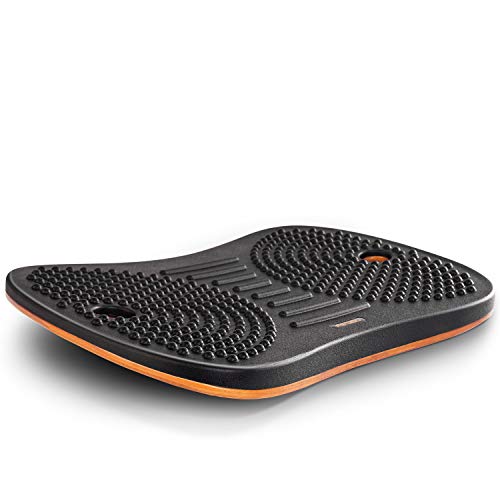
- 320-pound maximum weight recommendation
- Compact, portable wooden design
- Controlled 8.5-degree tilt for typing
Best For: Portable home and office use with a higher weight capacity
Eco-Friendly Made-in-USA Pick
FluidStance Plane Balance Board

- 360-degree rocker motion for active standing
- Made with recycled materials in the USA
- Portable design with nonslip grip and bumpers
Best For: Eco-conscious users who move between home and office
Integrated Comfort Pick
FEZIBO Mat with Anti-Fatigue Bar
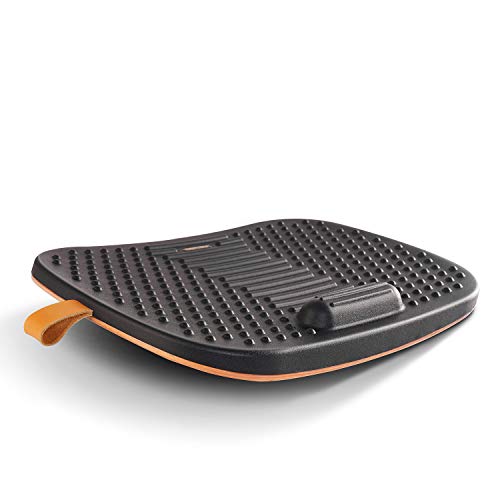
- Compact 360-degree swing platform
- Controlled 8.5-degree tilt for work use
- 320-pound maximum weight recommendation
Best For: Portable standing-desk use with an anti-fatigue mat design
Most Dynamic

- 360-degree spinning movement
- Canadian maple 10-inch deck
- Works for desks, fitness, and sports
Best For: Active standing and multidirectional balance training
Best Multi-Use Design
Ergo Collect 2-in-1 Balance Board

- 360-degree active-standing movement
- Flip side adds massage and calf stretching
- 350-pound capacity with carry handle
Best For: Adults wanting one board for standing, stretching, and foot relief
Best Gentle Option
Yes4All Foam Wobble Balance Board
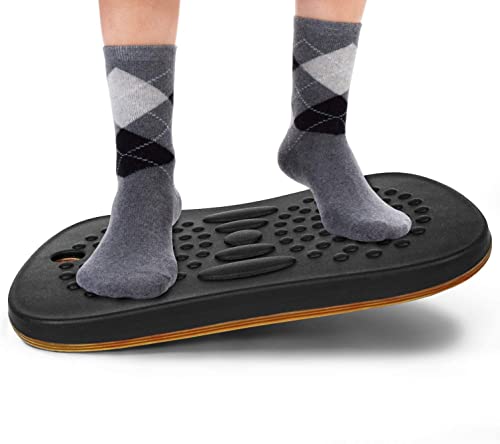
- Cushioned closed-cell EVA foam
- Textured nonslip surface
- 400-pound maximum weight recommendation
Best For: Gentle active standing, balance work, and rehabilitation
Best Overall
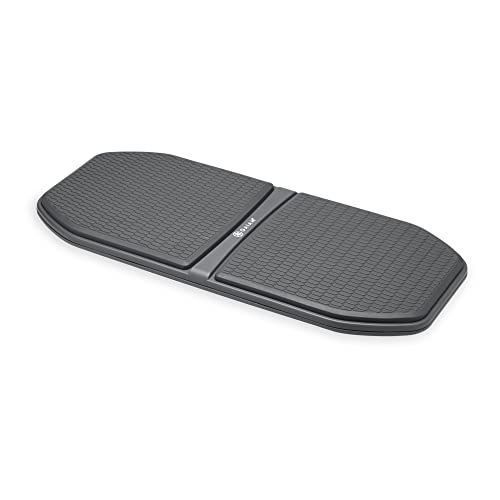
- Rocker motion for subtle workday movement
- Non-slip surface for hard floors and carpet
- 250-pound maximum weight recommendation
Best For: Home offices and standing desks needing gentle, stable movement
Best Large Surface
Standing Desk Comfort Balance Board

- Large platform for shifting foot positions
- Massage points for workday comfort
- 320-pound maximum weight recommendation
Best For: Users wanting a roomy, controlled board for office standing
Best for Dynamic Movement
Ergohead 360-Degree Balance Board

- 360-degree rotation with up to 8-degree tilt
- Massage balls and marbles for foot stimulation
- 360-pound maximum weight recommendation
Best For: Active users wanting multidirectional desk and workout movement
Premium Bamboo Pick – UPLIFT Desk Motion-X
For shoppers comparing balance boards for standing desks, the UPLIFT Desk Motion-X stands out with a wide bamboo deck and fluid, multidirectional movement. Its rock, tilt, and swivel motion encourages gentle activity while you work, and the molded base with floor-friendly grips helps keep movement controlled.
Best For: Adults who want a spacious, premium-looking board for daily standing-desk use.
Pros:
- Wide 27-by-12.5-inch deck supports a stable standing stance.
- Multidirectional motion promotes movement and core engagement.
- Thick, hand-finished bamboo offers a durable, polished look.
- Supports up to 250 pounds and includes a 15-year UPLIFT warranty.
Cons:
- Its larger deck may take more floor space than compact options.
- The cushioning mat is sold separately.
The Motion-X is a strong choice when stability, premium materials, and freedom of movement matter more than portability. It is especially well suited to a dedicated home or office workstation.
Heavy-Duty Value – FEZIBO Obsidian Black Balance Board
The FEZIBO Obsidian Black is a practical option among balance boards for standing desks, combining a compact wooden platform with 360-degree swing movement. Its 8.5-degree tilt is designed to keep motion controlled, so you can remain active without making accurate typing difficult.
Best For: Home and office users who want a portable board with a high 320-pound weight capacity.
Pros:
- Supports up to 320 pounds.
- Compact 20-by-12-inch size and 6.4-pound weight make it portable.
- Grip-focused design helps provide steady footing.
- Can also be used for push-ups, squats, planks, and other exercises.
Cons:
- The medium-sized deck is less spacious than larger boards.
- Its movement range is more limited than a fully free-moving design.
FEZIBO’s board makes sense for shoppers who prioritize load capacity and easy storage. It offers active standing in a relatively compact format that can move between work areas.
Eco-Friendly Made-in-USA Pick – FluidStance Plane Balance Board
The FluidStance Plane is a premium choice among balance boards for standing desks, using a 360-degree rocker design to encourage subtle movement throughout the workday. Its recycled-material construction, nonslip deck, and rubber bumpers provide a practical blend of motion, grip, and controlled stopping points.
Best For: Adults who value recycled materials, U.S. assembly, and portable active standing.
Pros:
- 360-degree rocking and swiveling encourage continuous micro-movement.
- Top deck uses recycled tire treads, while the base uses recycled plastic.
- Rubber bumpers create natural stopping points and help maintain control.
- Compact, lightweight design is easy to carry between work and home.
Cons:
- Its 250-pound weight recommendation is lower than the FEZIBO alternatives here.
- The recycled-material construction may appeal less to shoppers seeking wood or bamboo.
Plane is a compelling pick for environmentally conscious users who want active standing without sacrificing portability. Its movement is designed to come mainly from the hips down, helping preserve typing accuracy.
Integrated Comfort Pick – FEZIBO Mat with Anti-Fatigue Bar
The FEZIBO Standing Desk Mat with Anti-Fatigue Bar offers a compact wooden platform for shoppers considering balance boards for standing desks. It combines 360-degree swing movement with an anti-fatigue mat format, encouraging small shifts in posture while you work, read, or perform light exercises.
Best For: Users who want a portable standing mat with a built-in anti-fatigue focus.
Pros:
- 360-degree swing design encourages movement while standing.
- 8.5-degree tilt is intended to keep motion controlled for typing.
- Supports up to 320 pounds and uses durable, non-toxic materials.
- Suitable for work, reading, gaming, and exercises such as squats and planks.
Cons:
- The 20-by-12-inch platform provides less room than wider boards.
- The supplied notes do not specify the product’s weight.
This FEZIBO model is a useful fit when you want the movement of a wobble board in a compact standing-mat format. Its strong weight rating and portable dimensions add flexibility for home, office, or other standing tasks.
Most Dynamic – Whirly Board Wide 360°
The Whirly Board is a strong option if you want balance boards for standing desks that encourage active, multidirectional movement. Its 10-inch Canadian maple deck is designed for home-office use while also supporting balance practice, core training, and sports drills.
Best For: Standing-desk users who want a compact, highly active board that can also serve as family fitness and sports-training equipment.
Pros:
- 360-degree spinning, rocking, tilting, and bouncing motion engages balance from multiple directions.
- 10-inch-wide Canadian maple platform accommodates a range of foot sizes.
- Can be used for active standing, core exercises, kids’ balance practice, and sports training.
Cons:
- The dynamic spinning design may feel more challenging than a conventional rocker board.
- Supplied notes do not specify a maximum supported weight.
Choose this model when movement variety matters more than a simple, stable standing surface. It is especially versatile for buyers who want one board for desk use and off-hours balance training.
Best Multi-Use Design – Ergo Collect 2-in-1 Balance Board
This Ergo Collect model combines a standing-desk balance board with a textured foot-massage surface. For shoppers comparing balance boards for standing desks, it offers smooth 360-degree micro-movement plus a flip side for calf stretching and foot comfort.
Best For: Adults who want active standing, stretching, and foot-massage functions in one portable board.
Pros:
- Dual-sided design provides a wobble surface and an anti-fatigue massage mat.
- Also functions as a calf-stretch board with a built-in massage ball.
- Supports up to 350 pounds and has anti-slip grip on both sides.
- Leather carry handle makes it easy to move between work and workout spaces.
Cons:
- Its adult-oriented design may not be ideal for children’s balance practice.
- At 20.28 by 13.78 inches, it requires more under-desk space than a compact platform.
This is the most practical pick for users who want more than wobble training. The combination of movement, stretching, and massage makes it well suited to an office routine that changes throughout the day.
Best Gentle Option – Yes4All Foam Wobble Balance Board
The Yes4All Wobble Balance Board is a softer choice for standing-desk users who prefer foam cushioning and a textured, nonslip surface. It can make active standing more approachable while also supporting exercises, yoga, rehabilitation, and physical-therapy work.
Best For: Users seeking a cushioned balance pad for gentle desk movement, low-impact training, or balance and rehabilitation exercises.
Pros:
- Closed-cell EVA foam construction adds cushioning and durability.
- Textured, sweat-resistant surface helps provide grip and reduce sliding.
- Suitable for balance work, yoga, strength exercises, rehabilitation, and physical therapy.
- Supports up to 400 pounds according to the supplied specifications.
Cons:
- Foam construction may provide less pronounced wobble than a hard spinning board.
- The supplied notes list conflicting return and warranty durations, so verify current terms before buying.
Consider this model if comfort and approachable balance work are higher priorities than aggressive movement. Its cushioned format is particularly useful for beginners, seniors, and therapeutic routines.
Best Overall – Gaiam Evolve Balance Board
For shoppers comparing balance boards for standing desks, the Gaiam Evolve is a practical rocker-style option designed to add subtle movement during work. Its ergonomic shape, non-slip honeycomb surface, and 250-pound capacity make it suitable for home offices and other standing workstations.
Best For: Standing-desk users who want gentle rocking, core engagement, and a secure surface on hard floors or carpet.
Pros:
- Rocker motion encourages low-impact movement while working.
- Engages stabilizing muscles in the back, core, legs, and ankles.
- Honeycomb non-slip texture supports stable footing on multiple floor types.
- Supports users up to 250 pounds.
Cons:
- Its rocker design does not provide the 360-degree rotation offered by some boards.
- At 27 inches long, it may require more floor space than compact models.
The Evolve is a well-rounded choice when your priority is steady, controlled movement rather than highly dynamic balancing. It also works as a standing-desk companion for cashiers, clerks, and others who stand for extended periods.
Best Large Surface – Standing Desk Comfort Balance Board
This large balance board is a useful option for anyone seeking balance boards for standing desks with a broad, cushioned platform. Weight-shifting movement, massage points, and rubber bumpers provide a combination of activity and controlled stopping points for office use.
Best For: Users who want a larger standing surface, massage features, and a higher 320-pound weight recommendation.
Pros:
- Large 20.25-by-13.75-inch platform provides room for changing foot positions.
- Massage points are designed to support circulation and muscle engagement.
- Rubber bumpers provide natural stopping points during use.
- Supports up to 320 pounds and is easy to carry between work and home.
Cons:
- The notes do not specify included components beyond the board itself.
- Its wooden and PU foam construction may feel less streamlined than a fully molded board.
Choose this model if surface area and weight capacity matter more than maximum range of motion. Its hip-focused movement is also intended to minimize disruption while typing.
Best for Dynamic Movement – Ergohead 360-Degree Balance Board
For a more active approach to balance boards for standing desks, this Ergohead model adds 360-degree rotation and up to 8 degrees of tilt. Its massage balls and marbles create additional foot stimulation, while the wooden platform can also be used for selected exercise activities.
Best For: Standing-desk users who want multidirectional movement, foot massage features, and a board that can also be used at home or in a gym.
Pros:
- 360-degree rotation supports side-to-side, front-to-back, and forward movement.
- Tilts up to 8 degrees for a more dynamic balancing experience.
- Massage balls and marbles are designed to relieve plantar pressure and provide foot stimulation.
- Supports up to 360 pounds and can be used for planks or workouts.
Cons:
- Its greater range of motion may be more active than some users want while typing.
- At 7 pounds, it is heavier than the listed large balance board.
- The 20.9-by-13.8-inch platform is not as long as the Gaiam model.
This is the strongest fit for shoppers who want movement beyond simple rocking. The broader motion range and exercise compatibility make it versatile, though users seeking a quieter, more restrained standing surface may prefer a simpler rocker.
How We Picked the Best Balance Boards for Standing Desks
We focused on the features that matter during real workdays: platform size, stability, rocking or rotation range, surface comfort, construction, portability, and compatibility with standing desks. We also considered whether each design works primarily as an anti-fatigue mat, a balance trainer, or a combination of both.
A good office balance board should encourage small, controlled movements without demanding constant concentration. Products with wider platforms and moderate motion are generally easier to use while typing, reading, or taking calls, while narrower or more active boards may better suit exercise and balance training.
Quick Comparison
- Best for premium office use: FluidStance Adult Balance Board
- Best for a larger platform: UPLIFT DESK Motion-X Balance Board
- Best for mat-and-board versatility: FEZIBO Standing Desk Mat Balance Board
- Best for active balance training: Whirly Board Wide 360˚
- Best for budget-conscious shoppers: Yes4All Wobble Balance Board
- Best for combined comfort and motion: Gaiam Evolve Balance Board
Key Buying Factors for Balance Boards for Standing Desks
Platform Size and Stability
A wider board gives your feet more room and usually feels more forgiving during long work sessions. Smaller platforms take up less space but may require greater precision. Check the board dimensions against your desk area and any nearby chair, cable, or drawer clearance.
Motion Range
Rocking boards typically provide predictable front-to-back or side-to-side movement, while 360-degree designs allow more varied motion. For everyday office work, moderate movement is often easier to control than a highly responsive exercise board.
Comfort and Surface Texture
Look for cushioning, grip, and an edge design that will not create uncomfortable pressure points. A textured top can improve traction, while a softer surface may be preferable if you stand barefoot or in thin socks.
Materials, Weight, and Floor Protection
Wood, molded plastic, foam, and composite construction each offer different balances of durability and weight. Heavier boards tend to feel planted, while lighter models are easier to move or store. Use extra care on hard floors and verify that the base will not mark or slide on your flooring.
Work Use Versus Exercise Use
Some balance boards are designed mainly for anti-fatigue support, while others are intended for workouts, rehabilitation, or sports training. If you plan to type frequently, prioritize quiet, controlled movement. If you want a board for training, choose a model with a wider motion range and more responsive handling.
Who Should Buy Which Balance Boards for Standing Desks?
Choose a wide, stable board if you are new to standing desks, work for extended periods, or want easy foot repositioning. Choose a compact rocker if your workspace is small or you want simple movement without a large footprint. Choose a 360-degree board if you enjoy active balance practice or want more varied motion during breaks.
For the most comfortable setup, alternate between sitting and standing, keep your monitor at a suitable height, and begin with short sessions. A balance board should add movement—not force you to compensate with your ankles, knees, or lower back.