A balance board can add movement, stability work, and coordination training to a home workout without taking up much space. The best options under $50 range from simple wobble trainers to versatile roller-based designs.
Below, we compare 10 budget-friendly balance boards for core exercises, ankle rehabilitation, standing desks, and everyday balance practice, with attention to construction, traction, capacity, and ease of use.
Best 10 Balance Boards Under 50 Picks for 2026
Best Simple Trainer
Amazon Basics Wood Wobble Board
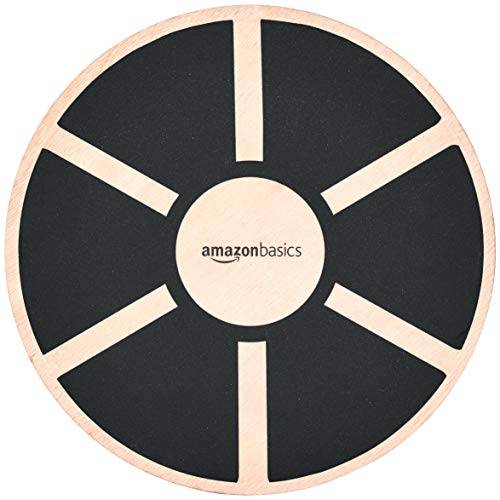
- Solid wood top supports up to 265 pounds
- Non-slip surface for balance exercises
- Useful for home workouts and rehab settings
Best For: Straightforward core, posture, and balance training
Best Multi-Mode Design
3-in-1 Slant and Balance Board
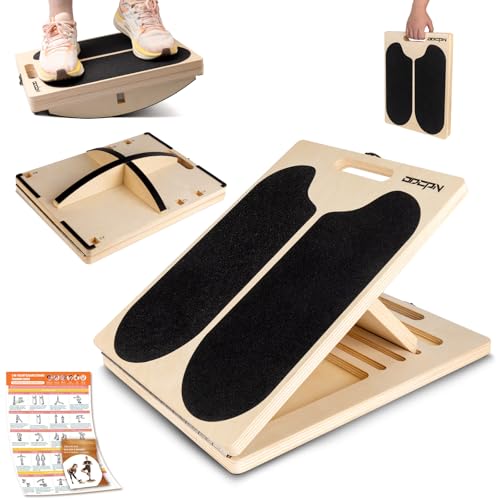
- Combines calf stretching with two balance modes
- Six adjustable incline angles
- Folds flat and includes magnetic side panels
Best For: Mobility work, recovery, and varied balance training
Best for Desk Use
Wooden Wobble Board with Ankle Support

- Designed for standing-desk movement
- Supports up to 350 pounds
- Arrives assembled with floor-protective pads
Best For: Beginners, rehabilitation, and office balance practice
Best 360-Degree Trainer

- 360-degree rotating balance base
- Textured surface with silicone padding
- Arrives assembled with carry holes
Best For: Dynamic balance, sports practice, and physical therapy
Best Overall

- 350-pound weight recommendation
- Anti-slip, floor-friendly design
- No assembly; portable for home or office
Best For: General balance, core, and posture training
Best for Ankle Rehab
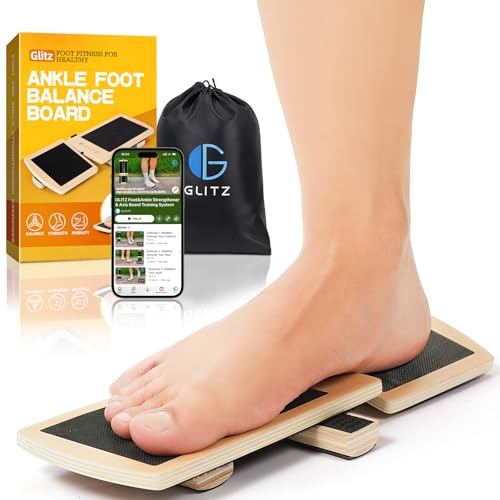
- Targets ankle and foot stability
- Adjustable Velcro balance bars
- Lightweight birch-wood construction
Best For: Focused ankle mobility and foot-strength exercises
Best for Versatile Workouts
Professional Wooden Wobble Board

- Supports up to 350 pounds
- Works for balance and core exercises
- Compact with anti-slip floor protection
Best For: Versatile stability, therapy, and bodyweight training
Compact Core Pick
ProsourceFit Wooden Balance Board
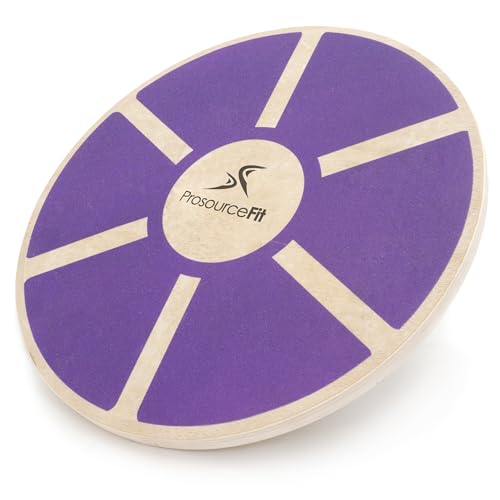
- 360-degree rotation for multidirectional training
- Textured non-slip surface
- Lightweight, portable design with 300-pound capacity
Best For: Portable adult core and stability workouts
Family Rocker Choice

- Flips between rocker and wobble training
- Suitable for adults, kids, and seniors
- Fully assembled, portable wooden design
Best For: Family balance practice and beginner home workouts
Adjustable Surf Trainer

- Three height settings for adjustable difficulty
- Includes roller, stoppers, and storage rack
- 441-pound capacity with anti-slip surfaces
Best For: Adjustable balance and surf-oriented training
Best Simple Trainer – Amazon Basics Wood Wobble Board
If you want a straightforward option among balance boards under 50, this Amazon Basics wood wobble board covers core balance, coordination, posture, and stability work without a complicated setup. Its square platform has a non-slip surface and supports up to 265 pounds.
Best For: Home workouts, basic balance drills, push-ups, planks, and targeted strengthening exercises.
Pros:
- Solid wood construction supports up to 265 pounds.
- Non-slip top helps provide a secure grip during exercise.
- Works for standing balance, planks, push-ups, and other workouts.
- Compact 15.75-by-15.75-inch design fits home gyms or rehab spaces.
Cons:
- It offers a single wobble-board configuration rather than adjustable modes.
- The product warning advises avoiding wet or smooth surfaces.
This is a practical pick if you prefer a conventional wood balance trainer with broad exercise applications and a clearly stated weight recommendation.
Best Multi-Mode Design – 3-in-1 Slant and Balance Board
For shoppers comparing balance boards under 50 that also want stretching functionality, this 3-in-1 design combines a calf-stretch slant board with 180-degree directional balance and 360-degree rotation modes. Six incline angles and magnetic side panels add flexibility for mobility and stability work.
Best For: Calf stretching, ankle mobility, physical therapy exercises, and users who want multiple balance modes in one board.
Pros:
- Combines slant-board stretching with 180-degree and 360-degree balance training.
- Six adjustable angles range from 20 to 45 degrees.
- Wood construction is listed with a 460-pound capacity in the product description.
- Detachable magnetic panels switch modes and the board folds for storage.
Cons:
- The supplied details list both a 460-pound capacity and a 300-pound maximum recommendation, so buyers should verify the applicable limit.
- Its multi-part design is more involved than a basic fixed wobble board.
This is the most versatile choice in the group for combining stretching, recovery, and progressive balance practice, especially when storage space matters.
Best for Desk Use – Wooden Wobble Board with Ankle Support
This wooden wobble board is a useful candidate among balance boards under 50 if you want to alternate between rehabilitation exercises and light movement while standing at a desk. Its anti-slip pads are designed to improve grip, reduce floor wear and noise, and support a range of balance and posture activities.
Best For: Standing-desk use, beginners, physical therapy, posture practice, and indoor balance training.
Pros:
- Plywood construction is rated to withstand up to 350 pounds.
- Double reinforcement bands add stability and strength.
- Anti-slip and anti-scratch pads help protect indoor floors.
- Arrives assembled for immediate use.
Cons:
- The supplied notes do not specify adjustable angles or alternate balance modes.
- Its 16.45-by-12.99-inch footprint may feel more limited than a larger training platform.
Choose this model if convenience and desk-friendly movement are priorities. The ready-to-use construction and floor-conscious padding make it well suited to indoor routines.
Best 360-Degree Trainer – Advanced Wood Balance Board
If you are looking at balance boards under 50 for broader movement practice, this advanced wooden model uses a 360-degree rotating base and a textured gray surface for balance, core, and stability exercises. It is designed for activities ranging from yoga and squats to surfing-oriented balance training.
Best For: 360-degree balance work, sports preparation, physical therapy exercises, and users seeking a larger training platform.
Pros:
- 360-degree half-ball base encourages multidirectional balance practice.
- Textured gray surface and silicone padding help provide traction.
- 17.5-by-13.4-inch platform offers room for varied exercises.
- Arrives assembled and includes carry holes for portability.
Cons:
- The supplied details list both a 500-pound support claim and a 350-pound maximum recommendation; verify the applicable limit before use.
- Its rotating design may be more challenging for beginners than a basic wobble board.
- The product is heavier at 2.68 kilograms.
This model stands out for multidirectional training and portability. It makes the most sense for shoppers who want more dynamic movement than a simple fixed rocker provides.
Best Overall – Wooden Balance Board Trainer
If you’re comparing balance boards under 50, this wooden rocker board is a versatile choice for everyday balance, core, and posture work. Its anti-slip surface and floor-protecting pads make it practical for home workouts, office use, or standing-desk sessions.
Best For: Beginners, seniors, and users who want a portable board for balance training, core exercises, or gentle ankle and knee conditioning.
Pros:
- Supports balance, core strength, posture work, and stability exercises.
- Anti-slip surface and non-slip base pads help provide secure, floor-friendly use.
- Supports up to 350 pounds and arrives ready to use with no assembly.
- Compact design works well at home, in an office, gym, or while traveling.
Cons:
- The rocker-style design may offer less targeted foot training than a specialized ankle board.
- It is listed for adult use, so it may not suit children.
Choose this model if you want one straightforward board for general stability practice and bodyweight movements such as planks, squats, and push-ups.
Best for Ankle Rehab – Adjustable Foot Strengthener
Among balance boards under 50, this compact ankle board stands out for targeted foot and ankle work rather than full-body wobble training. Adjustable Velcro-attached balance bars let users position the board for exercises focused on areas from the arches to the calves.
Best For: Athletes, therapy users, and adults working on ankle mobility, foot strength, balance, or recovery exercises.
Pros:
- Designed specifically for ankle stabilization, foot strength, and mobility exercises.
- Adjustable balance bars allow more targeted positioning for different exercises.
- Birch plywood construction and anti-slip pads provide a sturdy training platform.
- Lightweight and portable for home, work, therapy sessions, or outdoor use.
Cons:
- Its small design is less suited to planks, squats, or broad full-body balance work.
- Users recovering from an injury should follow appropriate professional guidance.
- The maximum weight recommendation is unusually high compared with its compact size, so users may want to verify fit and comfort before training.
This is the more specialized pick for foot and ankle conditioning, especially when adjustable positioning and portability matter more than a large standing platform.
Best for Versatile Workouts – Professional Wooden Wobble Board
For shoppers seeking balance boards under 50 that can handle more than basic standing practice, this wooden wobble board offers a versatile training platform. It supports balance, coordination, proprioception, core work, and bodyweight exercises while remaining compact enough for home, gym, or office storage.
Best For: Adults who want a general-purpose balance board for stability training, physical therapy exercises, or added challenge during planks, squats, and push-ups.
Pros:
- Supports balance, motor coordination, weight distribution, and core-strength training.
- Suitable for beginners, older adults, users with balance concerns, and advanced exercises.
- Anti-slip surface and protection pads help improve stability and reduce floor damage.
- Supports up to 350 pounds and has a compact, portable design.
Cons:
- The narrow rocker profile may require extra care when first learning to balance.
- It is intended for adults and may not be appropriate for children.
This model is a strong middle-ground option for buyers who want one board that can serve basic balance practice, rehabilitation-oriented routines, and more demanding bodyweight workouts.
Compact Core Pick – ProsourceFit Wooden Balance Board
If you want balance boards under 50 for straightforward stability practice, this compact ProsourceFit model offers 360-degree rotation in a lightweight wooden design. Its textured surface is intended to help reduce slipping, while the 15.75-inch size makes it easy to carry and store.
Best For: Adults seeking portable core, coordination, and stability training.
Pros:
- 360-degree rotation supports movement in every direction.
- Textured, non-slip surface works with shoes, bare feet, or hands.
- Lightweight design weighs about 3 pounds and supports up to 300 pounds.
- Compact size can suit home workouts or standing-desk movement.
Cons:
- Not recommended for rehabilitation, injury recovery, or high-risk balance training.
- The smaller platform may provide less room than larger balance trainers.
Choose this board when portability and simple 360-degree stability work matter most. Place it on a non-slip floor for optimal performance and use appropriate caution during balance exercises.
Family Rocker Choice – 2-in-1 Wooden Wobble Board
Among balance boards under 50, this wooden rocker stands out for its simple 2-in-1 format. Flip it to change between a side-to-side rocker and a wobble-style trainer, making it suitable for exercises such as squats, planks, push-ups, and active standing.
Best For: Families and beginners who want a versatile board for home, office, or living-room use.
Pros:
- 2-in-1 design offers rocker and wobble-style training.
- Designed for adults, kids, and seniors to practice coordination and balance.
- Fully assembled and portable at approximately 17.5 by 13.5 by 3 inches.
- Supports up to 150 kg, or about 330.7 pounds.
Cons:
- The supplied information does not specify a textured or non-slip surface.
- The side-to-side rocker motion may offer less multidirectional movement than a 360-degree board.
This is a practical choice if you prefer an approachable rocker format that can serve multiple users. Its fully assembled construction also keeps setup simple for home workouts or standing-desk activity.
Adjustable Surf Trainer – VEVOR 2-in-1 Balance Board
For shoppers comparing balance boards under 50, the VEVOR model is a feature-rich option with a board-and-roller setup, 360-degree rotation, and three adjustable height levels. Its broad 28-inch format is designed for core, coordination, surf, paddle-board, and general balance practice.
Best For: Users who want adjustable difficulty and a larger trainer for balance or surf-oriented workouts.
Pros:
- Three height settings—2.5, 2.7, and 2.9 inches—help vary training intensity.
- Includes a roller, magnetic stoppers, and storage rack.
- Multi-layer wood construction supports up to 441 pounds.
- Anti-slip top and base help reduce slipping risks.
Cons:
- At 28 inches long, it requires more storage space than compact wobble boards.
- The roller-based design may be more demanding for beginners than a fixed rocker.
- The supplied details list engineered wood rather than solid wood.
This board makes sense when adjustability and surf-style practice are higher priorities than minimal size. The included accessories and height settings provide more ways to tailor sessions as your balance skills develop.
How We Picked the Best Balance Boards Under 50
We focused on boards that offer useful stability training at an accessible price. Our comparison considers board construction, weight capacity, surface traction, range of motion, portability, and how well each design suits common uses such as core workouts, physical therapy, ankle strengthening, and standing-desk movement.
We also looked for practical differences between fixed wobble boards, rocker-style trainers, rotating models, and 2-in-1 designs. A high weight rating can be helpful, but it does not replace a secure non-slip surface or a stable setup area.
Quick Comparison
| Type | Best For | What to Look For |
|---|---|---|
| Wobble board | Core and balance training | Textured grip and smooth movement |
| Rocker board | Beginners and ankle work | Controlled side-to-side motion |
| Rotating board | Advanced stability exercises | 360-degree movement and strong traction |
| Roller board | Dynamic balance practice | Stoppers, adequate clearance, and experience |
Key Buying Factors for Balance Boards Under 50
Surface Grip and Construction
Choose a board with a textured or slip-resistant standing surface, especially if you plan to exercise in socks. Wooden platforms are common and can feel sturdy, while molded plastic may be easier to clean. Check that the base and pivot are firmly attached and free of sharp edges.
Movement Style
Rocker boards generally provide a more predictable learning curve. Wobble and rotating boards demand more control and can support broader balance practice. Roller-based models are the most dynamic and are better suited to users who already have basic balance skills.
Capacity and Size
Verify the listed weight limit before buying, and remember that shoes, equipment, and movement can add load. A larger platform may feel more comfortable for adults, while a compact board is easier to store and carry.
Safety and Intended Use
Use the board on a level, clear, non-slip surface and keep a wall, countertop, or sturdy chair nearby while learning. For rehabilitation, follow a clinician’s instructions; a budget balance board should not replace professional assessment after an injury.
Who Should Buy Which Balance Boards Under 50?
Beginners: Start with a rocker or basic wobble design that limits movement and makes it easier to build confidence.
Core and fitness users: A 360-degree wobble board offers more challenging multidirectional training and can fit into short home workouts.
Standing-desk users: Choose a low-profile board with reliable grip and controlled movement so it is practical during brief standing intervals.
Physical therapy and ankle work: Prioritize predictable motion, a secure surface, and a size that allows comfortable foot placement. Confirm suitability with a healthcare professional, particularly after a sprain or surgery.
Experienced users: A roller or 2-in-1 balance board can provide a greater challenge, but it requires more open space and careful progression.