A balance board can add instability to simple exercises, helping you train coordination, ankle control, core engagement, and overall stability without taking up much space.
We selected 10 balance boards under $200, ranging from simple wobble platforms to adjustable roller trainers and app-enabled models, so you can match the design to your goals, experience, and available budget.
Best 10 Balance Boards Under 200 Picks for 2026
Best Budget Pick
Amazon Basics Wood Wobble Board
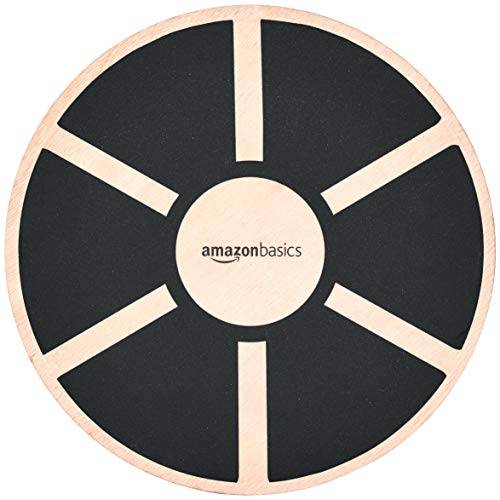
- Supports up to 265 pounds
- Non-slip solid wood platform
- Useful for core, balance, and posture exercises
Best For: Beginners and straightforward home balance training
Best Adjustable Trainer

- Three modes with adjustable stoppers
- Supports up to 300 pounds
- Includes a dynamic training roller
Best For: Progressive adult balance and board-sport training
Best for Mobility
3-in-1 Slant and Balance Board
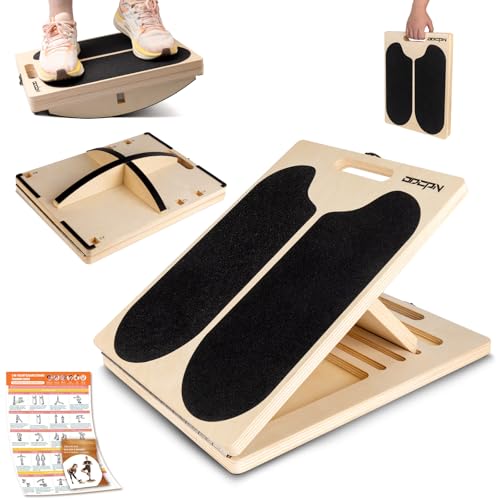
- Combines stretching with two balance modes
- Offers six adjustable slant angles
- Folds flat for compact storage
Best For: Calf stretching, mobility, recovery, and stability work
Best Full-Featured Set
Sportneer 7-Mode Balance Board
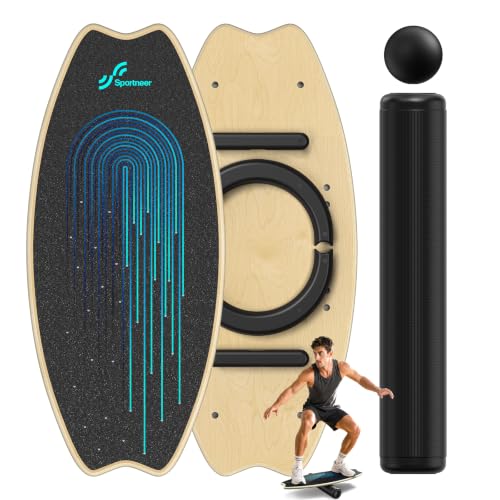
- Seven challenge modes with adjustable stoppers
- Includes roller and solid-rubber ball
- Supports up to 450 pounds
Best For: Athletes and varied sports-balance workouts
Best Interactive Pick

- 12 free games and four sports training modes
- Bluetooth app with feedback and progress tracking
- 450-pound capacity with a wide anti-slip surface
Best For: Interactive workouts, family challenges, and game-based balance training
Best for Everyday Use
Sportneer 7-Mode Balance Board

- Seven training modes with roller and ball
- Tool-free magnetic stopper adjustments
- 450-pound birch-wood design with EVA grip
Best For: Progressive workouts and sport-focused balance training
Best Simple Home Option

- 350-pound reinforced plywood construction
- Preassembled with anti-slip floor pads
- Suitable for therapy, posture, and standing-desk use
Best For: Basic balance practice, rehabilitation, and desk-based movement
Premium Maple Surf Trainer

- 2-ply Canadian maple construction
- Handle hole and storage stand included
- Supports users up to 250 pounds
Best For: Adult board-sport and core training
Portable Stability Pick

- Textured surface with six non-skid feet
- 360-degree rotation and 15-degree tilt
- Lightweight design supports up to 300 pounds
Best For: Portable balance and rehabilitation drills
Adjustable Wooden Trainer

- Three adjustable height levels
- 360-degree rotation with roller and stoppers
- Supports up to 441 pounds
Best For: Progressive adult balance and core workouts
Best Budget Pick – Amazon Basics Wood Wobble Board
If you want a straightforward option among balance boards under 200, this Amazon Basics wobble board focuses on foundational balance, coordination, posture, and core-strength exercises. Its compact wood design works for home workouts, gyms, and rehabilitation settings.
Best For: Beginners, home workouts, and basic balance or core training.
Pros:
- Solid wood top supports up to 265 pounds.
- Non-slip surface helps provide a secure grip.
- Suitable for push-ups, planks, standing poses, and targeted strengthening exercises.
- Compact 15.75-by-15.75-inch footprint is easy to place in a workout space.
Cons:
- Offers a single wobble-board setup rather than multiple training modes.
- Must be used on a dry, non-slip surface, not a wet or smooth one.
This is a practical, uncomplicated choice for shoppers who want a traditional wobble trainer without extra accessories or setup complexity.
Best Adjustable Trainer – 3-Mode Roller Balance Board
Among balance boards under 200, this adjustable roller model stands out for letting adults change the challenge as their skills improve. Adjustable stoppers provide three training modes, while the included roller supports dynamic balance practice.
Best For: Adults who want progressive balance training for fitness or board-sport preparation.
Pros:
- Adjustable stoppers offer three training modes and customizable movement.
- Pressed-wood construction supports up to 300 pounds.
- Full-coverage non-slip surface helps keep feet positioned securely.
- Roller can support training for surfing, skating, snowboarding, skiing, and general fitness.
Cons:
- The supplied configuration and accessories vary by set selection.
- Roller-based training may require more space and control than a basic wobble board.
Its adjustable design gives this board more room to grow with the user, making it a flexible choice for adults building stability and coordination progressively.
Best for Mobility – 3-in-1 Slant and Balance Board
This 3-in-1 model broadens the role of balance boards under 200 by combining calf stretching with 180-degree directional balance and 360-degree rotation. Six slant angles make it useful for mobility work, warm-ups, recovery, and stability practice.
Best For: Calf stretching, ankle mobility, recovery routines, and versatile balance training.
Pros:
- Combines a slant board with 180-degree and 360-degree balance modes.
- Six adjustable angles range from 20 to 45 degrees for varied stretching needs.
- Non-slip EVA base and PVC sandpaper surface support stable footing.
- Magnetic side panels allow quick switching between balance modes and the board folds flat.
Cons:
- Its stated maximum weight recommendation is 300 pounds, despite a higher capacity claim in the feature description.
- More setup components may be less convenient than a simple single-purpose board.
For shoppers who want stretching and balance work in one compact platform, this is the most multifunctional option in the group, especially for mobility-focused routines.
Best Full-Featured Set – Sportneer 7-Mode Balance Board
For shoppers comparing balance boards under 200, the Sportneer offers one of the broadest training setups in this selection. The set includes a board, roller, and ball, with seven challenge modes and removable stoppers for adjusting difficulty.
Best For: Athletes, hobby skaters, and users who want varied balance and sports-training exercises.
Pros:
- Seven challenge modes and four removable magnetic stoppers provide training flexibility.
- Birch construction supports up to 450 pounds.
- Includes both a roller and solid-rubber ball for different exercises.
- Matte surface is designed to provide non-skid grip with bare feet or shoes.
Cons:
- At 10.6 pounds, it is heavier than simpler balance boards.
- The larger 31.5-by-14.17-inch size may need more storage space.
- Its many modes and accessories can be more than beginners need.
This is the strongest choice for users who value variety, high weight capacity, and sport-specific balance practice over a minimal setup.
Best Interactive Pick – GoBalance Sport-Play
For shoppers comparing balance boards under 200, the GoBalance Sport-Play stands out as an app-enabled option that combines balance practice with games and workout tracking. Its wide wooden surface, removable soft mat, and 450-pound recommended capacity make it suited to varied home workouts.
Best For: Teens and adults who want interactive balance training, family games, and guided core workouts.
Pros:
- Includes 12 free interactive games and four sports training modes.
- Bluetooth app provides real-time feedback, analysis, and progress tracking.
- Supports multiplayer play with up to four GoBalance boards.
- Wide anti-slip surface includes a removable TPE yoga mat and balance cushion.
Cons:
- The board cannot connect directly to a TV; casting or screen mirroring requires a compatible phone and TV.
- At 8.4 pounds, it is heavier than a basic wobble board.
This is the most feature-rich choice of the three, especially if motivation and variety matter more than a simple, equipment-only design.
Best for Everyday Use – Sportneer 7-Mode Balance Board
Among balance boards under 200, the Sportneer is a versatile pick for users who want to progress beyond basic wobble exercises. It includes a roller, ball, and adjustable stoppers so you can vary the challenge for balance, core, ankle, and sport-specific training.
Best For: Adults seeking progressive home workouts, physical therapy support, or training for sports such as surfing and snowboarding.
Pros:
- Offers seven challenge modes with a roller and 2.8-inch ball.
- Four magnetic stoppers adjust without tools.
- Birch-wood construction supports up to 450 pounds.
- Textured non-slip EVA surface is designed for use with shoes or barefoot.
Cons:
- Its 30.09-inch length and 4.72-inch height require more storage space.
- The multi-mode setup may be more equipment than beginners need.
The Sportneer offers the broadest progression system here, making it a practical choice for users who want one board for balance drills, core work, and athletic conditioning.
Best Simple Home Option – Wooden Wobble Board
For a straightforward choice among balance boards under 200, this wooden wobble board focuses on stability practice without apps or extra components. Its compact profile, reinforced plywood construction, and anti-slip pads suit home exercise, rehabilitation routines, or use beneath a standing desk.
Best For: Beginners, desk users, and adults wanting a simple board for balance, posture, core, or physical therapy exercises.
Pros:
- Supports up to 350 pounds with reinforced plywood construction.
- Anti-slip pads improve grip and help reduce floor scratches and noise.
- Arrives assembled for immediate use.
- Can be used for standing-desk movement and relief from prolonged sitting.
Cons:
- It does not include adjustable modes, a roller, ball, or app-based guidance.
- Its 350-pound capacity is lower than the two other listed options.
This is the most uncomplicated option in the roundup: a compact, ready-to-use board for users who value convenience and basic balance practice over advanced features.
Premium Maple Surf Trainer – Adult Balance Board
This full-size wooden option is a strong choice for shoppers comparing balance boards under 200 who want a surf-training feel and a portable design. Its 2-ply Canadian maple construction, handle hole, and included stand make it practical for regular home, gym, office, or outdoor use.
Best For: Adults and teens training core strength, stability, coordination, and board-sport balance.
Pros:
- Durable 2-ply Canadian maple construction supports up to 250 pounds.
- Handle hole makes it easier to carry between workouts.
- Included storage stand keeps the board upright and organized.
- Supports surf, snowboard, skateboard, ski, yoga, and general fitness practice.
Cons:
- At 7 pounds, it is heavier than the compact plastic wobble-board option.
- The longer board format may require more storage space.
This is a well-rounded pick for adults who value wood construction, portability, and a dedicated storage solution. Its 250-pound capacity and board-sport focus make it especially suitable for structured balance practice.
Portable Stability Pick – No-Skid Wobble Board
For shoppers seeking balance boards under 200 for everyday stability drills, this compact wobble board emphasizes grip and portability. Its textured surface, six non-skid feet, and built-in handle support controlled training at home, in the office, at the gym, or while traveling.
Best For: Adults, athletes, dancers, rehabilitation users, and seniors seeking portable balance and coordination practice.
Pros:
- Textured top and six non-skid feet help provide a stable workout surface.
- 360-degree rotation and a 15-degree tilt support varied drills.
- Lightweight 3.5-pound design includes a portable handle.
- Supports up to 300 pounds and can be used for physical therapy or rehabilitation exercises.
Cons:
- Plastic construction may feel less like a traditional wooden surf trainer.
- Its 15.7-inch platform offers less length than full-size board designs.
This model is a practical choice when easy carrying and secure footing matter most. The compact platform and multidirectional movement make it suited to short balance, mobility, and core sessions.
Adjustable Wooden Trainer – 2-in-1 Balance Board
This 2-in-1 trainer stands out among balance boards under 200 for its adjustable difficulty and high weight capacity. The wooden board offers three height settings, 360-degree rotation, magnetic stoppers, a roller, and a storage rack for progressive practice.
Best For: Adults who want adjustable core, surf, paddle-board, balance, or physical-therapy training.
Pros:
- Three height levels let users adjust training intensity from 2.5 to 2.9 inches.
- 360-degree rotation adds variety for coordination and stability work.
- Multi-layer solid wood construction supports up to 441 pounds.
- Anti-slip surfaces, magnetic stoppers, roller, and storage rack add versatility.
Cons:
- The more advanced setup may be more equipment than beginners need.
- Its 27.6-inch length and included components may require dedicated storage space.
This is the most adjustable choice in the group, making it suitable for users who want to progress gradually or vary their workouts. Its high stated capacity and included storage rack add practical value for frequent training.
How We Picked the Best Balance Boards Under 200
We focused on the features that most affect daily use: platform stability, surface traction, adjustment options, weight capacity, portability, and the learning curve for beginners. We also considered whether each board is suited to general exercise, physical therapy, standing-desk movement, surf-style training, or more advanced balance work.
Because product designs vary widely, we included both straightforward wobble boards and models with rollers, balls, stoppers, multiple modes, or app-connected training. A higher feature count is not automatically better; the right board should suit your experience level and the type of movement you plan to practice.
Quick Comparison
| Board type | Best for | What to look for |
|---|---|---|
| Wobble board | Beginners, mobility, and core work | Grip, controlled tilt, and a stable platform |
| Roller board | Progressive balance training | Adjustable stops, roller size, and clearance |
| Multi-mode trainer | Users who want variety | Secure mode changes and clear instructions |
| App-enabled board | Motivation and guided practice | Bluetooth compatibility, games, and app support |
Key Buying Factors for Balance Boards Under 200
Platform and Surface Grip
Choose a platform large enough for your stance and covered with a genuinely slip-resistant surface. Textured wood, rubber, or dedicated grip coatings can improve confidence, but they do not replace appropriate footwear or a safe practice area.
Difficulty and Adjustability
Fixed wobble boards are usually easier to understand and store. Roller-based models can offer a broader progression, but they require more control and may be unsuitable for users recovering from an injury unless cleared by a professional. Adjustable stoppers are helpful for limiting movement while you learn.
Weight Capacity and Construction
Check the manufacturer’s stated capacity and leave a sensible margin rather than buying at the limit. Wooden boards can feel solid and attractive, while molded platforms may be lighter and easier to clean. Inspect the roller, ball, edges, and attachment points before every session.
Space, Noise, and Safety
Use the board on a level, non-slip floor with enough clearance to step off safely. A mat can reduce noise and protect flooring, although it may change how the board moves. Beginners should practice near a sturdy support and avoid using a balance board when fatigued.
Who Should Buy Which Balance Boards Under 200?
Beginners: Start with a basic wobble board or a model with adjustable stoppers. These designs make it easier to learn weight shifting gradually.
Core and general fitness users: Choose a grippy board with a stable platform and enough tilt to support squats, planks, and standing exercises.
Advanced users and surf-training enthusiasts: Roller or multi-mode boards provide more challenge and progression, but they demand more open space and careful setup.
Physical therapy and mobility users: Prioritize controlled movement, traction, and professional guidance over maximum difficulty. A simple board is often more useful than a feature-heavy trainer.
Desk workers and compact-home users: Look for a lightweight board that stores easily and supports short, controlled sessions. App-enabled options may appeal to shoppers who stay motivated through guided games and progress tracking.