Finding the best balance board for stroke recovery means looking beyond challenging workouts. The right option should support controlled movement, gradual progress, and confident practice at home or alongside a therapist.
This roundup compares 10 balance trainers, ankle boards, and wobble boards with different shapes, surfaces, capacities, and adjustment systems, so you can choose a model that matches current ability and recovery goals.
Best 10 Balance Boards for Stroke Recovery Picks for 2026
Sturdy Home Rehab Pick
Reinforced Wooden Wobble Board

- 350-pound capacity with reinforced construction
- Anti-slip pads help improve floor grip
- Arrives assembled for convenient home use
Best For: Beginners and older adults doing home balance and coordination exercises
Adjustable Recovery Trainer
3-in-1 Slant and Balance Board
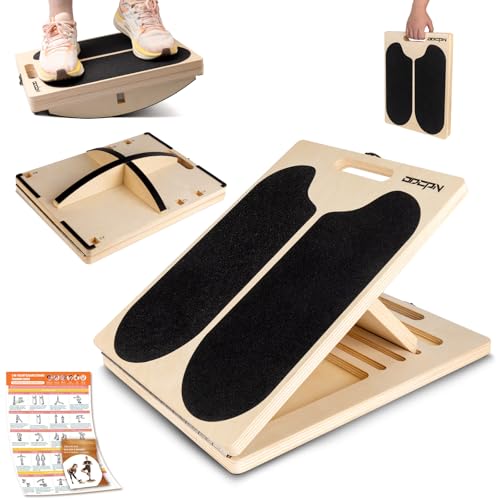
- Offers slant, 180-degree, and 360-degree modes
- Six incline angles support gradual stretching
- Folds flat and includes a training poster
Best For: Users seeking adjustable stretching and balance-training options
Simple Budget Option
Amazon Basics Wood Wobble Board
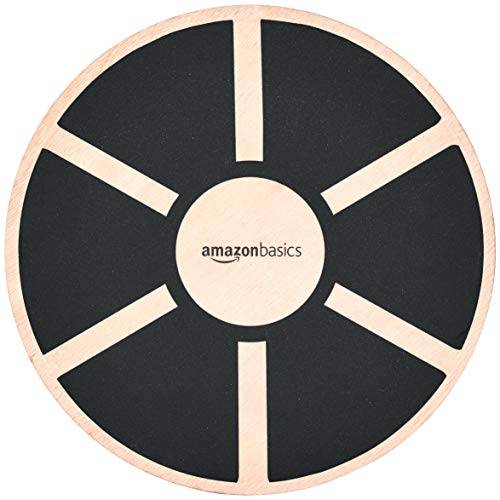
- Solid wood platform supports up to 265 pounds
- Slip-resistant surface supports varied exercises
- Suitable for home, gym, or rehab-center use
Best For: Users wanting a straightforward wobble board for supervised practice
Focused Ankle Rehab Pick
Single-Leg Bamboo Balance Board

- Targets ankle stability and foot strength
- Two quick-release training levels support progression
- Includes guide, carry bag, and scraper tool
Best For: Adults doing focused, supervised single-leg ankle rehabilitation
Everyday Stability Pick
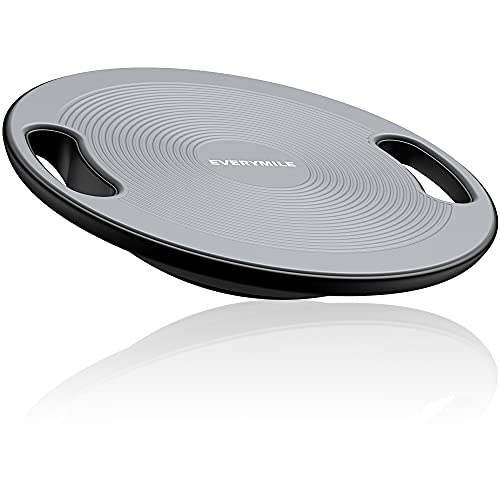
- Six non-skid feet and textured surface
- 360-degree rotation with 15-degree tilt
- Portable 3.5-pound design; supports 300 pounds
Best For: Portable balance and core-stability practice
Targeted Foot Therapy Pick
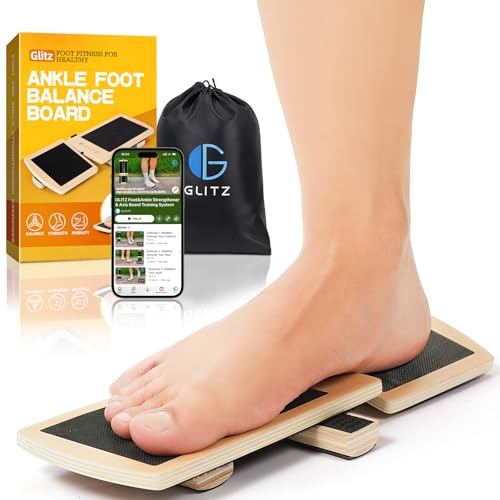
- Adjustable bars target arches through calves
- Non-slip pads on sturdy birch plywood
- Compact design with included video guide
Best For: Focused ankle, foot, and gait-related exercises
Progressive Balance Pick

- Three stopper positions adjust difficulty
- 15-ply wood board supports 300 pounds
- Trains balance, core strength, and coordination
Best For: Advanced, supervised balance progression
Ankle Rehab Pick

- Textured top and non-skid base
- 350-pound stated capacity
- Three progressive plans included
Best For: Compact ankle-focused balance and rehabilitation routines
Full-Size Therapy Pick

- Roomy 17.5-by-13.4-inch platform
- 360-degree rotation design
- Textured, moisture-resistant surface
Best For: Larger-space balance and physical-therapy exercises
Adjustable Progression Pick

- Adjustable pegs customize difficulty
- 360-degree controlled movement
- Illustrated and video guides included
Best For: Progressive, ankle-focused stability training at home
Sturdy Home Rehab Pick – Reinforced Wooden Wobble Board
For shoppers comparing balance boards for stroke recovery, this reinforced wooden wobble board offers a straightforward option for supported balance, coordination, posture, and core-strength work. Its anti-slip pads, assembled design, and 350-pound capacity make it practical for home physical-therapy routines, though exercises should match the user’s abilities and clinician guidance.
Best For: Beginners, older adults, and home users seeking a stable, multipurpose board for balance and rehabilitation exercises.
Pros:
- Supports up to 350 pounds with double reinforcement bands.
- Anti-slip and anti-scratch pads help grip the floor while reducing noise and wear.
- Arrives assembled for immediate use.
- Can also support posture work, core training, and standing-desk movement.
Cons:
- Its fixed design does not offer adjustable difficulty levels.
- The product notes do not specify a handrail or other external support.
This is a sensible all-around choice when durability and simple setup matter most. For stroke recovery, use it on a dry, stable surface and begin with appropriate supervision or professional instruction.
Adjustable Recovery Trainer – 3-in-1 Slant and Balance Board
This 3-in-1 model gives people exploring balance boards for stroke recovery several ways to progress, combining calf stretching with 180-degree directional balance and 360-degree rotation. Six incline settings and interchangeable balance modes add versatility, but users should select gentle settings and follow professional guidance when needed.
Best For: Users who want one compact board for stretching, ankle mobility, directional balance, and progressively varied training.
Pros:
- Combines a slant board with 180-degree and 360-degree balance modes.
- Six adjustable incline angles range from 20 to 45 degrees.
- Non-slip EVA base and PVC sandpaper surface support stable footing.
- Magnetic side panels switch between balance modes and the board folds flat for storage.
Cons:
- The maximum-weight information is inconsistent: the description cites 460 pounds, while the details list 300 pounds.
- Changing modes requires handling detachable side panels.
- Its multifunction design may be more than needed for basic balance practice.
The adjustable format is appealing for structured progression and mixed mobility work. Before purchase, verify the applicable weight limit and use the included poster as a supplement—not a replacement—for individualized rehabilitation advice.
Simple Budget Option – Amazon Basics Wood Wobble Board
For a simple approach to balance boards for stroke recovery, this Amazon Basics wood wobble board supports standing balance, posture, coordination, and core exercises. The slip-resistant top and familiar square platform suit home or rehabilitation-center use, provided it is placed on a dry, non-slip surface.
Best For: Users who want a basic, multipurpose wobble board for supervised balance and strengthening exercises.
Pros:
- Solid wood top supports up to 265 pounds.
- Slip-resistant surface helps provide a secure grip.
- Suitable for standing poses, planks, push-ups, and targeted strengthening.
- Works in home workout spaces, gyms, or rehabilitation centers.
Cons:
- It should not be used on wet or smooth surfaces.
- There are no adjustable settings or included rehabilitation instructions noted.
- The 265-pound capacity is lower than some alternatives in this roundup.
This is a no-frills choice for buyers who value a recognizable brand and uncomplicated construction. Its lack of adjustability makes careful setup, supervision, and appropriately scaled exercises especially important during recovery.
Focused Ankle Rehab Pick – Single-Leg Bamboo Balance Board
This single-leg bamboo board is a targeted option among balance boards for stroke recovery, emphasizing ankle stability, foot strength, mobility, and controlled one-foot training. Its two resistance levels, quick-release system, and photo-based guide can support progression, but single-leg work should be introduced only when it is safe for the user.
Best For: Adults focusing on one-foot ankle control, stability, mobility, and rehabilitation exercises.
Pros:
- Designed for focused single-leg ankle and foot training.
- Quick-release system provides two training levels without stuck Velcro.
- Smooth bamboo construction and high-grip surface support comfortable footing.
- Includes a training guide, QR-linked routines, carry bag, and scraper tool.
Cons:
- Its single-leg format may be too challenging for users with limited standing stability.
- It is specialized for ankle and foot work rather than a broad full-body wobble-board routine.
- The supplied details do not state a maximum weight recommendation.
This is the most targeted choice for ankle-focused progression and portability. The guided materials are useful, but stroke-recovery users should confirm that single-leg exercises are appropriate with a physical therapist or caregiver.
Everyday Stability Pick – No-Skid Wobble Board
For shoppers comparing balance boards for stroke recovery, this wobble board offers a stable, approachable design for balance, coordination, and core-training drills. Its textured surface, six non-skid feet, and portable handle make it practical for supervised home exercise or therapy routines.
Best For: Adults and seniors seeking a portable board for gentle balance, stability, and rehabilitation exercises.
Pros:
- Textured anti-slip surface and six non-skid feet support a stable stance.
- 360-degree rotation and a 15-degree tilt allow varied movement drills.
- Lightweight 3.5-pound design includes a carrying handle.
- Supports users up to 300 pounds.
Cons:
- The rotating platform may be challenging for users with limited balance.
- It is designed for adult use rather than specifically tailored stroke therapy.
Among these balance boards for stroke recovery, this is the most straightforward general-purpose option. Use it only at an appropriate difficulty level and with professional or caregiver guidance when needed.
Targeted Foot Therapy Pick – Adjustable Ankle Trainer
For balance boards for stroke recovery that focus on the feet and ankles, this compact trainer provides a more targeted format than a standard wobble board. Adjustable Velcro balance bars and tilt-based movements allow users to work on foot mobility, ankle stability, and body control.
Best For: Patients, athletes, and therapy users concentrating on ankle strength, foot mobility, and gait-related practice.
Pros:
- Adjustable balance bars support targeted training from the arches to the calves.
- Non-slip pads and birch plywood construction provide a sturdy exercise platform.
- Compact, lightweight design is suitable for home, therapy sessions, work, or travel.
- Includes a video guide for learning proper form.
Cons:
- Its small, foot-focused design may be less suitable for full-body balance drills.
- The listed maximum weight recommendation is unusually high, so users should confirm suitability with a professional.
This is the most specialized choice in the group for ankle and foot exercises. Its adjustable components may help tailor practice, but stroke-recovery users should follow a clinician-approved routine and begin with support as necessary.
Progressive Balance Pick – Adjustable Surf Trainer
For shoppers seeking balance boards for stroke recovery with adjustable difficulty, this surf-style trainer offers three stopper positions or a fully open setup. Its larger board and roller are built for balance control, coordination, and core work, though the surf-training format is best approached cautiously.
Best For: More advanced users who can safely practice standing balance and want adjustable progression for core and coordination training.
Pros:
- Removable stoppers provide 11-, 16-, and 22-inch difficulty settings.
- 15-ply pressed wood construction supports up to 300 pounds.
- Emery surface and TPE-covered roller help provide grip and smoother use.
- Trains balance, body control, core strength, and lower-body muscles.
Cons:
- The rolling design can be demanding for users with significant balance limitations.
- Its 29.53-inch length and 3.9-kilogram weight make it less portable than smaller boards.
- It is a sports trainer, not a stroke-specific rehabilitation device.
This board offers the widest progression range, but it also carries the greatest balance challenge of the three. Start with the stoppers installed, use a secure support nearby, and seek professional guidance before progressing.
Ankle Rehab Pick – Compact Stability Trainer
For shoppers comparing balance boards for stroke recovery, this compact ankle board offers a simple way to add controlled stability work at home or in a gym. Its textured top and non-skid rubber base are designed to help reduce slipping during exercises, while the included guide provides three progressive training plans.
Best For: Adults seeking a compact ankle-focused board for balance practice, rehabilitation routines, and gradual progression.
Pros:
- Textured surface and non-skid rubber base support safer use.
- Compact, lightweight design is easy to store and transport.
- Supports up to 350 pounds according to the supplied specifications.
- Includes beginner-to-advanced workout plans.
Cons:
- The small 7.5-by-4.8-inch footprint may feel limiting for broader exercises.
- Its ankle-focused design may be less versatile than a full-size balance board.
This is a practical option when you want targeted ankle stability work and clear progression guidance, but users needing a larger standing platform may prefer a wider board.
Full-Size Therapy Pick – 360° Wood Balance Board
Among balance boards for stroke recovery, this full-size wooden model stands out for its broad platform and 360-degree rotation design. The textured gray surface is intended to improve grip, while the larger deck can accommodate balance, core, and assisted physical-therapy exercises.
Best For: Adults who want a larger wooden platform for balance training, physical therapy exercises, and progressive stability work.
Pros:
- 17.5-by-13.4-inch platform provides more room than compact ankle boards.
- 360-degree rotation supports multidirectional balance practice.
- Textured, moisture-resistant surface is designed for grip and durability.
- Supports up to 350 pounds according to the product details.
Cons:
- At 2.68 kg, it is considerably heavier than the compact alternatives.
- The larger rotating platform may be more challenging for beginners.
- Its size requires more storage space.
This board is the most substantial choice in the group for users who value a stable, roomy surface and multidirectional movement; beginners should start with exercises appropriate to their ability.
Adjustable Progression Pick – Ankle Stability Board
For balance boards for stroke recovery, this adjustable ankle board is designed around gradual progression. Its adjustable pegs allow users to vary the challenge, while the textured birch-wood surface and included illustrated and video guidance support structured practice at home.
Best For: Adults who want customizable ankle stability training that can progress from seated exercises to more advanced drills.
Pros:
- Adjustable pegs allow users to customize training difficulty and positioning.
- 360-degree controlled movement targets ankle stability and coordination.
- Textured, non-slip surface is intended for secure barefoot use.
- Supports up to 400 pounds according to the supplied specifications.
Cons:
- The narrow 11.8-by-4.3-inch format is focused on ankle work rather than broad standing exercises.
- Its adjustable system may require more setup and learning than a basic board.
This is the strongest fit for shoppers who prioritize adjustable difficulty and guided progression. Because balance needs vary, use it within an appropriate recovery plan and advance gradually.
How We Picked the Best Balance Boards for Stroke Recovery
We focused on features that matter during rehabilitation rather than treating every balance board as a general fitness accessory. Our comparison considers platform stability, nonslip surfaces, range of motion, adjustability, weight capacity, portability, and how easily a user can progress from supported exercises to more demanding balance work.
Because stroke recovery varies widely, no balance board should be treated as a substitute for assessment or supervision from a physical or occupational therapist. Models with a broad platform, modest movement, and dependable traction are generally more appropriate for beginners than highly unstable trainers.
Quick Comparison
| Best For | Look For | Most Suitable Design |
|---|---|---|
| Early balance practice | Wide deck, low tilt, strong grip | Stable wobble board |
| Ankle and foot work | Compact platform, controlled movement | Single-leg or ankle board |
| Progressive rehabilitation | Adjustable difficulty or stoppers | Adjustable balance trainer |
| Stretching and mobility | Angled surface and secure footing | Slant or combination board |
| Advanced training | Greater tilt and durable construction | Sports-style balance board |
Key Buying Factors for Balance Boards for Stroke Recovery
Stability and Movement Range
Start with predictable movement. A board that tilts only slightly can help users practice weight shifting without introducing unnecessary instability. Adjustable stoppers or a restrained pivot may be especially useful as strength and coordination improve.
Surface Traction
A textured, slip-resistant surface is essential, but it does not eliminate the need for appropriate footwear, a clear floor, and nearby support. Avoid using a board on loose rugs or wet surfaces.
Platform Size and Capacity
A wider deck usually provides more room for foot placement and can feel less intimidating. Check the stated weight capacity and platform dimensions, particularly when the board will be used with shoes, a support rail, or other rehabilitation equipment.
Adjustability and Progression
Adjustable trainers can accommodate changing goals, while simple wooden wobble boards may be easier to understand and set up. For stroke recovery, useful adjustability should make exercises safer and more controlled—not simply more difficult.
Supervision and Setup
Choose a board that can be positioned near a countertop, parallel bars, or another stable support. A therapist should help determine whether standing, seated, assisted, or single-leg exercises are appropriate.
Who Should Buy Which Balance Boards for Stroke Recovery?
Choose a broad, low-motion wobble board if the priority is basic weight shifting and supported standing. Choose an ankle balance board for targeted foot, ankle, and lower-leg exercises, provided the user can control the smaller platform safely. Choose an adjustable model when a therapist expects the user to progress through several difficulty levels. Choose a slant-board combination when calf stretching and mobility work are also part of the routine. Choose a sports-style board only for users who have already developed sufficient control and have professional approval for more demanding balance challenges.
The best Balance Boards for Stroke Recovery are the ones that fit the user’s current abilities, home setup, and treatment plan. Prioritize traction, controllability, and safe progression over advanced features or maximum instability.