After hip replacement surgery, an ordinary low chair can make sitting down and standing up harder than they need to be. A higher seat, supportive arms, and a stable frame may make everyday transfers more manageable while you follow your care team’s instructions.
These five options range from adjustable hip chairs to a heavy-duty high chair. The right choice depends on your prescribed sitting precautions, your height, and where you plan to use it.
Best 5 Hip Replacement Recovery Chairs Picks for 2026
Most Adjustable
Platinum Health APEX Premium Hip Chair

- Seat height adjusts from 23 to 27.5 inches.
- Seat angle adjusts from level to 13 degrees front-down.
- Padded, removable arms; suitable for shower use.
Best For: Recovery seating that needs adjustable height and tilt.
Best Fixed-Height Comfort

- Fixed 27-inch-high seat.
- Padded seat, back, and full-length arms.
- Height-adjustable footrest with anti-slip strip.
Best For: Cushioned high seating with footrest support.
Best Multipurpose Stool
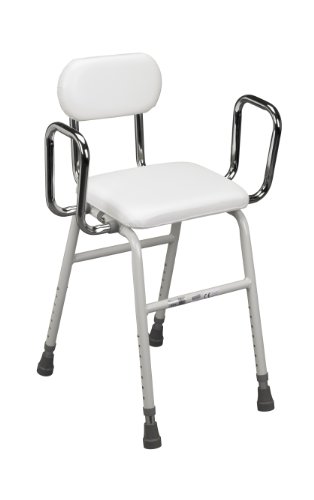
- Push-button height-adjustable legs.
- Width-adjustable, removable arms.
- 15 pounds; 300-pound maximum weight recommendation.
Best For: Adjustable recovery seating that doubles as a kitchen stool.
Heavy-Duty Pick
Helsevesen 500 lb Hip Surgery Chair

- Stated 500 lb capacity
- Cushioned, wipe-clean seat
- Armrests for standing leverage
Best For: Higher-capacity seating with a padded seat and arms
Classic Hip-High Pick

- 26-inch seat height
- Back and contoured arms
- 300 lb stated capacity
Best For: Fixed-height seating with a back and arms
Most Adjustable – Platinum Health APEX Premium Hip Chair
Among hip replacement recovery chairs, the APEX stands out for its adjustable seat height and angle. The seat raises from 23 to 27.5 inches, while its front-down tilt adjusts from level to 13 degrees to help limit hip flexion when sitting down or standing up.
Best For: People who need both seat-height and seat-angle adjustments during recovery.
Pros:
- Padded seat, back, and armrests provide support and leverage.
- Aluminum frame and water-resistant foam allow shower use.
- Armrests can be removed for better access to tables or countertops.
Cons:
- 265-pound maximum weight recommendation may rule it out for some users.
- Its 13-inch seat depth may feel shallow to some sitters.
The adjustable tilt is the main reason to choose this chair over a fixed-height option. Confirm the seat dimensions and weight limit before buying, and follow your care team’s guidance on positioning.
Best Fixed-Height Comfort – Lumex Everyday Hip Chair
Lumex Everyday Hip Chair with Adjustable Footrest for Hip or Knee Surgery Recovery, Rosewood
Check Price On AmazonIf you are comparing hip replacement recovery chairs for longer seated activities, the Lumex Everyday pairs a tall 27-inch seat with a padded back and seat. Full-length padded arms offer leverage for sitting and standing, and the footrest adjusts in height.
Best For: Someone who wants cushioned, high seating with an adjustable footrest.
Pros:
- High-density foam cushions the seat and backrest.
- Full-length padded arms offer support during transfers.
- Footrest has a textured anti-slip strip.
Cons:
- The 27-inch seat height is fixed, so it cannot be tailored to every user.
- At 43.3 pounds, it is heavier than the other chairs listed here.
This is a practical choice when 27 inches is an appropriate seat height and comfort matters during daily use. Check that height against your individual recovery instructions before ordering.
Best Multipurpose Stool – Drive Medical 12455
For shoppers considering hip replacement recovery chairs that can also serve at a kitchen counter, the Drive Medical 12455 is a compact adjustable stool. Push-button legs change its height, while an angled seat, backrest, and arms support everyday sitting and standing.
Best For: Someone who wants adaptable counter-height seating as well as a recovery stool.
Pros:
- Push-button height adjustment helps tailor the fit.
- Arms adjust in width and can be removed.
- Non-slip rubber feet and a powder-coated steel frame support stable placement.
Cons:
- The supplied details do not specify the full seat-height range, so verify the setting you need.
- Stool-style seating may be less suitable if you want a padded, full-size chair.
At 15 pounds, this is the lightest of the three listed options, and its 300-pound maximum weight recommendation is worth noting. Prioritize a seat height that matches your care team’s instructions.
Heavy-Duty Pick – Helsevesen 500 lb Hip Surgery Chair
Among hip replacement recovery chairs, the Helsevesen chair stands out for its steel frame and stated 500 lb capacity. Its raised seat and armrests are designed to make sitting down and standing up easier after hip or knee surgery.
Best For: Shoppers who need a higher-capacity chair with a cushioned seat and arms for leverage.
Pros:
- Stated 500 lb weight capacity.
- Cushioned, waterproof leatherette upholstery can be wiped clean.
- Armrests provide leverage when standing.
Cons:
- One listed height position limits fit adjustments.
- Assembly requires aligning screws before tightening them.
The extra capacity and padded seat make this a practical option if they match your needs. Check the seat dimensions against your post-surgery seating instructions before buying.
Classic Hip-High Pick – Drive Medical Hip High Chair
The Drive Medical Hip High Chair is a straightforward choice among hip replacement recovery chairs. Its 26-inch-high seat is designed to help post-hip-surgery users sit without bending as far at the hip, while the backrest and contoured arms add support.
Best For: Shoppers seeking a fixed-height, wipe-clean hip chair with a back and arms.
Pros:
- 26-inch seat height helps reduce hip bending when sitting.
- Backrest and contoured armrests provide support.
- Vinyl seat wipes clean; stated weight capacity is 300 lb.
Cons:
- One listed height position means the seat height is not adjustable.
- 17.5 inches between the arms may feel narrow for some users.
This is a practical, no-frills option if its seat height and space between the arms fit you. Confirm those measurements against your clinician’s guidance before purchasing.
How We Picked These Hip Replacement Recovery Chairs
We focused on features that matter during post-surgery transfers: an elevated sitting position, usable arm supports, stable construction, and adjustability where available. The five selections cover different needs rather than assuming one chair fits everyone. A product name or advertised capacity is not a substitute for checking its current specifications, dimensions, and assembly instructions before buying.
Your surgeon or physical therapist may give you specific rules about hip flexion, bending, and sitting. Use those instructions—not a chair’s marketing claims—to decide whether a seat height, angle, or footrest is appropriate.
Quick Comparison
For the most seat-position adjustment, start with the Platinum Health APEX hip chair. The Lumex Everyday Hip Chair offers an adjustable footrest for shoppers who need a place to position their feet. The Drive Medical 12455 is an adjustable-height stool with a back and arms, while the Drive Medical 17100-BV is a hip-high chair with a back and arms. The Helsevesen chair is the heavy-duty option, advertised with a 500-pound capacity; confirm its stated limit and sizing for your intended use.
Key Buying Factors for Hip Replacement Recovery Chairs
Seat Height and Transfer Position
Look for a height that lets you sit and rise without dropping into a deep bend or pushing up from a low cushion. Adjustable height can help accommodate different users, shoes, and rooms. Check the listed seat-height range against a measurement taken with guidance from your care team.
Arms, Back, and Stability
Armrests can provide a place to steady yourself during transfers, but they must be positioned where you can reach them comfortably. A backrest may help with seated support; it does not replace good posture or prescribed movement precautions. Check the chair’s footprint, leg design, weight rating, and floor-surface guidance, especially if it will sit on tile or another smooth floor. Do not use a chair that rocks or shifts under you.
Fit and Everyday Use
Compare seat width and depth with your body size and available space. Make sure the chair leaves room to approach it with any walker or other mobility aid you use. If a model has a footrest or angled seat, ask your therapist whether that position fits your recovery plan. Also check whether the chair needs assembly and whether it can be moved safely between rooms.
Who Should Buy Which Hip Replacement Recovery Chairs?
Choose the Platinum Health model if adjustable seat height and angle are your priorities, subject to your clinician’s approval. Consider the Lumex if an adjustable footrest is useful for your setup. Compare the two Drive Medical options if you want a straightforward back-and-arms design, choosing based on the dimensions and height range that fit you. Consider the Helsevesen if you need a higher advertised weight capacity and have verified the chair’s fit and current specifications.
Before ordering any hip replacement recovery chair, measure your space and confirm your transfer plan with your care team. The best chair is one you can approach, sit in, and leave while following your individual precautions.