Finding dependable trail footwear does not have to mean spending more than $100. The best budget trail shoes balance traction, cushioning, protection, and everyday comfort without unnecessary features that add cost.
We selected 10 affordable options for runners, hikers, and walkers, including waterproof designs, wide toe boxes, barefoot-style shoes, and versatile models for roads and light trails.
Best 10 Trail Running Shoes Under 100 Picks for 2026
Maximum Cushioning Pick

- Rearfoot GEL and AMPLIFOAM PLUS cushioning
- Breathable mesh upper with OrthoLite sockliner
- Trail-oriented molded rubber outsole
Best For: Comfort-focused trail runners who can account for a small fit
Versatile Trail Value
- Carbon-rubber lugs provide traction
- Moderate VERSARUN cushioning
- Supportive, debris-blocking mesh upper
Best For: Trail runners and hikers wanting balanced everyday performance
Lightweight Traction Pick
Under Armour Charged Bandit Trail 3

- Ventilated two-tone mesh upper
- Charged Cushioning foam supports responsiveness
- Technical lugs aid uphill and downhill traction
Best For: Dry-trail runners who want a lightweight, true-to-size shoe
Rugged Hiking Crossover

- Traxion outsole grips in multiple directions
- EVA midsole cushions each step
- Reinforced toe cap supports durability
Best For: Hiking and casual trail use on rugged terrain
Natural-Flex Trail Design

- Spacious barefoot-style forefoot
- 3mm grippy trail lugs
- Minimal cushioning and lightweight build
Best For: Minimalist runners who value toe splay and ground feedback
All-Terrain Cushioned Ride

- Fresh Foam and BIO Foam cushioning
- AT Tread all-terrain outsole
- Breathable mesh with reinforced overlays
Best For: Neutral runners mixing trail runs, hiking, and road sections
Trail-Ready Value
Lightweight NORTIV 8 Trail Shoes

- Flexible EVA cushioning for running and hiking
- 4mm rubber lugs grip varied terrain
- Breathable mesh with TPU toe protection
Best For: Versatile trail running, hiking, and outdoor walking
Wet-Weather Pick
Waterproof FENLERN Trail Sneakers

- Waterproof fabric helps keep feet dry
- Grooved rubber sole supports traction
- Lightweight design suits long outdoor walks
Best For: Hiking and everyday outdoor use in damp conditions
Roomy Fit Choice

- Wide toe box reduces forefoot squeeze
- 5mm drop supports a natural foot position
- EVA cushioning and 4mm lugs aid trail comfort
Best For: Runners and walkers wanting extra toe room
Maximum Cushioning Pick – ASICS Gel-Venture 11
If you want trail running shoes under 100 with a comfort-focused ride, the ASICS Gel-Venture 11 combines Rearfoot GEL technology, AMPLIFOAM PLUS cushioning, and a breathable mesh upper. Its molded rubber outsole is suited to trail use, though the fit runs small.
Best For: Runners seeking maximum cushioning for casual trail outings.
Pros:
- Rearfoot GEL technology helps absorb shock.
- AMPLIFOAM PLUS provides a softer, comfortable ride.
- OrthoLite Hybrid Max Lite sockliner supports moisture management and cushioning.
- Molded rubber outsole is designed for trail surfaces.
Cons:
- Runs small, so sizing deserves careful attention.
- Not water resistant.
The Gel-Venture 11 is a sensible value choice when cushioning is your priority. Check the fit before ordering, especially if you typically need extra room.
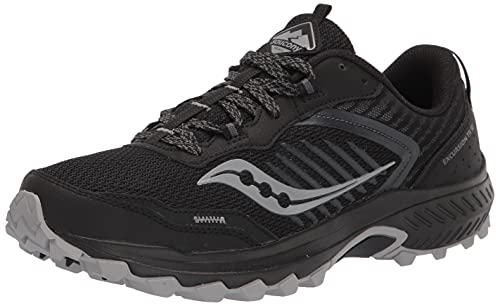
Versatile Trail Value – Saucony Excursion TR15
The Saucony Excursion TR15 is a practical option among trail running shoes under 100, pairing moderate VERSARUN cushioning with a mesh upper and supportive overlays. Its carbon-rubber lugs provide grip for trail running and hiking, while the design remains relatively streamlined.
Best For: Everyday trail running, hiking, and mixed outdoor use.
Pros:
- Carbon-rubber lugs offer grippy footing.
- VERSARUN cushioning provides moderate underfoot comfort.
- Supportive overlays help secure the foot and protect from debris.
- Contains recycled materials.
Cons:
- Not water resistant.
- Moderate rather than maximum cushioning.
- Product details list the surface recommendation as road despite its trail-running design.
Choose the Excursion TR15 if you want a balanced shoe for regular outings rather than an especially cushioned or technical model. Its versatile construction also suits hiking.
Lightweight Traction Pick – Under Armour Charged Bandit Trail 3
For trail running shoes under 100 that emphasize a light feel, the Under Armour Charged Bandit Trail 3 uses an engineered mesh upper, targeted overlays, and a molded sockliner. Charged Cushioning adds responsive foam underfoot, while technical trail lugs support climbs and descents.
Best For: Runners who prioritize ventilation, low weight, and trail traction.
Pros:
- Lightweight mesh construction improves ventilation.
- Technical trail lugs provide traction on uphill and downhill sections.
- Charged Cushioning foam is designed for responsiveness and durability.
- Molded sockliner helps reduce slippage.
Cons:
- Not water resistant.
- Offers moderate/high cushioning rather than a maximum-cushioning setup.
- Mesh construction may provide less protection from wet conditions.
The Charged Bandit Trail 3 is a strong fit for warm-weather or dry-trail use when ventilation and traction matter. Its true-to-size fit also simplifies ordering.
Rugged Hiking Crossover – adidas Terrex Anylander
The adidas Terrex Anylander is worth considering alongside trail running shoes under 100 if you need a hiking-oriented model with dependable grip. It combines an EVA midsole, reinforced toe cap, and Traxion outsole with a lightweight textile upper made partly from recycled and renewable materials.
Best For: Hikers and casual trail users who want rugged-terrain traction.
Pros:
- Traxion outsole uses directional lugs for grip in multiple directions.
- EVA midsole provides step-absorbing comfort.
- Reinforced toe cap adds durability.
- Uses a blend of recycled and renewable materials.
Cons:
- Designed primarily as a hiking shoe rather than a dedicated trail-running shoe.
- Not water resistant.
- The textile upper may offer less weather protection than a waterproof design.
The Anylander makes the most sense for hiking and slower-paced trail use. Its 10 mm drop and Traxion outsole support comfortable movement across rugged terrain, but runners seeking a purpose-built racing shoe may prefer a lighter trail-specific option.
Balanced Trail Comfort – Saucony Excursion TR16
For runners seeking trail running shoes under 100, the Saucony Excursion TR16 offers a practical mix of moderate cushioning, breathable construction, and dependable traction. Its VERSARUN cushioning is designed for balanced comfort, while carbon-rubber lugs support confident movement across varied trail surfaces.
Best For: Neutral runners who want a lightweight, flexible shoe for trail running, hiking, and everyday outdoor use.
Pros:
- VERSARUN cushioning provides moderate underfoot comfort.
- Carbon-rubber lugs offer grip across different terrain.
- Breathable mesh construction helps keep the shoe lightweight and flexible.
Cons:
- It is not water resistant.
- The shoe provides neutral support rather than pronation correction.
The Excursion TR16 is a straightforward choice for runners who prioritize balanced cushioning and trail traction without adding unnecessary features.
Natural-Flex Trail Design – WHITIN Wide Barefoot W51
Among trail running shoes under 100, the WHITIN W51 stands out for its wide barefoot design and minimal cushioning. The spacious forefoot supports natural toe splay, while the 3mm trail lugs and protective overlays provide traction and a secure fit on outdoor paths.
Best For: Runners and hikers who prefer a minimalist, wide-foot design with strong ground feedback and natural flexibility.
Pros:
- Wide forefoot allows natural foot movement and toe splay.
- 3mm trail lugs provide grip while retaining ground feedback.
- Supportive overlays and padded collar help secure the foot.
- Lightweight construction suits hiking, walking, and cross-training.
Cons:
- Minimal cushioning may feel less protective on rugged terrain.
- It is not water resistant.
- The barefoot-style fit may not suit runners accustomed to traditional cushioning.
The W51 is best viewed as a minimalist trail option: flexible and spacious, with enough outsole grip for outdoor use but limited cushioning for runners wanting a plush ride.
All-Terrain Cushioned Ride – New Balance Fresh Foam 410v9
For shoppers comparing trail running shoes under 100, the New Balance Fresh Foam 410v9 combines moderate cushioning with versatile all-terrain traction. Fresh Foam and BIO Foam midsole technologies are intended to soften impact and reduce fatigue, while the mesh upper and reinforced overlays balance airflow with durability.
Best For: Neutral runners who want a cushioned trail shoe for running, hiking, and mixed on-road or off-road use.
Pros:
- Fresh Foam cushioning delivers lightweight shock absorption.
- AT Tread outsole supports traction across road and trail surfaces.
- Breathable mesh and reinforced overlays combine airflow with durability.
- Lace-up closure allows a customized, secure fit.
Cons:
- It is not water resistant.
- Neutral construction does not provide pronation correction.
- The listed weight is 1.9 pounds, which may feel less light than minimalist options.
The Fresh Foam 410v9 is a versatile pick for runners who want more cushioning and a smoother transition between paved routes, hiking paths, and uneven trails.
Trail-Ready Value – Lightweight NORTIV 8 Trail Shoes
If you’re shopping for trail running shoes under 100, the NORTIV 8 Men’s Trail Running Walking Shoes offer a practical mix of cushioning, airflow, and traction. Their flexible EVA midsole supports running, hiking, and walking, while the rubber outsole uses 4mm lugs for grip on varied surfaces.
Best For: Trail runners, hikers, and active shoppers who want versatile outdoor shoes with moderate cushioning and dependable traction.
Pros:
- Lightweight EVA midsole provides cushioning and responsive energy return.
- 4mm multi-directional rubber lugs support traction on dirt, wet surfaces, and uneven terrain.
- Breathable mesh upper helps promote airflow during longer outings.
- TPU toe adds protection against roots and bumps.
Cons:
- Not water resistant, so they are less suited to consistently wet conditions.
- Moderate cushioning may not satisfy shoppers seeking a highly cushioned feel.
Choose this pair if you want one shoe for trail running, hiking, walking, and casual outdoor wear. It emphasizes versatility and stability rather than specialized weather protection.
Wet-Weather Pick – Waterproof FENLERN Trail Sneakers
Among trail running shoes under 100, these FENLERN hiking sneakers stand out for their waterproof fabric and grooved rubber outsole. The lightweight design is aimed at reducing fatigue, while the sole is built to provide traction across soft, loose, and rugged terrain.
Best For: Hikers and casual outdoor users who prioritize waterproof coverage, lightweight comfort, and an adaptable everyday style.
Pros:
- Waterproof fabric helps block water and moisture.
- Lightweight construction is designed for extended walking and trekking.
- Grooved rubber sole supports anti-slip traction on varied terrain.
- Suitable for hiking, jogging, walking, camping, travel, and general workouts.
Cons:
- The notes do not specify cushioning or arch-support levels.
- The casual styling may be less focused on technical trail-running features.
This is a sensible option when water resistance is a higher priority than detailed performance construction. Its broad activity range also makes it useful for outdoor errands and everyday wear.
Roomy Fit Choice – NORTIV 8 Wide Toe Box Shoes
For shoppers seeking trail running shoes under 100 with more forefoot room, the NORTIV 8 Wide Toe Box Trail Running Shoes use a spacious toe box and a 5mm heel-to-toe drop. They combine breathable mesh, EVA cushioning, and 4mm rubber lugs for trail running, hiking, and daily walking.
Best For: Runners and walkers who prefer a roomy toe box, low-drop geometry, and moderate cushioning for mixed outdoor use.
Pros:
- Wide toe box allows toes to spread naturally and may support balance.
- 5mm drop promotes a more natural foot position while reducing forefoot pressure.
- Removable insole and EVA midsole provide customizable, lightweight cushioning.
- 4mm rubber lugs support traction on dirt, gravel, and wet surfaces.
Cons:
- Not water resistant, limiting use in persistently wet weather.
- The roomy shape may not suit runners who prefer a snug forefoot fit.
This pair is especially compelling if toe space and a lower-drop platform matter to you. It balances trail grip with breathable construction and everyday versatility, without adding excessive bulk.
How We Picked the Best Trail Running Shoes Under 100
We focused on practical value rather than marketing claims. Each shoe was considered for outsole traction, midsole cushioning, upper durability, weather resistance, fit options, and versatility across dirt paths, gravel, packed trails, and everyday walking. We also included different design priorities so shoppers can choose between traditional cushioning, minimalist flexibility, wider forefoot room, and hiking-oriented protection.
At this price, compromises are normal. Budget shoes may use simpler materials, offer less rock protection, or have less refined fit than premium trail models. The strongest choices deliver the features most important for their intended terrain while remaining comfortable enough for regular use.
Quick Comparison
| Best For | Recommended Style | What to Look For |
|---|---|---|
| General trail running | Cushioned trail shoe | Secure heel, grippy outsole, breathable upper |
| Hiking and mixed use | Trail-hiking shoe | Durable upper, stable platform, protective toe area |
| Wet conditions | Water-resistant or waterproof shoe | Weather-resistant construction and traction |
| Wide feet | Wide toe-box design | Nonrestrictive forefoot and adjustable lacing |
| Minimalist running | Barefoot-style shoe | Flexible sole, low stack, natural toe movement |
Key Buying Factors for Trail Running Shoes Under $100
Traction and Outsole Design
Look for multidirectional lugs that can bite into loose dirt, grass, and uneven surfaces. Shallower, closely spaced tread is often better for packed trails and road-to-trail use, while deeper lugs suit mud and softer ground. No budget outsole performs perfectly everywhere, so match the tread to your usual routes.
Cushioning and Stability
More cushioning can improve comfort on long walks and hard-packed trails, while a lower, firmer platform may provide a more connected feel on technical ground. A secure heel and supportive midfoot are especially important when descending or carrying a pack.
Fit and Foot Shape
Leave enough room for your toes to spread and for feet to swell during longer outings. Wide-toe-box models can help runners who dislike pressure at the front, but they may feel less secure if the heel and midfoot are not laced firmly. Check sizing guidance carefully, especially when buying online.
Weather Protection and Durability
Waterproof uppers help in rain and shallow wet grass but may reduce breathability. Mesh shoes dry faster and are often more comfortable in warm conditions. Reinforced toe areas, sturdy overlays, and abrasion-resistant materials can extend useful life on rocky trails.
Who Should Buy Which Trail Running Shoes Under 100?
Choose a cushioned model such as the ASICS, Saucony, or New Balance options if you want a familiar running-shoe feel for parks, gravel, and moderate trails. Consider the adidas or NORTIV 8 hiking-oriented designs if stability, durability, and walking versatility matter more than speed.
Wet-weather commuters and hikers should prioritize waterproof construction, while runners with broader feet may prefer a dedicated wide-toe-box model. The WHITIN barefoot-style shoe is best for experienced minimalist users who specifically want flexibility and ground feel—not for anyone transitioning quickly from heavily cushioned shoes.
Finally, remember that trail shoes under $100 are most suitable when their limitations match your route. For frequent technical mountain running, heavy mud, or ultralong distances, a more specialized premium shoe may justify the additional cost.